Slurries are typical solid–liquid two-phase fluids widely used in process industries such as lithium-ion battery manufacturing, papermaking and metallurgy.
The solid particles in the medium can cause wear to instruments, lead to electrode fouling and signal interference, making it difficult for conventional flow measurement equipment to maintain long-term stable measurement.
This article summarises the wear resistance and interference immunity of different measurement devices to assist plants in quickly identifying flow measurement solutions suited to their specific operating conditions.
What Are Slurries?
Slurries are uniform, paste-like suspensions formed by mixing solid powders with a liquid medium.
The system typically incorporates additives such as dispersants, binders and defoamers to regulate viscosity, flowability and storage stability. In industrial fluid measurement applications, slurries are typical high-solid-content non-Newtonian fluids.
Their flow characteristics differ significantly from those of conventional media such as water and gases; the solid particles within them are prone to settling and causing wear to pipework and instruments, and may also adhere to pipe walls and form lumps.
Applications of Slurries
1. New Energy: Slurries for lithium-ion battery anodes and cathodes, and the conveyance and coating of silver-aluminium slurries for photovoltaics, require wear-resistant and clog-resistant flowmeters to control flow rates and ensure stable product quality.
2. Mining and Metallurgy:Pipeline transfer of ore slurry and tailings slurry; flow measurement is used to control feeding and discharge, whilst the instruments are designed to withstand particle abrasion.
3. Ceramics and Building Materials:Conveyance and glazing of body slurry and glaze slurry; precise flow control ensures uniform colour of finished products and prevents slurry from adhering to pipe walls and interfering with measurements.
4. Coatings and Chemicals: Conveying and filling of colour pastes and grinding slurries; flow monitoring keeps mixing ratios stable and stops viscous materials from blocking sensing elements.
5. Environmental Protection and Water Treatment: Conveying of sludge and desulphurisation slurries; flow regulation controls chemical dosing and works well even with suspended solids in the mix.
6. Electronics Manufacturing: Printing and conveying of conductive and insulating pastes; flow control ensures component printing accuracy and reduces particle wear on probes.
Factors to Consider for Slurry Flow Measurement
1. Physical Properties of the Slurry Medium
When selecting a slurry flow meter, attention must be paid to solids content, particle size, hardness, viscosity and corrosiveness:
Slurries with high solids content and coarse, hard particles are prone to wearing down components; high-viscosity slurries are prone to adhering to pipe walls; sedimentary slurries are prone to blockages; and crystalline media may adhere to the probe, causing zero-point drift; corrosion-resistant materials must therefore be selected.
2. Process operating temperature and pressure
Prior to measurement, the slurry’s operating temperature, pipeline operating pressure and the amplitude of instantaneous pressure fluctuations must be established.
High temperatures alter the slurry’s viscosity whilst also limiting the temperature resistance of the instrument’s lining and seals; for high-pressure conditions, flow measurement equipment with a matching pressure rating must be selected.
3. Slurry conveyance pipeline conditions
These include the nominal pipe diameter, pipe material, pipe wall thickness and the length of straight pipe sections. Most flowmeters require sufficient straight pipe sections upstream and downstream; fittings such as elbows, valves, reducers and pump bodies can cause flow turbulence, significantly reducing measurement accuracy.
Consideration must also be given to whether the pipeline has reduced diameters, linings or scale deposits, as deposits on the inner wall alter the actual flow cross-sectional area and cause measurement errors. Additionally, confirm whether there is a need for bypasses, drain valves or blow-off valves in the pipeline.
4. Flow Range and Flow Conditions
Record the typical instantaneous flow rate, peak flow rate and minimum start-stop flow rate of the slurry to determine the flowmeter type with a suitable turndown ratio. Under low-flow conditions, slurry is prone to sedimentation, whilst high-flow, high-velocity conveyance can exacerbate scouring and wear.
5. Risk of Slurry Abrasion and Blockage
Slurries containing hard minerals or metal particles pose a high risk of abrasion; therefore, obstruction-free, wear-resistant lined, non-contact measurement solutions must be selected.
For pipelines carrying highly sedimentary slurries, drain ports must be provided at the bottom of the pipeline and the instrument; when selecting a model, prioritise designs with unobstructed flow paths and no dead zones to reduce the likelihood of blockages caused by solid accumulation.
6. Measurement Accuracy and Signal Output Requirements
Determine the accuracy grade based on the process application; high-precision scenarios such as batching and feed ratio control require high-accuracy instruments, whilst pipeline monitoring and rough flow observation may utilise cost-effective equipment.
Additionally, specify the output signal type—such as 4–20 mA analogue, pulse signals, or RS485/Modbus digital communication—to match the data acquisition requirements of downstream PLCs and control systems.
7. Installation Environment and Protection Rating
Site areas are categorised as indoor dry, damp, dusty and explosion-proof zones. Chemical, lithium-ion battery and ceramic slurry workshops often contain dust or flammable and explosive volatile substances, necessitating the use of instruments with the appropriate explosion-proof rating.
For outdoor installations, consideration must be given to waterproofing and low-temperature environments, with additional heat tracing and insulation provided where necessary.
The presence of sources of electromagnetic interference, such as high-power motors and variable frequency drives, in the vicinity must be assessed; where interference is severe, measurement equipment with strong resistance to electromagnetic interference should be prioritised.
8. Suitability for Maintenance and Cleaning
As slurries are prone to adhesion and scaling, the ease of dismantling, flushing and in-line cleaning of the instruments must be assessed. For food and pharmaceutical slurries, which have hygiene-grade requirements, sanitary flowmeters with polished, dead-space-free surfaces that support CIP/SIP cleaning must be selected.
Industrial slurries with heavy contamination require support for high-pressure water flushing to avoid frequent dismantling for cleaning, which would disrupt production; the replacement costs of wear parts and the space required for maintenance operations must also be taken into account.
9. Cost and Long-Term Operational Wear
A comprehensive assessment must be made of equipment procurement costs, installation and modification expenses, spare part replacement cycles, and energy consumption.
In high-wear operating conditions, low-cost impeller flowmeters require frequent replacement, resulting in higher long-term total costs; non-contact instruments, which are wear-free, involve a higher initial investment but require fewer maintenance consumables. Selection should be based on a comprehensive comparison taking into account production cycles and slurry characteristics.
Slurry Flow Meters
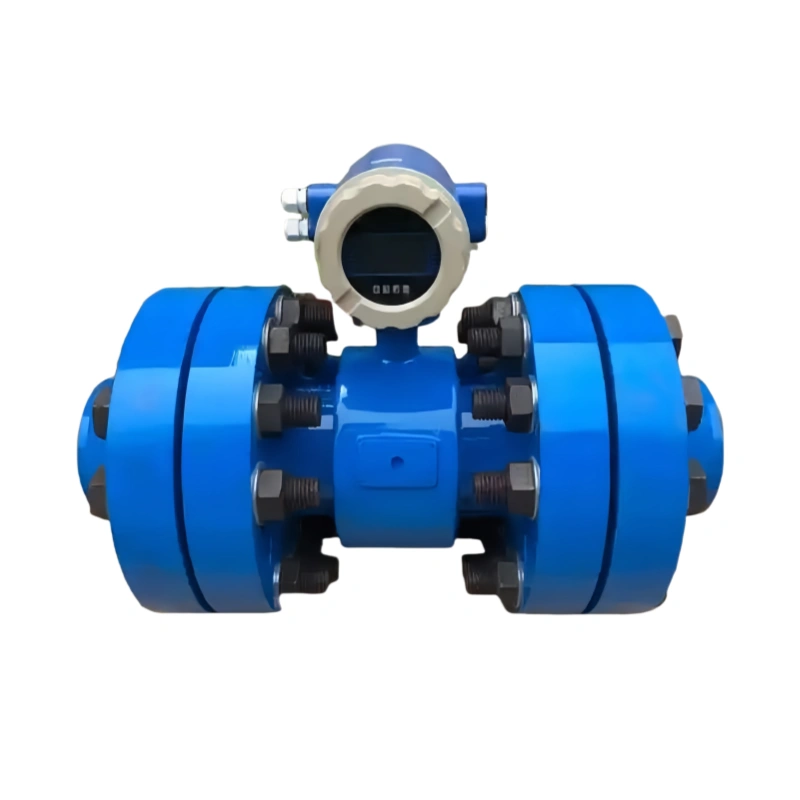
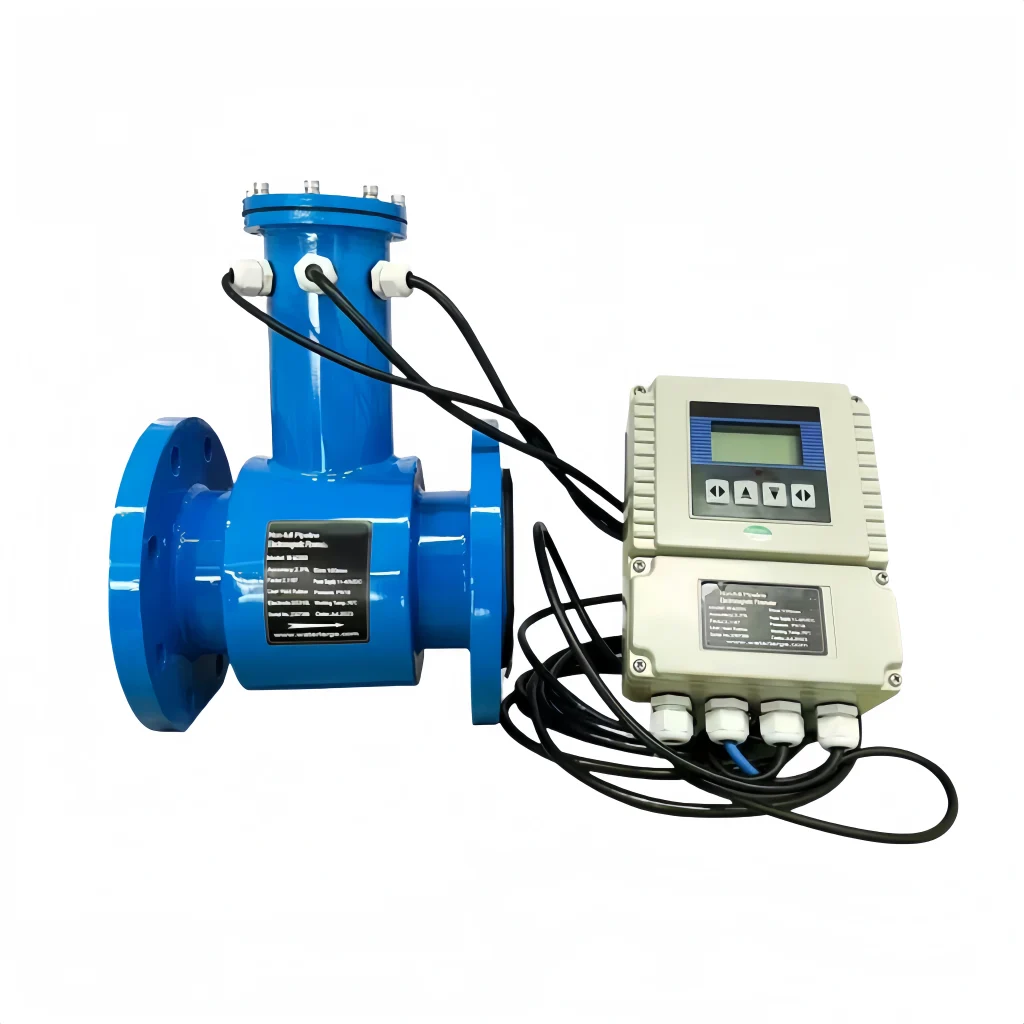
Electromagnetic Flowmeters
Principle of Operation
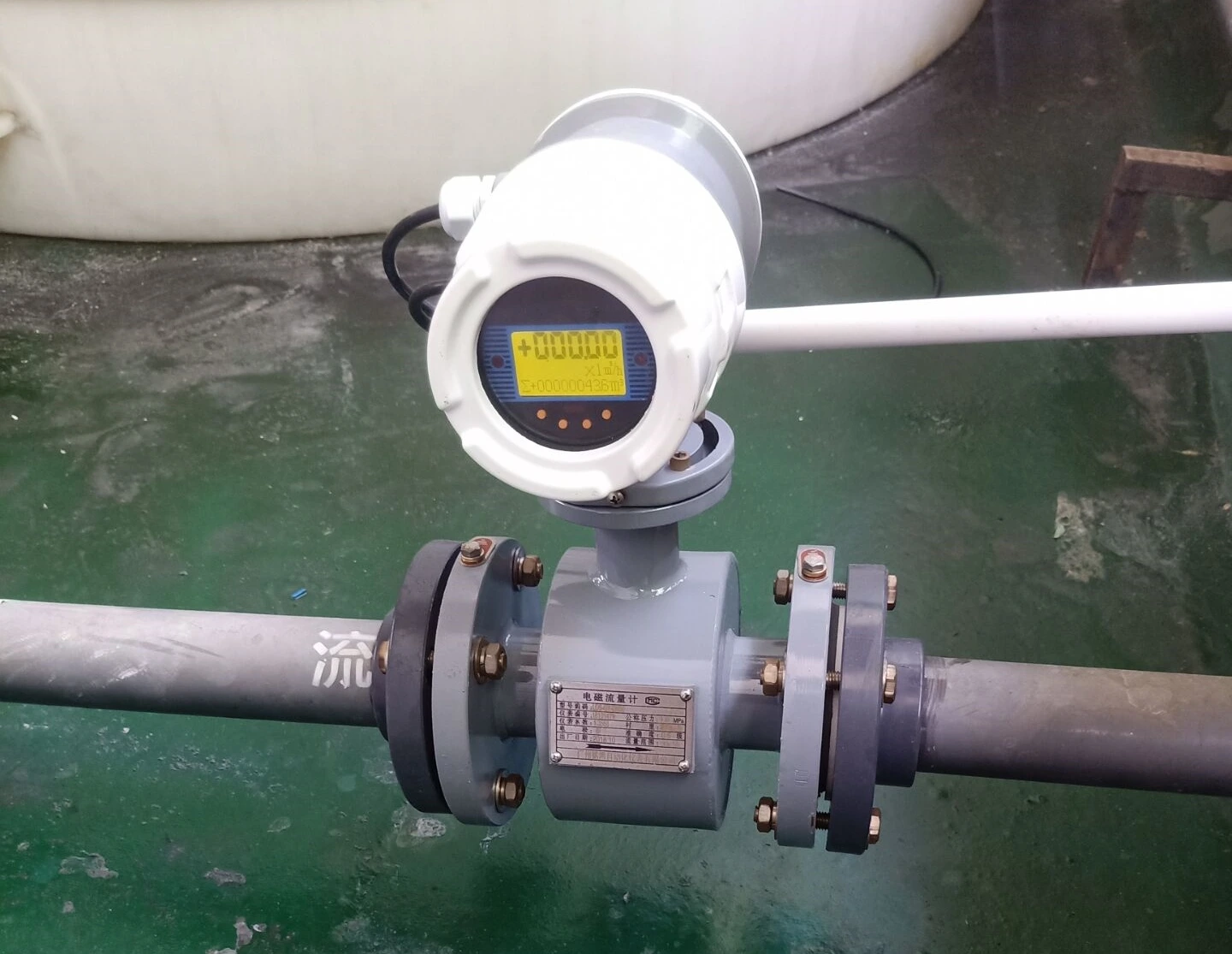
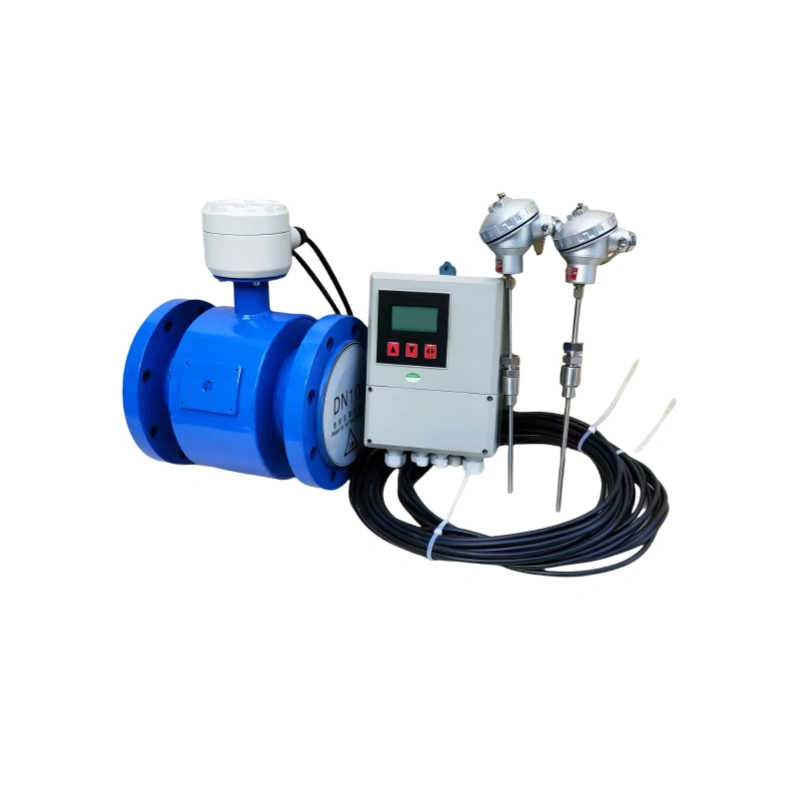
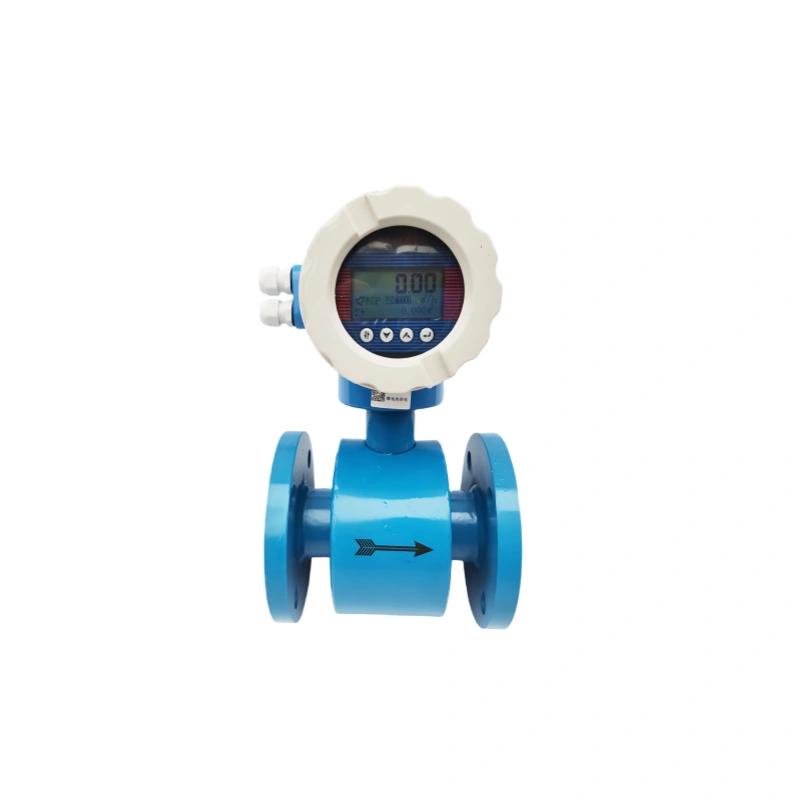
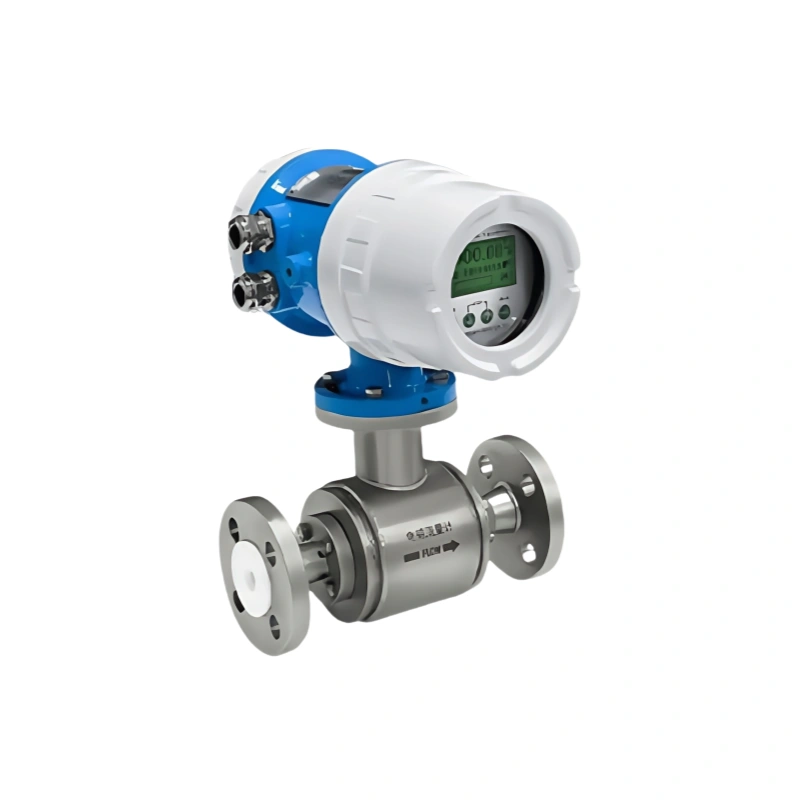
Electromagnetic flowmeters operate based on Faraday’s law of electromagnetic induction. An excitation magnetic field is generated outside the pipeline; when a conductive slurry flows through this field and cuts across the magnetic flux lines, an induced electromotive force proportional to the flow velocity is generated.
The instrument captures and processes this electromotive force signal to calculate the volumetric flow rate of the medium. The equipment imposes strict requirements on the medium’s conductivity; in industrial applications, the medium’s electrical conductivity must exceed 5 μS/cm.
Advantages:
Low pressure drop, resistant to blockages: As there are no throttling components inside the pipe, the medium flows smoothly with extremely low pressure loss; the meter is suitable for slurries containing particles or viscous substances and is resistant to silting and blockages.
Corrosion resistance and wide adaptability: It can be fitted with a variety of lining materials, such as rubber, PTFE and ceramic, and is capable of withstanding corrosion from acids and alkalis as well as slurry erosion, making it suitable for a wide range of industrial and mining media.
High accuracy and good stability: It delivers high measurement accuracy and a wide turndown ratio, so it works well across both high and low flow rate conditions. Density swings, viscosity changes or temperature shifts in the slurry do not throw off the readings, which keeps operation steady.
Disadvantages:
Limited range of applicable media: It only measures conductive media; gases, oils and other non-conductive substances are off the table, so the application scope is fairly narrow.
Electrodes are prone to wear and corrosion: Since the measuring electrodes sit in constant contact with the slurry, hard particles gradually wear them down or the medium itself corrodes them—either way, measurement stability takes a hit.
Interference from magnetic particles: Strongly magnetic particles in the medium can throw the magnetic field distribution out of balance, upset the measurement environment and drag down accuracy.
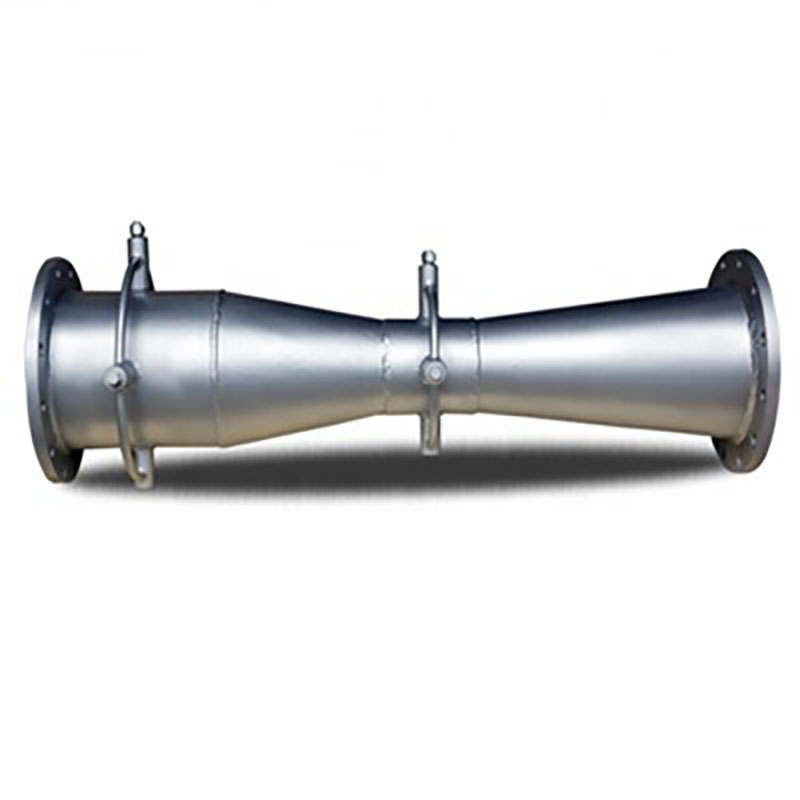
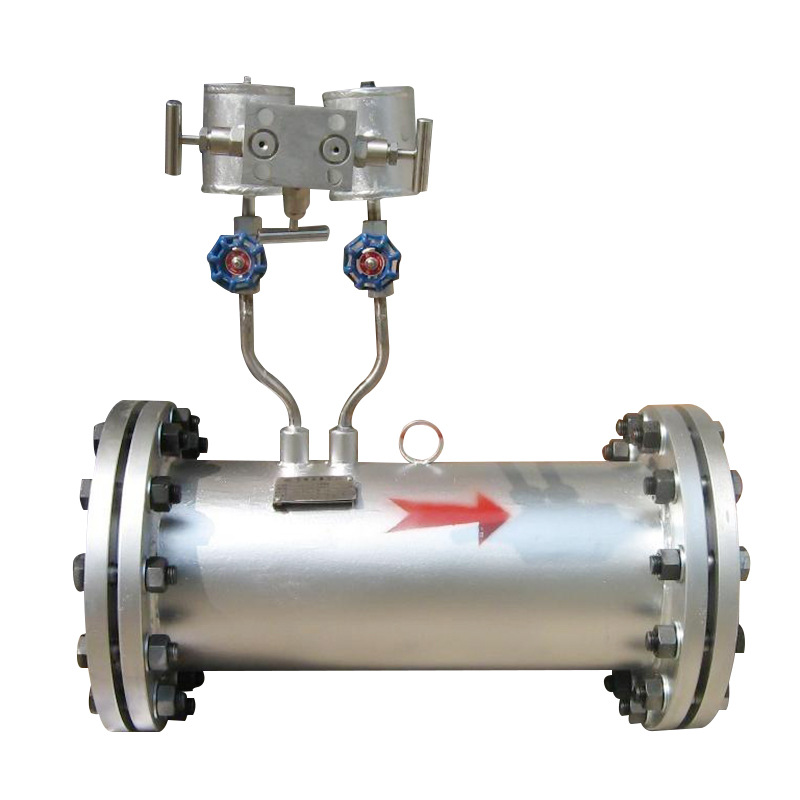
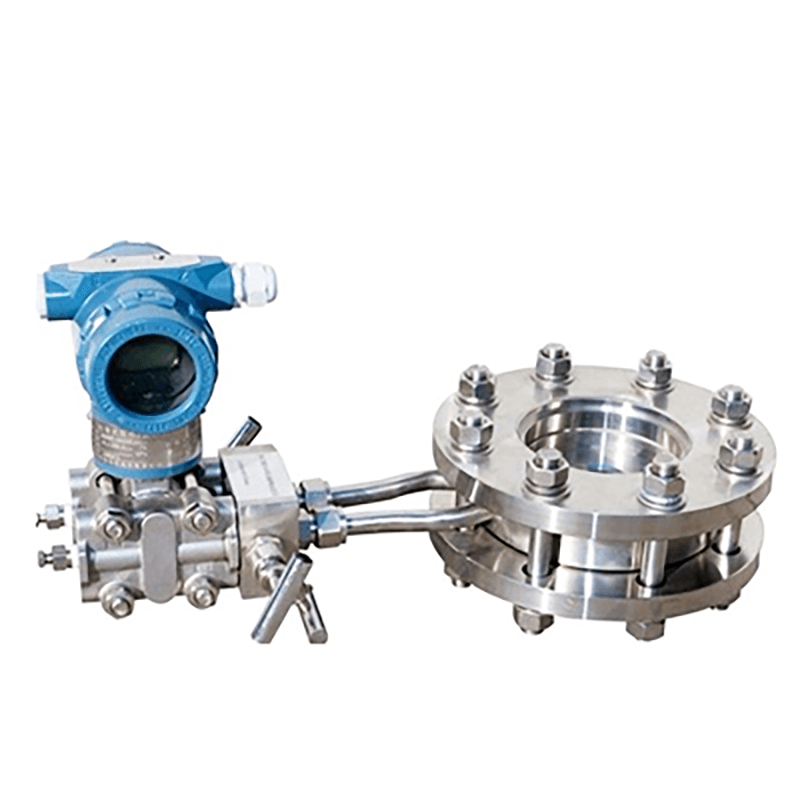
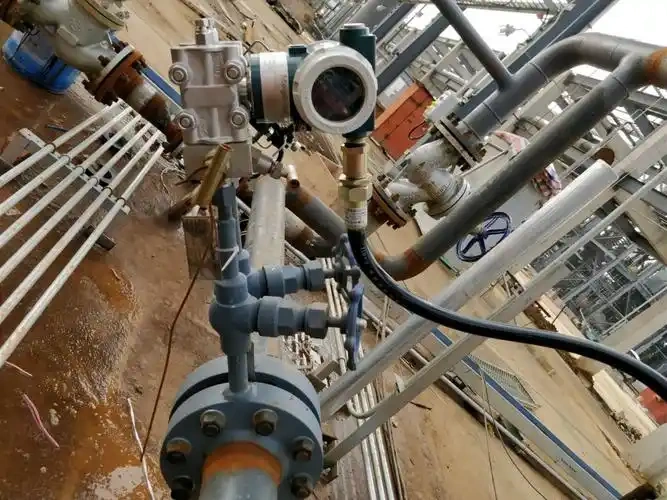
Differential Pressure Flow Meter
Principle of Operation
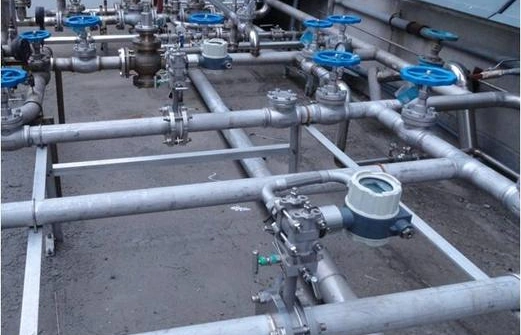
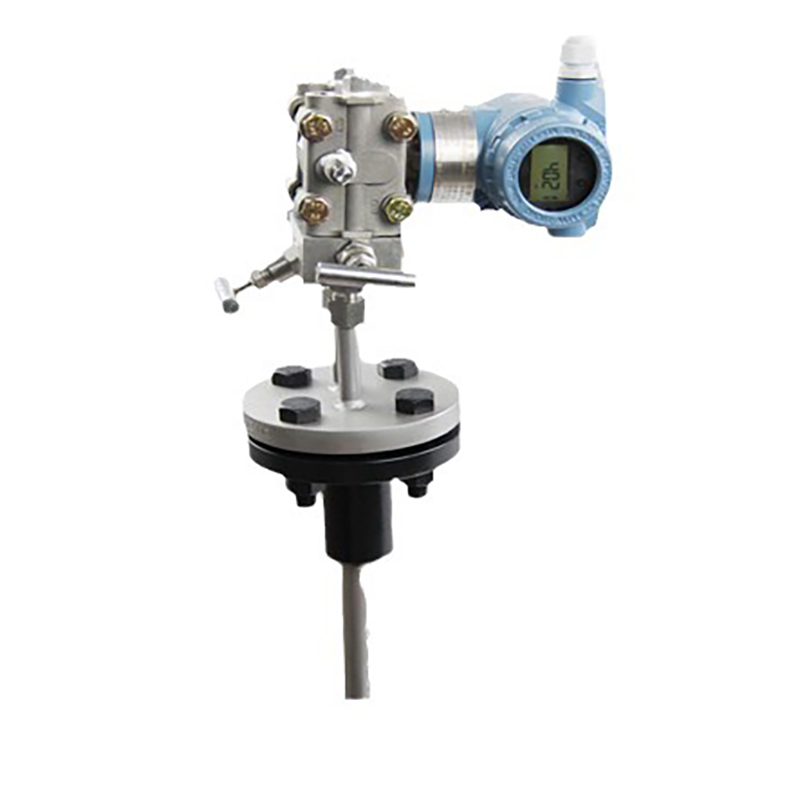
Differential pressure flow meters operate based on Bernoulli’s equation. By installing throttling devices such as orifice plates, wedges or V-cones within the pipeline, the cross-sectional area of the flow path is altered.
As the medium flows through the throttling element, a pressure differential is generated between the upstream and downstream sides; the magnitude of this pressure differential is proportional to the square of the medium’s flow velocity.
The pressure differential signal is transmitted via pressure-taking lines to a transmitter, where it is converted to determine the real-time flow rate in the pipeline.
Advantages:
High reliability: These meters have been around for decades and the technology is well proven. The structure is straightforward, breakdowns are rare, and they keep running steadily over the long haul.
Excellent temperature and pressure resistance: They handle tough conditions—high heat, high pressure—without breaking a sweat, so they fit into demanding environments.
High versatility regarding media: Conductivity doesn’t matter one way or the other—these things handle conductive fluids, non-conductive fluids, slurries, you name it. That flexibility gets you into a lot more situations.
Low acquisition cost: The design is straightforward and dirt-cheap to build, so what you pay to buy and install them stays low. Decent value for the money.
Disadvantages:
Significant pressure loss and high energy consumption: The throttling arrangement burns off a lot of pressure across the pipe, which means your pumps work harder and your electricity bill keeps climbing.
Prone to blockages and high maintenance requirements: Those impulse lines are thin and slurry debris packs into them fast, so you’re constantly cleaning them out. The running costs and maintenance headaches stack up over time.
Prone to wear: The orifice takes a beating from particle impact over time, and accuracy drifts downward as a result; parts need swapping out on a schedule.
Narrow turndown ratio and poor accuracy at low flow rates: The usable range is tight, so when flow slows down, the readings become noticeably unreliable.
Sion-Inst Slurry Flowmeter Case Study
Electromagnetic Flowmeter
LDG-50-35MPa
Field-integrated display model
Fluid type: Slurry
Pipe diameter: DN50
Rated pressure: 42 MPa
Operating temperature: 0–70 °C
Flange and clamp connection,
Body material: 304 stainless steel, including flanges, bolts and gaskets;
220 V power supply
F4 lining, 316L electrodes
Flow range: 3.5–70 m³/h
With RS485 communication and 4–20 mA current output
Accuracy: Class 1.0
Body protection rating: IP67
Selection Guide
1. Determine the characteristics of the medium:
First, confirm the slurry’s electrical conductivity, solids content, particle size and hardness, viscosity and corrosiveness; at the same time, assess whether there is a tendency for sedimentation, flocculation or crystallisation, as these characteristics directly determine the type of instrument that can be selected.
2. Match the measurement principle:
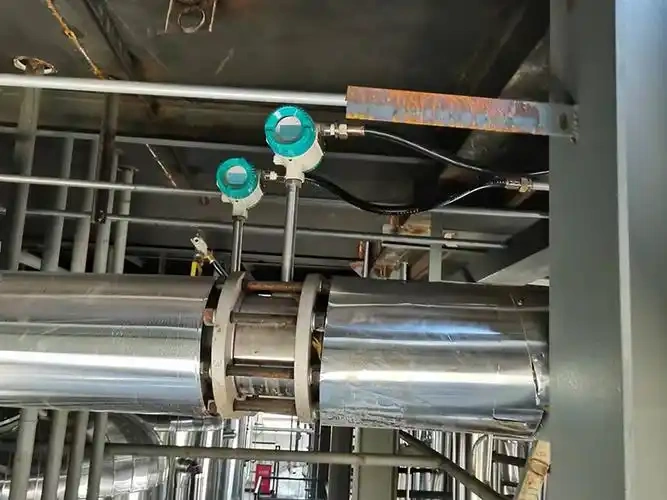
For conductive slurries, give priority to electromagnetic flowmeters; for precise mass measurement, select a Coriolis flowmeter; ultrasonic flowmeters are suitable for large-bore or corrosive media; differential pressure flowmeters are preferred for high-temperature, high-pressure or non-conductive slurries.
3. Assess operating conditions:
Consider pipe diameter, pressure and temperature ranges, installation space, and whether production shutdowns to break the pipe are permissible. Clamp-on ultrasonic flowmeters are suitable for applications requiring continuous operation, whilst Coriolis flowmeters are sensitive to installation stresses.
4. Balancing accuracy and cost:
Coriolis meters are dead-on accurate, but you pay dearly for that precision; electromagnetic flowmeters hit a sweet spot on price and barely need any upkeep; differential pressure meters look cheap upfront, yet they bleed you dry over time on energy bills and maintenance; ultrasonic meters sit somewhere in between, though a few stray bubbles in the line will throw them off completely.
5. Consider the risk of wear and blockage:
For slurries with high solid content and coarse, hard particles, avoid Coriolis vibrating tube and differential pressure pressure-taking tube configurations; prioritise electromagnetic or clamp-on ultrasonic flowmeters; slurries prone to sedimentation require a backflush or diaphragm sealing system.
6. Confirm long-term maintenance requirements:
assess electrode replacement cycles, lining wear monitoring, and the ease of dismantling and inspecting orifice plates, etc., to select instrument types and supplier service systems that match the organisation’s maintenance capabilities.
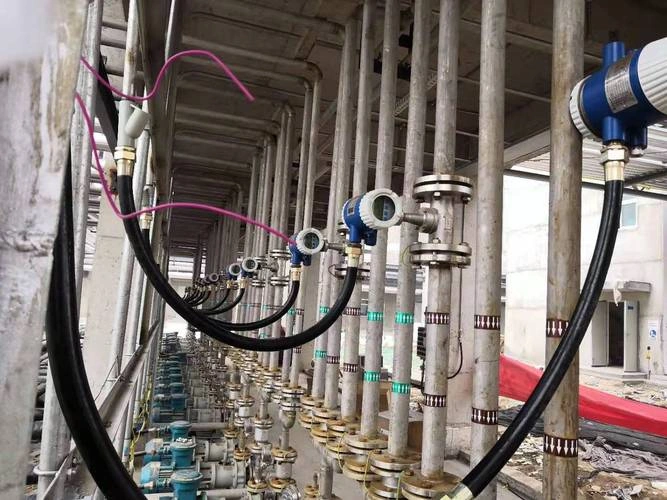
Drawing on practical experience in slurry measurement across multiple industries, Sion-Inst can provide a bespoke flowmeter solution tailored to the specific characteristics of the on-site medium, process temperature and pressure, pipework conditions, accuracy requirements and operational maintenance needs, effectively resolving industry challenges such as measurement fluctuations, equipment blockages and frequent maintenance.
Sion-Inst focuses on fitting the meter to your actual operating conditions. We handle standard installation and commissioning, and we stick around with solid after-sales support—so you get better production accuracy and lower running and upkeep costs. If you want us to take a close look at your setup or put together a custom selection plan, just reach out whenever suits you.