In the petrochemical, chemical and energy storage sectors, various types of tanks serve as core facilities for media storage and process buffering; precise level monitoring is directly linked to production safety, process stability and inventory measurement accuracy.
Due to operating conditions such as high temperature and pressure, media volatility, corrosion and scaling, traditional level measurement methods have inherent limitations. Tank radar level transmitter, which utilise the principle of microwave echo ranging, have become the preferred solution for industrial tank level monitoring thanks to their high accuracy, strong resistance to interference and maintenance-free operation.
Radar Level Transmitter
The radar level transmitter operates on the principle of microwave radar reflection. The device’s antenna emits high-frequency electromagnetic wave pulses into the interior of the container; these waves travel in a straight line through the air and are reflected upon encountering the surface of liquid or solid materials, with the echo signals then being received by the radar antenna.
The instrument’s processor works out the time difference between the pulse that’s sent out and the echo that’s received. So, we combine this with the speed of electromagnetic waves in air, and then we use an algorithm to calculate the actual distance from the antenna to the surface of the material. Then, it combines that with the total height of the container to automatically convert the measurement into the real-time liquid level.

Challenges in Measuring Tank Liquid Levels
Complex operating conditions: The insides of storage tanks can be really hot, really pressure-filled or filled with steam, mist, dust and fumes. These things can easily mess with the signal, causing fluctuations and distortion in readings.
Variable medium characteristics: Things like how thick or thin the liquid is, whether it forms crystals, how well it sticks to the walls of the tank, whether it makes bubbles, how it separates or collects at the bottom of the tank, or whether it leaves a layer on the surface can all be present in the liquid being measured. The sensing area may be blocked and the measurement may be distorted because of the liquid sticking to the measuring probe or instrument.
Tank structural constraints: Some storage tanks have things like agitators, pipes, baffles and ladder frames inside, which can get in the way of signal paths. Also, narrow-bore, deep-well and sealed pressure vessels make it tricky to install instruments and detect signals the usual way.
High corrosion resistance and explosion-proof requirements: Media in chemical and oil/gas storage tanks are often highly corrosive and flammable or explosive. So, measurement instruments have to be able to resist corrosion and be durable, as well as meet explosion-proof rating requirements. This means there are some pretty strict selection and installation standards.
Interference from liquid level fluctuations: Factors such as material inflow and outflow, agitation operations and liquid sloshing can cause violent fluctuations in the liquid surface, which can lead to sudden jumps in level readings. It’s not easy to find the right average for the liquid level.
Significant variations in dielectric constant: Materials with low dielectric constants often reflect microwave and acoustic waves well, producing weak echoes. This can make it difficult for equipment to recognise interfaces, resulting in blind spots or inaccurate measurements.
Inconvenient maintenance and calibration: It is not possible to simply open the lid for maintenance or manual calibration of many storage tanks, which are designed as sealed, pressurised vessels. Consequently, subsequent instrument verification, cleaning and maintenance are difficult, and the costs associated with shutdowns are high.
Radar Level Transmitter for Measuring Liquid Levels in Storage Tanks
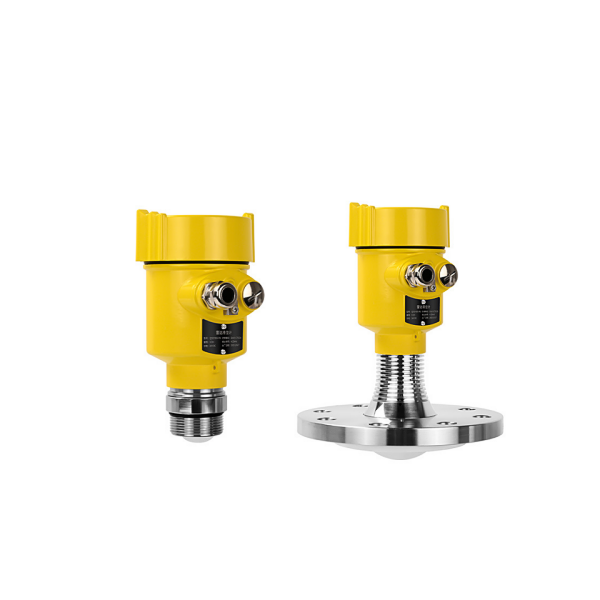
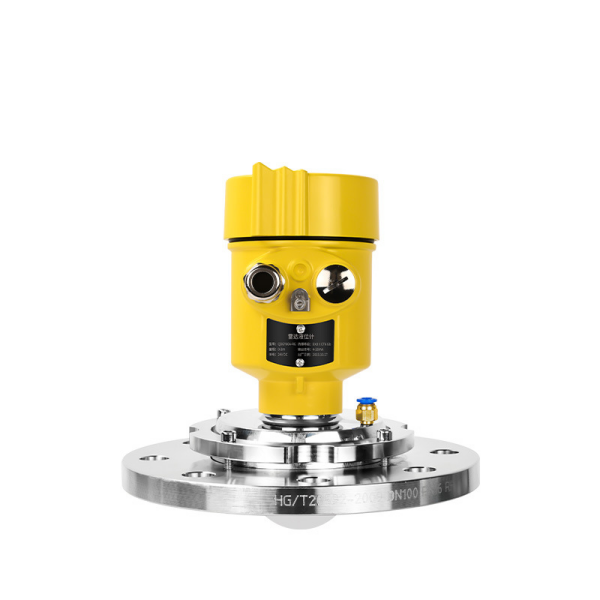
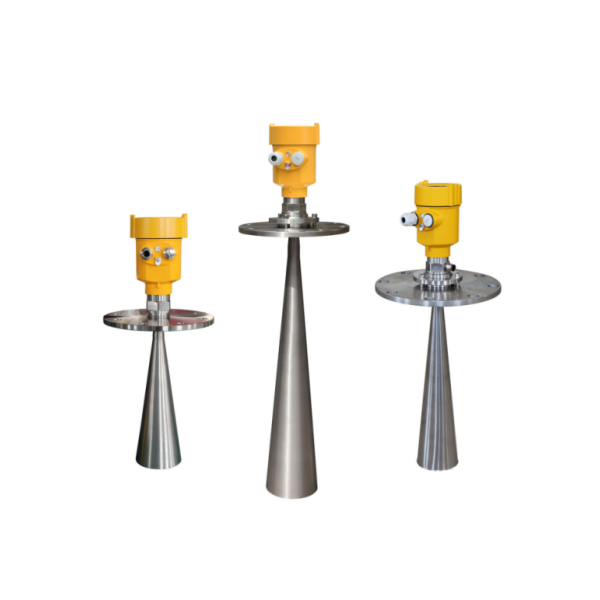
Non-contact Radar Level Transmitter
Measuring Principle:
Utilises high-frequency radar waves transmitted through the air without direct contact with the medium. Radar waves are reflected when they hit the surface of the liquid inside the tank.
The device measures the liquid level by timing how long it takes for an echo to travel using radar waves. This is a simple and efficient measuring method.
Installation Method:
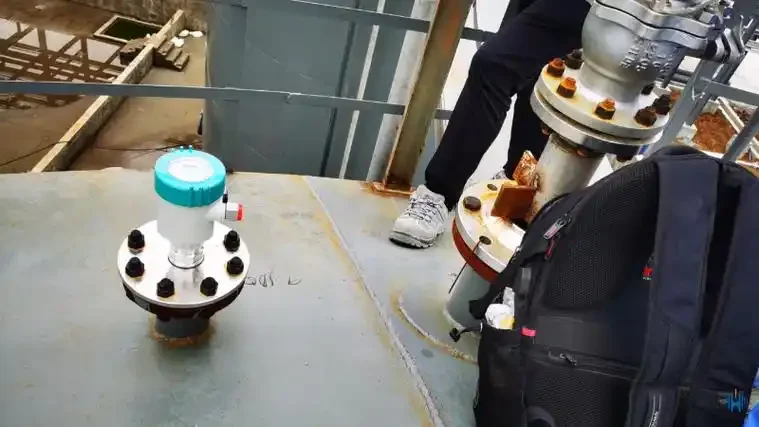
Put the probe in the right place on the top of the storage tank. Make sure the probe is pointing straight up, towards the liquid on the inside of the tank.
The probe does not penetrate the material at any point and has no physical contact with the medium inside the tank. Installation is straightforward and does not affect the normal operation of the storage tank.
Suitable operating conditions:
Suitable for various tank media characterised by high temperature, high pressure, high volatility, high corrosion, and high viscosity or a tendency to crystallise.
It can also be used in complex environments with high dust concentrations, as well as in the presence of steam or mist within the tank. This makes it suitable for a wide range of applications.
Limitations:
If there are complex obstacles in the tank, if there is too much foam on the liquid’s surface or if the liquid level changes a lot, the radar waves can be affected by false echoes. This can mean that the measurement is not as accurate as it could be. To avoid this, simply ensure that you install it in the correct locati0n.
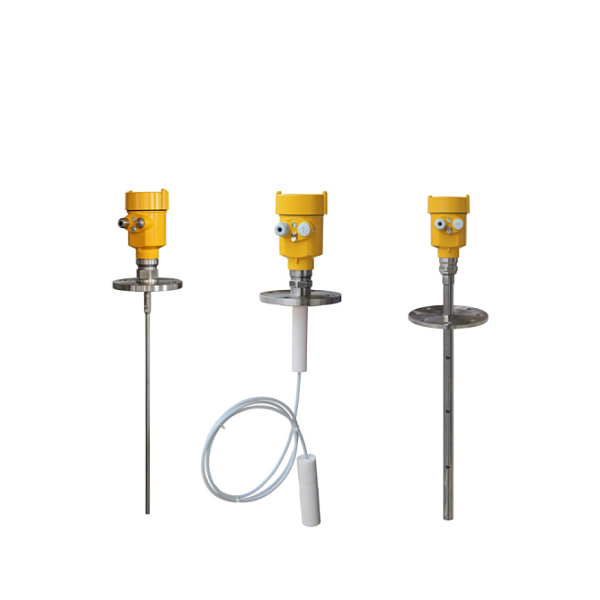
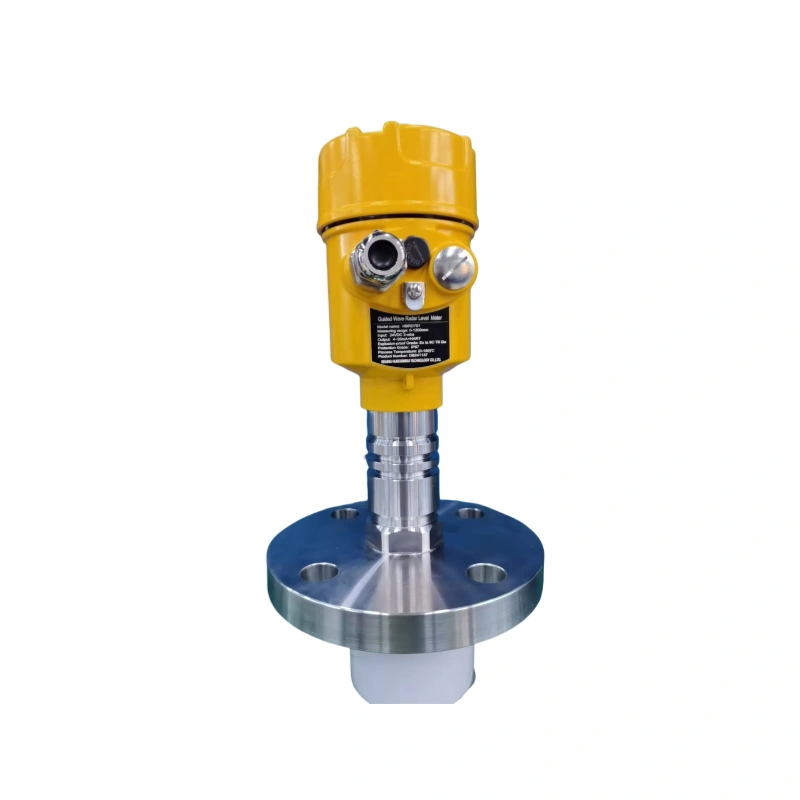
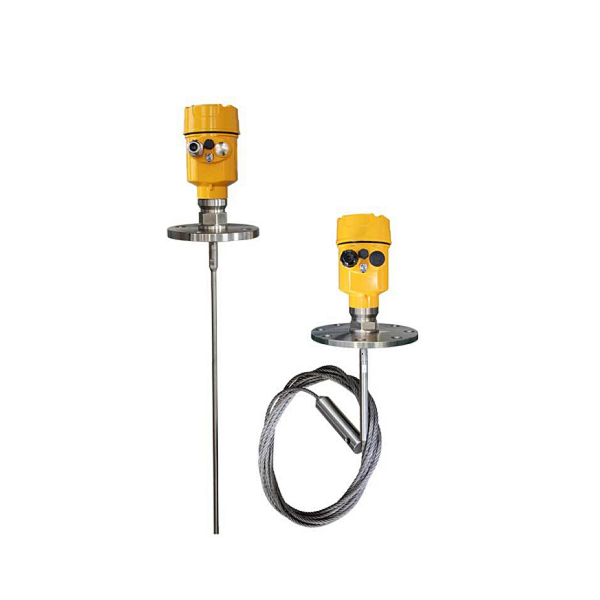
Guided-Wave Radar Level Transmitter
Measuring Principle:
RA special tool or steel wire sends water waves straight to the surface of the liquid in the tank. When they hit the top of the liquid, a clear, mirror-like echo is made.
The gadget can tell how much liquid is in the tank by measuring how long it takes for radar waves to bounce back. It is also pretty resistant to interference.
Installation Method:
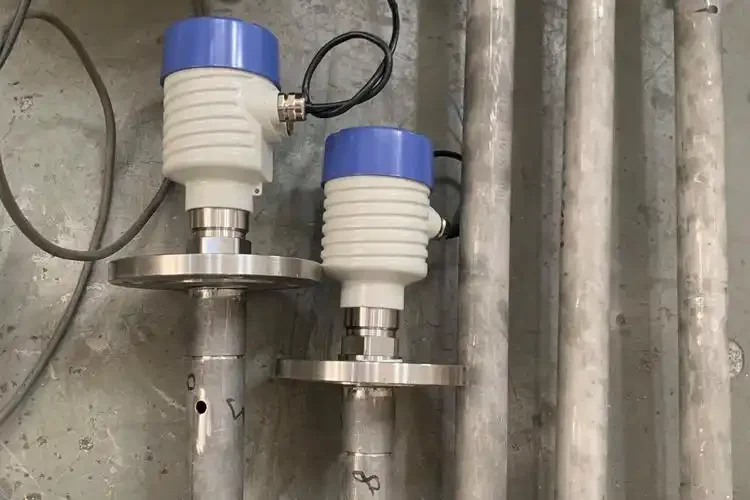
The sensor is mounted and locked in place on top of the tank. The steel wire and probe extend straight up into the tank, touching the contents inside.
The probe then sends the radar signal through the steel cable. It is very important to make sure that the probe or steel wire is straight up and down during fitting.
Suitable Applications:
This product is highly effective in small-diameter and horizontal tanks, and in the presence of thick layers of foam or significant changes in the liquid surface. It can also measure the amounts of solids.
It can measure the points where two liquids meet. This makes it perfect for use in complicated tank situations.
Limitations:
The probe or steel wire comes into direct contact with substances that are highly corrosive or that stick to it. Long-term use can result in scaling or corrosion, meaning more maintenance is required than with non-contact methods.
This method is also ineffective with tanks containing very thick substances or those that tend to build up and form deposits.
Advantages of Radar Level Transmitters in Measuring Tank Liquid Levels
1. Accurate and Stable Measurement
Non-contact and guided-wave radar level transmitters both work on the same principle of radar wave reflection or transmission to measure liquid levels accurately.
You’ll get live data, which is perfect for keeping an eye on tank levels. Guided-wave radar is especially good at resisting interference and is less affected by vapour, dust and foam in the tank, which makes for really stable measurements.
2. Convenient Installation with No Impact on Production
Both types of radar level transmitters are installed on the top of the storage tank. Non-contact probes do not penetrate the material and have no contact with the medium, whilst guided wave radar only requires a probe rod or steel cable to be inserted into the medium.
The installation process is simple and rapid, requiring no production downtime and causing no disruption to the tank’s normal operation. Furthermore, guided wave radar allows for the selection of probe rod or steel cable types based on the tank’s dimensions and the characteristics of the medium, offering greater installation flexibility.
3. Wide range of operating conditions
Non-contact models can withstand high temperatures and pressures, and are suitable for highly volatile, highly corrosive, viscous and crystallising media, as well as complex environments with high levels of dust and vapour.
Guided wave radar is more suitable for small-diameter and horizontal tanks, capable of handling conditions with thick foam layers and significant liquid level fluctuations, whilst also measuring liquid-liquid interfaces and solid material levels, covering a wide range of tank scenarios.
4. Low maintenance costs and high practicality
Non-contact models suffer no mechanical wear and have no contact with the medium, requiring no frequent maintenance; stable operation is achieved simply by avoiding installation interference.
Guided wave radar has a small measurement blind zone, enabling precise monitoring of residual liquid levels at the tank bottom and reducing measurement errors. Neither requires frequent calibration, offering excellent long-term cost-effectiveness.
5. Resistance to environmental interference and high adaptability
Radar level transmitters are unaffected by changes in temperature, pressure or humidity, nor are they disturbed by minor fluctuations in medium density or dielectric constant.
They maintain measurement consistency even under complex conditions inside and outside storage tanks, and are unfazed by harsh tank environments such as open-air, enclosed, or flammable and explosive conditions.
6. Intrinsically Safe and Suitable for High-Risk Environments
The entire unit can be designed to be either intrinsically safe or explosion-proof, meeting the safety standards required for the storage of flammable and explosive substances in the chemical, petrochemical and oil and gas industries.
As there are no moving mechanical parts or risk of spark generation, measurements within sealed tanks do not require venting holes, ensuring production safety and compliance.
Other level transmitters for measuring storage tanks
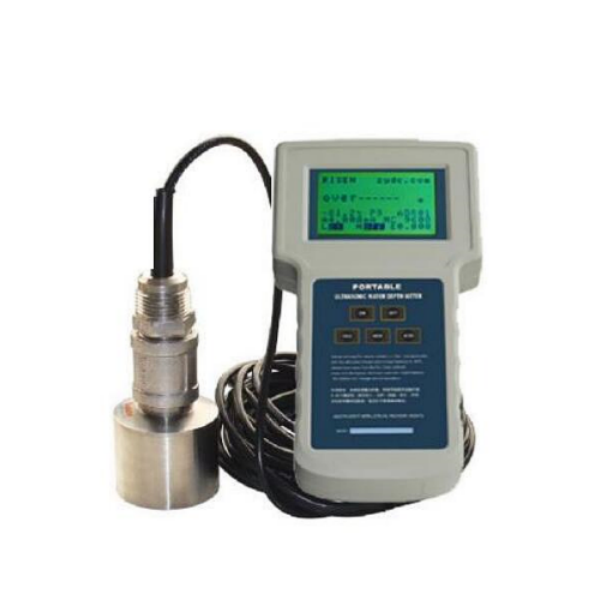
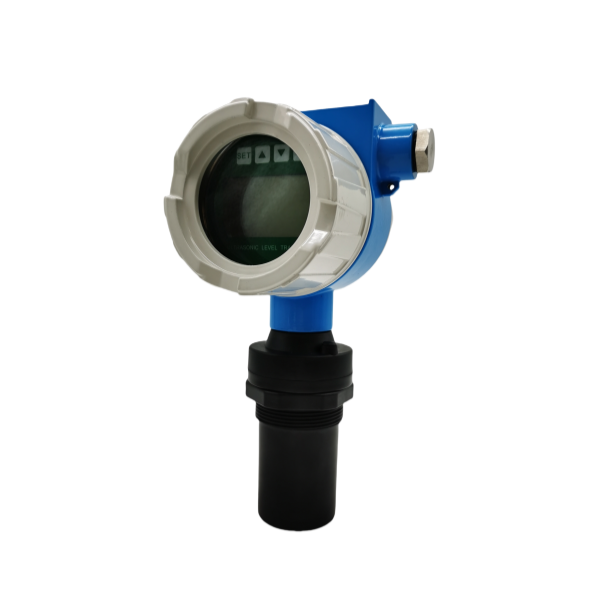
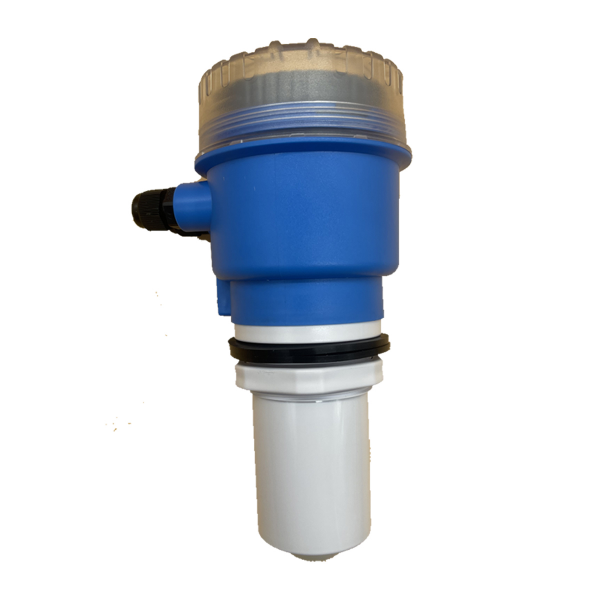
Ultrasonic level sensors: This is a non-contact measurement. It detects the level of liquid in a tank using the principle of sound wave reflection. It does not need to touch the liquid in the tank. It is suitable for corrosive, viscous and impure liquids. It is simple to install and maintain. It is suitable for use in atmospheric pressure storage tanks.
Magnetic flip-plate level transmitters: They work by communicating vessels and magnetic coupling, which let you keep an eye on the liquid level directly. You can fit them with level switches or remote transmission modules to enable signal output, and they’re suitable for various atmospheric and low-pressure storage tanks in the petroleum, chemical and water treatment industries.
Float-type level sensor: The level of the liquid causes the float in this sensor to move up and down. This activates a switch or alters a magnetic signal. It’s straightforward to understand and offers great value for money. It’s perfect for storing clean stuff like fresh water and normal oils, and you can use it for point-switch control or constant level measurement.
Differential Pressure Level Transmitter: It measures the height of the liquid level inside the tank by converting the static pressure. It’s perfect for use with sealed, pressurised storage tanks, and it can handle high temperatures and pressures. It’s great for measuring the level of liquids in storage tanks, whether that’s crude oil, chemical solvents or other substances.
Capacitive level sensors: By measuring changes in the medium’s capacitance, these bad boys can find out how much liquid is in it. They are small and don’t have any moving parts, which makes them great for tanks that hold viscous, grainy, or powdered materials as well as different kinds of liquids. They are particularly well-suited for small, enclosed tanks.
How to Select the Right Tank Level Sensor
Confirm the characteristics of the tank medium
Determine whether the medium inside the tank is clean water, wastewater, corrosive acids or alkalis, oil products, viscous slurries, or high-temperature, high-pressure media. For corrosive, crystallising, viscous, or particulate-laden media, select a level sensor that is corrosion-resistant, anti-fouling and clog-resistant.
Determine the Tank Operating Environment
Consider whether the tank is atmospheric pressure, sealed and pressurised, or located in an explosion-proof zone; or whether it is exposed to high or low temperatures, dust, or steam/mist outdoors.
Explosion-proof models must be selected for flammable and explosive environments, whilst high-temperature and high-pressure conditions require sensors with corresponding pressure and temperature ratings.
Measurement Method and Installation
When it comes to installation, you’ve got options: top-mounted, side-mounted, flanged or threaded. Just depends on the tank structure. For open-top tanks, you could use submersible or ultrasonic sensors.
For sealed pressure tanks, radar, guided wave radar or magnetic flip-plate sensors are preferred. Standard ultrasonic sensors should be avoided in confined spaces or where agitation causes interference.
Measurement Range and Accuracy
Find out the measurement range based on the tank height, making sure there’s some room for error. Standard accuracy is enough for most water and oil storage jobs, but you’ll need high-precision level sensors for chemical blending and metering/billing.
Output Signals
Choose the signal output methods you need, like 4–20 mA, RS485 or HART, depending on the on-site control system. Digital communication signals are great for remote monitoring, while magnetic flip-plate transmitters with remote transmission capabilities are perfect for on-site observation.
Maintenance Costs and Service Life
If you’re dealing with materials that can scale or stick, it’s better to use non-contact radar or ultrasonic sensors. This way, you won’t have to worry as much about regular cleaning and maintenance.
If you’re using it outdoors for a long time or in places where things can get damaged easily, choose materials like stainless steel or PTFE. That way, you can be sure your stuff will last.
When it comes to keeping an eye on the level in tanks in the petrochemical, chemical and energy storage industries, having the right equipment for measuring levels is really important. This is essential for making sure that production is safe, that processes are stable and that you can manage your inventory better.
Sino-Inst has a great range of level transmitters, like hydrostatic, differential pressure, radar and ultrasonic models, and a bunch of level switches too. These solutions are great for all sorts of tricky operating conditions, like atmospheric pressure, sealed pressurised systems, high temperatures and pressures, corrosive and viscous media, as well as explosion-proof and high-risk applications.
We have lots of experience in choosing products and a wide range of products. This means we can give you personalised advice, customised installation solutions and after-sales support that is right for you. We’ll make sure your integrated solutions are stable, simple and affordable for all types of liquid level measurement.