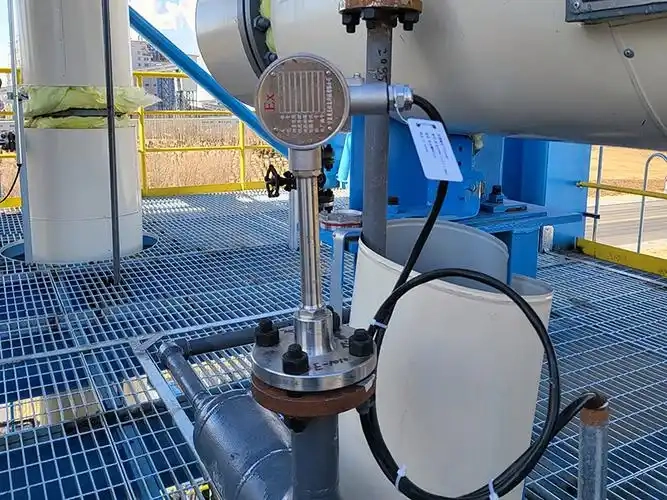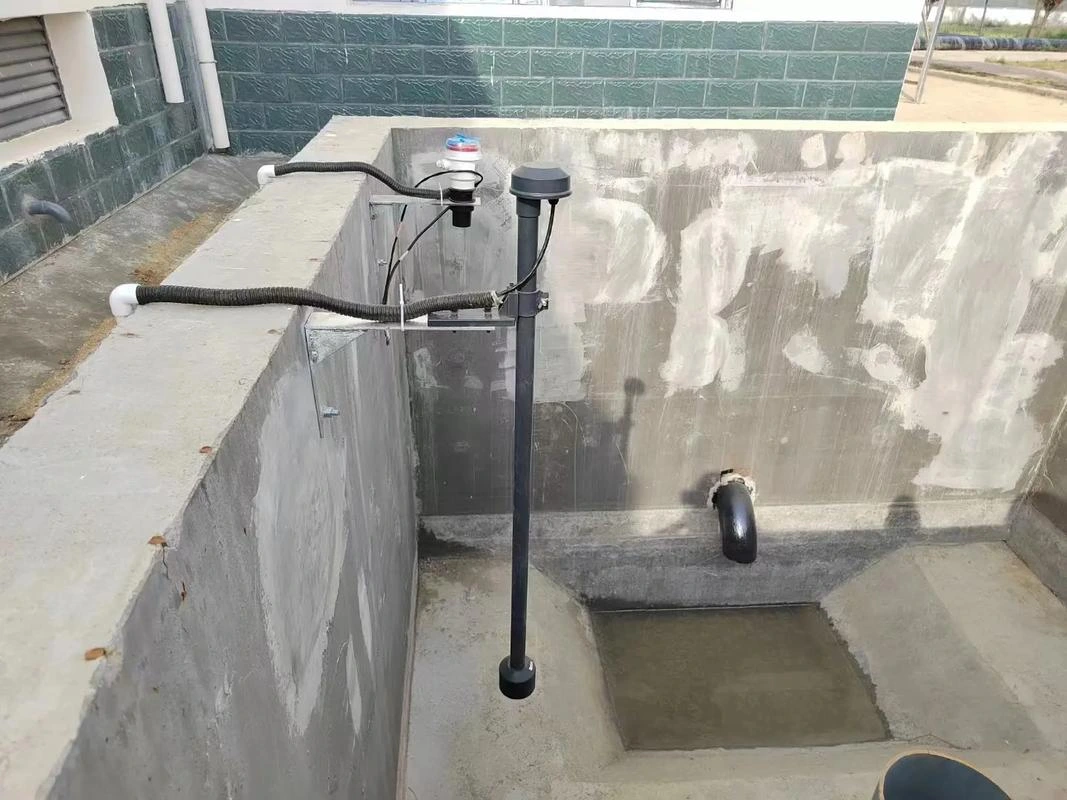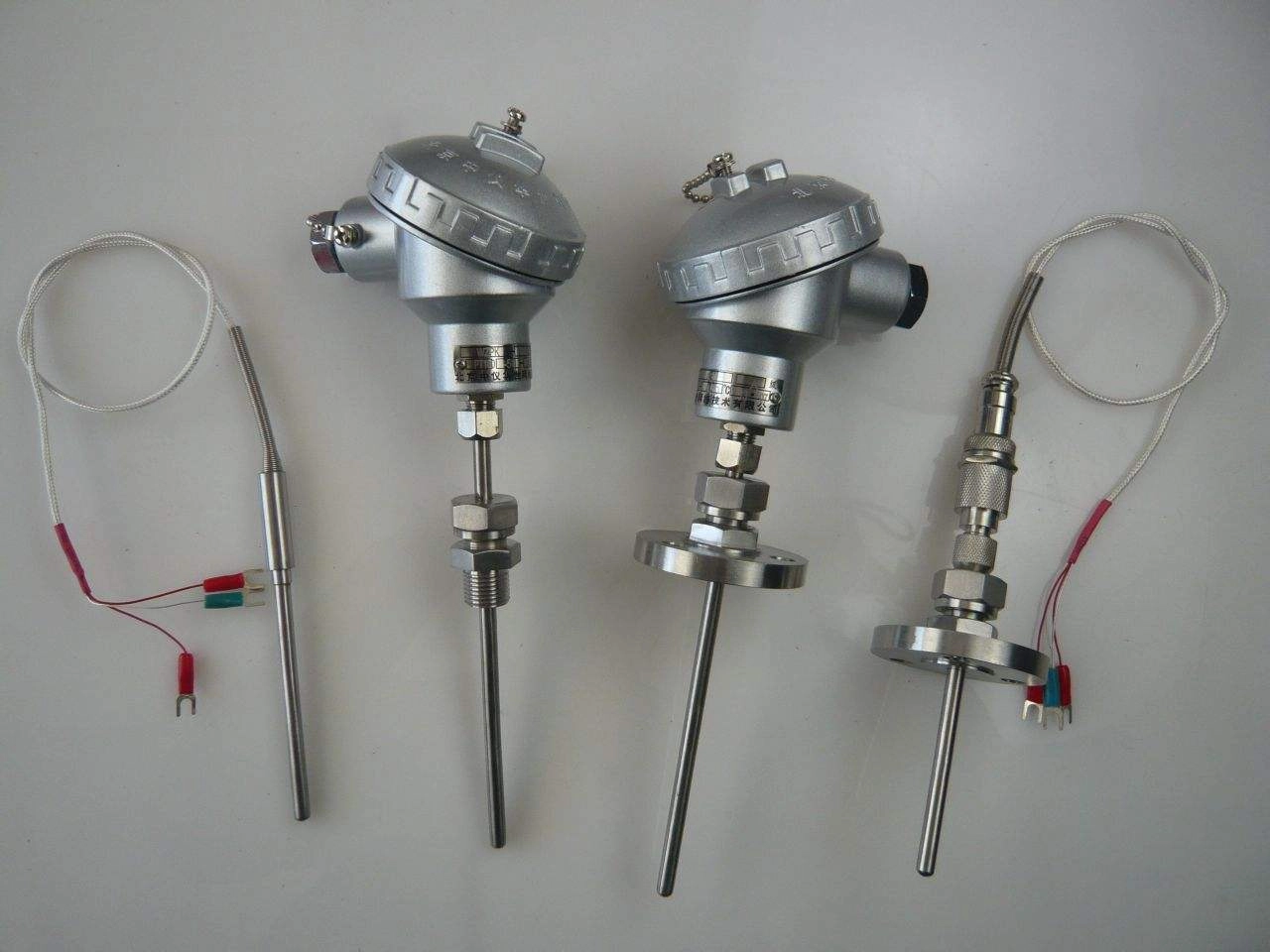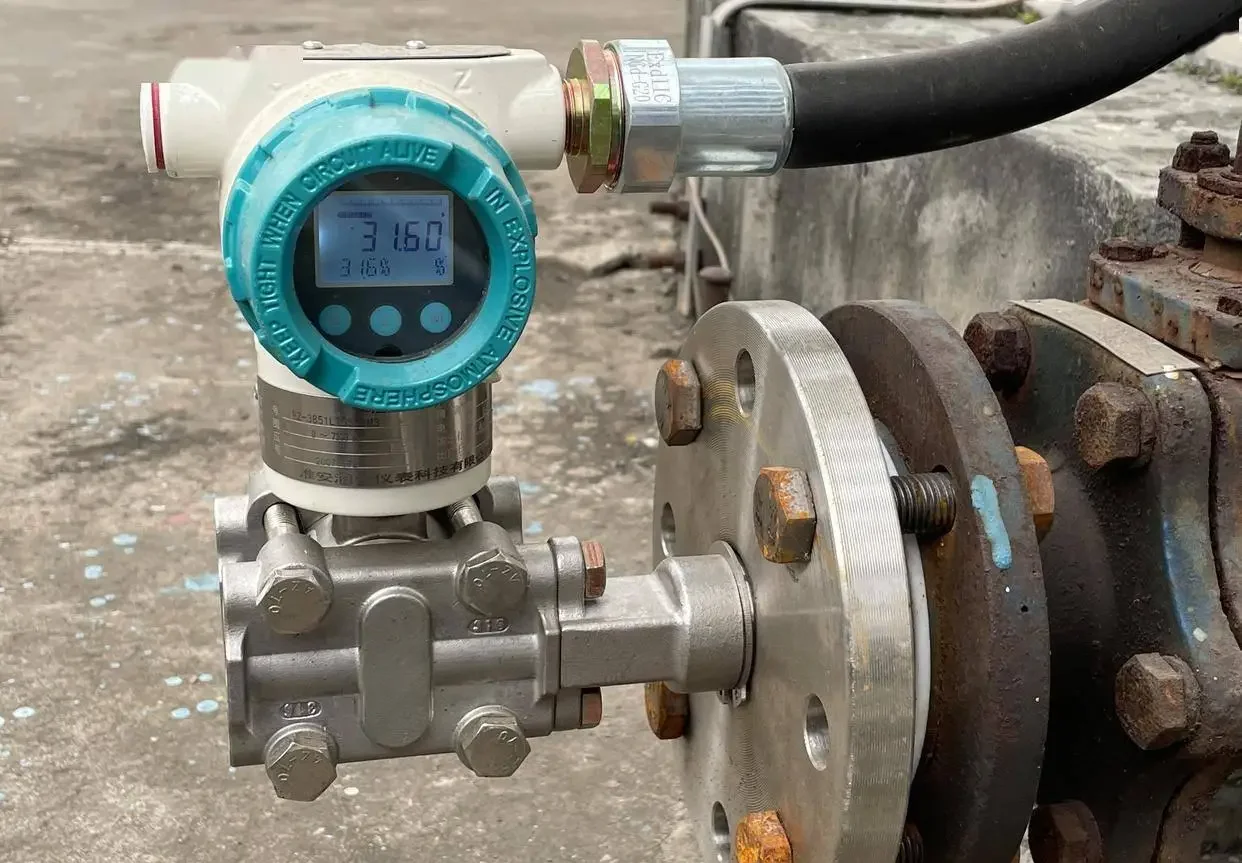
Underwater pressure sensors serve as a vital technological pillar for modern marine research, environmental monitoring, and industrial development. Contemporary underwater pressure sensors enable precise, real-time monitoring of critical parameters such as pressure and water levels, while extending their applications to ecological monitoring, geological exploration, and communications.
These pressure sensors are designed to operate in demanding underwater environments. They must be highly precise, corrosion-resistant and able to withstand high pressures to meet the diverse operational requirements of underwater, down-hole, deep-sea, shallow-water, polar and coastal applications.
What is an underwater pressure sensor?
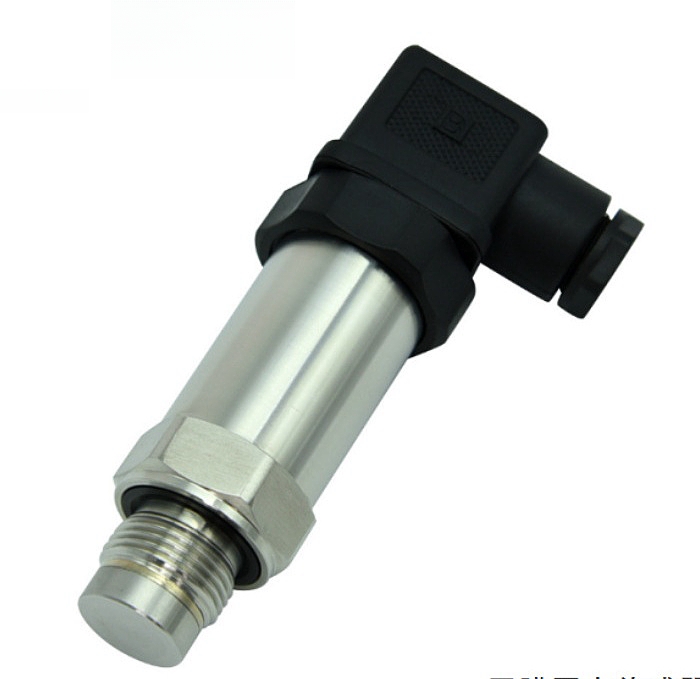
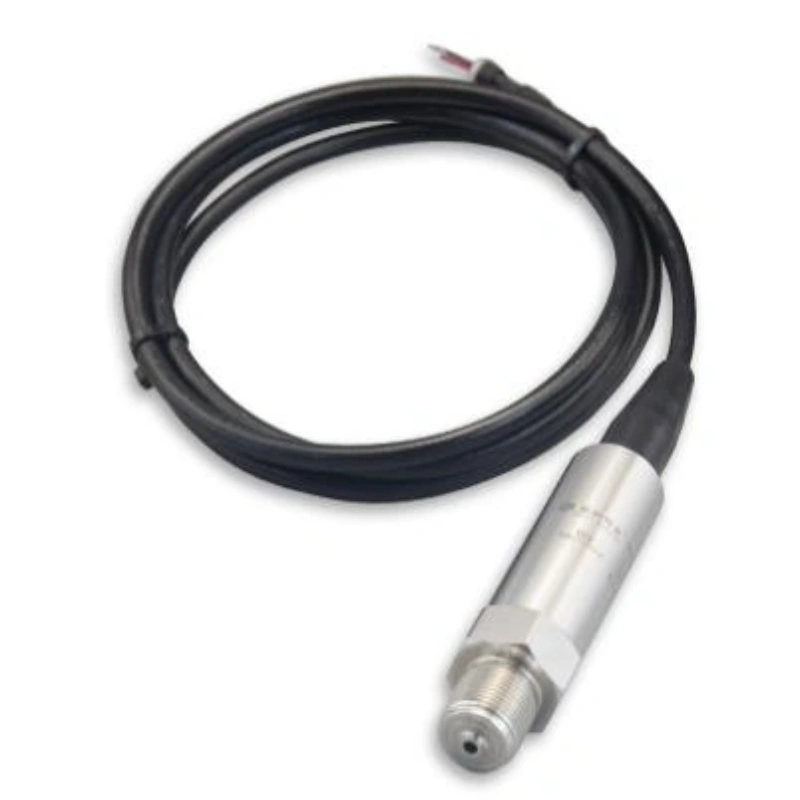
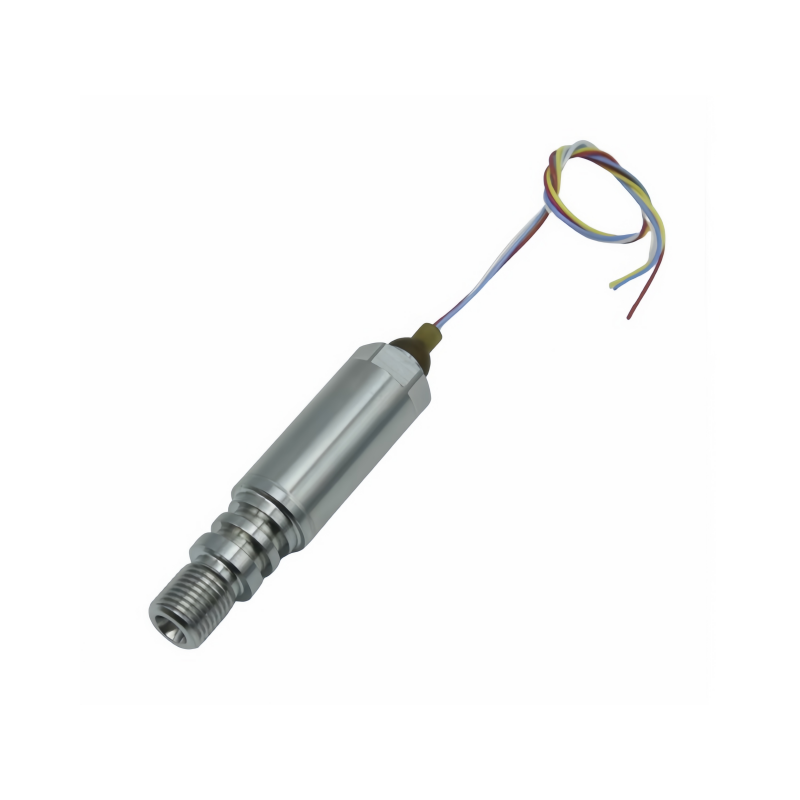
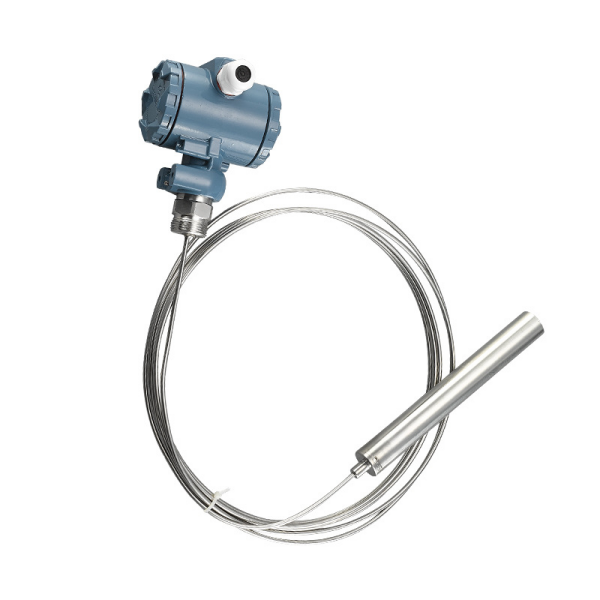
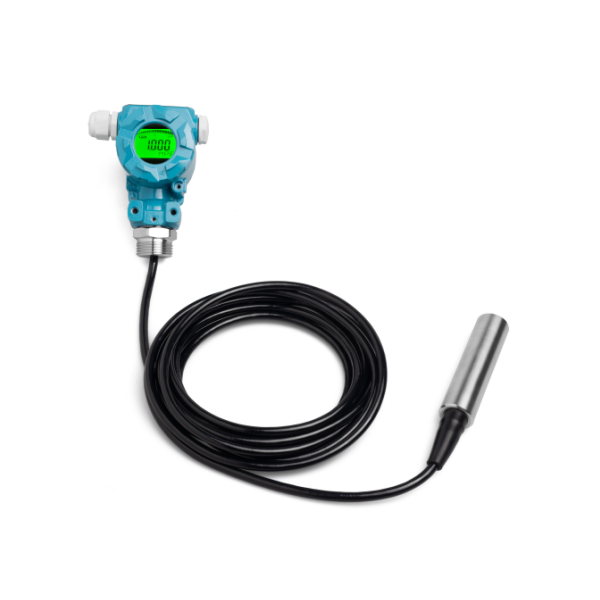
An underwater pressure sensor is a precision instrument that can measure changes in water pressure.By detecting the hydrostatic pressure exerted by the surrounding water on the sensor, it can calculate the current depth as well as other environmental parameters such as pressure and water level.The sensor’s operation is based on the principle of fluid statics, whereby the pressure inside a liquid increases with depth.
Basic Structure of Underwater Pressure Sensors
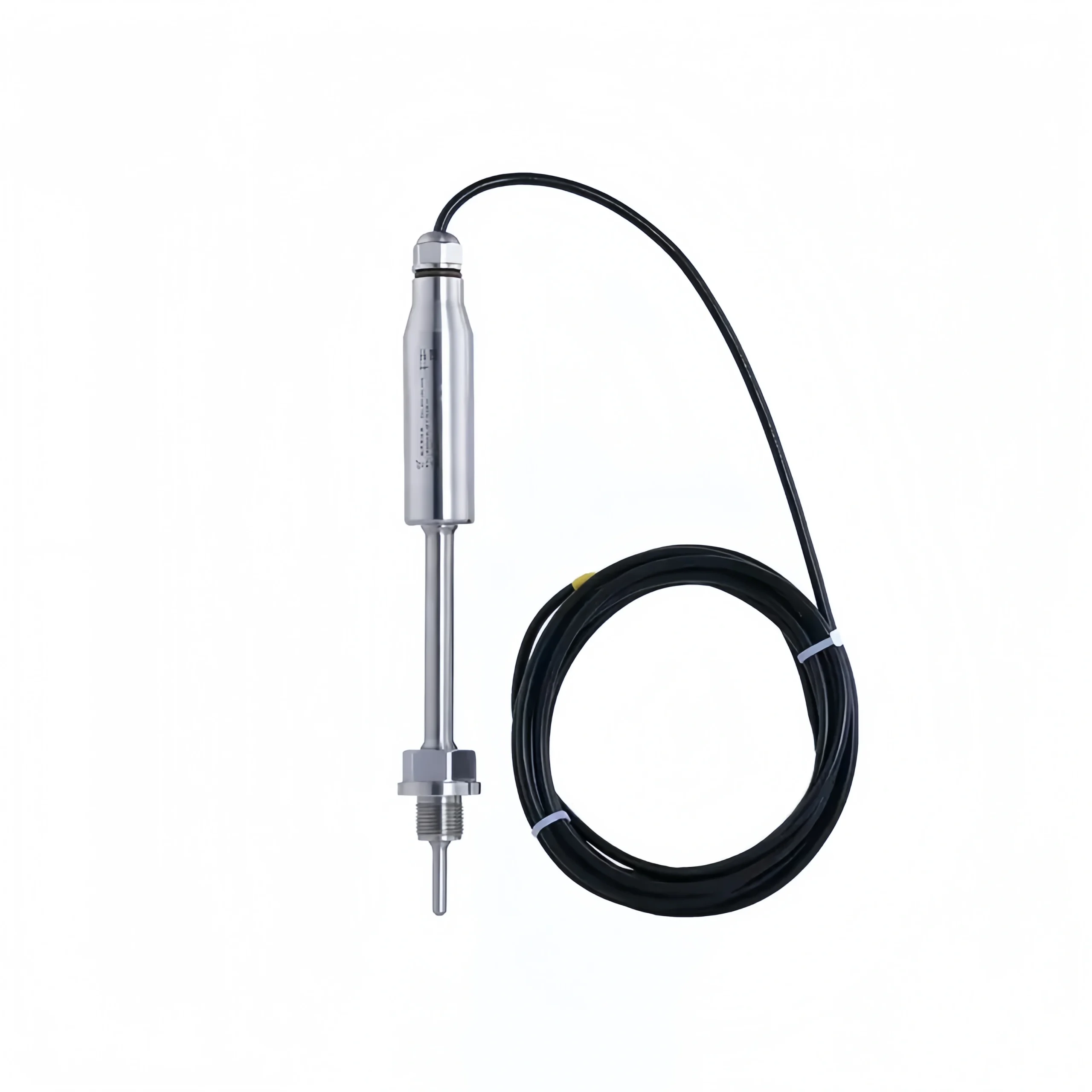
The composition of underwater sensors principally includes sensing elements, electronic circuits, encapsulation structures, and external interfaces.The sensing elements are responsible for detecting changes in the underwater environment, including parameters such as temperature and pressure. These signals are then processed and transmitted by the electronic circuits.
The encapsulation structure guarantees the sensor’s capacity to function reliably for protracted durations in underwater environments, while simultaneously preventing water ingress and protecting the integrity of internal electronic components from any potential damage.The external interfaces facilitate data transmission and reception, thus serving as a critical component for ensuring the efficient operation of the sensor system.
The Working Principle of Underwater Pressure Sensors
The fundamental principle of underwater pressure sensors is based on the common operating mechanism of pressure sensors, typically employing structures such as strain gauges, piezoelectric sensors, or diaphragms to detect pressure variations.A water pressure sensor generally comprises three components: the sensing element, the signal processing unit, and the output module.
When submerged in an aquatic environment, the pressure exerted by water acts upon the sensor’s sensitive element, causing deformation or alterations in its electrical signal. The pressure signal detected by the sensing element is transmitted to the signal processing unit, where it is converted into readable data before being output to relevant systems for monitoring and analysis.
Characteristics of Underwater Pressure Sensors
Waterproof performance
Typically requires IP67 (submerged in 1 metre of water for 30 minutes) or IP68 (continuous underwater operation). Special scenarios necessitate IP69K (protection against high-pressure, high-temperature water jets).
Sensor Materials and Packaging Technology
The encapsulation design of underwater sensors is of paramount importance, particularly in deep-sea high-pressure environments. Common encapsulation materials include stainless steel, titanium alloys and plastics. Titanium alloys are used a lot in deep-sea sensors because they’re really resistant to corrosion and strong. Underwater sensors require extremely robust waterproofing, typically employing high-seal designs to ensure that the equipment remains operational over extended periods despite variations in water pressure and quality.
Signal transmission technology
Signal transmission technology for underwater sensors constitutes another critical factor influencing their performance.Within aquatic environments, electromagnetic wave propagation is constrained, rendering cable transmission the prevalent method.
RS485 is a physical layer communication standard that facilitates data transfer between devices. It defines specifications for electrical connections, signal transmission methods and connection protocols.Using differential signal transmission, RS485 enables half-duplex communication between multiple devices and supports long-distance transmission. Communication permits multiple devices to interact via a single bus, with one device acting as the master to issue commands and others functioning as slaves to receive them.
The 4–20 mA protocol uses variations in current value to transmit signals and is typically employed for point-to-point communication. In contrast, RS-485 offers relatively high transmission rates of tens of kilobits per second or more. In contrast, 4-20mA operates at comparatively lower rates, typically ranging from hundreds to thousands of bits per second. As RS-485 uses differential signalling, it is more resistant to interference and can effectively resist electromagnetic interference and noise.In contrast, the 4–20 mA analogue signal is relatively sensitive to interference, necessitating measures such as shielded cabling to mitigate it.
The RS-485 interface generally requires an external power supply. The 4-20mA interface typically employs a two-wire system, with one wire providing power and the other transmitting the signal.
Pressure resistance and environmental adaptability
Underwater sensors must have excellent pressure resistance, especially in high-pressure environments such as the deep sea. The housing design must therefore account for the effects of water pressure in order to prevent damage to the internal components.The sensors are also impacted by the temperature, salinity and corrosive factors of the underwater environment, so it’s essential to use materials and designs that can withstand these environmental challenges.Amazingly, underwater sensors can maintain stable operation over extended periods, even when faced with multiple environmental stresses!
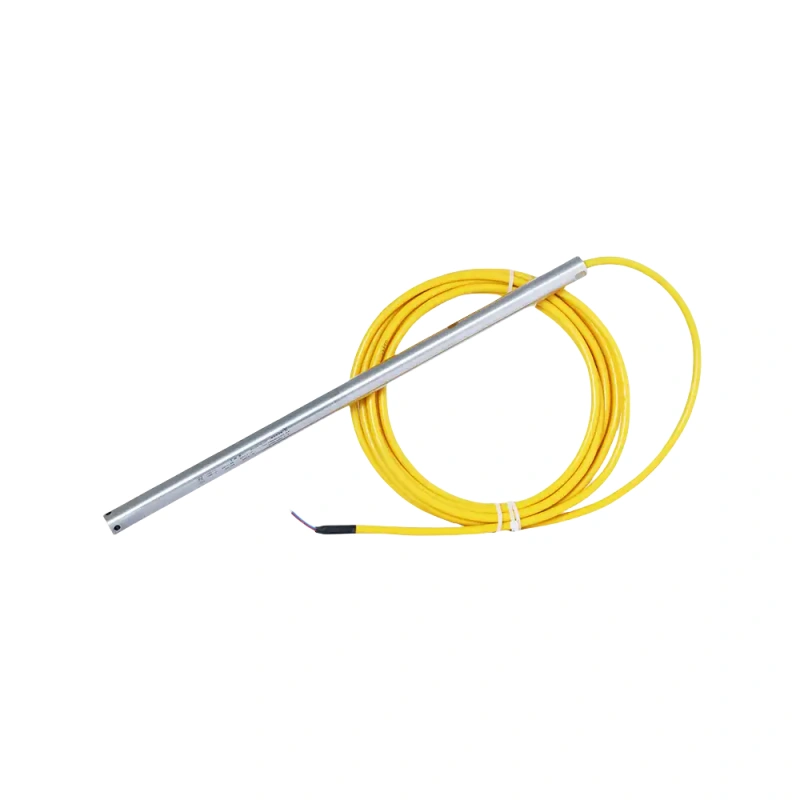
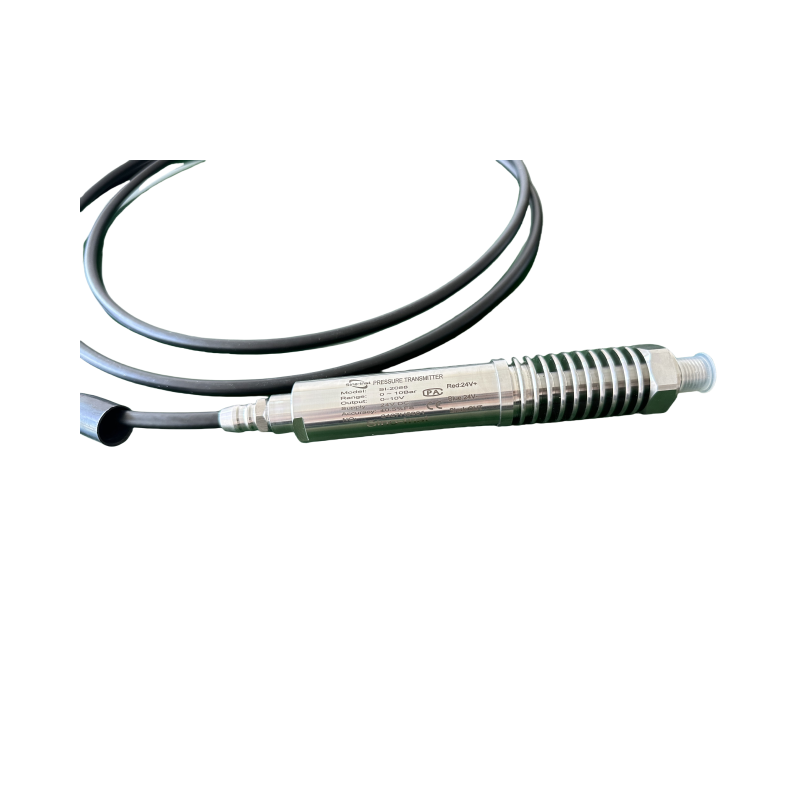
Applications of Underwater Pressure Sensors
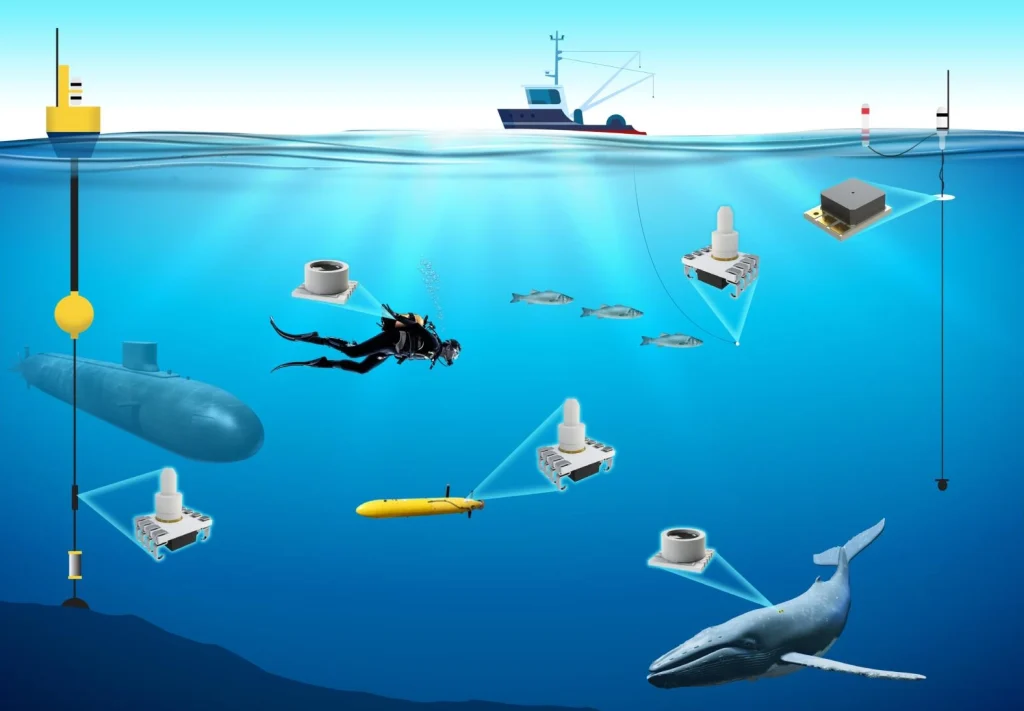
Underwater pressure sensors are extensively employed in the pressure monitoring of submersible equipment, primarily serving the following purposes:
1.Deep-sea exploration and research
Deep-sea exploration is a crucial area of current scientific research. Underwater pressure sensors can accurately measure changes in water pressure, providing scientists with data on water depth and pressure, as well as their variations.This information is extremely important for marine geology, the study of marine ecosystems, and the exploration of seabed mineral resources.Water pressure sensors provide researchers with real-time, accurate information on water pressure, enabling them to analyse the impact of underwater environmental changes on biological habitats.
2.Underwater Engineering
Subsea pressure sensors are a vital part of underwater engineering. For instance, when it comes to extracting oil and gas from the seabed, these sensors keep an eye on pressure changes within the wells. This means engineers can make changes to how they extract things quickly, making sure they’re safe and efficient.Subsea pressure sensors are also used to monitor and maintain subsea pipelines and detect faults in submarine cables.
3.Diving operations and deep-sea diving equipment
Deep-sea diving equipment typically needs to withstand immense water pressure, especially in deep-sea regions.Underwater pressure sensors are able to monitor the external pressure on the submersible in real time, thereby assisting control personnel in comprehending the depth at which the equipment is operating and preventing the submersible from malfunctioning due to excessive pressure.Pressure data effectively prevents equipment damage and ensures the safety of both divers and the equipment.
4.Underwater robots and automated equipment
Underwater robots play a crucial role in subsea operations, performing various tasks such as exploration, salvage, and maintenance. These robots use underwater pressure sensors to monitor pressure, so they can operate normally in high-pressure environments and provide real-time feedback on their status and performance. If abnormal water pressure changes are detected, the system automatically triggers an alarm, allowing for timely adjustments to the robot’s operating conditions.
5.Offshore engineering and subsea pipeline inspection
Subsea pipelines, platforms and other facilities in marine engineering must withstand prolonged exposure to water pressure.Pressure sensors can be employed to monitor the pressure conditions within these installations. By analysing the data transmitted by these sensors, engineers can detect issues such as leaks, bending or damage occurring within the pipelines.
Factors to consider when selecting an underwater pressure sensor
Liquid properties
Density: The thickness of the liquid directly affects the pressure at a certain depth, which then affects how accurate the level reading is.
Temperature: To get accurate readings, it is necessary to compensate for changes in the liquid’s density caused by temperature.
Chemical Compatibility: You also need to make sure the sensor materials can handle the liquid – you don’t want corrosion or fouling!
Installation Precautions
Tank geometry: The way the tank is shaped affects how the pressure is spread and how accurate the measurements are.
Where it should be installed: Where the sensor is in the tank affects how accurate the liquid level readings are. Ease of maintenance: Consider the ease of installation and maintenance of the sensor.
Work depth
The operating depth of an underwater pressure sensor refers to the maximum depth at which the sensor can function properly. This parameter is closely related to the sensor’s waterproof design and affects its applicability in deep-sea environments.Different types of underwater pressure sensors have significantly different maximum operating depths, which generally indicates the structural strength and pressure resistance of the device. For some special applications, such as deep-sea exploration, sensors are required to withstand even greater water pressure.
Accuracy and sensitivity
The accuracy of an underwater pressure sensor refers to the magnitude of the deviation between its measured value and the actual value. This parameter determines the sensor’s application scenarios. Take marine environmental monitoring, for example.That needs sensors that can make highly accurate measurements. Sensitivity, on the other hand, is all about how well a sensor can respond to changes in its environment. Sensors that are highly sensitive can pick up tiny changes more accurately, so they’re better suited to complex and ever-changing underwater environments.
Response Time
Since underwater pressure sensors usually need to operate continuously over long periods of time, power consumption is a crucial factor that affects their performance and range of applications. Lower power consumption enables the sensor to monitor for longer, particularly when it relies on battery power.A long response time can lead to delays in real-time monitoring data, affecting the efficiency of subsequent decisions or reactions.
Power Consumption
Since underwater pressure sensors usually need to operate continuously over long periods of time, power consumption is a crucial factor that affects their performance and range of applications.Lower power consumption enables the sensor to monitor for longer, particularly when it relies on battery power.Controlling power consumption not only affects the device’s battery life but also reduces energy consumption and extends the device’s lifespan.
FAQ
How to select the optimal output signal?
Piezoresistive elements are connected in a Wheatstone bridge configuration. The bridge’s ability to provide a changing differential voltage output to the electronic amplifier is due to the varying applied pressure.Selecting the output signal requires understanding the application, environment, supply voltage and its regulation, as well as the system’s capability to read and process the signal.Sion-Inst pressure sensors offer multiple analogue and digital output signals, including our wireless sensing capabilities.Common output signals: 4-20mA, 0.5-4.5V, 1-5V, RS-485 (with SDI12 protocol), 10mV, 20mV, 0.5-2.5V, 0-10V
How to protect pressure sensors?
Firstly, prevent peak voltages from occurring. Inspect the piping system and adjust the opening and closing speeds of valves where possible.
Second,install accumulators within the piping system to absorb pressure fluctuations.
Third,employ pressure sensors with a greater measurement range. This will provide higher overload pressure and burst pressure ratings, but will reduce the achievable resolution of the sensor.
What is zero-point drift in pressure sensors?
Zero-point drift in pressure sensors refers to the phenomenon of irregular, slowly changing voltage appearing at the output terminal when the amplifier input terminal is short-circuited. The main causes of zero-point drift are the influence of temperature changes on transistor parameters and power supply voltage fluctuations. In most amplifiers, the zero-point drift of the first stage has the greatest impact. The more stages and the higher the amplification factor, the more severe the zero-point drift.
Sion-Inst, as a professional company in the field of sensing and control, possesses extensive industry experience and profound technical expertise.We are committed to providing our customers with high-quality sensor hardware solutions to continuously create long-term value and help them achieve business growth.