Guide for Different Types of Natural Gas Flow Meters

Table of Contents

Natural gas flow meters are essential pieces of kit in energy metering, keeping tabs on how much gas is moving through a pipeline at any given moment and tracking total usage over time. Whether it’s an industrial boiler, a city gas gate station, trade settlement, or process control, getting the measurements right matters because it hits both the bottom line and safety on the job.

Core Characteristics of Natural Gas

Natural gas is a combustible gaseous fossil fuel that sits underground in geological formations. Methane makes up the bulk of it, but there’s also ethane, propane, carbon dioxide, nitrogen, plus trace amounts of water and other contaminants mixed in.

It generally moves through pipelines for delivery and use, and it pulls double duty as both a relatively clean-burning fuel and a raw material for chemical production.

1. High Compressibility: Methane is the main component, so natural gas compresses a lot. Its volume changes sharply with even small shifts in temperature and pressure, meaning the physical state is constantly shifting when operating conditions move even slightly.

2. Sensitivity to Operating Parameters: Density and flow rate are heavily tied to temperature and pressure. Load swings on the pipeline, pressure tweaks, and ambient conditions all keep knocking the physical state around, so the operating parameters never sit still.

3. Variations in Composition: Gas from different wells or fields doesn’t have the same recipe, and it carries various impurities. Extraction and purification processes shift the component ratios around, which directly knocks density and the compression factor out of whack.

4. Low Viscosity and High Flowability: Natural gas is thin and slippery, so it moves fast and doesn’t put up much resistance. Flow patterns keep shifting around, and it flip-flops between laminar and turbulent flow at both high and low rates, so the flow state is hard to pin down.

5. Flammable and Explosive, with High Safety Requirements: The explosive limits are wide, so any leak can quickly turn into a dangerous mixture. On top of that, it’s invisible and has no smell, which makes leaks hard to spot. That puts serious demands on explosion-proofing and sealing for any equipment involved.

6. Prone to Impurity Buildup: Industrial-grade natural gas carries dust, moisture, and condensate that tend to stick to pipe walls and instrument internals. Over time, this buildup causes fouling and blockages, which inevitably throws off measurement accuracy.

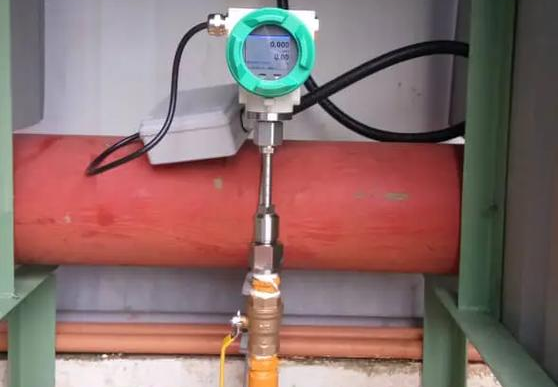
natural gas flow meter 1

What is a Natural Gas Flow Meter?

There are a variety of factors to consider when measuring natural gas flow. These include gas properties, such as its compressibility, temperature and pressure, gas composition, impurities and moisture. There is also the type of meter, environmental conditions, and specific application requirements. These factors ensure reliable and accurate readings in applications, such as legal-for-trade metering, process control and regulatory compliance.

natural gas flow meter 1

How to Measure Natural Gas Flow?

There are a variety of factors to consider when measuring natural gas flow. These include gas properties, such as its compressibility, temperature and pressure, gas composition, impurities and moisture. There is also the type of meter, environmental conditions, and specific application requirements. These factors ensure reliable and accurate readings in applications, such as legal-for-trade metering, process control and regulatory compliance.

Challenges in Natural Gas Flow Measurement

 1. Significant measurement errors from shifting operating conditions:

Natural gas compresses easily, so even small wobbles in temperature and pressure can send volumetric flow rate all over the place.

When you’re converting from actual to standard conditions, any slip-up in picking up those parameters goes straight into the measurement error.

2. Hard to correct for component swings:

When the gas composition shifts, it knocks core metering parameters out of line.

Most instruments are locked in with fixed calibration settings and can’t adjust on the fly, so the readings drift off systematically.

3. Messy flow patterns and poor adaptability:

Natural gas flow tends to be turbulent and keeps switching regimes. Pipes, bends, and fittings often leave the gas flow uneven.

Most meters are built for steady, well-behaved conditions, so accuracy drops and data gets distorted when things get complicated.

4. Blind spots at low flow rates:

When flow is low, the signal is faint and easily drowned out by vibrations and equipment noise.

Meters often don’t have the resolution down at the bottom end, so low flows either get under-reported or missed entirely.

Meters often don’t have the resolution down at the bottom end, so low flows either get under-reported or missed entirely.

5. Accuracy falls off due to impurities:

Contaminants in the gas cause scaling, blockages, and wear on meter internals, knocking calibration out of whack and disturbing the flow profile.

Over time, the measurement errors just keep creeping up.

6. High-pressure explosion-proof requirements narrow equipment choices:

With high-pressure pipelines and flammable media, the safety bar is set high. High-precision meters are tough to fit into these conditions, and the general-purpose explosion-proof options tend to sacrifice accuracy.

High-precision meters are tough to fit into these conditions, and the general-purpose explosion-proof options tend to sacrifice accuracy.

7. Unstable measurement under low-pressure conditions:

Down at the end of the line where pressure is low or slightly negative, natural gas lacks energy and density.

Meter signals fluctuate badly, zero drift becomes a headache, and stability goes out the window.

Gas Turbine Flow Meter with temperature and pressure compensation
Gas Turbine Flow Meter-Natural Gas
Insertion-Turbine-Flow-Meter
Insertion Turbine Flow Meter for Large Pipes
Upgraded Gas Flowmeter-Swirl Flowmeter
Integrated Vortex Flowmeter Flange connection
Integrated Vortex Flowmeter for Gases and Steam with PT Compensation
Wafer-Vortex-Shedding-Flow-Meter-split-temperature-and-pressure-compensation
Wafer Vortex Shedding Flow Meter – Low Installation Cost
gas mass flow meter
Gas Mass Flow Controller

Types of Natural Gas Flow Meters Used for Measurement

Natural gas flow meters can be classified according to their working principle. Here are some common types:

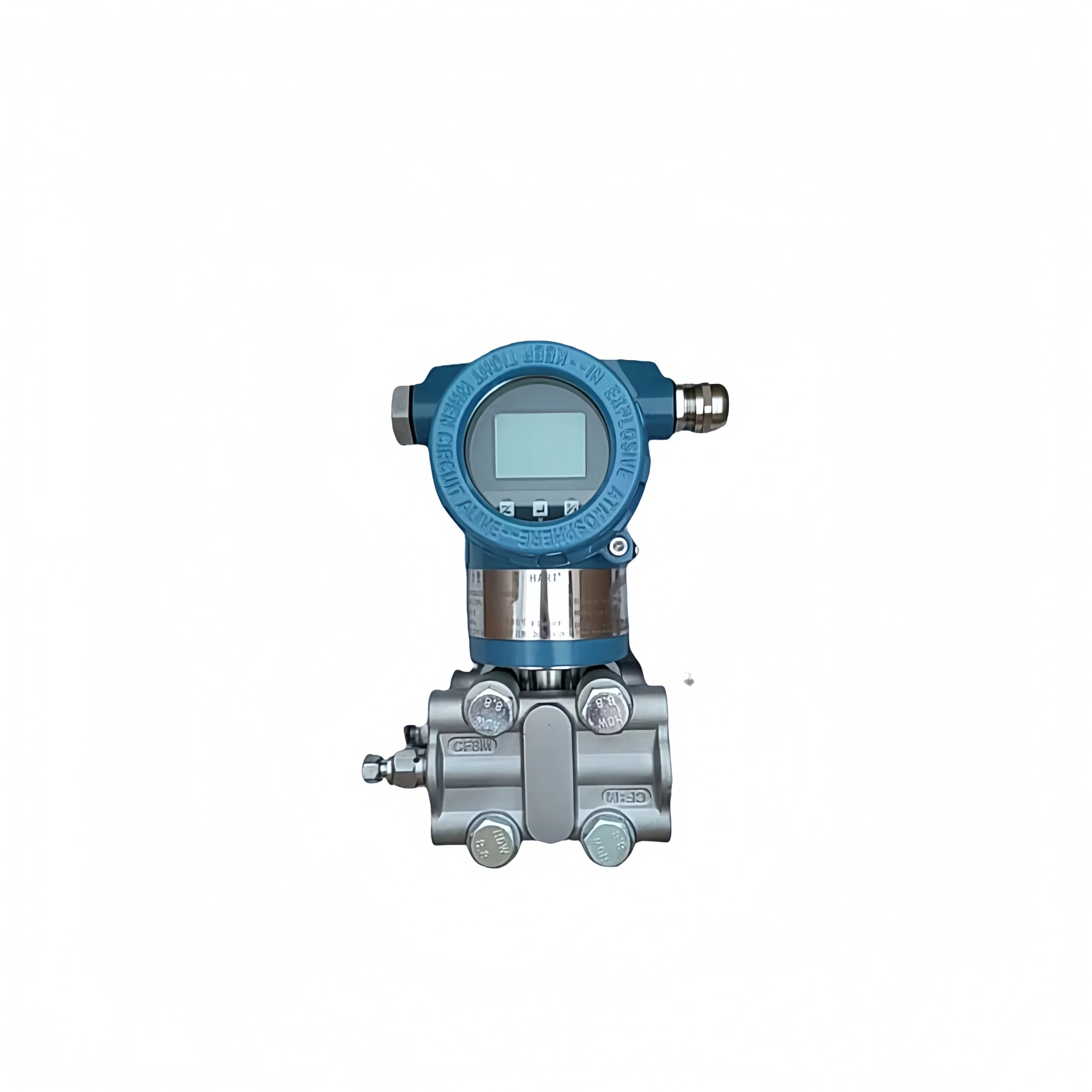
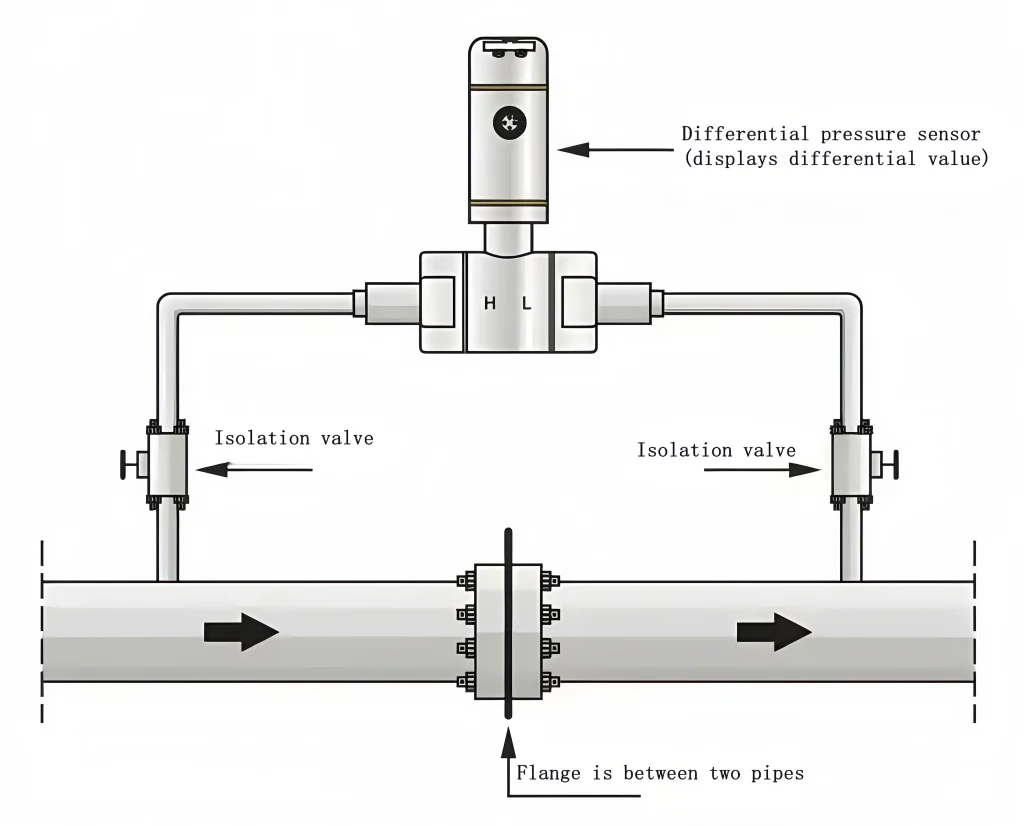
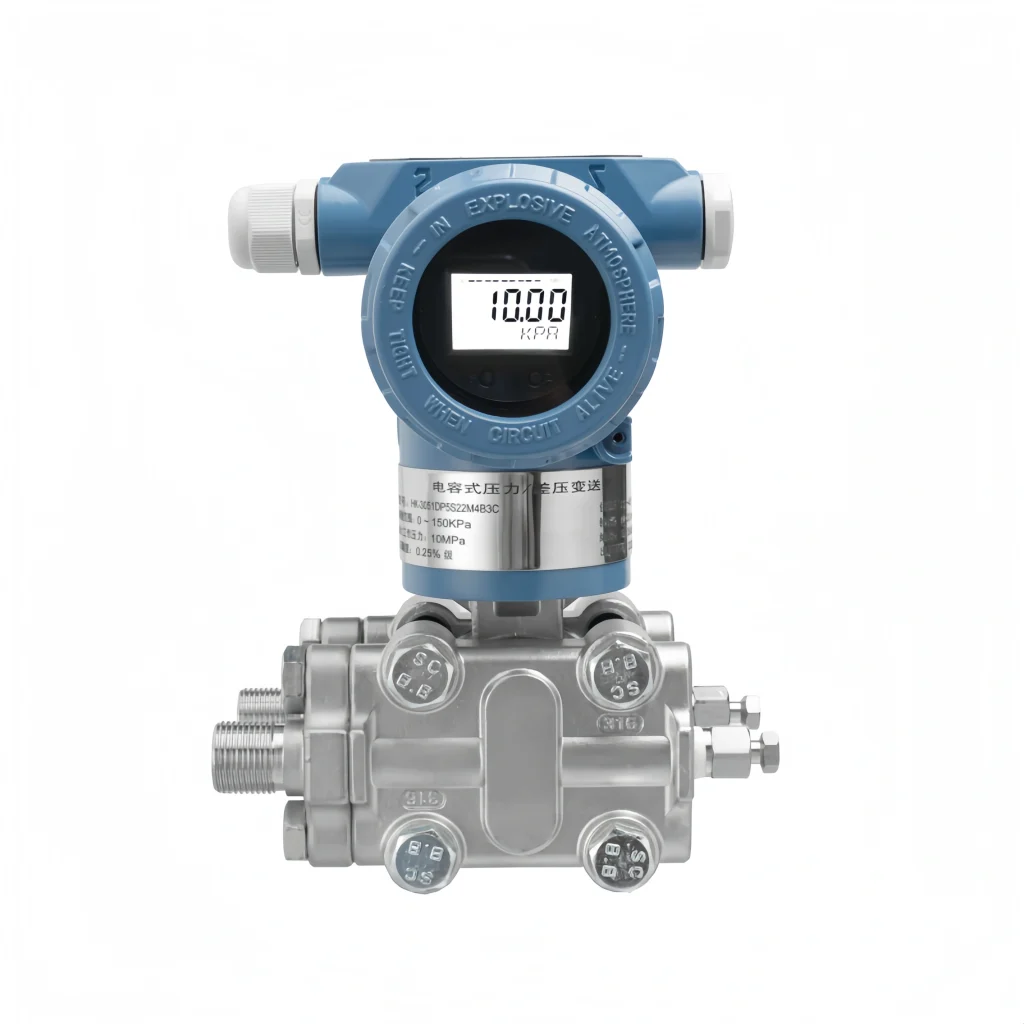
1. Differential pressure flow meter

Working Principle

A differential pressure flow meter creates a pressure drop across a restriction (such as an orifice plate) and measures the pressure difference to calculate flow. Common types include orifice flow meters and venturi flow meters.

Advantages

  • The standard orifice plate structure is adopted, which is easy to copy.
  • Simple structure, stable and reliable performance, long service life and low price.
  • The application range is extremely wide. It is suitable for liquid, gas and steam.
  • General production process and pipe diameter. There are products for all working conditions (pressure, temperature).
  • The implementation and maintenance costs are relatively low.

Disadvantages

  • The nonlinear relationship between differential pressure and flow limits the range of flow that can be accurately measured.
  • Because the instrument signal is the square of the flow, the range is narrow, generally only 3:1~5:1;
  • Proper installation (including straight pipe sections) is critical to accuracy. And it can be complicated.
  • Primary elements (such as orifice plates) may cause clogging or scaling.
  • High pressure loss.

2. Thermal Mass Flow Meter

Working Principle

Thermal mass flow meter is based on the laws of heat transfer. It is an instrument that directly measures the mass flow rate of gas. Thermal mass flow meter is widely used in many industries. Applications such as HVAC systems, biogas monitoring and industrial gas flow measurement.

Advantages

  • Thermal mass flow meter can provide accurate measurement. And is known for consistent results over time.
  • Not affected by pressure and temperature changes.
  • No moving parts.
  • Generally less resistance to flow than other types of flow meter
  • Direct mass flow measurement

Disadvantages

  • Measurement accuracy may be affected by fluid composition and thermal properties.
  • Thermal mass flow meter sensitivity may decrease at high flow rates.
  • Moisture or dust particles can affect measurement accuracy.
  • Limited accuracy compared to other technologies.

3. Ultrasonic Flow Meter

Working Principle

Ultrasonic flow meters use sound waves to measure gas flow rate. They measure the time it takes for the sound wave to travel through the fluid to calculate the volume flow rate. There are two main types: time difference method and Doppler shift method. Ultrasonic flow meters are widely used in various industries. They have accurate non-invasive measurement capabilities.

Advantages

  • Non-invasive installation, suitable for clean and dirty fluids.
  • No moving parts, which reduces wear and tear. Low maintenance costs.
  • High accuracy.

Disadvantages

  • Not suitable for liquids with high concentrations of suspended solids or bubbles.
  • Requires straight, unobstructed pipe sections for best performance.
  • Requires external pressure/temperature compensation for accurate mass flow.

4. Turbine Flow Meter

Working Principle

Turbine flowmeters measure gas flow using a turbine rotor that rotates as the fluid flows through it. Turbine flowmeters excel in measuring medium and high-speed fluids and steady flows. They are especially suitable for clean, non-corrosive gases.

Advantages

  • High accuracy and precision. Accuracy is typically within ±0.5%, and even higher accuracy can be achieved.
  • Wide flow range. Including low and high flow applications.
  • Applicable to liquids and gases.
  • They are simple in design and relatively easy to install and maintain.
  • Low pressure drop.

Disadvantages

  • The physical properties of the fluid have a great influence on the flow characteristics.
  • Requires regular calibration to maintain long-term accuracy.
  • Not suitable for steam.

5. Vortex Flow Meter

Working Principle

Vortex flow meter measures gas flow by detecting the frequency of vortices generated when the fluid flows through a blunt body. Vortex flow meters are widely used and can measure a variety of fluids. Suitable for chemical, petrochemical and energy industries.

Advantages

  • No moving parts, low maintenance cost.
  • High accuracy. Wide range.
  • Low pressure loss.

Disadvantages

  • Not suitable for low Reynolds number measurements.
  • Not suitable for high or low viscosity.
  • Requires sufficient straight pipe section.
  • Low instrument factor (compared to turbine flowmeter).
natural gas flow meters

Parameter comparison of different types of natural gas flow meters

Flow meter type

Working Principle

Accuracy

Turndown ratio

Pressure drop

Cost

Application

Differential pressure flow meter

By measuring the pressure drop across an orifice.

Lower than some flow meters. 3% to 5%.

Limited turndown ratio.

Higher than some flow meters.

Generally lower than Coriolis force.

Custody transfer, industrial applications.

Thermal mass flow meter

Measures mass flow based on heat transfer from a heating element.

Above average. 1% to 3%.

High turndown ratio is usually 100:1 and can be as high as 1000:1.

Low.

Cost-effective.

Industrial processes, energy management.

Ultrasonic flow meter

Measures flow based on an ultrasonic signal.

0.7% to 1%.

Medium. 50:1.

Low.

Expensive.


Custody transfer, wastewater.

Turbine flow meter

Measures velocity based on the rotation of a turbine rotor.

Very good, but depends on operating conditions.

Wider range than some flow meters.

Low.

Moderate.


Custody transfer, industrial applications.

Vortex flow meter

Measures velocity based on vortex shedding.

0.7% to 2.5%.

Good.

Low.

High.

Industrial applications, steam, compressed air.

Applications of natural gas flow meters

Natural gas flow meter is an important instrument used to measure pipeline natural gas flow, playing a vital role in various industries.


  • Energy distribution
  • Process control
  • Regulatory compliance
  • Energy efficiency and auditing
  • Power plants
  • Oil and gas industry

Key Considerations for Selecting Natural Gas Flow Meters

1. Figure out the operating parameters of the medium first, with pipeline pressure, temperature, and flow range at the top of the list. Tell the difference between normal day-to-day conditions and special cases like high pressure, low pressure, or slight negative pressure.

Also check what’s actually in the natural gas and how much junk is mixed in—condensate, dust, moisture, that sort of thing—to see if contamination is going to be a problem.

2. Pick based on flow characteristics, for high-flow, steady transmission setups, differential pressure or vortex meters usually do the job; for low-flow, low-velocity situations, go with instruments that can handle small measurement ranges and steer clear of types that have blind spots.

For pipeline networks where flow keeps bouncing around, choose products that respond quickly and can shrug off interference.

3. Fit the on-site piping and installation reality, choose equipment based on pipe diameter, how much straight pipe you’ve got to work with, and how it needs to be mounted. Some instruments need a long stretch of straight pipe upstream and downstream.

If space is tight, go with models that don’t need as much, and keep in mind how old the pipeline is and whether vibration is an issue.

4. Follow safety rules, since natural gas can go up in flames or blow, you’ve got to use explosion-proof flow meters outdoors, at stations, and underground.

For high-pressure transmission lines, double-check the equipment’s pressure rating and make sure the sealing is up to standard.

5. Think about accuracy requirements, for trade settlement and billing, you need high-precision instruments that can compensate for temperature and pressure in real time and correct for component shifts.

For non-settlement stuff like internal process monitoring and routine checks, standard economical meters are fine.

6. Weigh operation, maintenance, and running costs: judge how well the equipment holds up against scaling and wear given the actual site conditions; if there’s a lot of impurities floating around, favor models that don’t clog easily and are straightforward to service.

Make the final call by looking at purchase price, how much of a headache maintenance is, and whether spare parts are easy to get.

7. Factor in application differences, long-distance trunk lines put stability and pressure resistance first; urban household and branch networks care more about measuring low flows accurately; industrial kilns and chemical gas applications also have to deal with corrosive media and messy on-site environments.

natural gas flow meter 1

Natural gas flow measurement is essential for industries that use natural gas and perform energy measurement and other processes. It involves detecting the volume or mass of gas using various flow meters.

A natural gas flow meter is a precision device used to measure the flow of natural gas in a pipeline. Sino-Inst offers a variety of flow meter products. Including differential pressure, thermal mass, ultrasonic, turbine, vortex flow meters. You can choose the right flow meter type based on your specific application.

Welcome To Share This Page:
Product Categories
Latest News
Get A Free Quote Now !
Contact Form Demo (#3)

Related Products

Related News

Capacitive differential pressure transmitters are key sensing components in process control. When pressure comes at them from both sides, the

Differential pressure sensors are widely used in industrial measurement and control systems to detect pressure differences between two distinct locations. Thanks

As a core sensing device in industrial process control and energy metering, the inline air flow meter measures the volumetric

Target flow meters play a significant role in measurement applications across industrial sectors such as petrochemicals, metallurgy, power generation and

The water flow switch controls the water circulation, water inlet and outlet, water heating, water pump switch control, and the

Capacitive fuel level sensors are a key part of keeping tabs on industrial processes, and they show up just about

The function of a flow switch is to measure and control the flow of a pipeline. By monitoring the medium

An oval gear flow meter is a high-precision flow instrument based on the positive displacement measurement principle. Due to its

There are many things to note when installing flow switches and flow sensors. Proper installation of flow switches and flow

Scroll to Top

Get A Free Quote Now !

Contact Form Demo (#3)