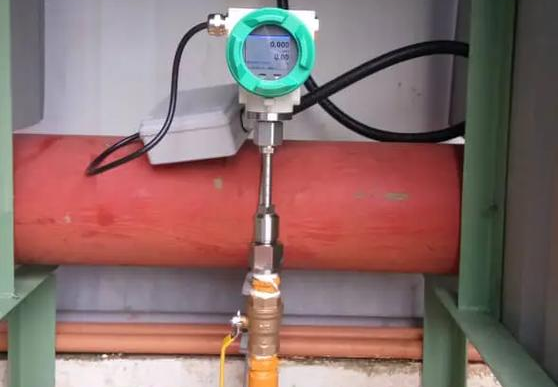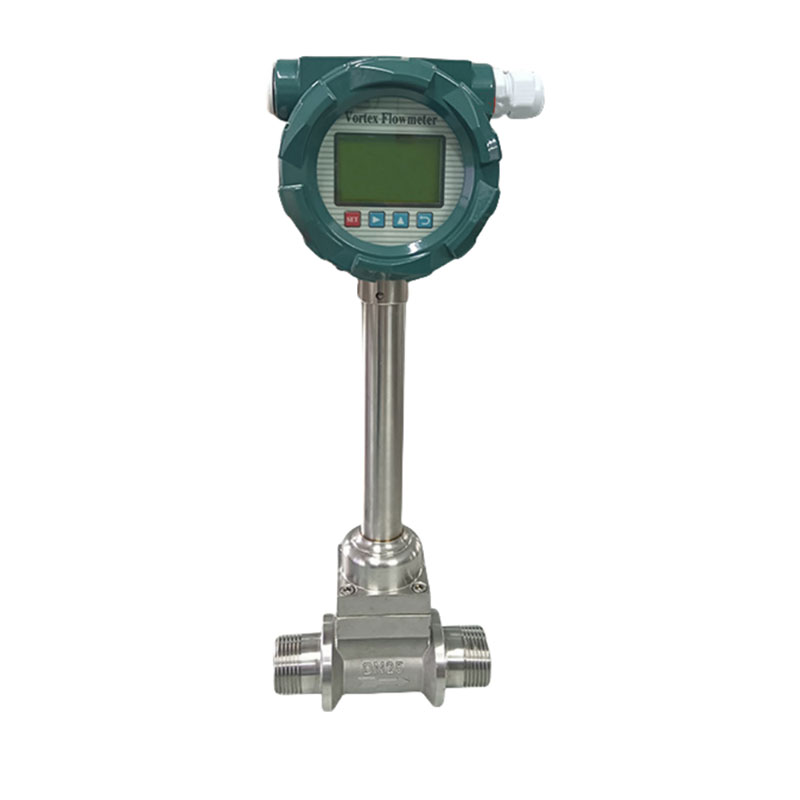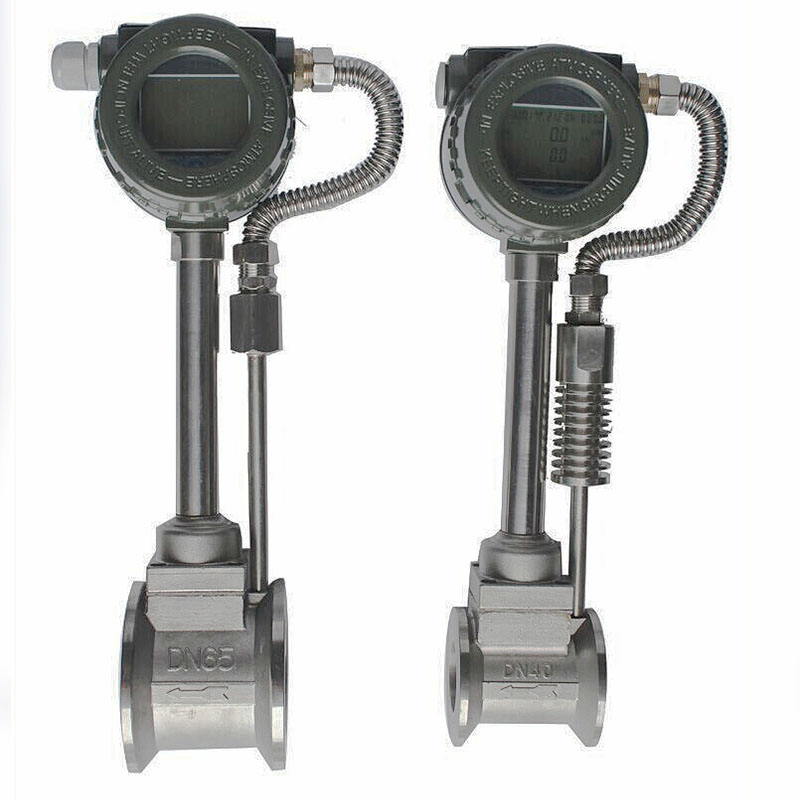
Swirl flowmeters are currently the preferred choice for metering and trade measurement in oilfield and urban natural gas transmission and distribution systems. As a variant of the well-known vortex flow meter, they feature compact dimensions, lightweight construction, and convenient offline calibration. These instruments find extensive application across aviation, aerospace, shipbuilding, nuclear energy, and armaments industries; as well as in mechanical engineering, metallurgy, coal mining, and automotive manufacturing sectors.
Working Principle
The operating principle of the swirl flowmeter is intrinsically linked to the Karman vortex street phenomenon. When fluid passes through the helical swirl generator, it is compelled to rotate violently around its central axis, thereby generating a vortex flow.
As this swirling flow accelerates, its intensity progressively increases upon entering the constriction section. Upon entering the expansion section, the swirl flow starts to rotate again, influenced by the return flow from the guide vane. The frequency of this secondary swirling flow is directly related to the flow rate.
As the fluid moves axially into the flow sensor, the helical blades cause the fluid to rotate. This rotational movement triggers the formation of a vortex flow at the vortex generator’s centre. Subsequently, this vortex stream continuously advances within the Venturi tube.
When you get to the constriction section, the vortex velocity gets a lot faster because there’s a sudden drop in flow. When the vortex stream enters the expansion section, the backflow effect makes it rotate again. During this process, the rotational frequency of the vortex stream is directly and linearly related to the velocity of the fluid medium.
Structural Features
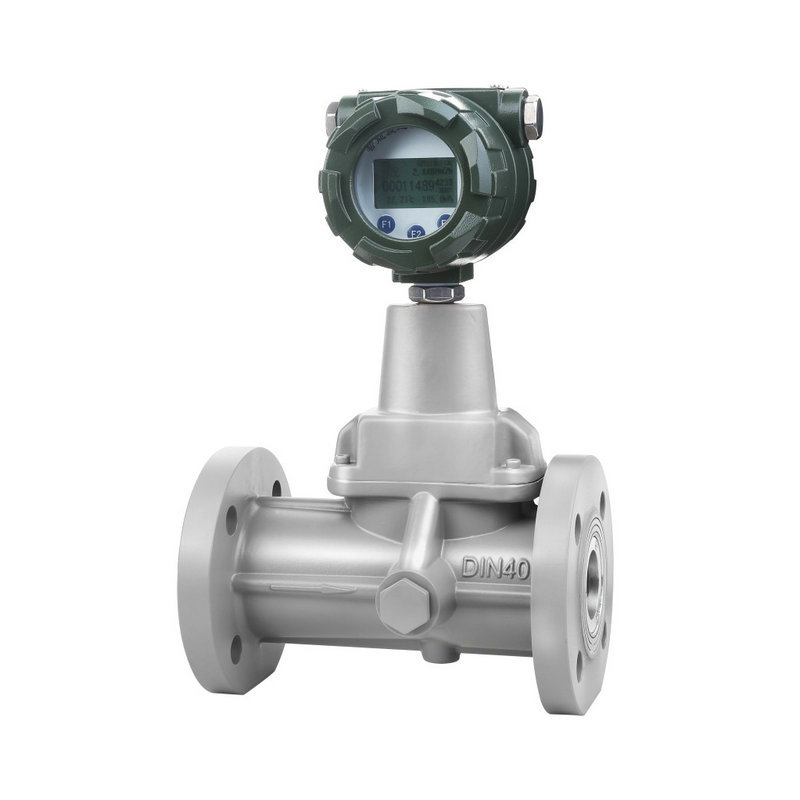
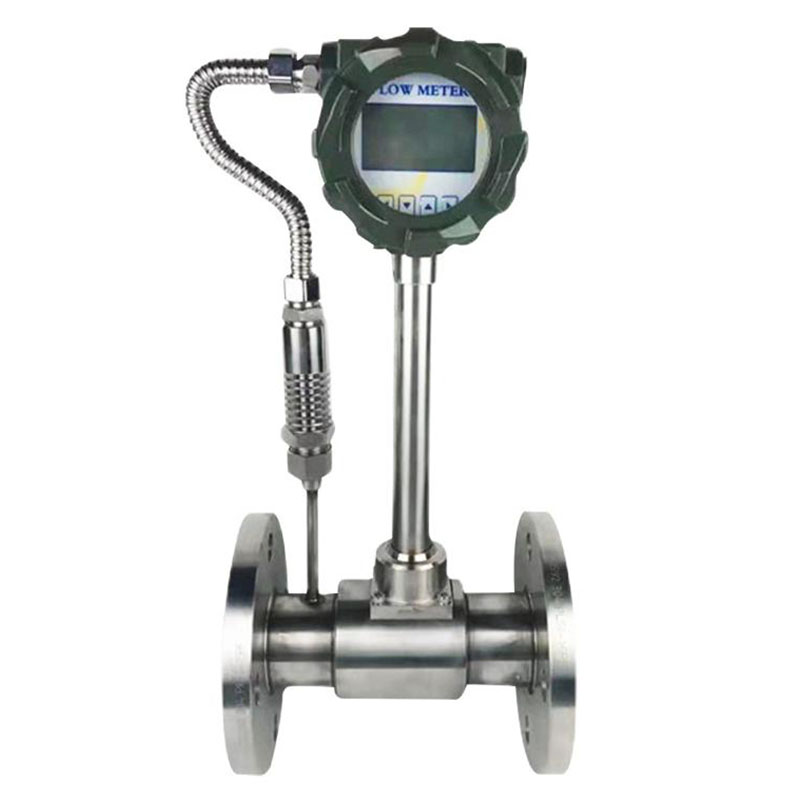
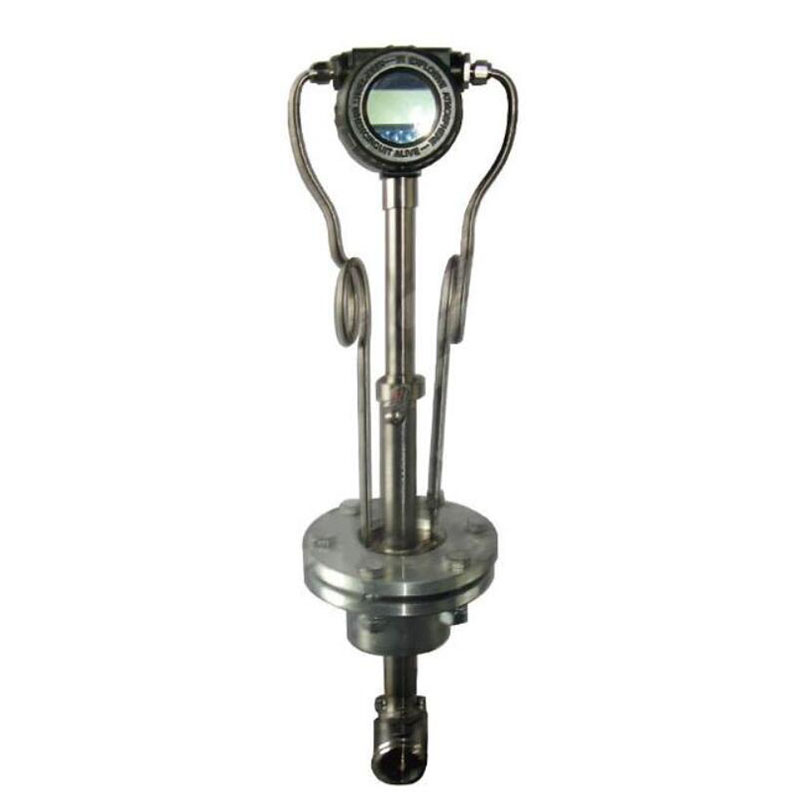
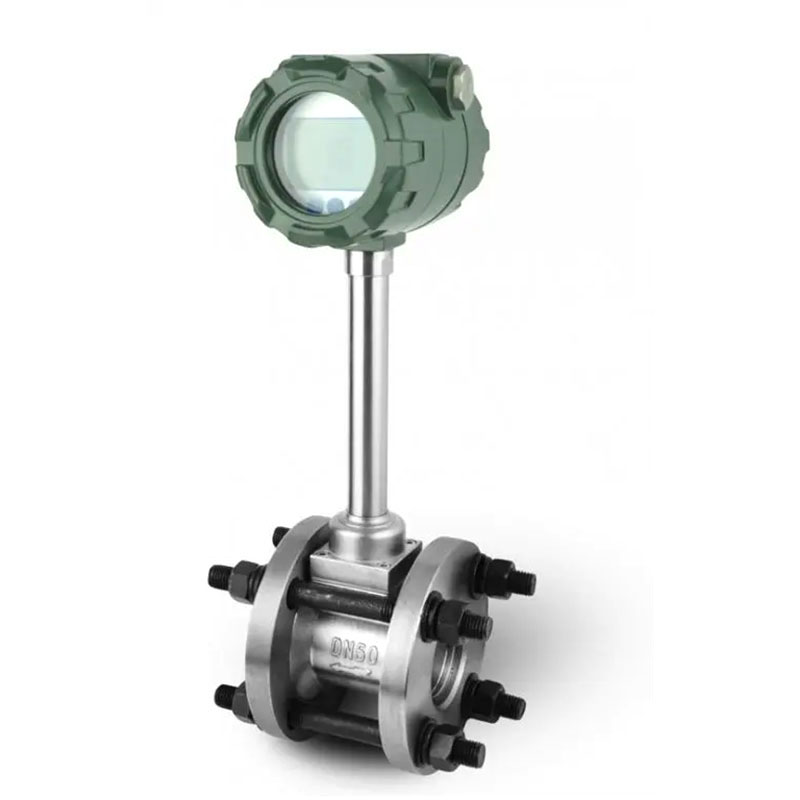
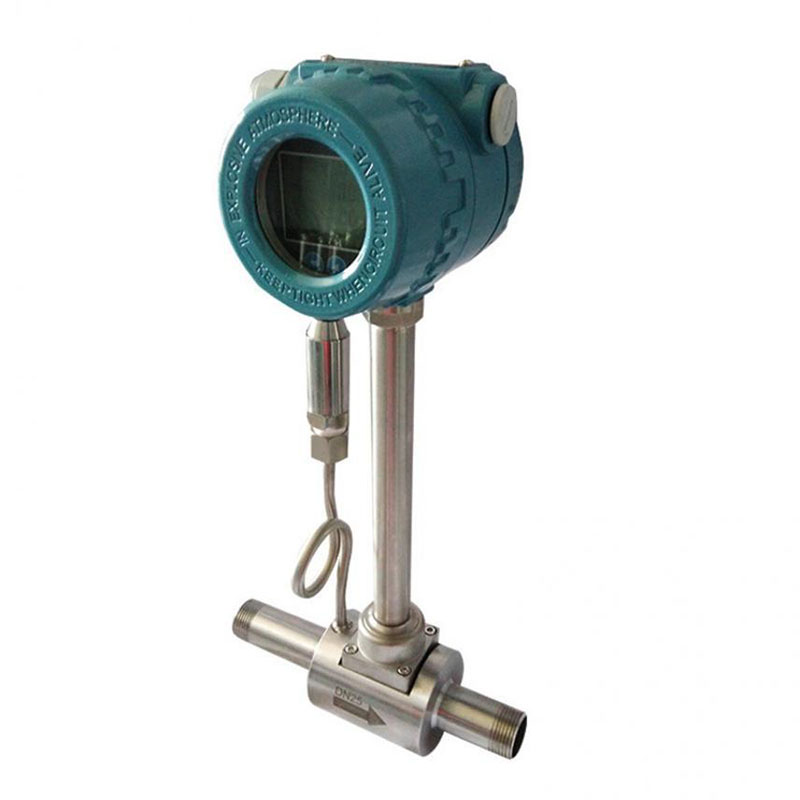
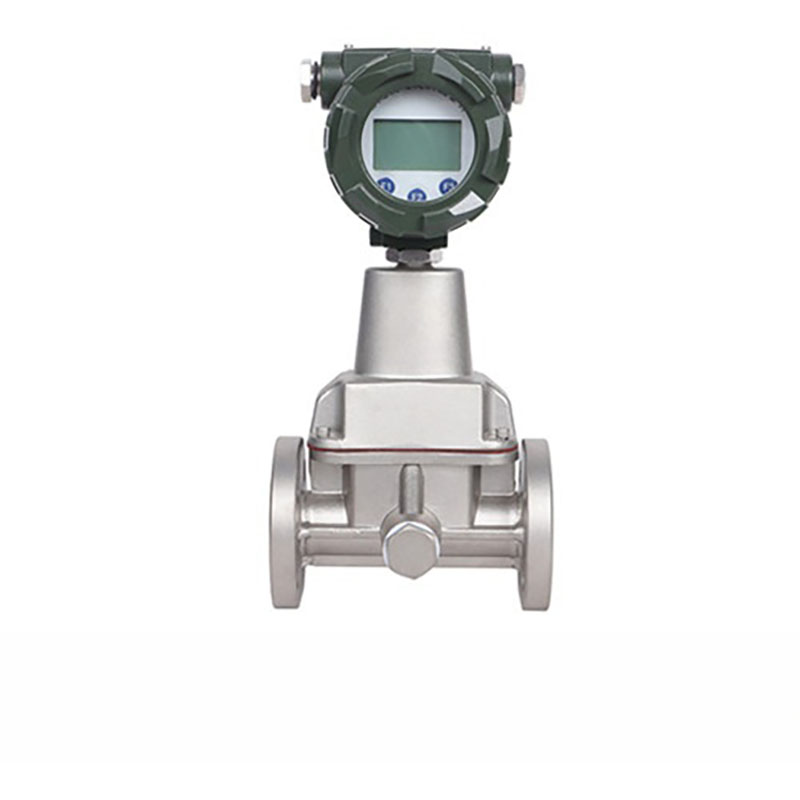
Swirling device: Forcibly induces vortex flow in the fluid, typically employing helical guide vanes.
Detection element: Piezoelectric or ultrasonic sensor, capturing the precession frequency of the vortices.
Integration Unit: Processes signals to display instantaneous flow rate and cumulative flow volume, incorporating a microprocessor for intelligent compensation.
De-vortexing Device: Eliminates downstream vortex interference to ensure measurement stability.
Housing and Sensors: Incorporates built-in pressure and temperature sensors, constructed from stainless steel or aluminium alloy to accommodate diverse operating conditions.
Advantages and Disadvantages of Swirl Flowmeters
Advantages
- Swirl flowmeters make strong vortex signals, which means the signal-to-noise ratio is relatively high. Their lower limit Reynolds number is lower than that of vortex flow meters, making them suitable for measuring across a wide range of flow rates and meeting diverse application requirements.
- This flowmeter exhibits outstanding signal stability and excellent repeatability. Because it doesn’t have any moving parts, it shows excellent resistance to corrosion and maintains stability, which leads to a relatively high level of reliability.
- Due to the robust swirl signal, the vortex flowmeter is insensitive to upstream flow obstructions or velocity distribution distortions. Compared to vortex street flowmeters, it requires shorter upstream straight pipe lengths. Typically, only (35)D upstream and 1D downstream straight pipe lengths suffice for measurement requirements.
- Also, the instrument coefficient K of the swirl flowmeter is 12 times greater than that of the vortex flowmeter. This makes the swirl flowmeter really accurate and stable, so it can handle all kinds of flow measurement needs.
- Multiple output signals are available; it provides a standard 4-20mA current signal output, which can be set up in either a two-wire or three-wire configuration. It also has pulse output capabilities, making it easy to connect to different control systems.
Disadvantages
- Significant pressure loss: The design of the swirl flowmeter means it causes a noticeable drop in pressure.This is because the fluid is forced through the swirl generator and made to rotate, while the vortex flow is accelerated within the contraction section of the measuring tube, both of which contribute to increased pressure loss. What’s more, it takes way more energy to form, accelerate and generate whirls during the vortex precession process than it does to create Karman vortex streets. Consequently, the pressure loss of vortex flow meters is markedly higher than that of vortex street flow meters. Experimental and computational results indicate their resistance coefficient is 4 to 8 times greater than vortex street flow meters, or even higher.
- Application Scenario Limitations: Due to the relatively substantial pressure loss of swirl flowmeters, their application faces certain constraints. Performance may be suboptimal in process pipelines with low static pressure and minimal head difference, as well as in dirty flow measurement scenarios.
- Calibration Requirements: Owing to substantial pressure loss, swirl flowmeters necessitate calibration using high-static-pressure flow standard apparatus. Calibration using atmospheric-pressure flow standard apparatus is only feasible for the mid-to-low ranges of the flow measurement span.
- Manufacturing Complexity: The flowmeter’s vortex generator blades feature a multi-start helical design with relatively thin blade thickness, presenting considerable manufacturing challenges that result in elevated machining costs. Additionally, the measuring tube comprises multiple sections including contraction, throat, and expansion segments, resulting in a complex overall structure.
- Dimensions: The small cone angle of the contraction section necessitates a longer contraction length. This increase becomes more pronounced with larger flowmeter diameters. Consequently, this flowmeter type is unsuitable for flanged clamp-in or insertion configurations.
Practical Applications of Swirl Flowmeters
Swirl flowmeters are suitable for diverse scenarios owing to their high precision, wide measurement range, stable reliability, and corrosion resistance:
Gas metering for natural gas, coal gas, liquefied petroleum gas (LPG), and other fuels: During trade transactions involving natural gas, coal gas, and other energy sources, swirl flowmeters deliver highly accurate flow data, ensuring fair and precise commercial settlements.
Chemical industry: These devices are utilized to gauge the flow of industrial gases, including ammonia, chlorine, and hydrogen, thereby facilitating safety protocols within production workflows.
Petroleum industry: Accurate measurement of gas flows, such as petroleum gas, is crucial throughout oil extraction, refining, storage, and transportation, providing dependable data for both production and management purposes.
Power generation: Precise gas flow measurement is essential for the proper functioning of equipment and the efficient use of energy. Spiral flow meters are designed to fulfill this need, thereby contributing to the stability and efficiency of power generation.
Metallurgical Industry: Real-time monitoring and measurement of blast furnace gas, converter gas, and other gases furnish essential data support for metallurgical production processes.
Coal Processing: The measurement of coal gas and other gases is critical for ensuring the seamless operation of coal processing and the efficient utilization of energy.
You can also use vortex flow meters to measure the flow of low-viscosity, low-Reynolds-number liquids like water and oil, but only in certain conditions.
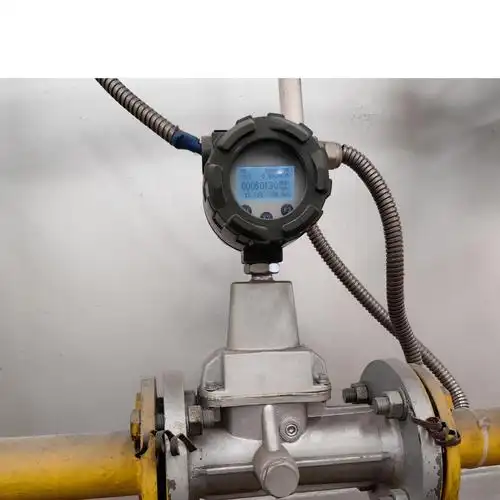
What is the difference between swirl and vortex flowmeter?
Differences in Operating Principles
Vortex flow meters determine flow rate using the Karman vortex street principle. On the other hand, swirl flowmeters use the centrifugal force created by the fluid spinning around to measure flow.
Suitable Fluid Types
Vortex flow meters are appropriate for the measurement of gases, steam, and liquids, demonstrating optimal performance in environments characterized by elevated temperatures and pressures. Conversely, swirl flowmeters are better suited for the measurement of low-velocity, low-pressure gas flows, thereby providing enhanced adaptability.
Installation and Maintenance
Vortex flow meters don’t have moving parts, so they need less maintenance and last longer. Swirl flowmeters, while potentially subject to wear and maintenance demands stemming from fluid characteristics, have a wider range of applicability, accommodating more intricate operational scenarios.
Measurement Accuracy
Vortex flow meters provide a high degree of measurement accuracy and exhibit reduced sensitivity to variations in fluid properties. Nevertheless, measurement inaccuracies may be amplified under conditions of low flow rates or in the presence of bubbles or solid particulates. Swirl flowmeters, in contrast, maintain relatively consistent measurement performance, even at low flow rates.
Item | Vortex Flowmeter | Swirl Flowmeter |
Measuring Principle | Based on Karman vortex street principle; detects vortex shedding frequency | Based on swirl principle; detects swirl precession frequency |
Applicable Medium | Gas, liquid, steam (universal type) | Gas only (clean, dry single-phase gas) |
Measuring Accuracy | ±0.5%~±1.5% FS | ±1.0%~±2.0% FS |
Rangeability | 10:1~20:1 | 10:1~30:1, better at low flow rates |
Pressure Loss | Small | Relatively large |
Straight Pipe Requirement | High (upstream 10D, downstream 5D) | Low (upstream 3D~5D, downstream 2D~3D) |
Vibration Resistance | Average, sensitive to vibration | Good |
Low Flow Performance | Average | Excellent |
High Pressure Adaptability | Good | Excellent |
Moving Parts | None | None |
Main Advantages | Wide medium compatibility, low pressure loss, high temperature & steam resistance | Excellent low-flow performance, short straight pipe requirement, anti-vibration, gas-specialized |
Main Limitations | Sensitive to vibration, weak at low flow rates, high straight pipe demand | For gas only, relatively large pressure loss, limited in large pipe diameters |
Typical Applications | Steam, water, medium & large gas flow measurement | Natural gas, compressed air, low-flow / high-pressure gas measurement |
Selection Criteria
Medium Type: For gas, liquid, or steam measurement, select vortex flow meters; for gas-only measurement, prioritise swirl flowmeters.
Flow Range: For low flow rates and high-pressure gases, select swirl flowmeters; for medium to high flow rates and wide measurement ranges, select vortex flow meters.
Installation Requirements:Insufficient straight pipe runs – select swirl flowmeter;Adequate straight pipe runs – select vortex flowmeter.
Operating Conditions:High vibration, complex flow patterns – select swirl flowmeter;Clean, stable flow field – select vortex flowmeter.
Cost Considerations:Large pipe diameters, multi-medium applications – vortex flowmeter offers better cost-effectiveness;Small diameters, high-pressure gases – swirl flowmeter delivers superior overall benefits.
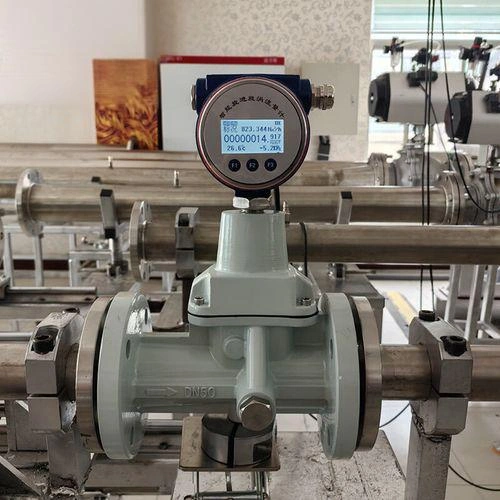
As core equipment in industrial metrology, the reliability and precision of swirl flowmeters directly impact a company’s operational efficiency and industry reputation. Leveraging a mature R&D and production system alongside an efficient after-sales response mechanism, Sion-Inst provides high-quality swirl flowmeters and comprehensive life cycle services to clients across industries. We offer end-to-end support from selection consultation and custom manufacturing to installation commissioning and periodic calibration. Contact us immediately to receive a bespoke, one-to-one selection plan, empowering your enterprise’s growth with professional metrology equipment.