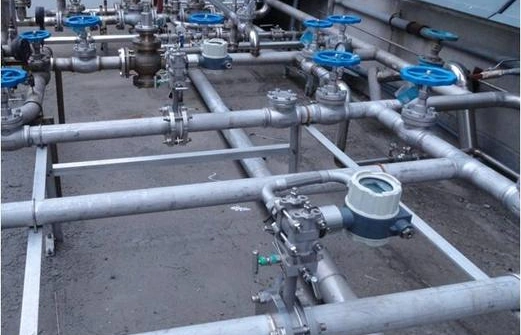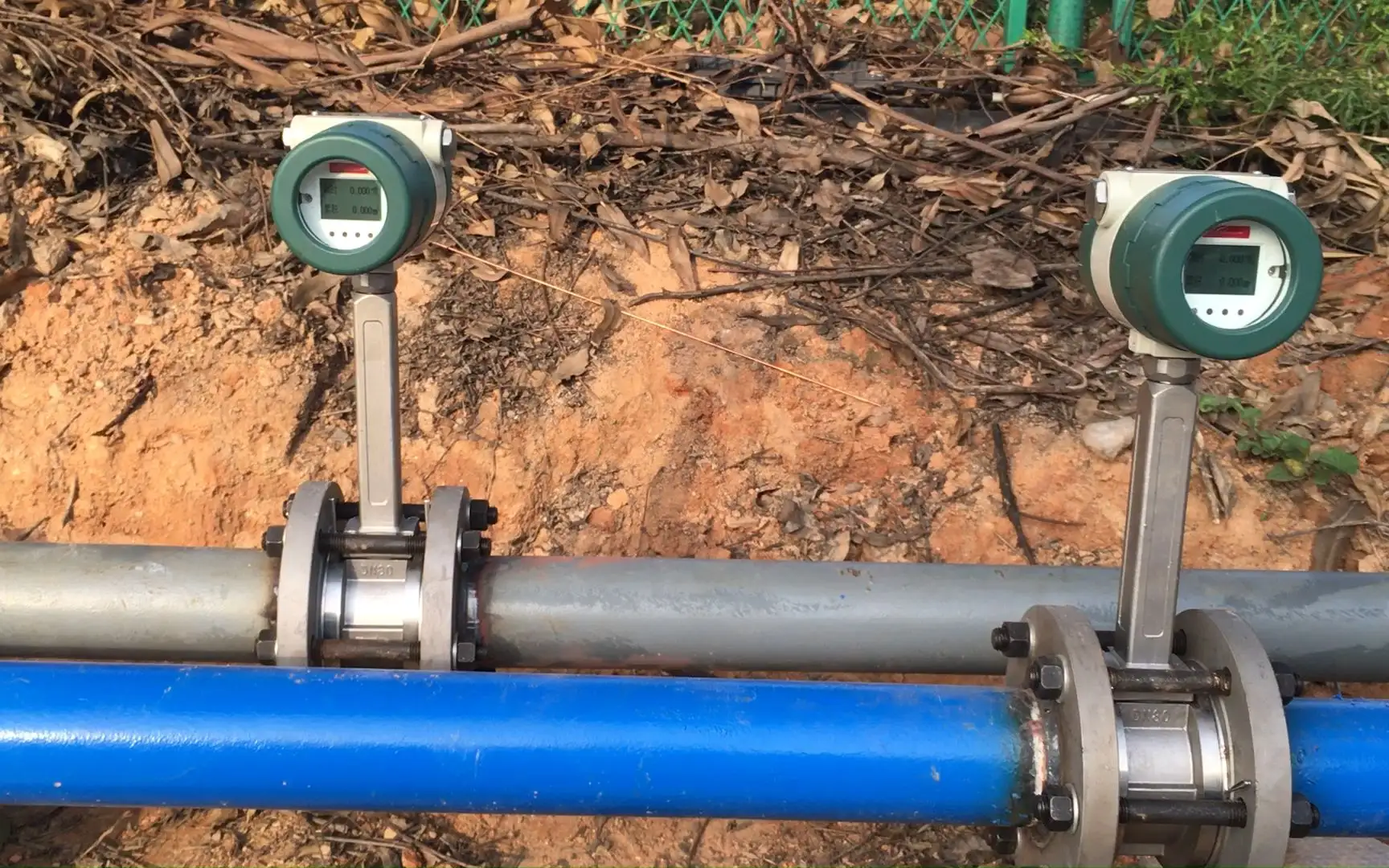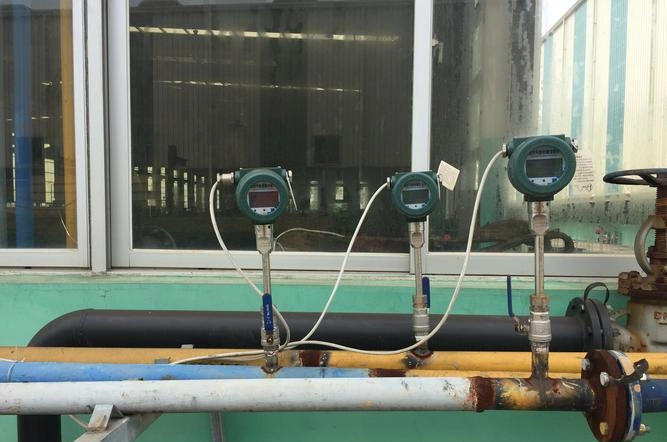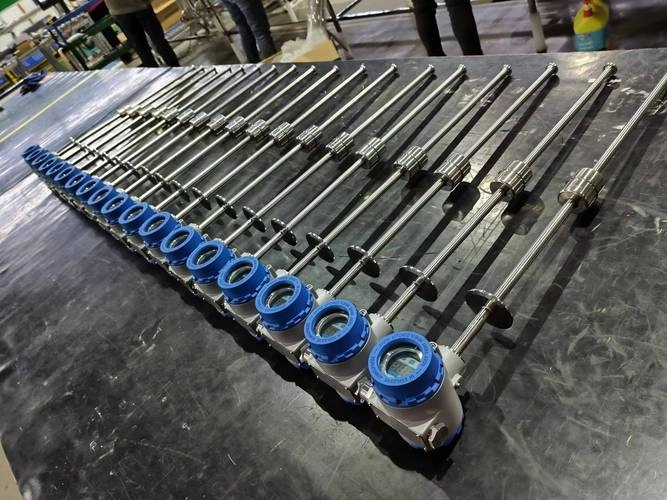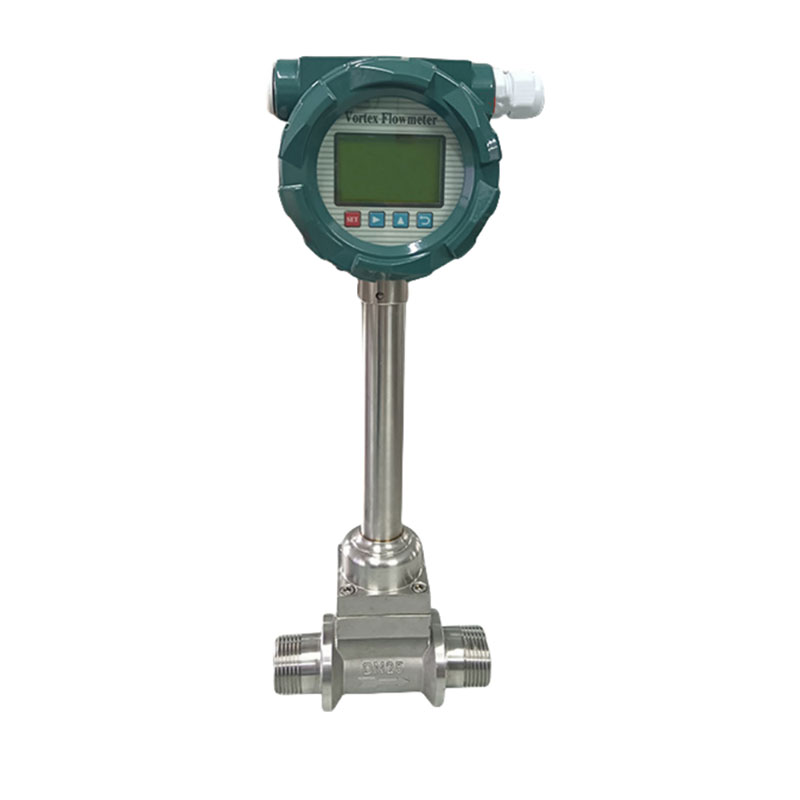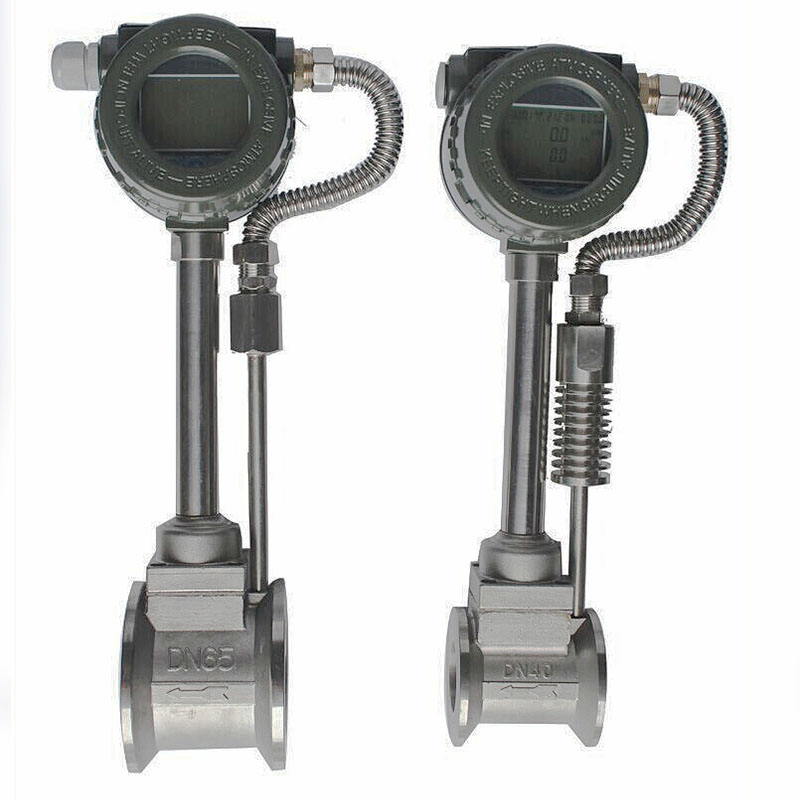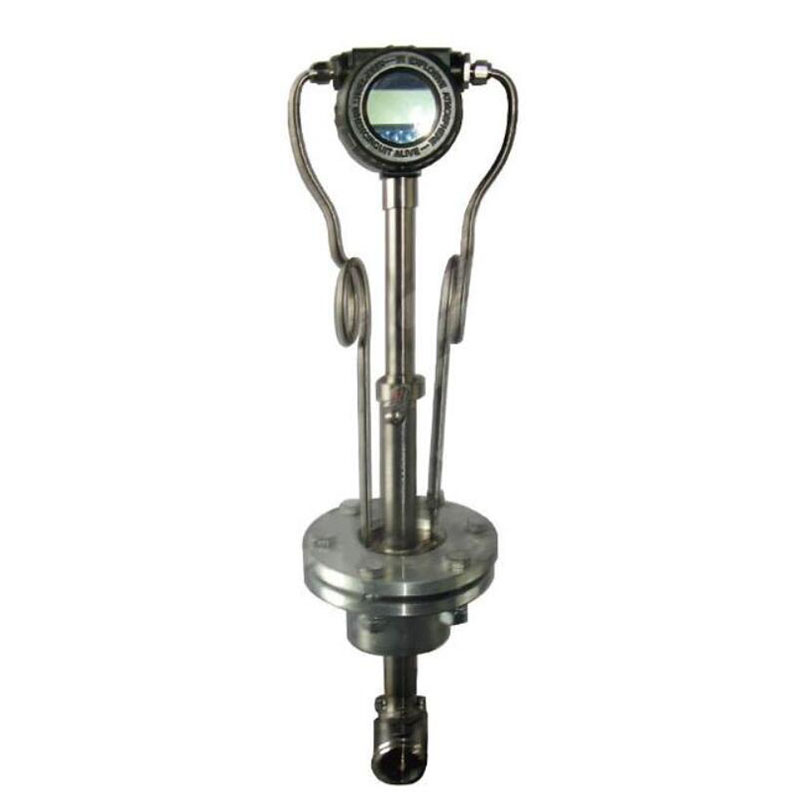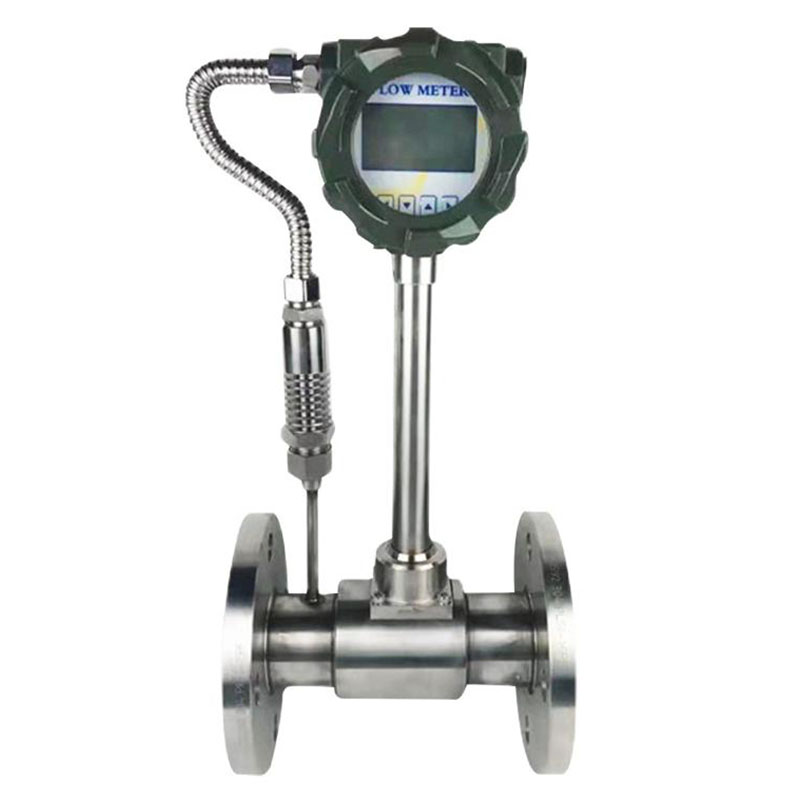
We include temperature and pressure compensation in our vortex flow meters to ensure that changes in fluid temperature and pressure do not affect our measurements. This ensures that the final measurement results, particularly the volumetric or mass flow rates of compressible fluids such as gases and steam, accurately reflect the actual fluid throughput under operational conditions.
What is Temperature Pressure Compensation
As the name suggests, temperature pressure compensation is all about dealing with changes in temperature and pressure. Pressure and temperature are also the two main things that affect flow measurement values. Basically, when the steam gets hotter or the pressure drops, its volume gets bigger, which can mess up the measurement of how much it flows. On the other hand, when the temperature drops or the pressure goes up, its volume gets smaller, which can lead to an inaccurate measurement of the flow.
To make the flow measurements more accurate, you need to ‘compensate’ for the flow rate. This involves considering the effects of temperature and pressure and adjusting the measured flow value to achieve a more accurate reading. This process is often called ‘temperature and pressure compensation’. So, basically, temperature and pressure compensation deals with changes in density by working out the steam density based on the operating temperature and pressure data.
The Imperative of Temperature Pressure Compensation in Vortex Flow Meters
It’s not just optional, it’s abasic requirement for vortex flow meters because of the way the medium works, the metrology involved, and how well it all fits together. It’s the most important thing to make sure you’re measuring things accurately, and you need to think about it in four different ways.
Firstly, it adapts to the properties of compressible media, forming the foundation for precise measurement. Vortex flow meters primarily measure compressible media such as gases and steam, whose volume and density fluctuate significantly with temperature and pressure. Without temperature and pressure compensation, the instrument can only measure the volumetric flow rate under operating conditions. This results in substantial data deviations, failing to reflect actual consumption and rendering the measurement worthless.
Secondly, it safeguards measurement compliance and fairness in critical scenarios. In trade settlements and energy consumption accounting, measurement data impacts both parties’ interests and corporate governance. Temperature and pressure compensation converts operating flow to standardised flow, ensuring uniform and comparable data. This prevents discrepancies and trade disputes, guaranteeing accurate and compliant accounting.
Thirdly, it adapts to complex industrial operating conditions, ensuring stable instrument operation. Dynamic fluctuations in temperature and pressure during industrial production cause accuracy degradation and data distortion without compensation. Temperature and pressure compensation enables real-time parameter acquisition and deviation correction, ensuring precise instrument output across wide operating conditions.
Fourthly, it overcomes the instrument’s inherent limitations. It does this to maximise performance. Vortex flowmeters work on the Karman vortex street principle, where changes in temperature and pressure affect the speed of the flow, causing the signal to go a bit haywire. Temperature and pressure compensation fixes these issues, making sure the instrument achieves its designed accuracy.
Principle of Temperature Pressure Compensation in Vortex Flow Meters
The way these meters work is by detecting the temperature and pressure of the flowing liquid in real-time. This corrects the measured flow rate based on the conditions the liquid is operating in. This means you can calculate volumetric or mass flow rates under standard conditions, so you can avoid measurement errors caused by variations in operating conditions.
The specific principle is grounded in the physical properties of fluids: for compressible fluids such as gases and vapours, density undergoes significant variation with changes in temperature and pressure. Vortex flow meters measure the volume of a liquid as it flows through them. But in industry, we often need to measure the volume or mass of a liquid at a set temperature and pressure, like 0°C and 101.325 kPa. Temperature and pressure compensation uses built-in temperature and pressure sensors to collect real-time parameters. These are combined with fluid property equations (like the ideal gas equation of state or steam density tables) to calculate the operating density. This lets you convert the operating volume flow rate into a standard volume flow rate or mass flow rate.
Methods for Temperature Pressure Compensation in Vortex Flow Meters
Vortex flow meters primarily employ two approaches for temperature and pressure compensation:
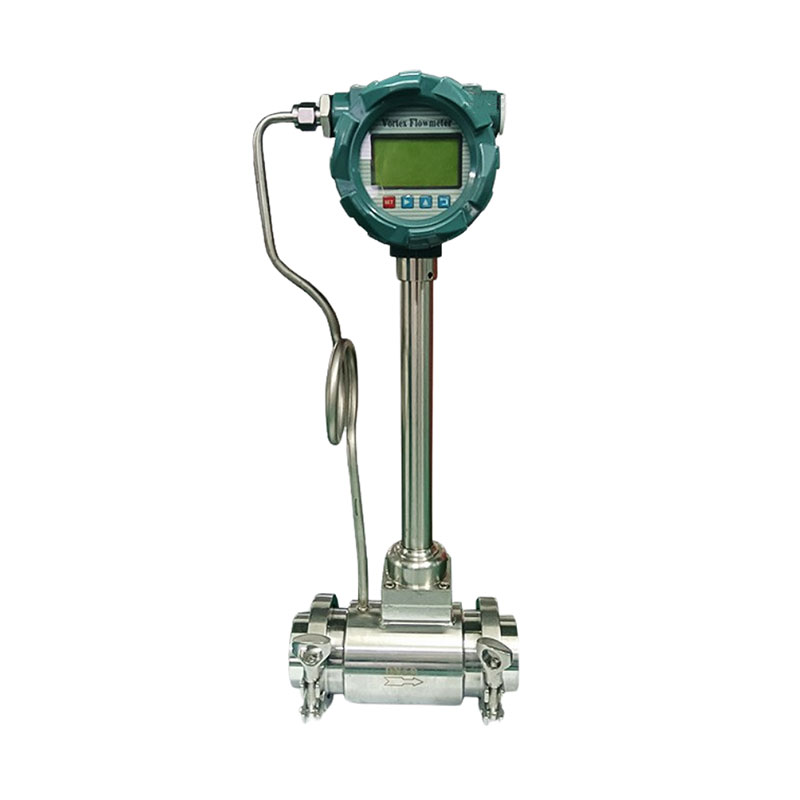
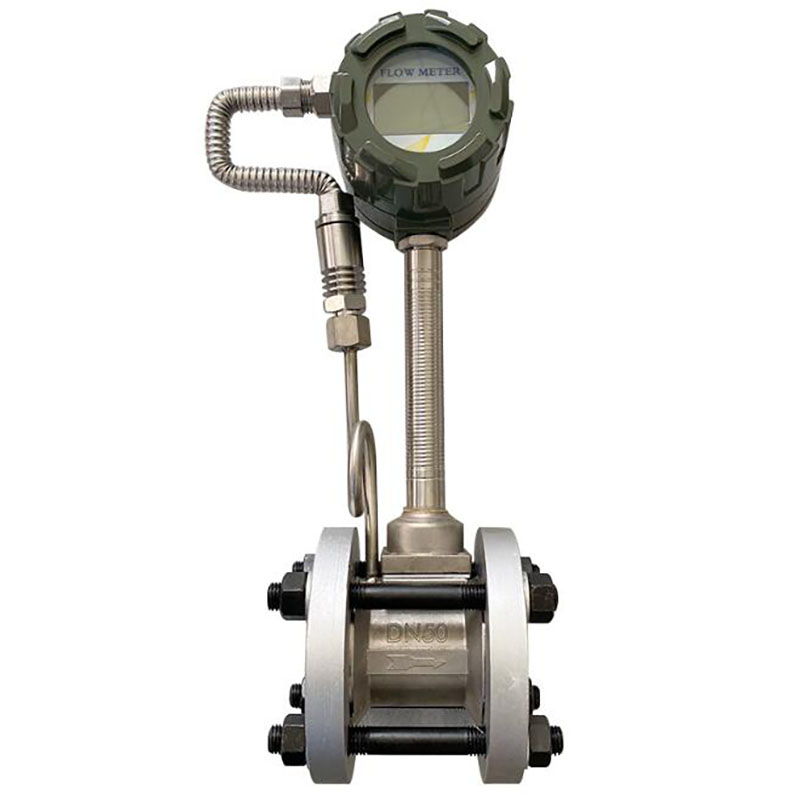
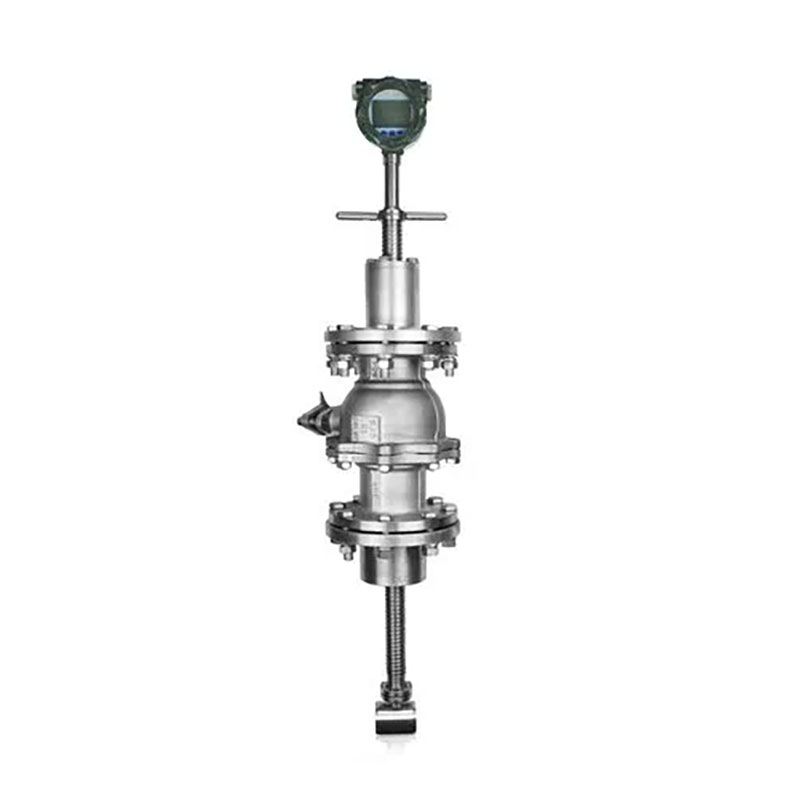
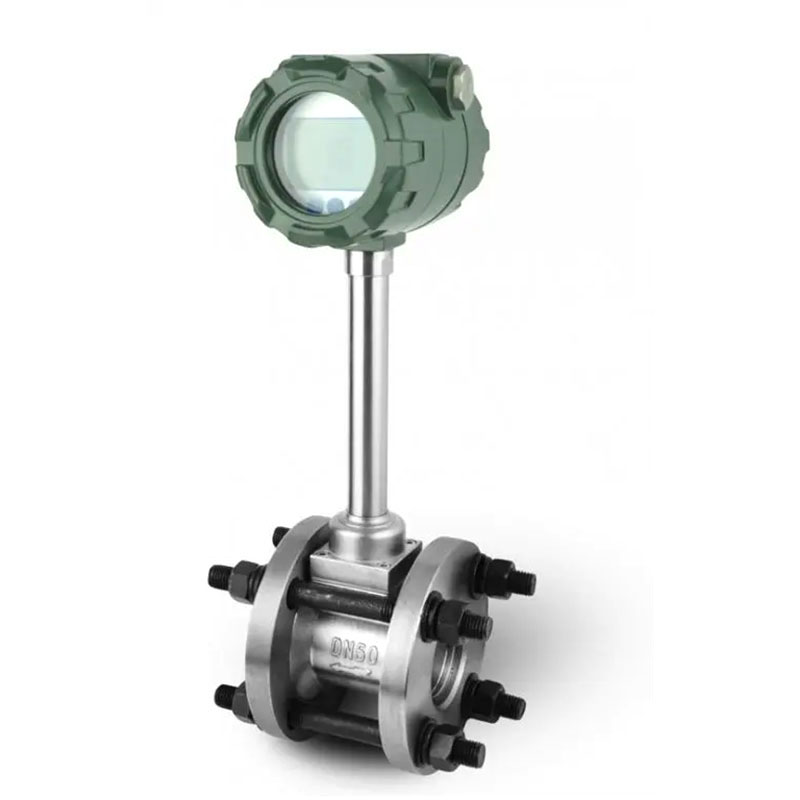
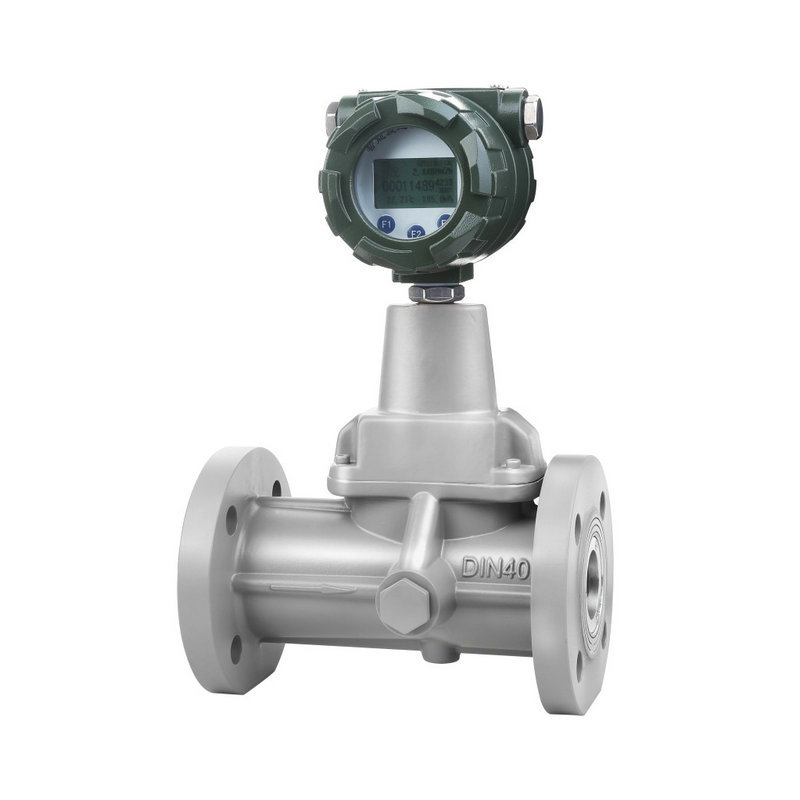
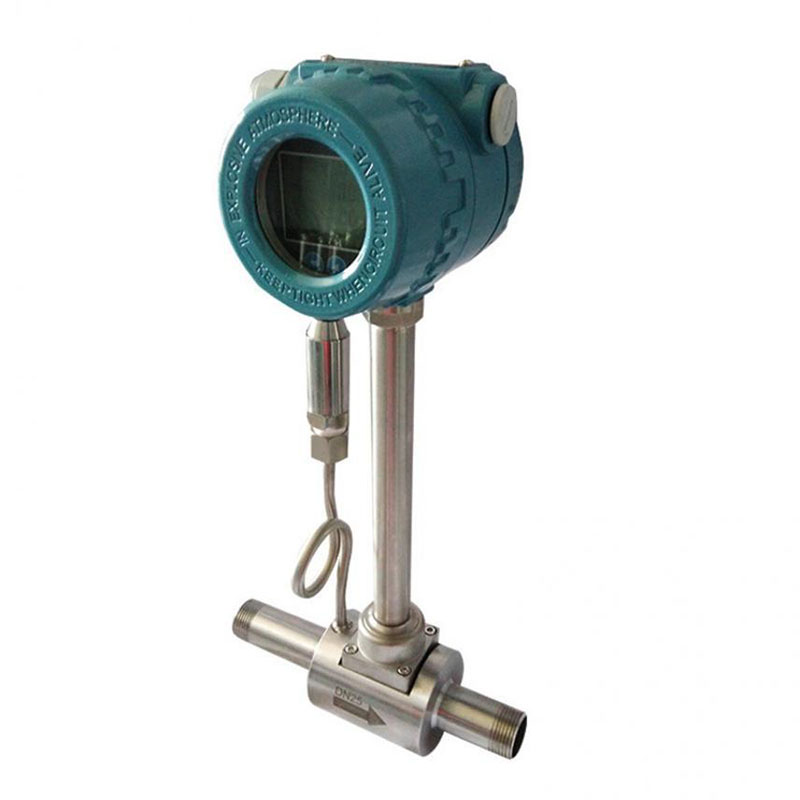
Integrated Temperature Pressure Compensation: The temperature and pressure sensors are built into the flow meter so they can all work together, measure and display things in the same way. This intelligent flow meter incorporates built-in temperature and pressure compensation functionality. The converter directly processes signals measured by the sensors—including volume, temperature, flow rate, and pressure—to achieve on-site display.
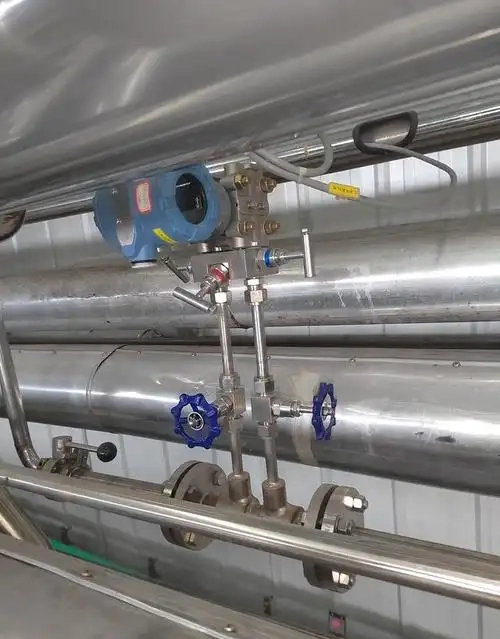
Separate Temperature Pressure Compensation: This configuration comprises four distinct instruments: a dedicated vortex sensor, a separate temperature sensor, an independent pressure transmitter, and a display instrument (flow totaliser). This approach requires the user to install and configure the sensors and transmitters themselves, with data processing and display handled by the flow totaliser.
When is temperature pressure compensation required?
1. When measuring gases, simultaneous temperature and pressure compensation is necessary; gases are typically settled based on volumetric flow at standard conditions. This is because volumetric flow changes when temperature or pressure varies.
2. When measuring superheated steam, simultaneous temperature and pressure compensation is required; steam is generally settled based on mass flow. This is because any change in temperature or pressure alters the steam’s density, consequently changing the mass flow.
3. When measuring saturated steam, you need to make sure you either compensate for temperature or pressure. The amount of steam you get per unit of space or pressure is always the same (check the tables). Knowing either variable allows determination of the steam density.
4. When measuring liquids, pressure compensation isn’t usually needed. For pressures below 5 MPa, only temperature effects are usually considered, meaning temperature compensation is needed for accurate measurement. When we’re doing our usual checks, you might not need to worry about compensation.
Advantages and Disadvantages of Vortex Flow Meters
Advantages:
1. Wide measurement range: You can use it to measure all kinds of fluids, including liquids and gases, and it’s especially good for medium to low flow rates.
2. High accuracy: Offers superior measurement precision compared to other flow meter types, typically within ±1%.
3. No Moving Parts: The operational principle does not rely on moving components, facilitating maintenance and reducing wear and failure risks.
4. High Reliability:They’ve got a simple and durable structure, so vortex flow meters are really stable and reliable even when they’re used for a long time.
5. Strong Adaptability: Capable of functioning across broad temperature and pressure ranges, suitable for diverse harsh environments.
Disadvantages:
1. Sensitivity to fluid viscosity: These meters are sensitive to changes in fluid viscosity; high or fluctuating viscosities may cause measurement errors.
2. Pressure loss:They can cause some pressure loss when you’re measuring it, which might not be great for applications where you need to move fluids around really well.
3. Inadequate for low flow rates: Under low flow conditions, vortex generation may be insufficient, potentially compromising measurement accuracy.
4, Installation requirements: Where you install it is really important, and you’ll need to make sure you’ve got enough straight pipe lengths either side to keep the fluid flowing.
5. The likelihood of interference:Just be aware that strong vibrations, bubbles or solid particles can disrupt the measurement results and affect accuracy.
Applications of Vortex Flow Meters
Industrial Production: Vortex flow meters are used in all sorts of industries – metallurgy, power generation, coal mining, chemical processing, petroleum, you name it. They’re used to measure and regulate the flow rates of various fluids, including gases, liquids and steam, so that production processes can be met.
Energy Measurement: In energy metering, vortex flow meters measure flow of lots of different energy sources, like coal, crude oil, coalbed methane, petroleum gas and natural gas, as well as electricity, coke, manufactured gas, refined petroleum products, liquefied petroleum gas and steam. They can also measure energy-carrying media, such as compressed air, oxygen, nitrogen, hydrogen and water. This provides really important data for managing energy in a scientific way, helping to save energy and reduce how much is used, and making the economy more efficient.
Environmental Protection: In the field of environmental protection, vortex flow meters keep an eye on and control the flow of flue gases, waste liquids and sewage, which helps to improve air and water quality.
Transportation: In transportation, vortex flow meters are key tools for controlling, distributing and scheduling pipeline systems. By measuring the flow of fluids in pipelines, they make sure transport processes are managed and regulated precisely.
FAQ
Do all flow meters require temperature and pressure compensation?
Not all flow meters necessitate temperature and pressure compensation; the requirement depends primarily on the fluid type and metering needs. Gases (such as air, natural gas, coal gas) and steam (saturated steam, superheated steam) must undergo compensation, as the volume of these fluids is significantly affected by temperature and pressure, with deviations exceeding 10%. If you don’t compensate, you’ll get really inaccurate readings.
Liquids with a low viscosity (like water and diesel) might not need to adjust for temperature and pressure if the temperature and pressure are pretty steady and you don’t need to be too precise. But it’s a good idea to think about compensation if there are big changes in temperature or pressure, or if you’re using it for trade settlement or high-precision measurement. You don’t need to do any extra compensation with mass flow meters, as they measure fluid mass flow directly. They’re unaffected by changes in temperature or pressure and already include compensation.
How to differentiate and select electromagnetic, vortex, turbine, and mass flowmeters?
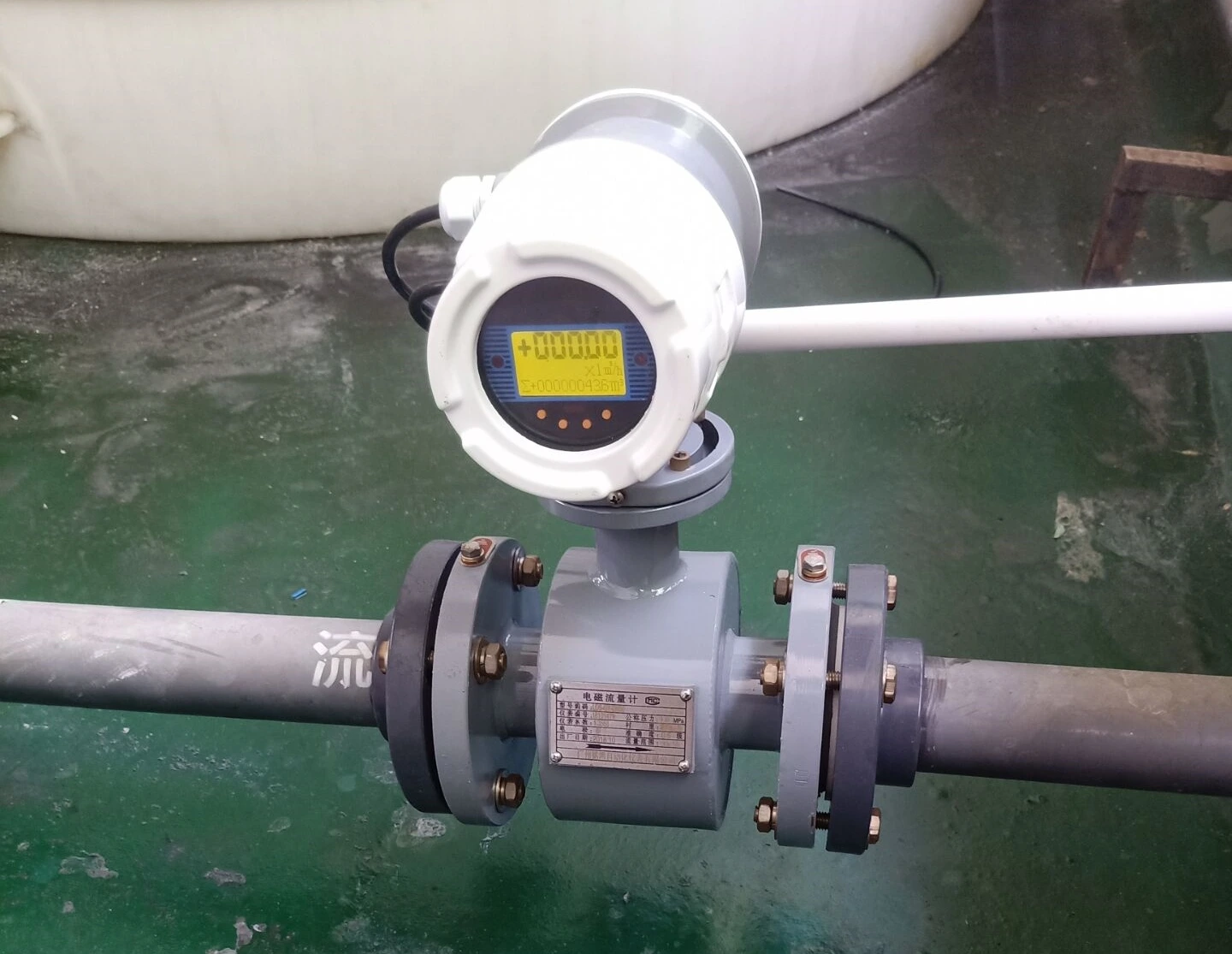
Electromagnetic flowmeter: Measures conductive liquids (water, wastewater, acids/alkalis). Cannot measure gases, steam, or oils.
Vortex flow meters: Measure gases, steam, and low-viscosity clean liquids; the most versatile application.
Turbine flow meters: Measure clean, low-viscosity liquids or gases; high accuracy but intolerant of contamination.
Mass flow meters: This is a direct measurement tool for mass flow that’s great for high-precision applications involving gases, oils or chemicals.
What are the general installation requirements for flow meters?
Straight pipe runs: The distance upstream is usually 10-20 pipe diameters, and the distance downstream is 5-10 pipe diameters.
Flow direction: Ensure arrow orientation aligns with medium flow direction.
Full pipe requirement: Make sure you measure the liquid properly so there’s enough in the pipe to flow (e.g. electromagnetic, ultrasonic).
Avoid interference: Position away from disturbance sources such as pumps, valves, and elbows.
Supporting structure: Large-diameter flowmeters require independent support to prevent pipeline stress.
Grounding: Electromagnetic flowmeters must be properly earthed to ensure accurate measurements.
It’s really important to measure flow accurately and reliably, because this is key to making sure that industrial production is up to scratch, that energy efficiency is optimised, and that costs are kept in check. If you need any help with bespoke flow measurement solutions, professional selection guidance or standardised calibration services, just give us a shout. Sion-Inst has a specialist technical team and lots of experience in implementing solutions in the industry. This means they can deliver one-stop flow measurement services that are tailored, energy-efficient, precise and reliable. This helps businesses to improve their production and develop in a sustainable way.