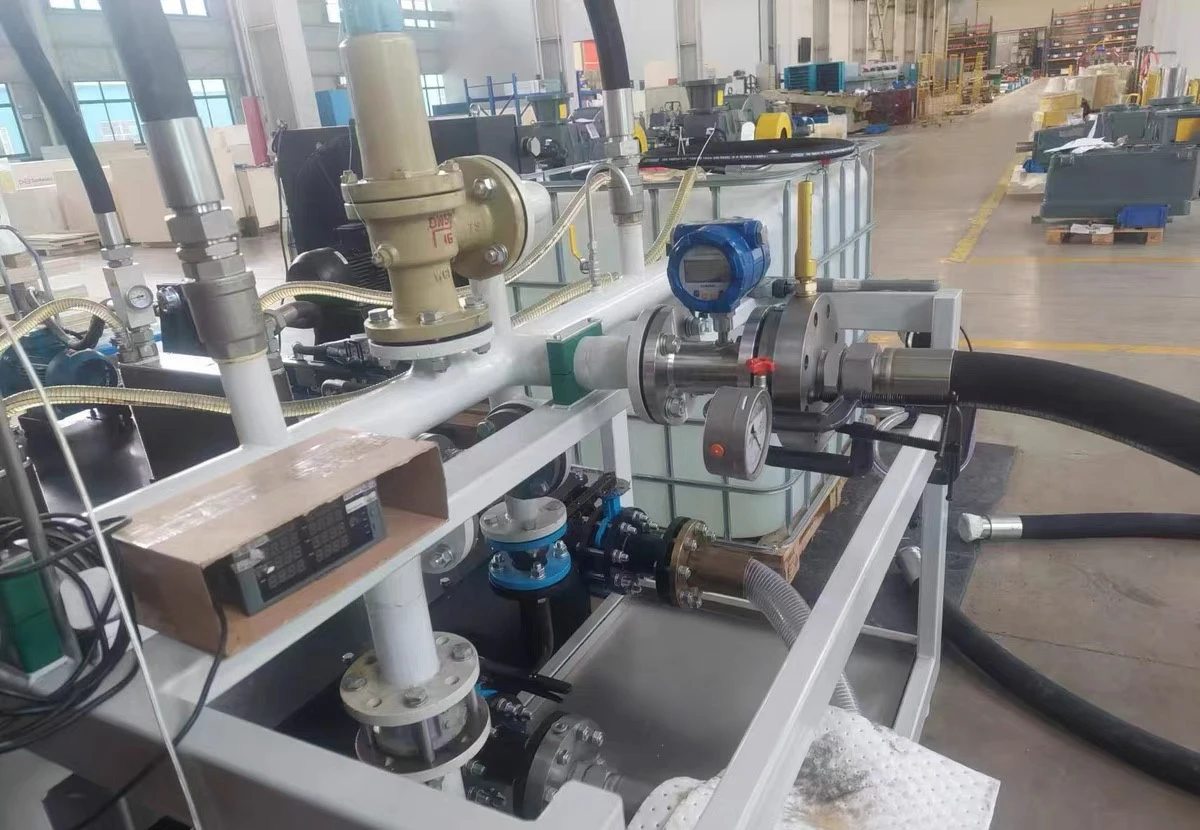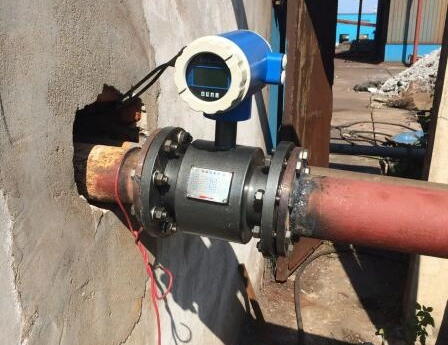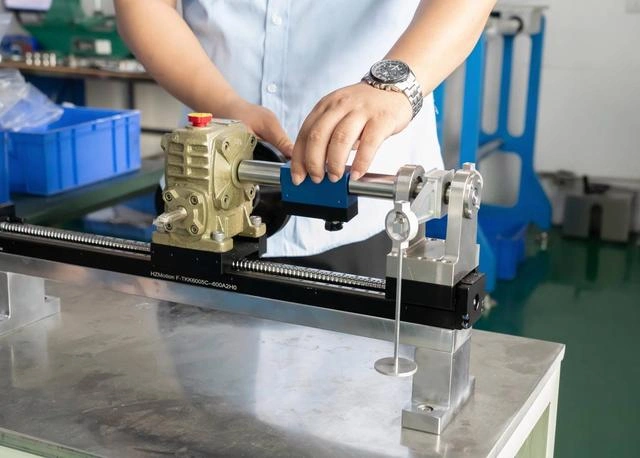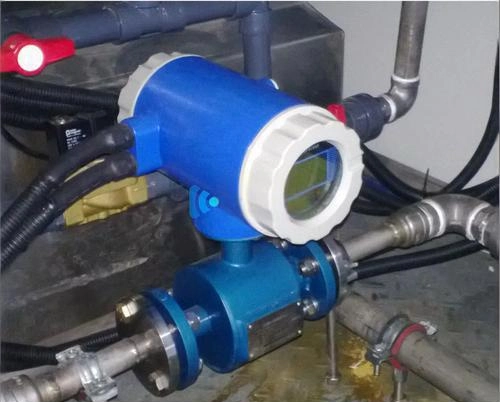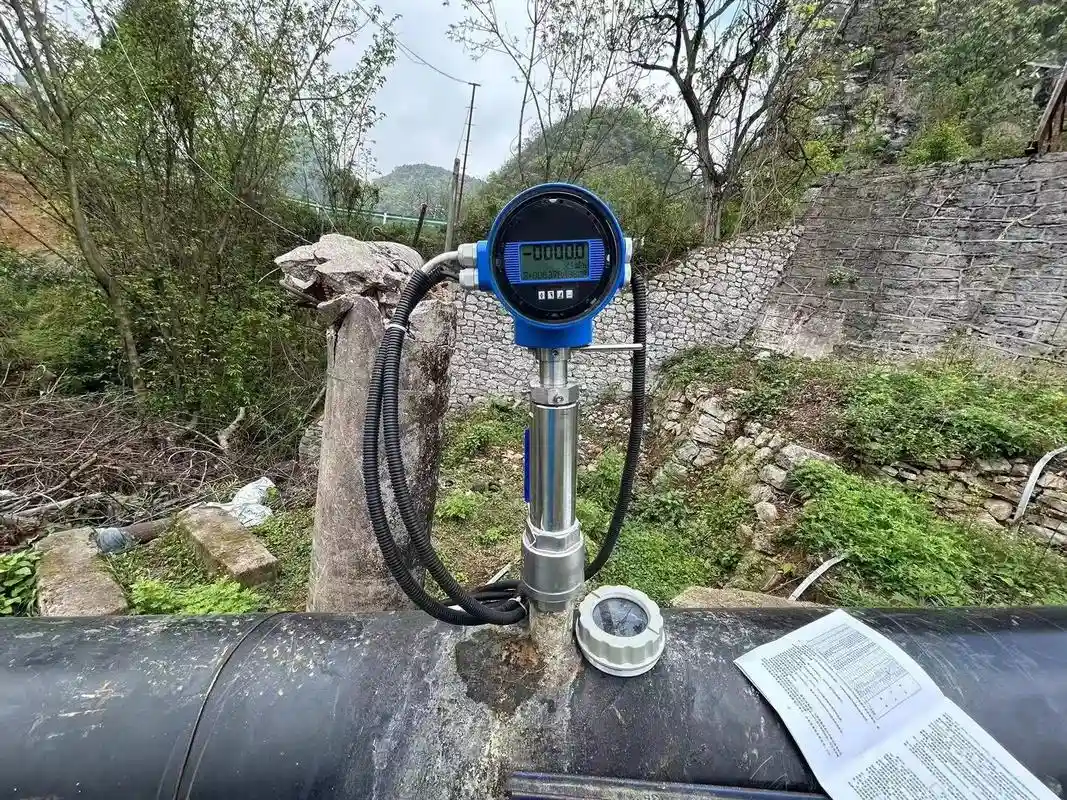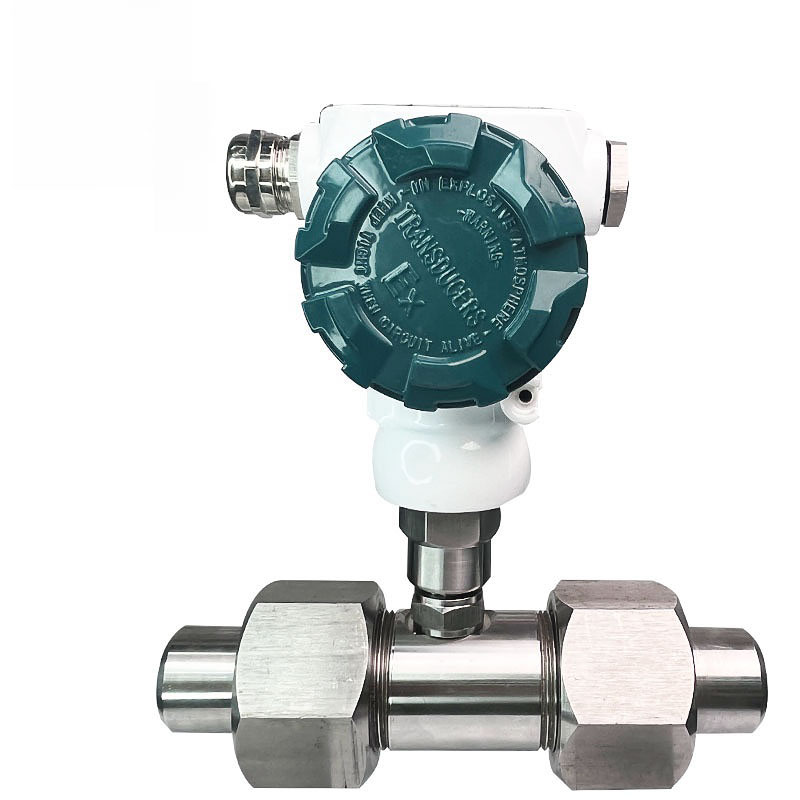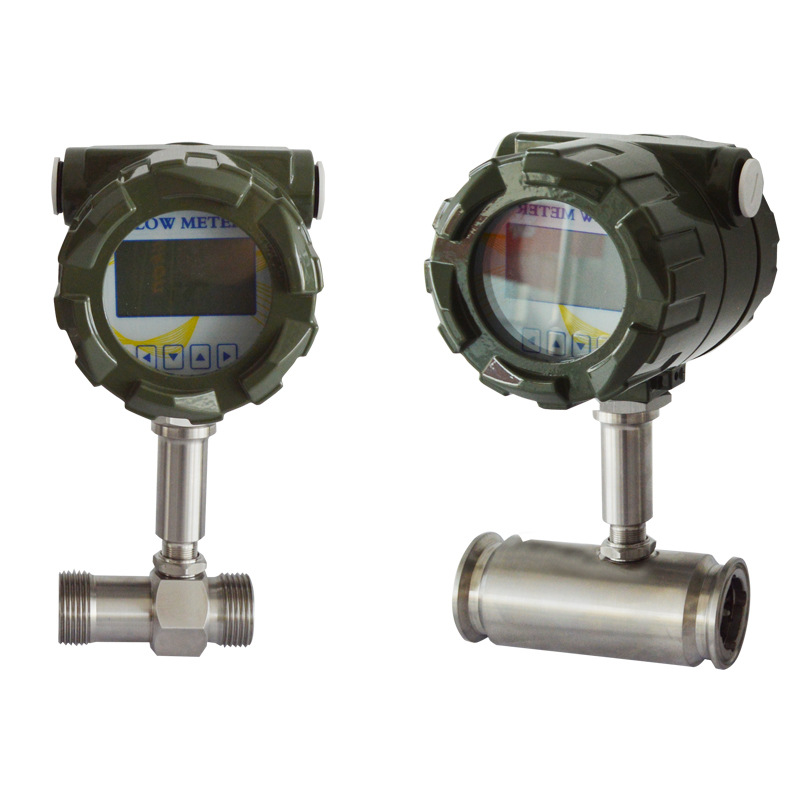
In the realm of manufacturing and sales, the precision with which you manage the flow of materials directly impacts the cost of production, the consistency of the process, and the adherence to protocol. Turbine flowmeters are highly accurate (±0.1%R to ±0.2%R) and fast. These products have a wide range of applications, including petrochemicals, food and pharmaceuticals, and aerospace.
Working Principle of Turbine Flow Meters
The primary structure of a turbine flow meter comprises components such as the turbine, sensor, magnetic ring, and bearings. The core element is a turbine that rotates freely within the pipeline.
When fluid passes through the meter, its kinetic energy drives the turbine to rotate. The rotating turbine generates a rotational speed signal proportional to the flow velocity. By measuring the turbine’s rotational speed, the flowmeter calculates the fluid flow rate.
Turbine flow meters use magnets to detect the movement of the turbine. These pulse signals are directly related to the speed of the fluid, which allows us to calculate the flow rate based on how often the pulse occurs. Turbine flowmeters can do this by measuring the flow of fluids and sending the information to control systems as it happens.
Characteristics of High Accuracy Turbine Flow Meters
High accuracy Measurement: High accuracy turbine flowmeters offer exceptional measurement accuracy, typically achieving an error range of just 0.2% to 0.5%. This makes them ideal for use in industrial production, where stringent flow accuracy requirements are commonplace.
Rapid Response: Turbine flow meters respond swiftly to flow variations, delivering real-time, accurate flow data. This facilitates timely adjustments to production strategies, ensuring process stability.
Broad Applicability: Suitable for measuring diverse fluid media—including liquids and gases such as petroleum products, oil-gas mixtures, molten iron, molten steel, water, and natural gas—to fulfil varied industrial production requirements.
Stable and Reliable: Featuring a relatively simple structure with minimal blade clearance, turbine flow meters exhibit minimal performance variation during prolonged operation, ensuring robust stability. Additionally, their high resistance to electromagnetic interference and vibration enables reliable functioning in demanding industrial environments.
Easy Installation and Maintenance: The straightforward installation and maintenance procedures of high accuracy turbine flow meters help reduce operational costs for enterprises while enhancing production efficiency.
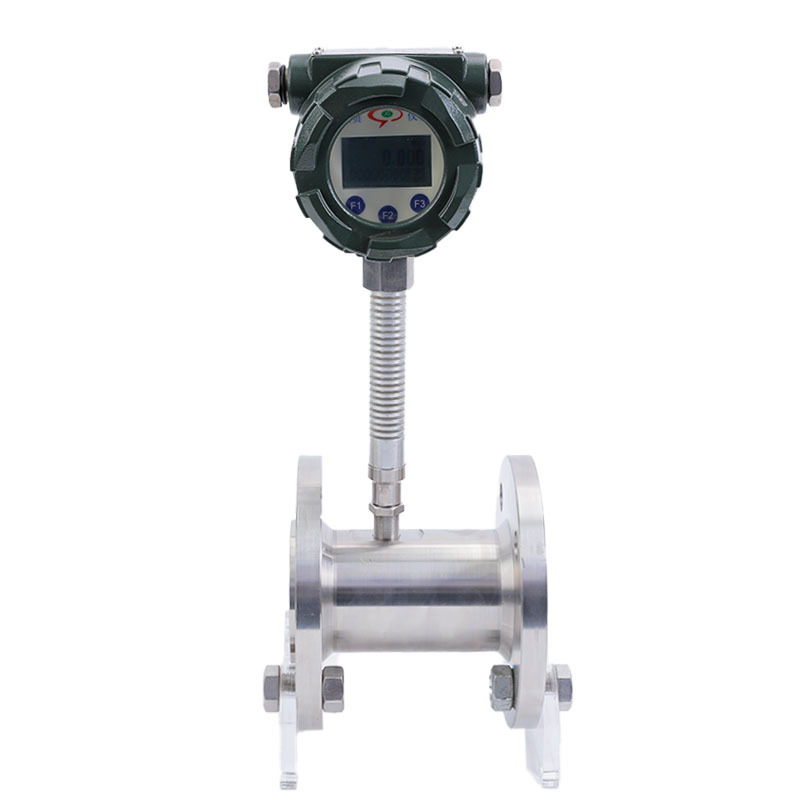
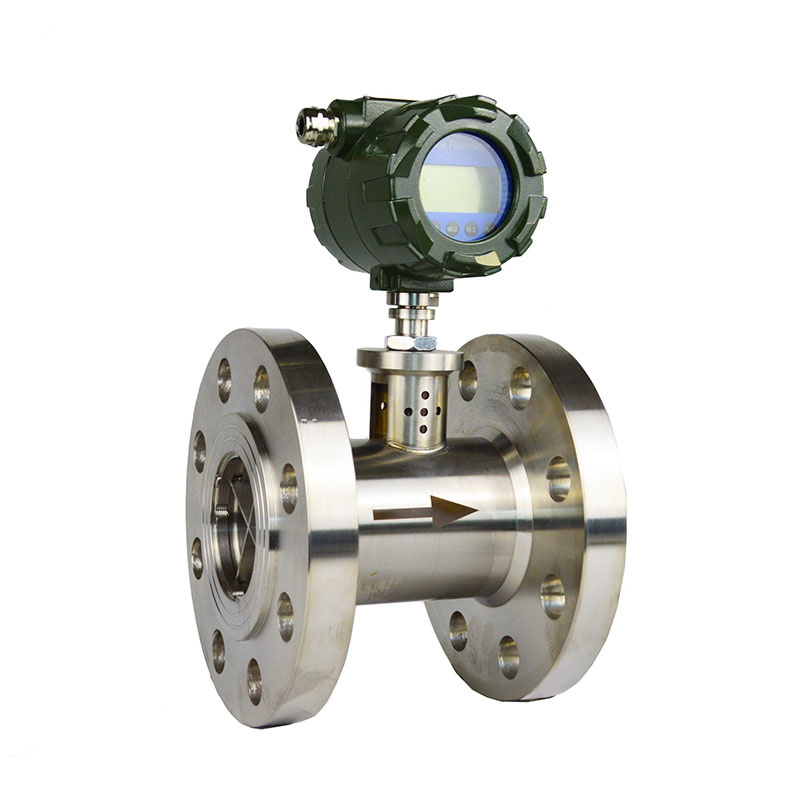
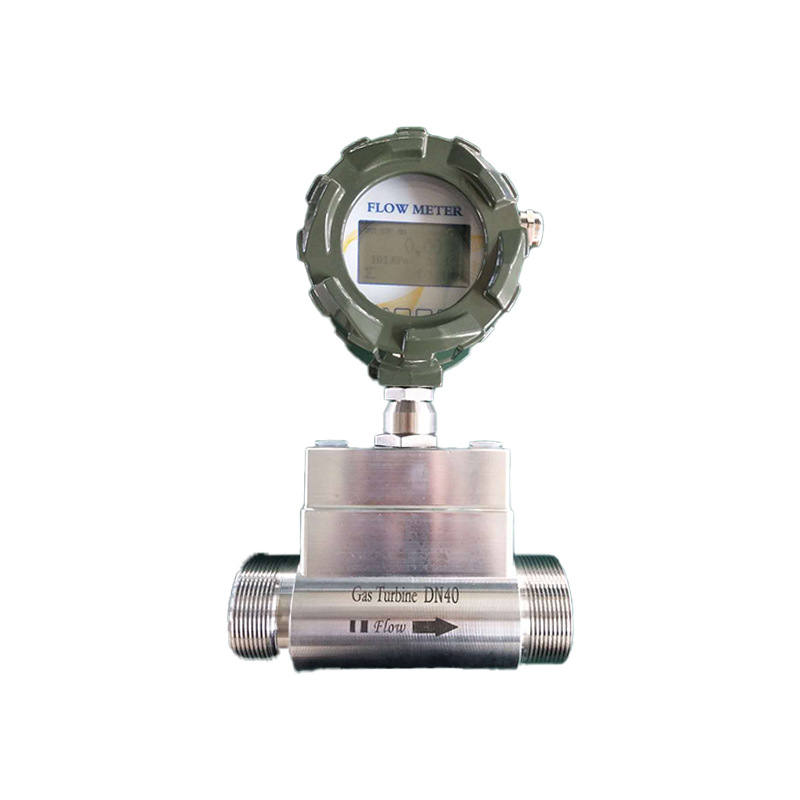
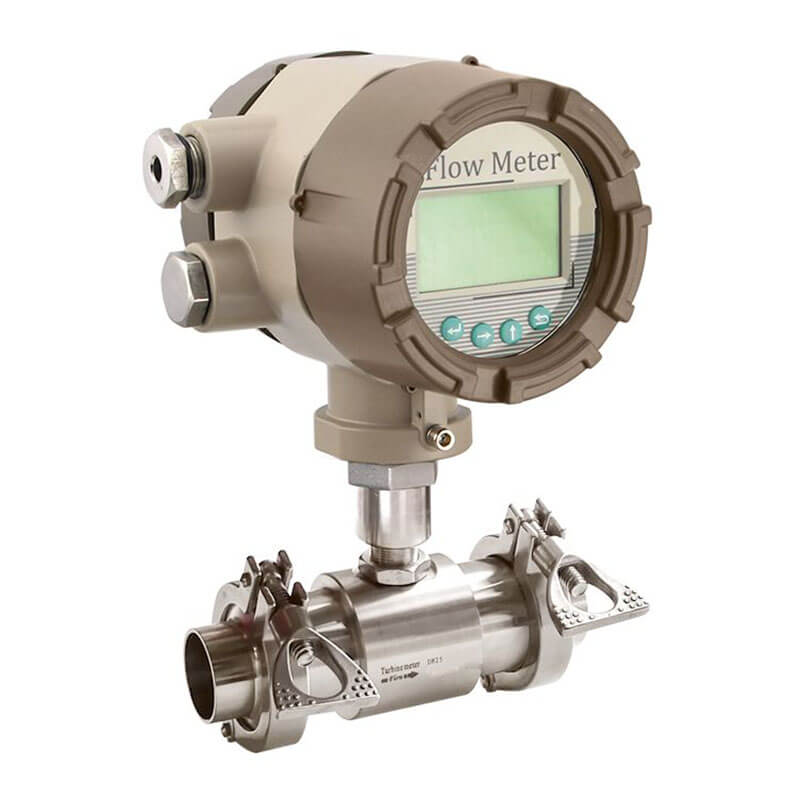
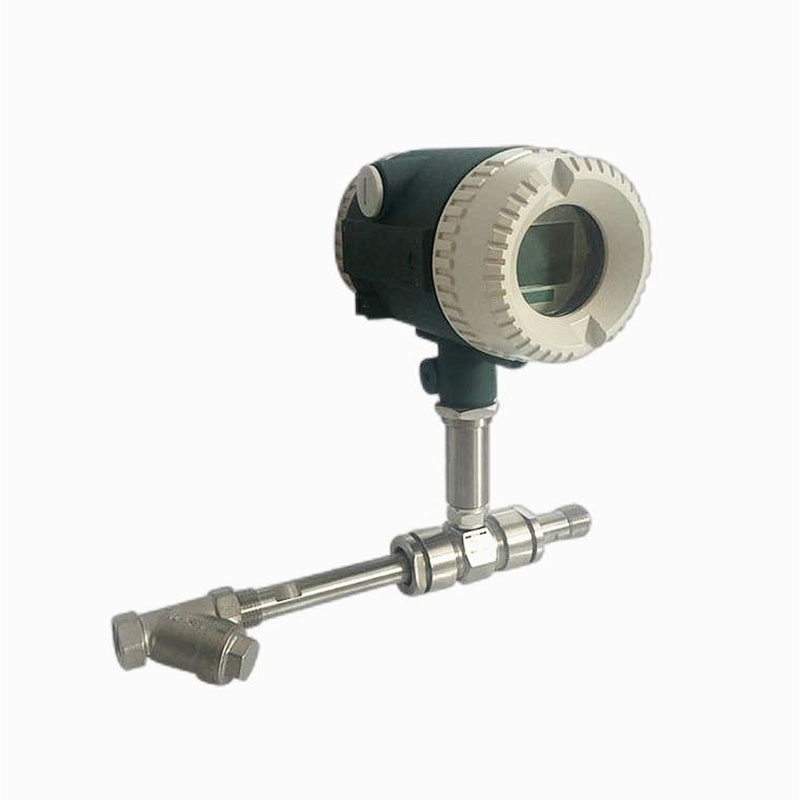
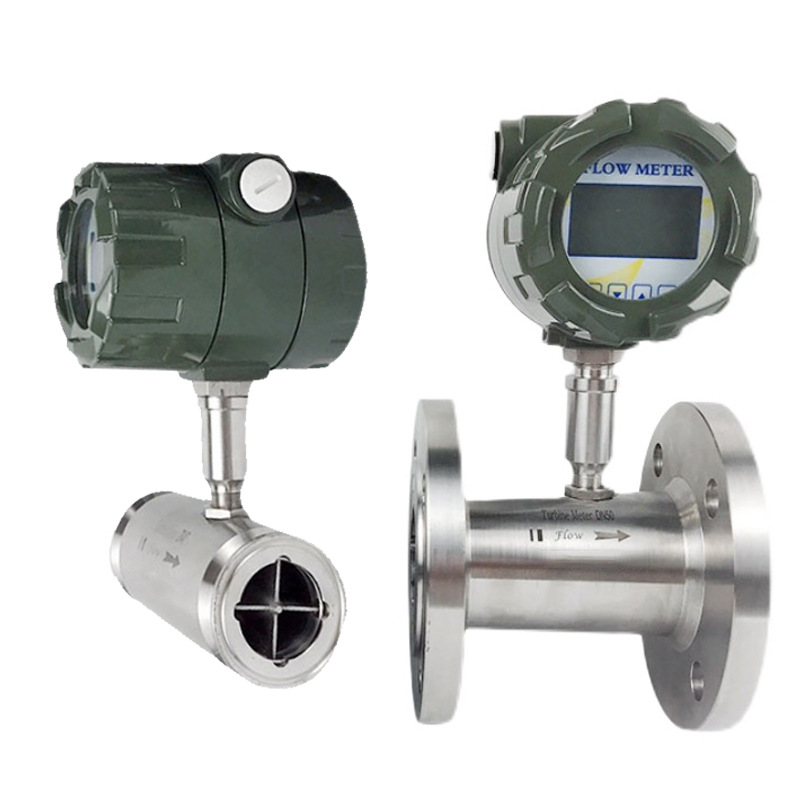
High Accuracy Turbine Flow Meters VS Turbine Flow Meters
High accuracy models usually offer accuracy classes of 0.2 or 0.5, with some even reaching 0.1 class, with repeatability error ≤0.1%;
Standard models usually offer accuracy classes of 1.0 or 1.5, with some industrial-grade models at 2.5. Repeatability error is comparatively higher, meeting only basic flow monitoring requirements.
Core Structure and Manufacturing Processes:
High accuracy models demand exceptionally high machining accuracy for impellers, shaft assemblies, and flow guides. Impeller dynamic balancing calibration is more stringent, with some incorporating damping structures or flow field optimisation designs to minimise measurement interference from fluid turbulence.
Standard models feature simplified structures with broader component machining tolerances. They lack specialised flow field optimisation, ensuring only basic rotation and signal acquisition.
Key Component Materials:
high accuracy models employ bearings and impellers crafted from wear-resistant, corrosion-resistant, low-friction materials to minimise mechanical wear impacts on accuracy.
Standard models predominantly utilise carbon steel, ordinary copper alloy impellers paired with brass bearings. These materials offer lower material costs but incur relatively higher mechanical friction losses.
Suitable operating conditions and applications:
The high accuracy model is suited for scenarios demanding stringent flow data accuracy, such as trade settlement, metrological calibration, and laboratory accuracy testing. It primarily handles clean, low-viscosity high accuracy measurement media.
The standard model is primarily employed for industrial process control, operational flow monitoring, and approximate energy consumption estimation, satisfying general flow monitoring requirements in conventional industrial contexts.
Calibration and maintenance requirements:
The high accuracy model requires shorter calibration intervals (typically 6–12 months), necessitating calibration by specialist institutions against high-grade measurement standards. Maintenance demands exceptionally high medium cleanliness (to prevent impurities from wearing accuracy components).
The standard model features longer calibration intervals (1–2 years), permitting routine on-site calibration. It exhibits relatively relaxed medium cleanliness requirements and simpler maintenance procedures.
Accuracy Classes for Turbine Flow Meters
I. Accuracy Class 1: ±0.5%, ±1%
Turbine flow meters of this accuracy class are suitable for scenarios demanding high measurement accuracy, such as trade measurement in energy sectors like petroleum and natural gas, and production process control in industries including pharmaceuticals and food processing.
These flow meters demonstrate high sensitivity, minimal noise, and stability. These instruments are capable of quantifying the flow of diverse gases and liquids. This renders them optimal for the delivery of reliable measurement data for industrial manufacturing and scientific research.
II. Accuracy Class II: ±1.0%, ±2%
Turbine flow meters within this accuracy classification are suitable for standard industrial applications necessitating moderate measurement precision, including chemical processing, power generating, and wastewater treatment sectors.
These flow meters have been shown to meet the flow measurement requirements of most industrial production processes and are highly reliable and stable. Accurate measurement data is essential for optimising and controlling production processes.
III. Accuracy Class III: ±1.5%, ±3%
Turbine flow meters of this accuracy class are suitable for scenarios with less stringent measurement accuracy requirements, such as water supply systems (e.g., tap water, hot water) and general industrial flow measurement applications.
These flow meters offer relatively lower prices and high cost-effectiveness, making them ideal for large-scale deployment and cost-constrained scenarios. While their accuracy is slightly lower, they adequately fulfil basic flow measurement needs.
IV. Accuracy Class IV: ±2.5%, ±5%
Turbine flow meters of this accuracy class are suitable for scenarios with very low measurement accuracy requirements, such as flow measurement in non-critical applications like irrigation or firefighting.
These flow meters are inexpensive, easy to install and maintain, and suitable for scenarios where high accuracy measurement is unnecessary. However, due to their lower accuracy and greater error margin, they are unsuitable for critical applications or high accuracy measurement requirements.
Typically, high accuracy models are characterised by standard accuracy grades of 0.2 or 0.5, with some reaching 0.1, and a repeatability error of ≤0.1%.
Standard models commonly offer 1.0 or 1.5 grade accuracy, while certain industrial-grade variants reach 2.5 grade. It is evident that these demonstrate comparatively elevated levels of repeatability error, thus attaining compliance with only the most elementary flow monitoring requirements.
Factors Affecting the Accuracy of Turbine Flow Meters
Inherent Factors of the Flow Meter
Quality and accuracy of Turbine Components:
The manufacturing accuracy of the turbine is critical to measurement accuracy. Deviations in the shape, dimensions, or angle of the turbine blades can cause uneven force distribution during fluid flow, thereby compromising the linear relationship between rotational speed and fluid velocity.
Additionally, bearing quality is critical. Low-quality bearings generate significant friction, increasing rotational resistance and causing measured flow rates to underestimate actual flow.
Sensor Accuracy and Stability:
Sensors are the key components for detecting turbine rotational speed. The inherent accuracy and stability of electromagnetic or photoelectric sensors directly affect flow measurement accuracy.
Insufficient sensor sensitivity may fail to accurately detect turbine speed variations, or interference and noise during signal transmission can distort the detected signal. For instance, electromagnetic interference may cause the sensor to output erroneous signals, leading to measurement deviations.
Calibration Status of the Flow Meter:
Accurate calibration is essential to ensure the accuracy of measurements taken by liquid turbine flow meters. The standard liquid used, calibration equipment employed, and calibration methodology all influence calibration accuracy.
If the flow standard of the calibration liquid is inaccurate or the calibration equipment lacks sufficient accuracy, this may introduce errors in the flow meter’s calibration coefficient.
Installation and Operating Environment
Installation Position and Method:
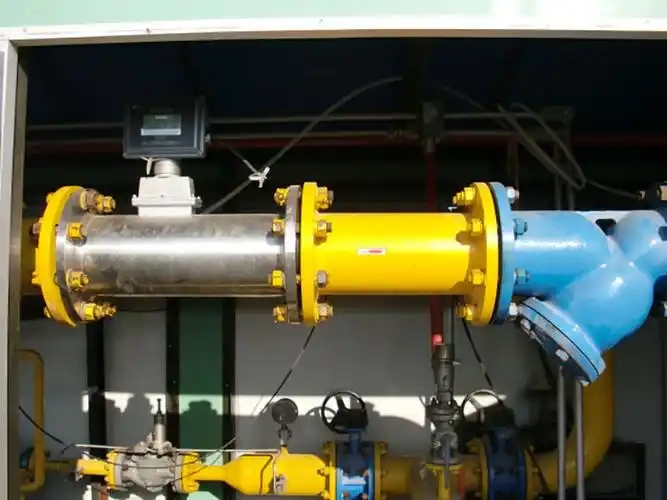
If the flow meter is not positioned correctly, the measurements may be inaccurate. If you install it near pipe bends, valves, or similar components, it can disrupt fluid flow, creating swirling water movements.
This can cause the blades to vibrate unevenly, which can lead to errors in the measurements. To install it properly, you need to make sure there are enough straight pieces of pipe in the right places so that the liquid can flow steadily into the meter.
Pipeline Vibration and External Interference:
The vibrations from the pipeline could reach the flow meter, which could affect the turbine’s steady rotation. For example, the vibrations from large equipment near the pipeline could be sent to the flow meter.
This can cause vibrations in the turbine, which can affect its ability to accurately measure rotational speed. It is important to note that electromagnetic interference, changes in temperature and humidity have the capacity to affect the electronic components of a flow meter.
This can result in signal problems or reduced performance, which can affect the accuracy of the measurement.
Applications of High Accuracy Turbine Flow Meters
Petrochemical industry: High-accuracy turbine flowmeters are commonly used in the petrochemical industry to measure the flow rates of petroleum products and oil-gas mixtures. This makes it easy to control the process automatically and make sure the quality is always good. These meters are very accurate and respond quickly. This means that petrochemical enterprises can monitor production workflows. This ensures product quality and efficiency of production.
Metallurgical Industry: In the metallurgical sector, high-accuracy turbine flow meters are used to measure the flow of molten metals like iron and steel. This helps businesses collect important information about how well their products are working, improve the way they produce their products, and make their products better.
Water Treatment Industry: Within water treatment, high accuracy turbine flow meters monitor and regulate water flow to ensure efficient and effective water quality treatment. Their extensive applicability renders turbine flow meters indispensable flow measurement tools in water treatment applications.
The Natural Gas and Liquefied Petroleum Gas Industries: High-accuracy turbine flowmeters are used to measure gas flow in these sectors. These meters are very important for making sure that we always have enough energy.
Other Industries: Also, high-accuracy turbine flowmeters are often used to measure and control the flow of liquids in important industries like power generation, pharmaceuticals and food processing. They provide exact and trustworthy information about how fast liquids are moving to help with making things in factories.
FAQ
High Pressure Turbine Flow Meter
The high pressure turbine flowmeter is a pressure-resistant, reinforced velocity-type flowmeter. Its housing is made of high-strength stainless steel and features a high-pressure connection design, making it suitable for measuring the flow of clean media in high-pressure pipelines.
The fluid impinges on the turbine, causing it to rotate; a magnetoelectric sensor converts the rotational speed into a pulse signal, which is then used to calculate instantaneous and cumulative flow rates.
This instrument features high accuracy, low pressure drop, and explosion-proof capabilities, making it suitable for high-pressure applications such as hydraulics and petrochemicals. It supports pulse and 4–20 mA signal outputs.
Accuracy of Mass Flow Meters
Mass flow meters offer high measurement accuracy; Coriolis mass flow meters typically achieve an accuracy of 0.1% to 0.5%. They are unaffected by changes in medium temperature, pressure, density, or viscosity, and can directly measure the mass flow rate of the medium while also providing density and temperature measurements.
The instrument offers excellent repeatability, making it suitable for applications with stringent measurement requirements, such as trade settlement and chemical batching.
Accuracy may decrease slightly in low-flow models, and factors such as installation stress and gas content in the medium may also interfere with actual measurement accuracy.
High Precision Metal Rotor Flow Meter
The high-precision metal rotor flowmeter is a variable-area flow measurement instrument that utilizes a metal conical tube and a float structure. It is suitable for measuring small to medium flow rates of liquids, gases, and steam.
It withstands high temperatures and pressures, resists vibration, and is corrosion-resistant. With no fragile plastic components, it offers strong adaptability to various operating conditions. During operation, the fluid moves the float up and down, and the flow rate is determined by the equilibrium position.
It supports on-site display and can also output a 4–20 mA remote transmission signal. This flowmeter offers good stability and is easy to install and maintain. It is widely used in industries such as chemicals, pharmaceuticals, and water treatment, and is a commonly used instrument for precise measurement of low flow rates.
Comparison of Flow Meter Accuracy
Coriolis mass flow meters: Offer the highest accuracy, up to ±0.1%. They directly measure mass flow and are unaffected by medium density. They are commonly used in high-demand scenarios such as trade settlement but tend to be relatively expensive.
Electromagnetic Flowmeters: High-precision models offer an accuracy of ±0.2%, while standard models are ±0.5%. They are suitable only for conductive liquids, incur no pressure loss, and perform stably in slurry and wastewater applications.
Turbine Flowmeters: Accuracy ranges from approximately ±0.25% to ±0.5%. They are suitable for clean, single-phase fluids and offer an excellent turndown ratio; however, they contain internal moving parts, making them susceptible to wear caused by impurities in the medium.
Vortex flow meters: Accuracy ranges from ±0.75% to ±1.0%; they can measure liquids, gases, and steam; they have no moving parts; however, measurement errors increase significantly at low flow rates.
High-precision metal rotor flow meters: Accuracy generally ranges from ±1.0% to ±2.5%; these are variable-area instruments; their advantage lies in low-flow measurement, but they are significantly affected by medium density, temperature, and pressure.
Pipe-section ultrasonic flowmeters: Accuracy ranges from ±0.5% to ±1.0%; clamp-on models have lower accuracy, approximately ±1.0% to ±2.0%. They require no pipe cutting for installation and are suitable for retrofitting large-diameter pipes.
Differential pressure flowmeters: Accuracy ranges from ±1.5% to ±3.0%. They are widely used but have a relatively narrow measurement range, and their accuracy is significantly affected by straight pipe runs and process conditions.
Our Sion-Inst products are lovingly crafted by people who have a deep knowledge of sensor technology. This ensures you can count on it, it’s got strict quality control, and it’s great to work in all sorts of industrial settings.
They’re perfect for meeting the basic requirements for production operations, lowering costs, process upgrades and making things more efficient. You can be confident that they are both highly accurate and very stable, and they will give you years of use.
We’re so excited to work with you to create new operating systems for industry and build long-lasting, reliable partnerships.