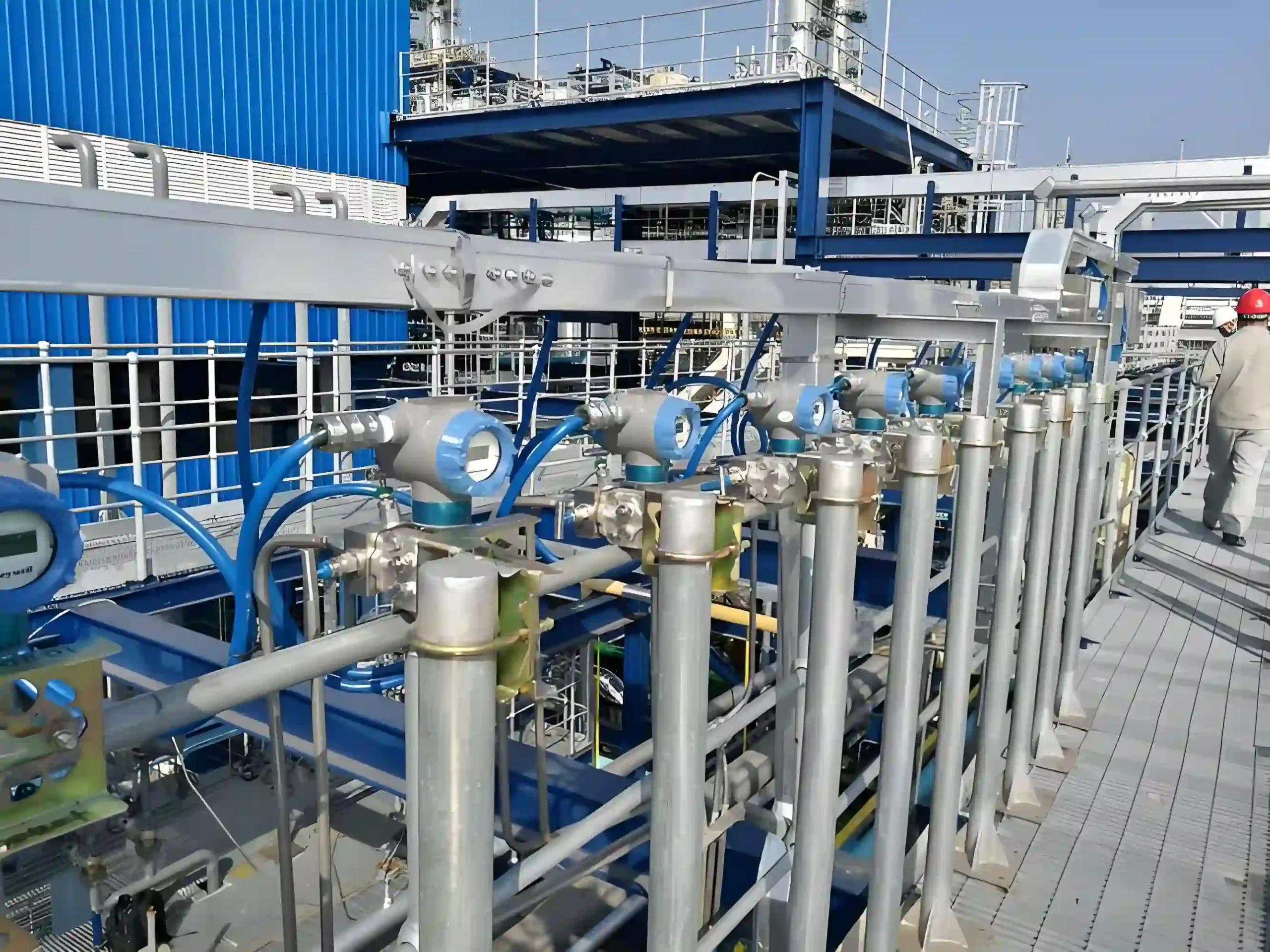
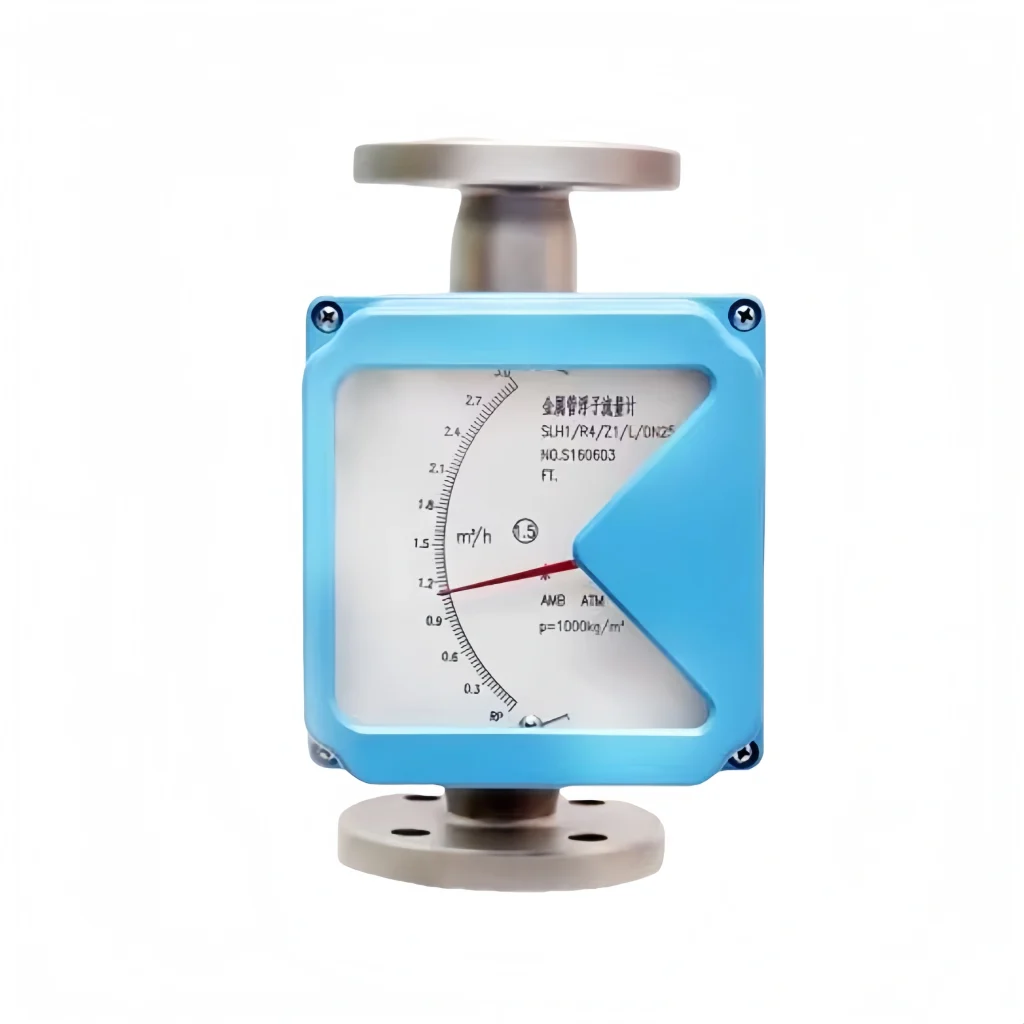
A rotameter is a variable-area flow meter that works on throttling principles. It basically has a vertical tapered tube with a float inside that moves up and down freely.
The float finds its stable position when the kinetic energy of the fluid and buoyancy forces balance out, and you can read the flow rate directly from where the float sits.
It’s got a pretty straightforward design, you can read it right off the scale without any extra gear, and it doesn’t eat up much pressure. That’s why you’ll see it all over the place in chemical plants, pharma operations, and general process control setups.
Working Principle of the Rotameter
The rotameter utilises the principle of variable cross-sectional area throttling to measure flow. As the fluid flows upwards through the conical tube, the float within the tube is subjected to the combined effects of the fluid’s upward dynamic pressure, its own weight and the buoyancy of the fluid.
When the flow settles down, these three forces balance out and the float just hangs there at some fixed spot inside the tapered tube. But when the flow rate shifts, the fluid speed changes too, and the upward push on the float goes up or down along with it—so the float gets shoved upward or drops back down.
As the float moves, the gap between it and the tube wall opens up or narrows, changing the flow area until things balance out again.
The scale on the tube is already set up to match where the float sits, so you can just glance at the reading where the float is and know the flow rate right then and there.
Typical Structure
Conical measuring tube: Usually built from glass, clear plastic, or metal, it’s shaped like a cone—wider up top and tighter down below. The wall has flow rate markings on it, and this piece is really the heart of the whole thing since the fluid runs through it and you read the measurement straight off it.
Rotor (float): This sits inside the tube and comes in a few different shapes depending on what you need. The material it’s made from depends on what fluid you’re dealing with. It bobs up and down as the fluid pushes on it, and wherever it ends up tells you the flow rate.
Upper and lower bases: These go on either end of the tube to hold it in place and keep the connections from leaking. You can also get them set up with flanges, threads, or whatever else you need to hook into your piping system.

Advantages of the Rotor Flow Meter
Simple structure: There are no complicated moving parts or transmission mechanisms here—just a tapered tube and a float that moves around. That means it doesn’t break down often, you barely have to mess with it for maintenance, and it keeps running for a good long while.
Direct reading: You don’t need any external power or fancy secondary instruments. The flow rate is right there on the tube’s scale, so you can read it off instantly. It’s easy to see and simple to use.
Low pressure loss: The fluid passes through the ring-shaped gap between the float and the tube wall, and that gap automatically widens or narrows as the flow changes. So the pressure drop stays pretty small and fairly steady, which helps keep the system’s energy use down.
Suitable for low-flow measurement: This thing really shines when you’re dealing with low flow rates and small pipes. It can pick up on tiny flows that other meter types would struggle to catch.
Wide turndown ratio: Typically up to 10:1, with some models offering even higher ratios; that is, the maximum measurement range can exceed 10 times the minimum flow rate, providing strong adaptability to changing operating conditions.
Low installation requirements: Generally requires only vertical installation, with minimal requirements for upstream and downstream straight pipe lengths; no long stabilisation section is required upstream, and it occupies minimal installation space.
Corrosion resistance: The measuring tube and rotor can be selected from a variety of materials—such as glass, plastic, stainless steel and PTFE—depending on the characteristics of the medium, making them suitable for corrosive media and various industrial environments.
Lower cost: Compared to electromagnetic flowmeters and mass flowmeters, rotor flowmeters feature a simple structure and mature manufacturing processes, resulting in relatively lower purchase and maintenance costs.
Disadvantages of Rotameters
Poor measurement stability: These get calibrated at the factory under standard conditions, but out in the field, swings in temperature, pressure, and fluid density mess with the forces on the float and throw off your readings. So they don’t work well in places where conditions keep changing.
Limited installation conditions: Since the whole thing depends on balancing the float’s weight against the fluid’s buoyancy, it has to go in vertically with the flow coming up from the bottom. You can’t lay it sideways or tilt it, which really narrows down where you can put it in your piping setup.
Narrow range of compatible media: Forget about using this with thick, viscous fluids or anything carrying dirt or solid particles. Run it long enough with that stuff and the float can get stuck or the tube can clog up—bad for accuracy and potentially rough on the meter itself.
Limited operating conditions: Most standard ones are built from glass or plastic, so they can’t take much heat or pressure. High-temperature or high-pressure environments are out of the question; they’re really only good for normal low-pressure, room-temperature jobs.
Other limitations: Pretty much all of them only give you a local reading right at the meter. If you need to send that data somewhere else remotely, you’ve got to add electrical components on top, which bumps up the cost.
Practical Applications of Rotameters
1. Chemical Industry
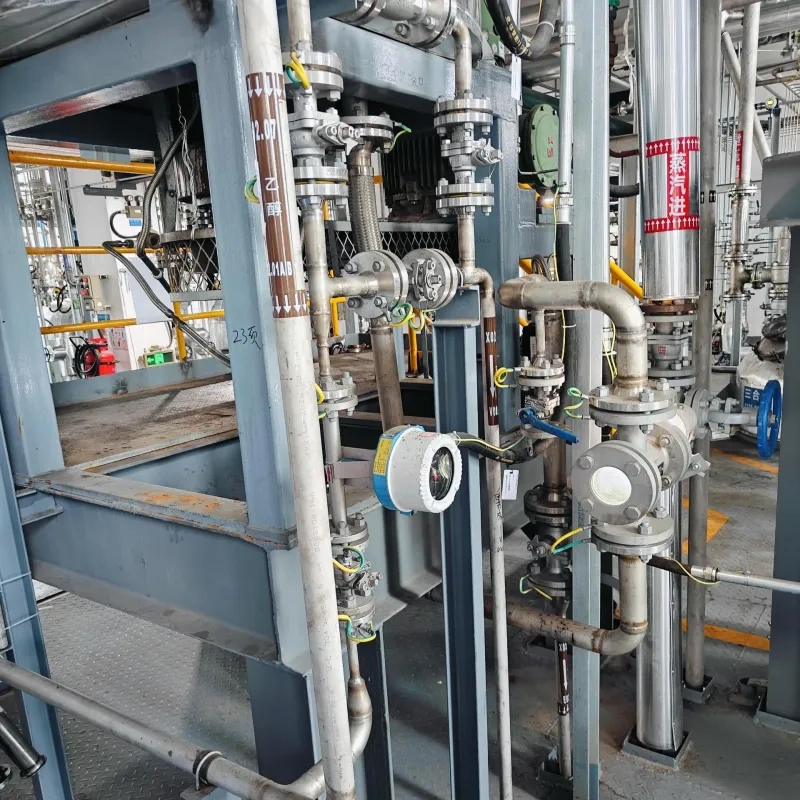
Capable of measuring the flow of various liquids, gases and vapours, and suitable for conventional corrosive fluids such as acids, alkalis and salts. They are commonly used for flow monitoring and regulation in reactors, transfer pipelines and dosing systems, meeting the requirements of small to medium pipe diameters and atmospheric pressure conditions.
2. Water Treatment Sector
Widely used in processes such as tap water supply, sewage treatment and pure water production, monitoring the flow of raw water, chemicals and reclaimed water. The equipment features a simple structure, facilitating on-site installation and routine inspection and maintenance.
3. Energy and Gas Industry
Suitable for gas transmission pipelines carrying natural gas, compressed air and liquefied petroleum gas, as well as for the metering of fluids such as fuel oil and heat transfer oil. Typically installed at pipeline network branches and workshop gas/oil supply points to enable on-site, intuitive readings.
4. Food and Pharmaceutical Industries
Sanitary rotor flowmeters are selected to measure media such as beverages, pharmaceutical solutions and purified water, complying with hygiene standards. They are commonly used in production line dosing and material transfer stages to prevent cross-contamination of media.
5. HVAC Systems
These get used to keep tabs on flow in circulating water, heating and cooling fluids, and gases moving through ventilation ducts. Since they work well with smaller pipes, you’ll find them controlling flow in air-conditioning water loops and building ventilation systems, both in commercial setups and industrial facilities.
6. Laboratories and Small-Scale Equipment
Research labs, test rigs, and small experimental setups use these all the time for keeping track of low-flow gases and liquid reagents. They’re compact and don’t give you a hard time during installation, so they fit pretty easily into whatever experimental arrangement you’ve got going.
7. Metallurgy and Machining
You’ll see them measuring flow of cooling oil, lubricant, and compressed air on machine tools and in auxiliary metallurgy lines. They’re built to hold up in typical industrial environments, so they keep the cooling and lubrication systems running smoothly without much fuss.
Selection Recommendations
1. Identify the characteristics of the medium to be measured, distinguishing between gases, liquids and vapours. Additionally, confirm whether the medium is corrosive, viscous or contains solid particles.Corrosive media require corresponding corrosion-resistant materials, whilst media containing particles should not be measured using standard rotor flowmeters.
2. Confirm the actual working parameters first, including the common flow span, operating pressure and medium temperature. When picking a flow meter according to measuring range, keep the real service flow between 20% and 80% of the meter’s full scale. This practice helps maintain reliable measuring precision.
3. Check pipe dimensions and relevant installation rules. Make sure the meter’s bore size aligns with the nominal diameter of on-site pipelines. Also confirm the installation posture: most rotamers must be fitted vertically and upright, as any tilt will lead to inaccurate readings.
4. Choose proper wetted materials. Select glass, stainless steel or PTFE for parts that come into contact with the process medium, based on actual working conditions. Glass tube types work well for regular water and gas media, while PTFE or stainless steel are ideal options for highly corrosive fluids.
5. Figure out accuracy standards and signal output needs. Basic glass tube rotamers fit on-site local monitoring. If you need remote signal delivery or automated system control, opt for metal tube rotamers equipped with remote electric output functions.
6. Pick suitable models with surrounding conditions in mind. For outdoor sites, humid areas or hazardous explosive zones, select units that meet corresponding protection and explosion-proof grades. For severe working environments, metal-bodied designs are recommended for better service life and sturdiness.
7. Take into account medium density and pressure compensation. Gases and low-density liquids are significantly affected by pressure and temperature. If high measurement accuracy is required, a compensation device should be used, or a specialised model suitable for the operating conditions shou
How to Read a Rotameter
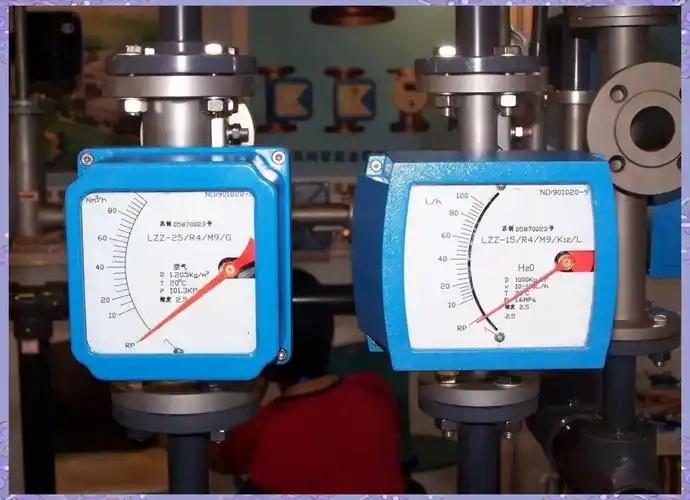
When reading a rotameter, first ensure that the instrument is installed vertically, the flow of the medium is steady, and the float is stable and no longer fluctuating up and down.
Look straight ahead at the scale line corresponding to the float’s maximum diameter; do not look down or up, to prevent visual distortion. Read the value at this scale position directly; if the scale has sub-divisions, estimate the reading accurately according to the scale’s division standards.
If the meter is used for media such as gases or steam, and the on-site conditions differ from the calibration conditions, the raw reading must be corrected according to the actual temperature and pressure parameters, as specified in the manual, to obtain the accurate actual flow rate.
Rotameter vs. Electromagnetic Flowmeter
Measuring Principle:
Rotameter: Based on the principle of buoyancy and gravitational equilibrium. As the fluid flows through, the rotor is subjected to upward buoyancy and downward gravitational force; the position of the rotor changes with the flow rate, thereby indicating the flow rate.
Electromagnetic Flowmeter: Based on Faraday’s law of electromagnetic induction. When a conductive liquid flows through a magnetic field, an induced electromotive force is generated, the magnitude of which is proportional to the flow rate; the flow rate is determined by measuring this electromotive force.
Suitable Media:
Rotameter: Suitable for measuring clean, impurity-free liquids, gases and steam. No requirements regarding the conductivity of the medium.
Electromagnetic Flowmeter: Suitable only for measuring conductive liquids, such as sewage, slurry, and acid or alkali solutions. Cannot measure gases, steam or non-conductive liquids.
Installation requirements:
Rotameter: Has to go in vertically with the fluid coming up from the bottom. You also need a decent stretch of straight pipe upstream to get reliable readings.
Electromagnetic flowmeter: Way more flexible on positioning—you can mount it horizontally, vertically, or at an angle. It doesn’t need much straight pipe, but keep it away from heavy vibration and strong magnetic fields.
Measurement Accuracy:
Rotameter: Typically runs ±2% to ±4% FS, so it’s fine for jobs where you don’t need super tight accuracy.
Electromagnetic Flowmeter: Much tighter, usually ±0.5% to ±1% FS. That’s the go-to when precision matters.
Pressure Drop:
Rotameter: Eats up a fair bit of pressure, and that loss changes with the flow rate.
Electromagnetic flowmeters: Barely any pressure loss at all—pretty much negligible.
Maintenance costs:
Rotameters: Simple build, easy to work on, and cheap to keep running. The catch is the float and tapered tube wear out over time and need swapping out periodically.
Electromagnetic flowmeters: More complex inside, trickier to maintain, and costlier overall. The electrodes and lining tend to foul up or corrode, so they need regular cleaning and replacement too.
Why must rotor flowmeters be installed vertically?
Rotor flowmeters rely on the balance between the float’s own weight and the upward force of the fluid to achieve measurement; therefore, they must be installed vertically.
The float inside the instrument is suspended within the conical tube by the force of the fluid in the pipeline. Only when the instrument is kept in a vertical position will the direction of the float’s weight be exactly opposite to the direction of fluid flow, allowing the forces acting on both to balance precisely, and ensuring that the height at which the float rests accurately corresponds to the actual flow rate.
If installed at an angle or horizontally, the float will be subject to lateral support forces from the pipe wall and gravitational components, disrupting the original balance of forces. This causes the float’s position to shift, resulting in significant measurement errors.
In severe cases, the float can get stuck against the tube wall and stop moving altogether, which basically kills the meter. Keeping it vertical also keeps the flow pattern steady and cuts down on swirls and off-center flow that would mess with the readings—so the thing keeps working properly over the long haul.

Thanks to its outstanding overall performance and excellent value for money, the rotor flowmeter has become a classic choice for industrial flow monitoring. Sino-Inst offers a comprehensive range of selection solutions and supporting products tailored to different media, operating conditions and installation requirements.
We also provide professional technical guidance, installation advice and after-sales support, helping users across various industries achieve precise and stable flow control, thereby ensuring the efficient operation of production systems.