What is an Ultrasonic Tank Level Sensor?: A Comprehensive guide

Table of Contents

In the field of industrial automation and intelligent monitoring, ultrasonic level sensor is a typical representative of non-contact measurement technology. It is playing an increasingly critical role. It uses the principle of ultrasonic reflection time difference. It has the advantages of fast response speed, high accuracy, and convenient installation and maintenance. It is an ideal choice for liquid level monitoring of water tanks, oil tanks, etc.

What is an Ultrasonic Tank Level Sensor?

An ultrasonic tank level sensor is a device that uses ultrasound to measure the level of a liquid or solid inside a tank or container. And it does so without physical contact.


An ultrasonic tank level sensor is just like an ultrasonic sensor. It uses non-contact measurement. It also does not need to be immersed in the liquid or solid being measured. This makes it suitable for applications where contact is undesirable or impractical. For example, corrosive, viscous, or high-temperature liquids.


They can be used to measure a wide range of liquids and solids. Ultrasonic level sensors provide accurate measurements even when the level changes are small. They are generally easy to install and low-maintenance. 

How does an Ultrasonic Tank Level Sensor work?

The working principle of the ultrasonic tank level sensor is similar to that of the ultrasonic level sensor.

It works by emitting an ultrasonic pulse and measuring the time it takes for the echo to reflect from the surface of the material in the tank. The distance is then calculated based on this time and thus the level of the material.

Here is a detailed explanation of the process:

  1. Transmission: The sensor’s transducer transmits high-frequency ultrasonic pulses (above the human hearing range).
  2. Propagation and reflection:These sound pulses travel through the air gap above the material surface. When the pulse reaches the liquid or solid surface, it reflects back to the sensor.
  3. Time of flight measurement:The sensor’s receiver detects the reflected pulse. It measures the time it takes for the pulse to travel from the sensor to the surface and back. This is called the “time of flight”.
  4. Distance calculation:Using the known speed of sound in the medium (usually air) and the measured time of flight. The sensor calculates the distance to the material surface using the following formula: Distance = (Sound Speed ​​× Flight Time) / 2.
  5. Level determination:Once the distance to the surface is known, the sensor can determine the material level in the tank.
  6. Output:Convert the calculated level information into a usable output signal. Such as analog voltage/current or digital data. For display or integration into a control system.

Key components:

  • Transmitter: emits ultrasonic pulses.
  • Receiver: detects reflected pulses.
  • Microcontroller and signal processor: calculates distance and level based on the received signal.
  • Temperature compensation: many sensors have the ability to compensate for temperature changes. This is because temperature changes affect the speed of sound.
What Is An Ultrasonic Tank Level sensor?:A comprehensive guide

Typical Applications of Ultrasonic Tank Level Sensors

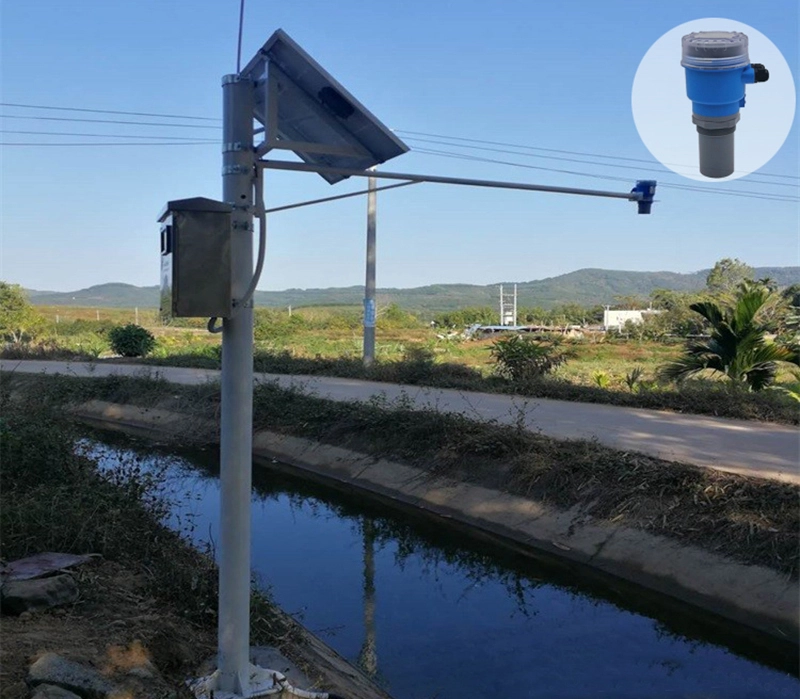
The ultrasonic tank level sensor has the ability to measure the liquid level accurately and reliably in a non-contact manner. It is widely used in various industries.


  1. Water and wastewater treatment: Monitors liquid levels in water treatment plants, sewage treatment plants, etc. To manage flows, prevent overflows, and ensure efficient operations.
  2. Chemical industry: Monitors liquid levels in chemical tanks and reactors. Especially where corrosive or hazardous materials are involved. To ensure safe and precise chemical mixing and processing.
  3. Oil and gas industry: It can track liquid levels in tanks and pipelines. To accurately manage inventory and prevent shortages or surpluses.
  4. River, lake, and reservoir monitoring: It can monitor water levels in natural water bodies. To help with disaster preparedness, flood control, and water resource management.
  5. Groundwater monitoring: Monitors liquid levels in wells and boreholes.
  6. Irrigation systems: It can monitor liquid levels in agricultural tanks. To ensure efficient irrigation and manage fertilizer stocks.
  7. Fire extinguishing systems: Monitor liquid levels in fire cylinders. Measure fuel levels in tanks (such as diesel tanks).
  8. Level measurement: monitor the level of solid media (such as powder, small particles or plastic particles) in silos or bins.
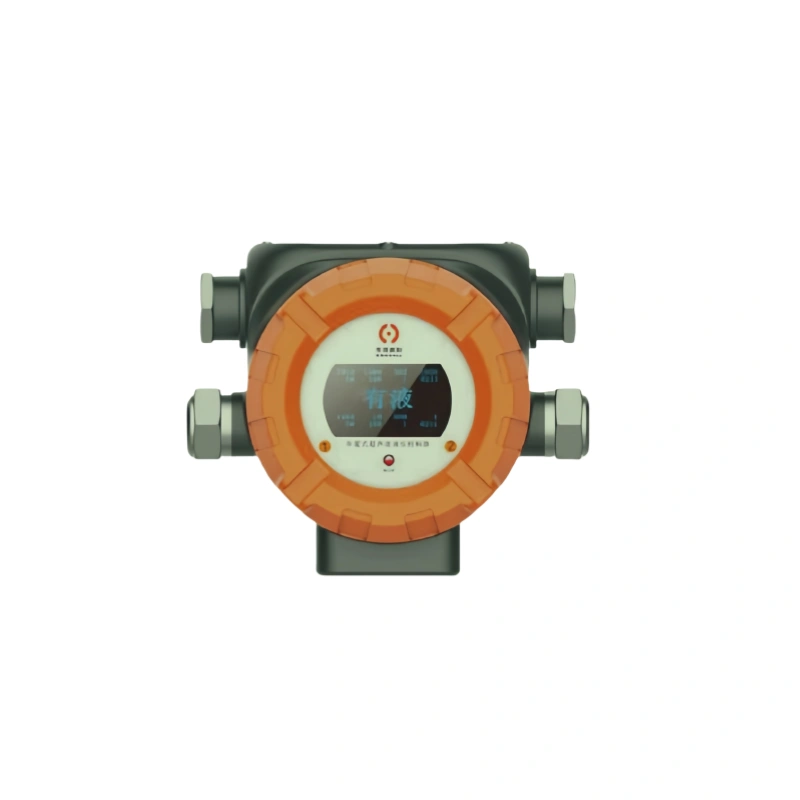
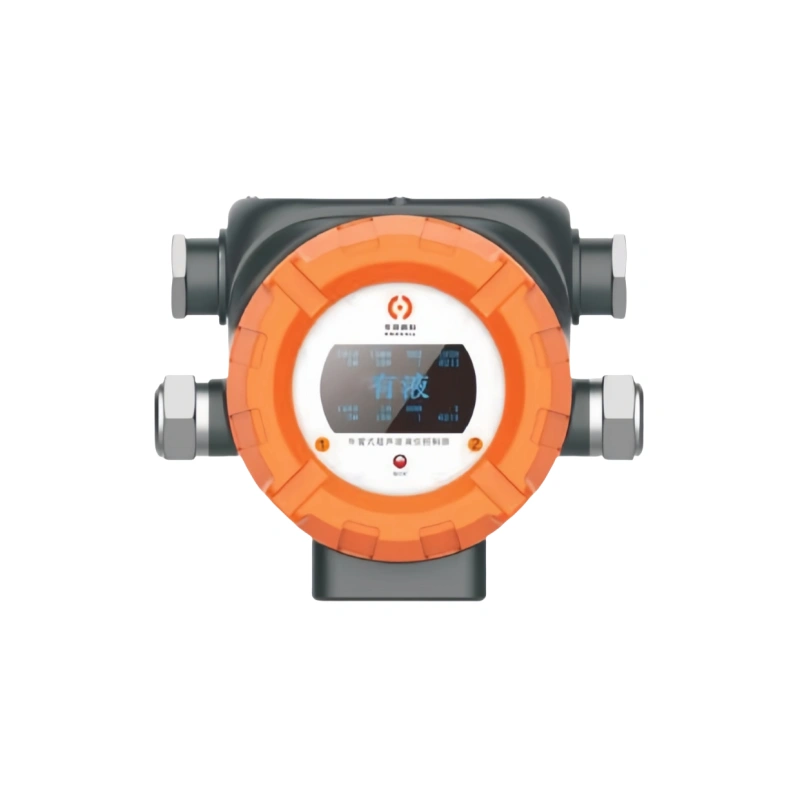
Ultrasonic level switch
Ultrasonic Level Switch/Controller
Non-Invasive-Ultrasonic Liquid Level Transmitter 2
Non-Invasive Ultrasonic Liquid Level Transmitter
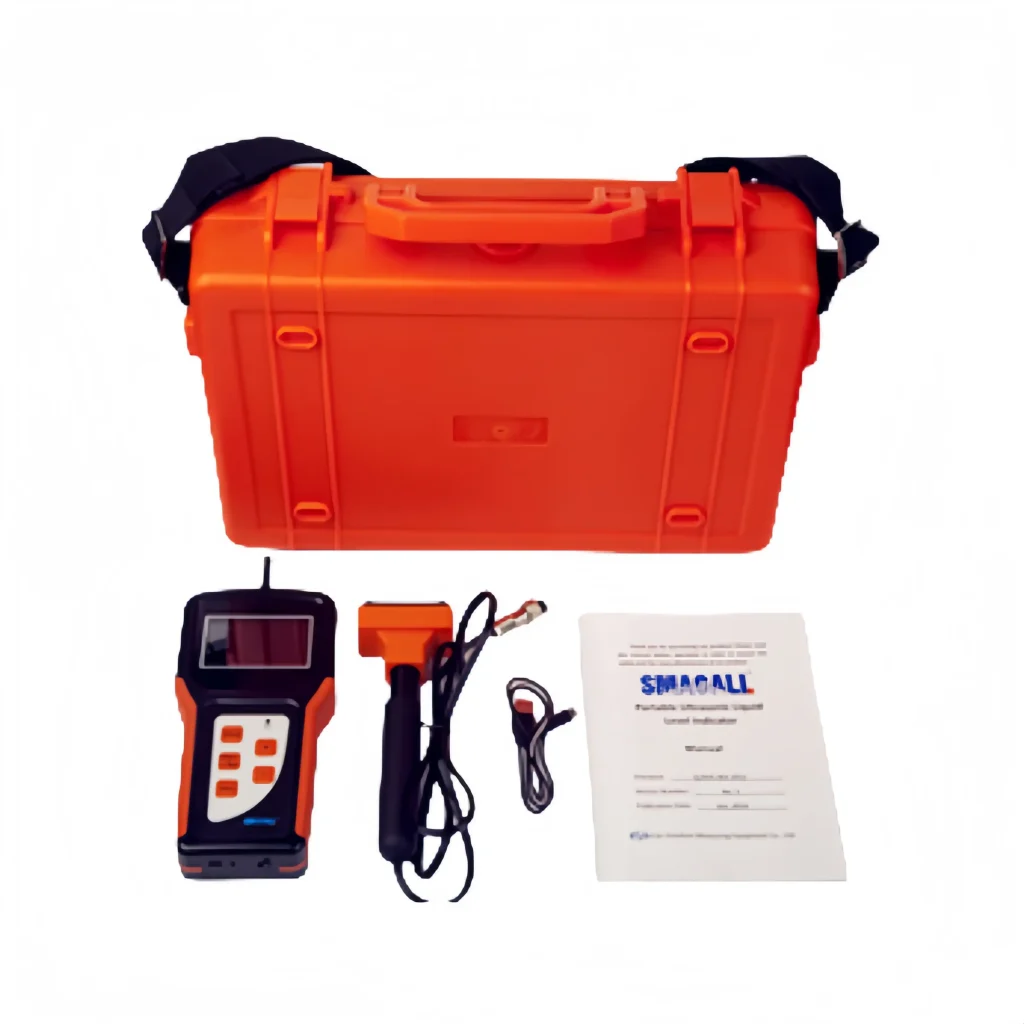
portable ultrasonic level indicator
Portable Ultrasonic Liquid Level Indicator To Measure Co2 Level
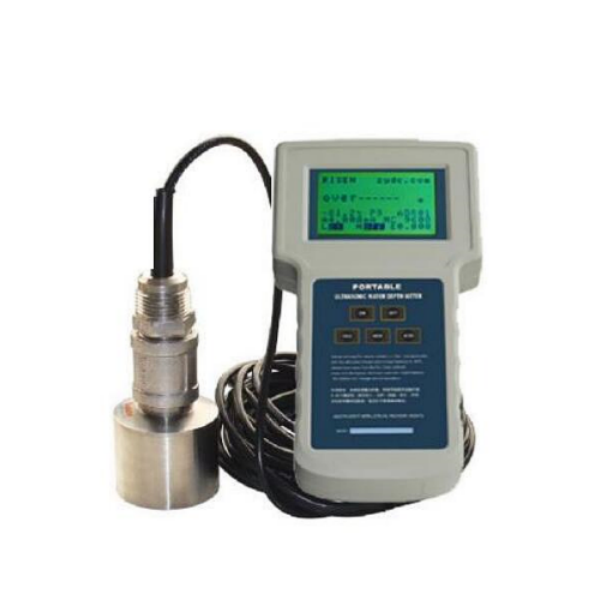
Handheld Portable Ultrasonic Water Depth Gauge
Handheld-Portable Ultrasonic Water Depth Gauge/Sensor
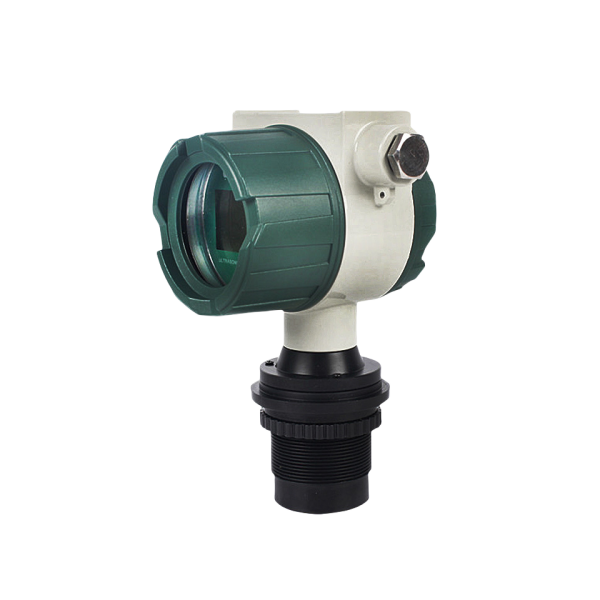
Explosion-proof ultrasonic level gauge Two-wire system
Explosion-Proof Ultrasonic Level Meter 0~20m
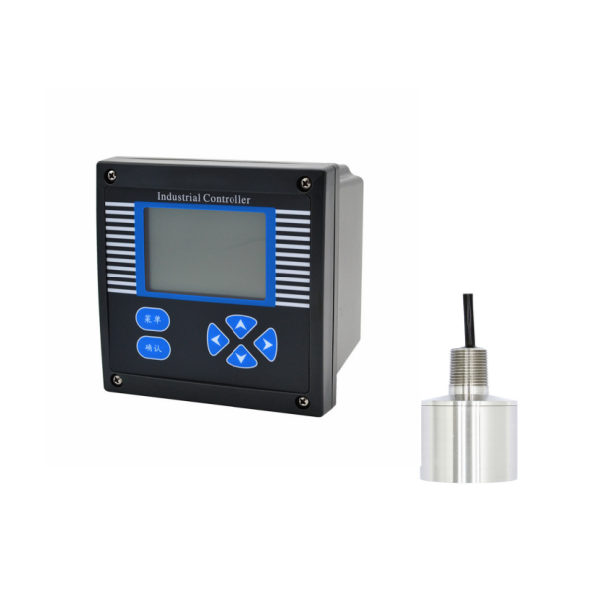
Ultrasonic Sludge Level Meter
Ultrasonic Sludge Level Meter-Sludge Blanket Detection

Add Your Heading Text Here

Ultrasonic tank level sensors offer a variety of advantages. Because they do not require direct contact with the liquid being measured. So they are particularly useful in corrosive or sanitary environments.

  • Non-contact measurement. Ultrasonic tank level sensors emit sound waves to measure liquid level without direct contact with the liquid.
  • Simple installation. The sensor is usually installed on the top of the tank without intruding on the tank itself.
  • Ultrasonic sensors can be used for a variety of liquids. Including water, chemicals, and mud.
  • They are suitable for different tank sizes and shapes.
  • Cost-effectiveness. Compared with other level sensors, they are less expensive.
  • Equipped with RS-485 communication interface and adopt special echo processing methods. This can effectively avoid false echoes.
  • A variety of measurement ranges are available. Including 5 meters, 10 meters, 15 meters and customized 40 meters.
  • They are equipped with PVDF material probes. This ensures reliable measurement of the instrument in corrosive liquids or corrosive environments.

When to use a submersible tank level sensor? When to use ultrasonic?

Submersible level sensors are ideal for deep tanks, wells, and corrosive environments. Ultrasonic sensors are ideal for clean water tanks, flumes, and weirs in controlled environments.

Submersible Level Sensors

  • Corrosive or abrasive liquids, where the sensor is directly immersed in the liquid.
  • High-precision level measurement.
  • Applications where foam or turbulence may interfere with other types of sensors.
  • Deep tanks, wells, and where long measuring ranges are required.

Ultrasonic Level Sensors

  • Non-contact level measurement in clean tanks.
  • Applications where direct contact with the liquid is undesirable.
  • Applications where cost is a major factor.

Ultrasonic tank level sensors are essential components for efficient measurement in various industries. They are used in water treatment plants, chemical processing plants or industrial tanks.


Ultrasonic level sensors are widely used in the industrial field. The same is true for ultrasonic tank level sensors. Ultrasonic tank level sensors provide reliable data. This supports efficient operations and resource conservation.


Sino-Inst’s ultrasonic level sensors can meet the needs of various industries for level measurement. If you have any questions about the application requirements of ultrasonic level sensors or related technical issues, please contact our engineers!

Welcome To Share This Page:
Product Categories
Latest News
Get A Free Quote Now !
Contact Form Demo (#3)

Related Products

Related News

In the field of industrial automation and intelligent monitoring, ultrasonic level sensor is a typical representative of non-contact measurement technology.

Liquid pressure transducers are devices designed to measure static or dynamic pressure within liquids, serving applications such as liquid pressure

In order to improve the efficiency of beer production, beer flow measurement is crucial. Therefore, brewery flow meters have become

There are a variety of factors to consider when measuring natural gas flow. These include gas properties, such as its

High accuracy pressure transducers are a type of pressure monitoring equipment frequently used in industrial production.Their function is to convert pressure

Underground storage tanks are an important type of storage facility. They can be used to store energy, fuel, and water.

Pressure sensors play an important role in industrial processes. They are suitable for various fields such as automotive manufacturing, aerospace,

Pressure transducers are core components of automated control and monitoring systems. It plays a crucial role in industrial processes. Among

In chemical plants, liquid ammonia level control is crucial. Liquid ammonia is highly corrosive and volatile, resulting in a high

Scroll to Top

Get A Free Quote Now !

Contact Form Demo (#3)