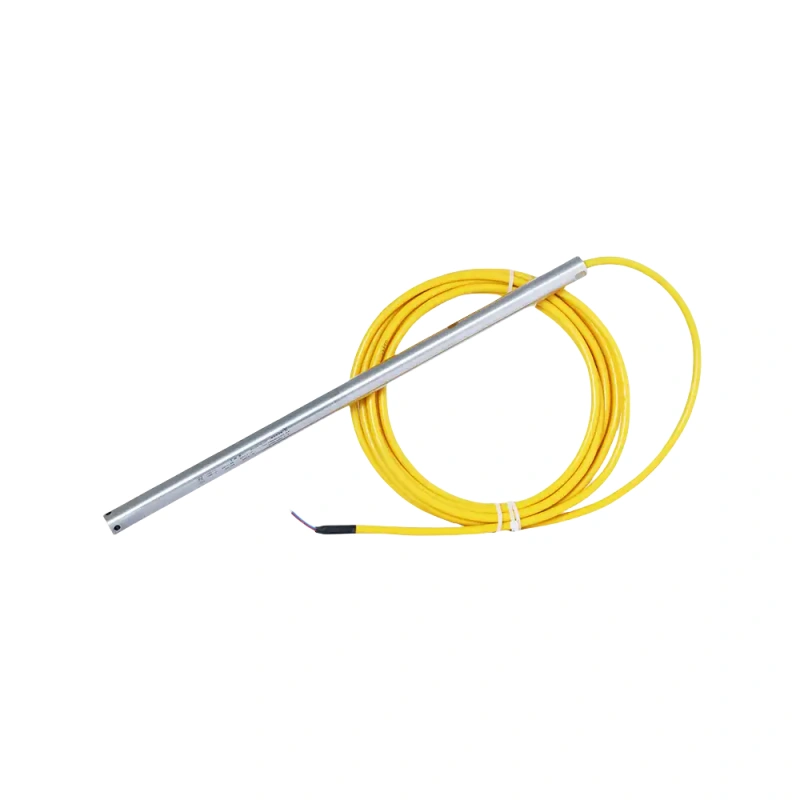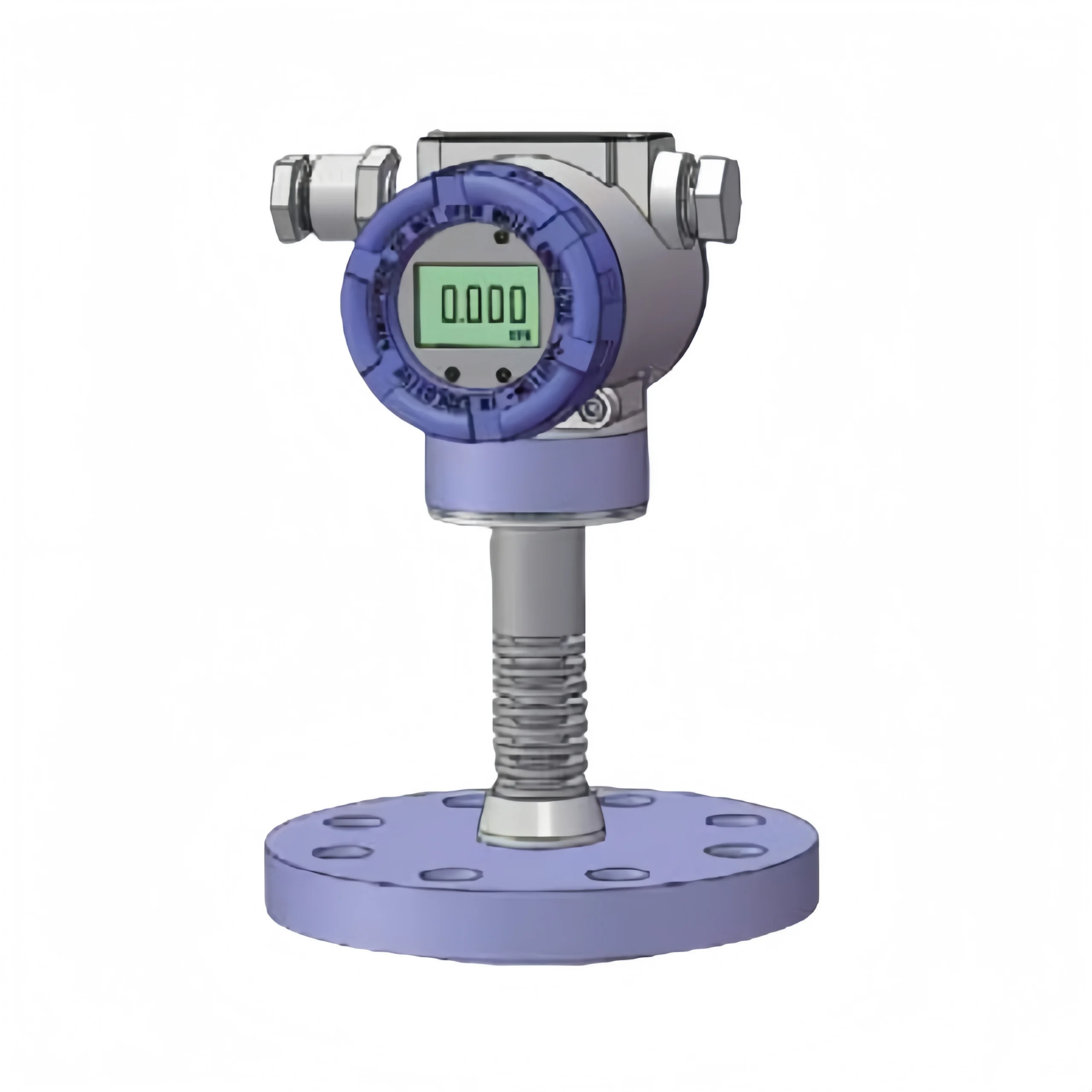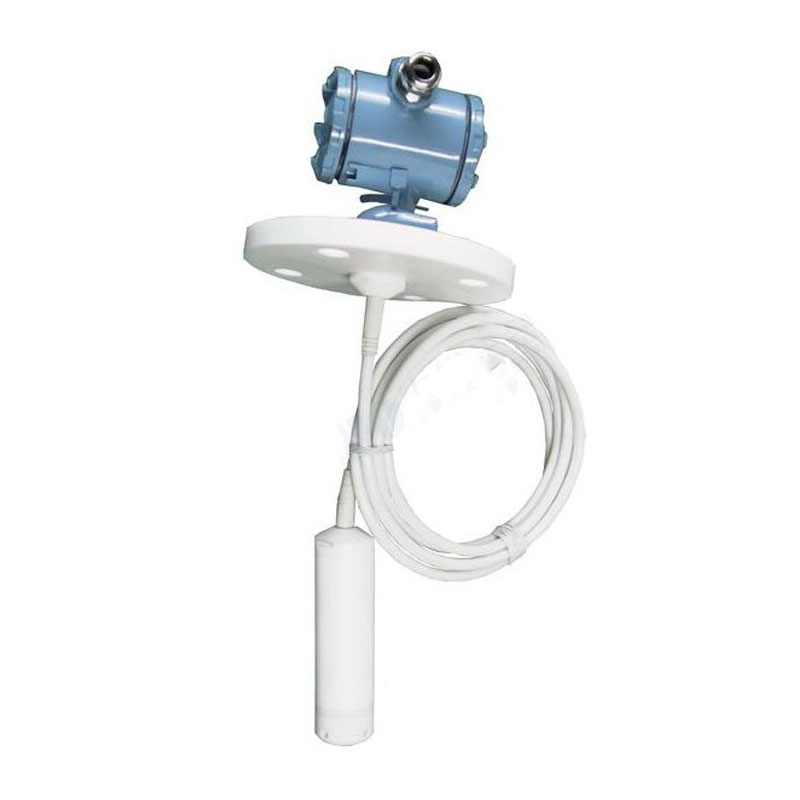
In modern industrial production, the accurate acquisition of liquid level data is a fundamental prerequisite for ensuring the safe and efficient operation of systems. Float level sensors are a classic measuring instrument, and they’re used a lot in storage tanks, reactors and various complex vessels. It can handle extreme conditions like high temperatures, high pressures and severe corrosion, which is why it’s the go-to solution in industries like chemicals, food and pharmaceuticals.
How a Float Level Sensor Works
The operating principle of a float level sensor is based on the principle of buoyancy, as detailed below:
Buoyancy: When you put the float in a liquid, it goes up because of the buoyant force. Archimedes’ principle says that the size of this buoyant force is equal to the weight of the liquid the float displaces.
Changes in Liquid Level: The float’s buoyancy changes as the liquid level rises or falls. When the liquid level rises, the buoyancy acting on the float increases, causing the float to rise; when the liquid level falls, the float descends.
Displacement Transmission: The float is connected to an indicator or actuator via a linkage. As the float rises or falls, the linkage moves accordingly, so the float’s displacement is sent to the indicator or actuator.
Liquid Level Display or Control: The indicator displays the height of the liquid based on how the linkage moves, and the actuator controls equipment like valves and pumps based on the liquid level signal. This means that the liquid level is automatically controlled.
Structure of a Float Level Sensor
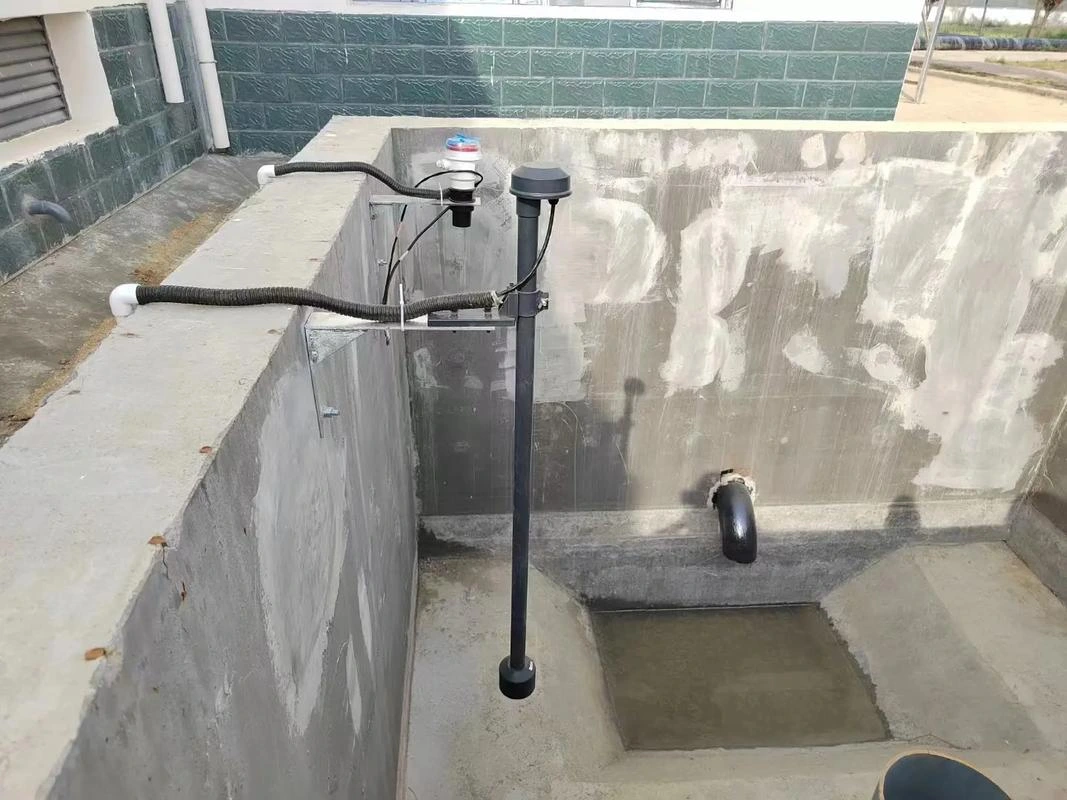
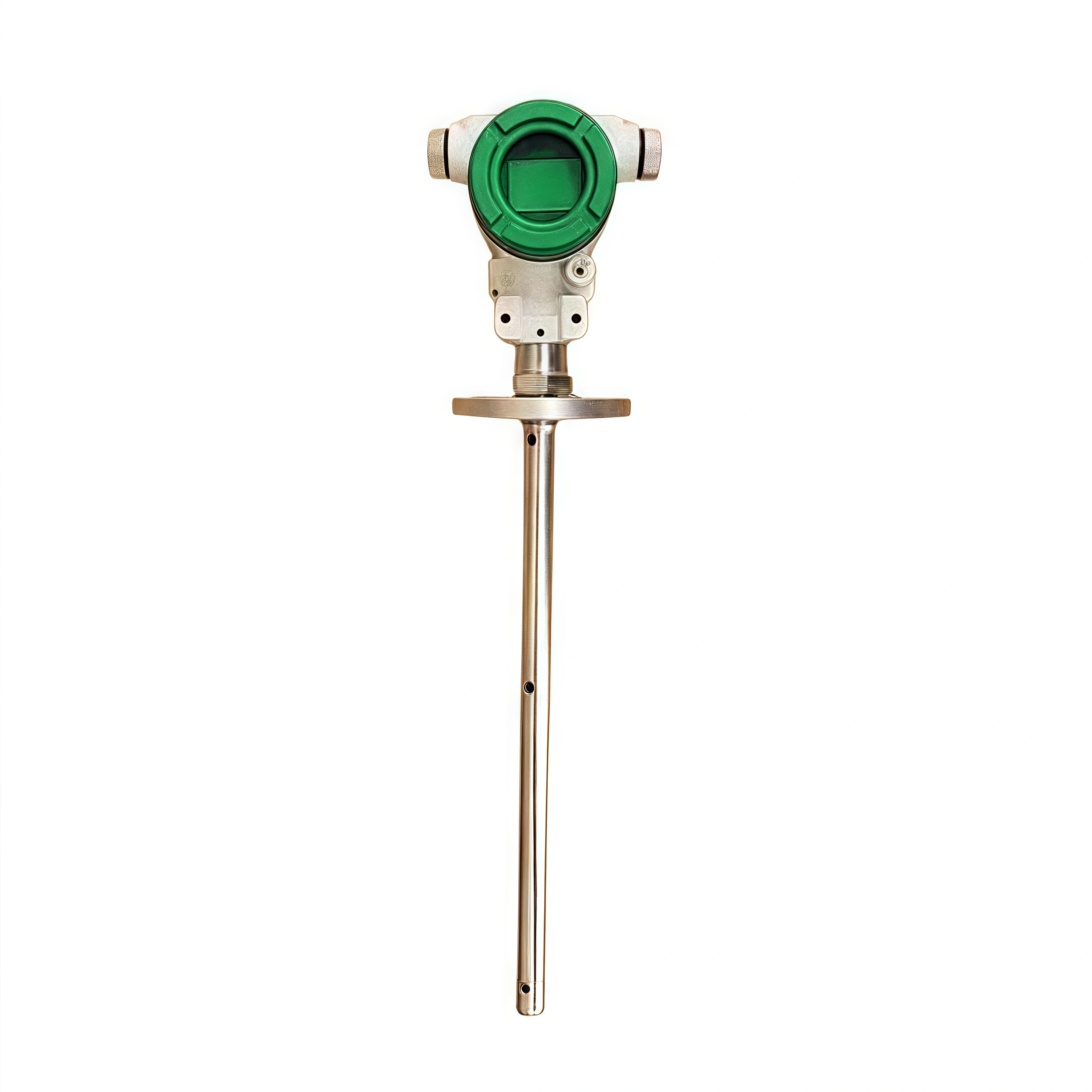
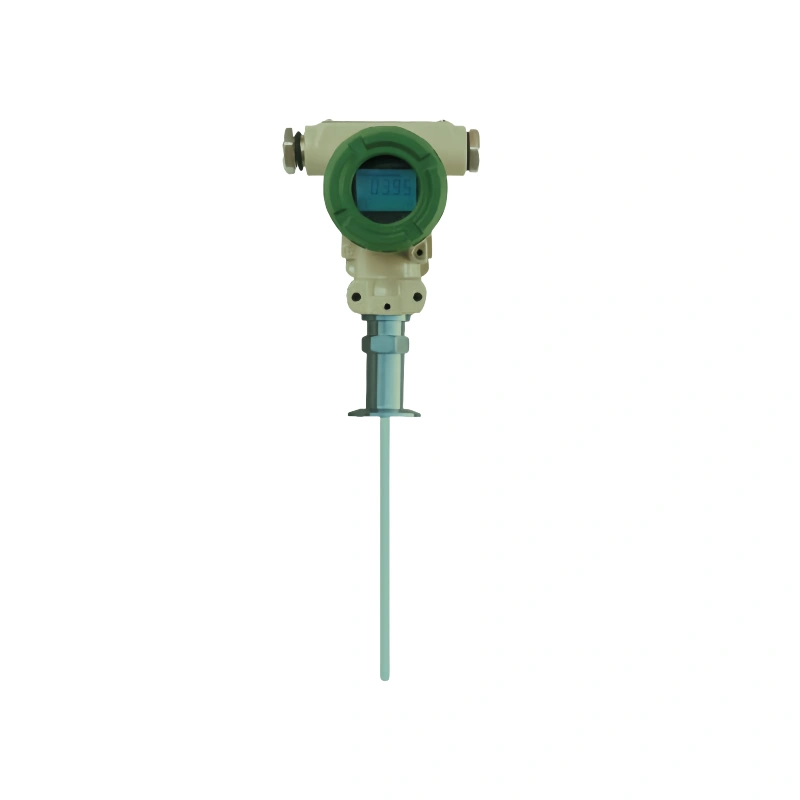
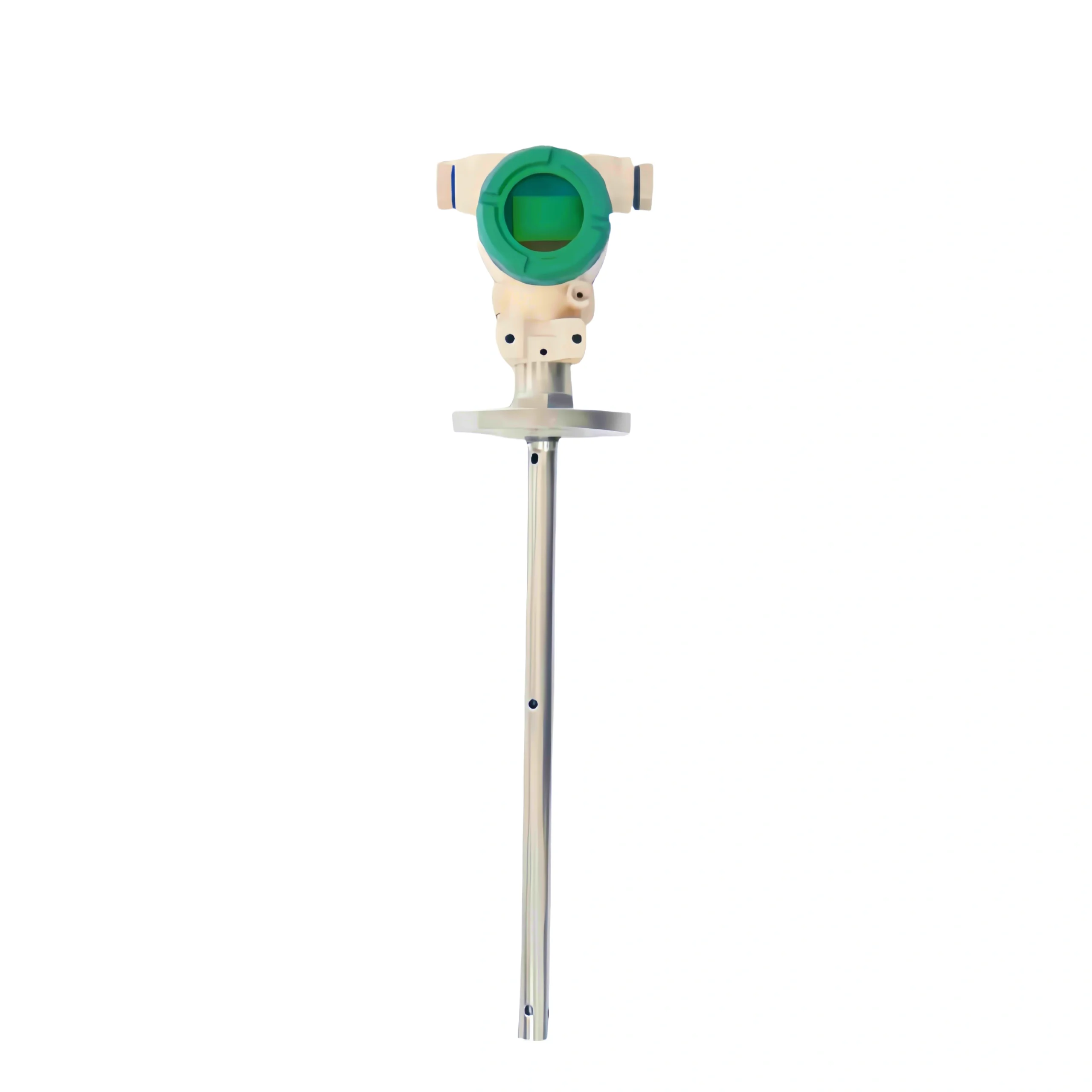
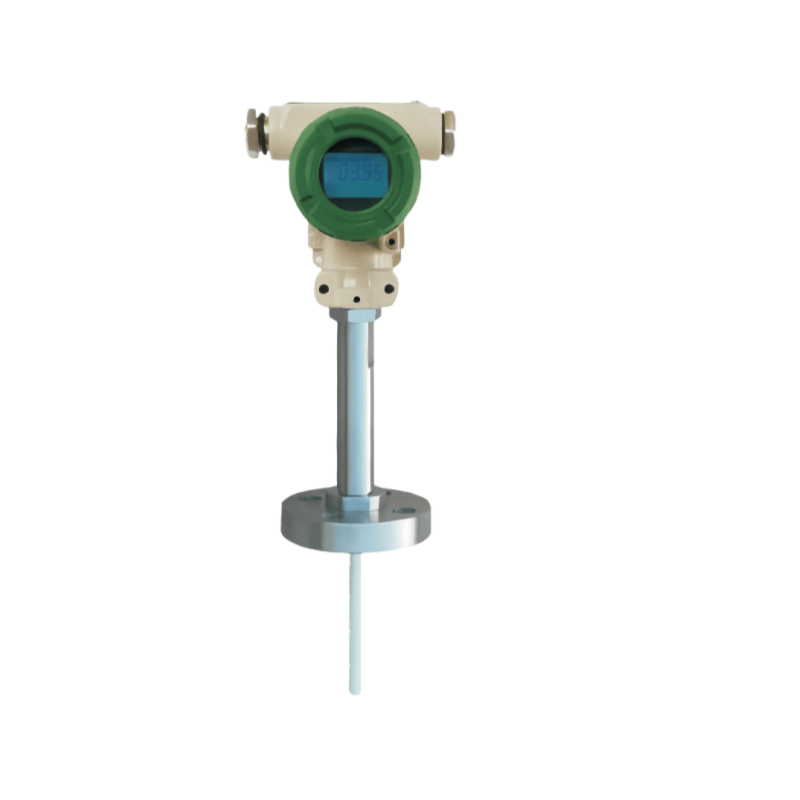
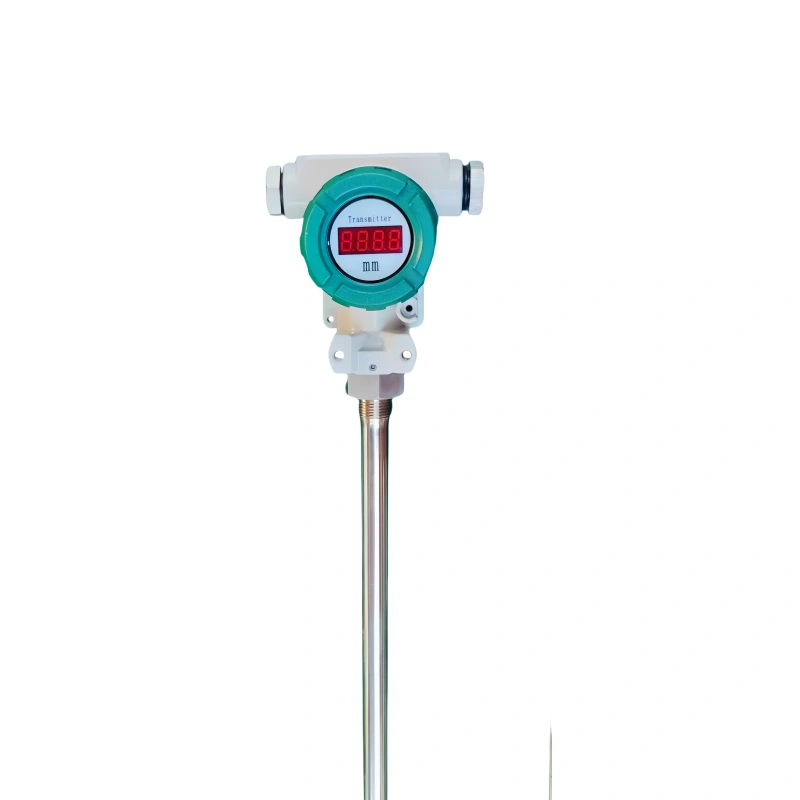
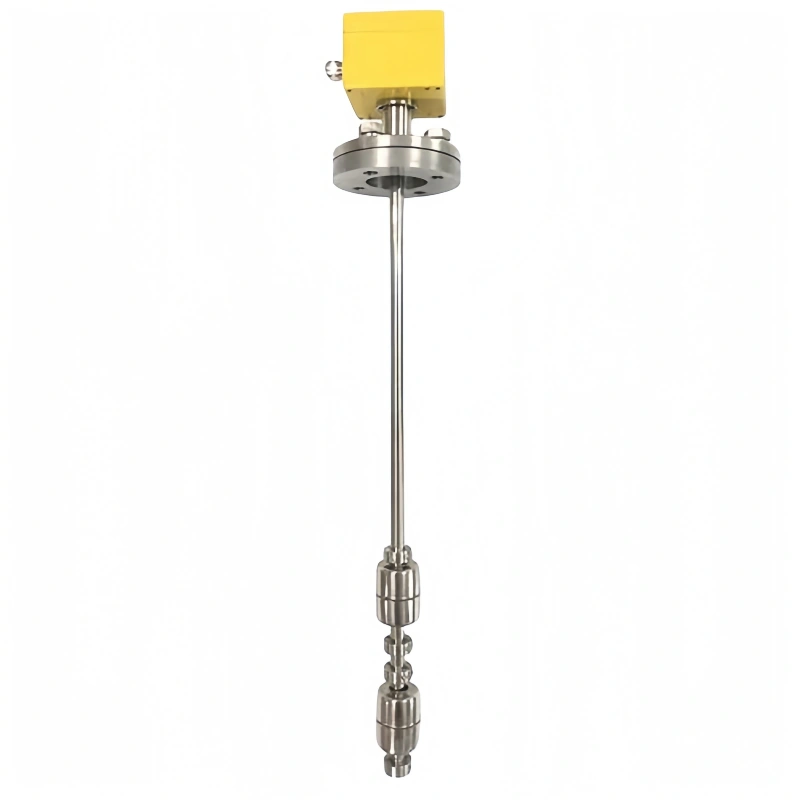
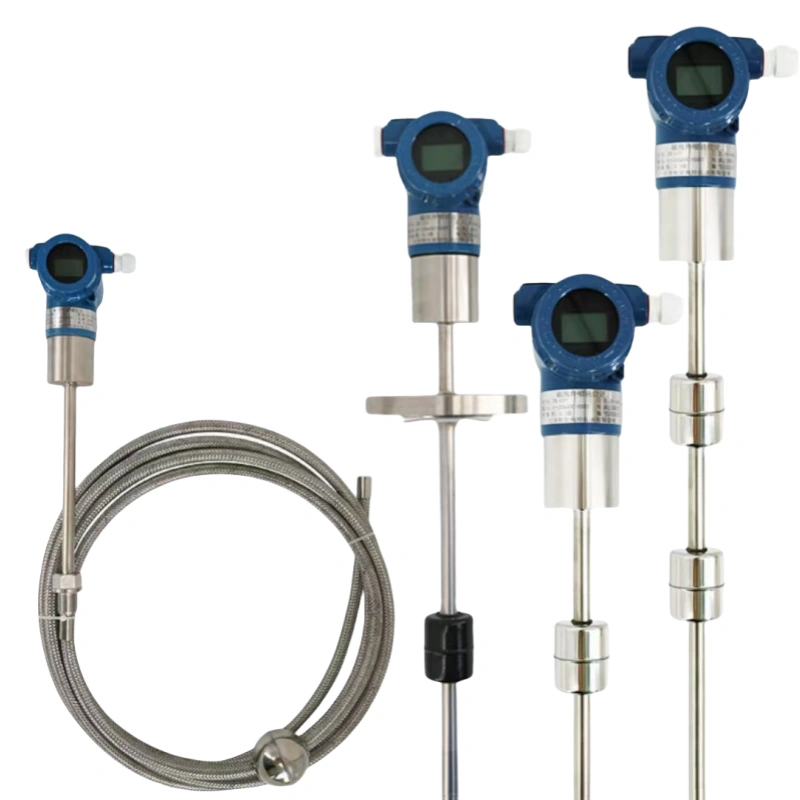
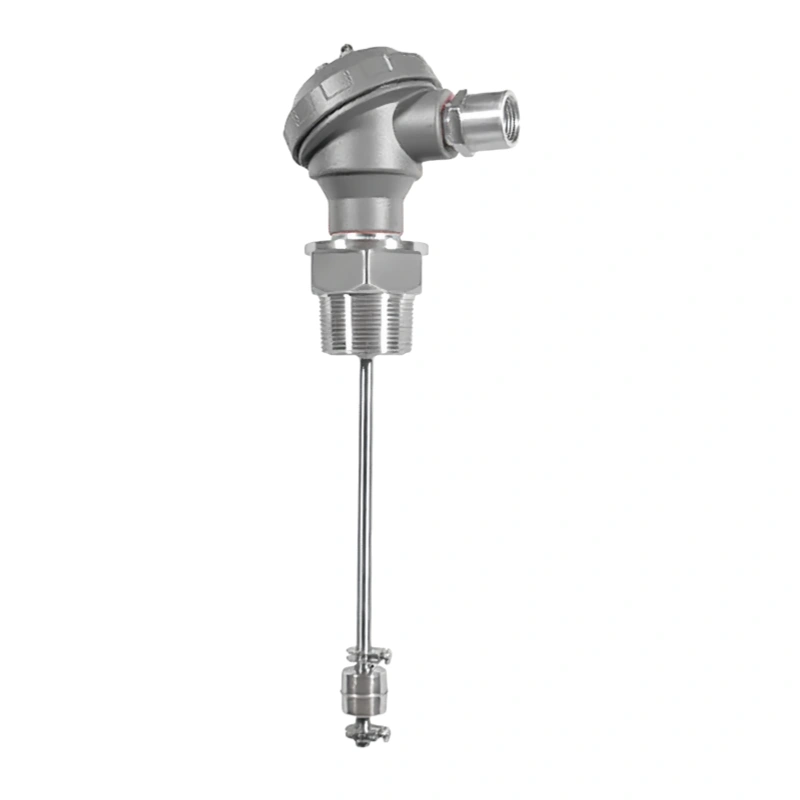
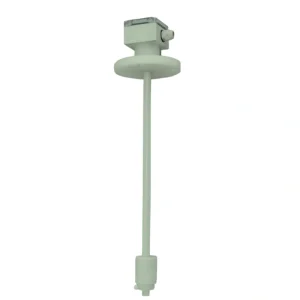
A float level sensor consists of a float, a rod and other components. The float level sensor is mounted on top of the vessel via a connecting flange. The float remains afloat on the liquid surface based on the principle of buoyancy. When the liquid level in the vessel changes, the float moves up or down accordingly. Due to magnetic interaction, the reed switch within the float level sensor is activated, converting the change in liquid level into an electrical signal. This signal is then displayed as a digital reading on a display instrument, The float level sensor thus enables remote detection and control of the liquid level.
Features and Advantages of Float Level Sensors
Due to their structure and operating principle, float level sensors offer the following notable features and advantages:
High-precision measurement: Float level sensors are great for getting super accurate measurements. They use mechanical transmission mechanisms and floats that are designed to a high precision to control and measure liquid levels. This makes float-type level sensors a reliable measurement device, perfect for applications where high precision is needed.
Reliability and Stability: Float level sensors are really reliable and stable. Their simple structure and minimal number of components mean there’s less chance of faults and damage, so they’re more stable and reliable. These sensors are pretty tough. They can handle high temperatures, high pressures and corrosive media, and still work just like they should.
Suitable for a wide range of liquid media: Float level sensors can measure all kinds of liquids. They’re great for water, oil, chemicals and acid-base solutions. If you pick the right float material and density, you can get accurate measurement results across different liquids.
Extensive optional features: Local indication provides a handy visual representation of the liquid level. Switch control lets you set up multiple alarm points however you like, so you can control things like the pump, valves and alarms. Switch signals can be directly utilised for interlock protection. Continuous measurement provides standard signals such as 4–20 mA, which can be integrated into DCS/PLC systems to achieve continuous level monitoring and regulation.
Relatively flexible installation: A variety of installation methods are available. Vertical top-mounted installation is the most common, with the float rising and falling with the liquid level within the main vessel or measuring tube. Side-mounted installation is used for large storage tanks where a top opening is not feasible, utilising a guide tube to allow the float to move. The bypass-tube type is installed on a bypass pipe on the outside of the vessel, facilitating maintenance and servicing. Flanged or threaded connections accommodate different installation interfaces.
Good cost-effectiveness: Float level sensors are pretty cheap and offer great value for money compared to other level measurement devices. They’re simple to make and this means they’re cheap to produce, which makes them more economical and practical. This has led to them being used a lot in industrial applications.
High safety: The reed switch used in the switching type is a passive contact that produces no sparks, making it intrinsically safe and highly suitable for areas with explosion-proof requirements.
High-pressure resistance: The sealed design can withstand high pressures and is also heat-resistant; high-temperature variants of float and sealing materials are available.
Controllable density influence: Floats of varying densities can be selected to accommodate liquids of different densities. Adjustment of the float may be required when density variations exceed ±0.02 g/cm³.
Simple structure and easy maintenance: The main moving parts are relatively simple, resulting in a relatively low failure rate. In the event of a fault, diagnosis and replacement are generally straightforward.
High pressure resistance: Float level sensors withstand high pressures. In well-sealed vessels, they operate normally and provide accurate level measurements, functioning stably and reliably even under high-pressure conditions.
Limitations
Mechanical moving parts: If you’ve got some prolonged friction going on, it can lead to wear and tear, so you’ll need to keep an eye on it and do some maintenance now and then.
Density influence: Sensitive to changes in medium density; if the liquid density exceeds the design range, measurement errors may occur.
Installation requirements: A certain amount of vertical space is required during installation to ensure the float can move freely. The installation locati0n must avoid sources of interference such as feed inlets. The measuring cylinder may require insulation or trace heating to prevent the medium from solidifying.
Dead zones: As the float has a certain volume, there are usually small dead zones at the top and bottom.
Susceptibility to scaling and adhesion: If the medium is prone to scaling or adhering to the float or connecting rod, this may affect movement or measurement accuracy.
Key Application Scenarios
Petroleum and Chemical Industries
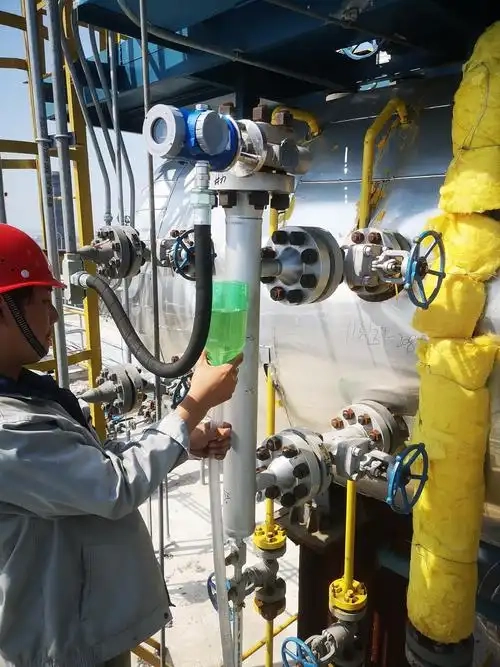
Float level sensors are used a lot in the petroleum and chemical industries. These sensors are used a lot in these sectors to measure the level in things like liquid tanks, storage tanks and reactors. Petroleum and chemical products often have characteristics like high temperature, high pressure, flammability and explosiveness. This means that the reliability and safety requirements for level sensors are very strict. Float level gauges are simple and reliable, making them perfect for measuring liquid levels in these industries.
Pharmaceutical and Food & Beverage Industries
The pharmaceutical and food & beverage industries have very strict rules about measuring liquid levels. These sensors are used a lot in places like storage tanks, fermentation tanks, reactors and other equipment to keep an eye on the liquid levels. Float level sensors are highly precise and reliable, which is important for the quality and safety of pharmaceutical and food and drink products.
Environmental Protection and Water Treatment Industries
Float level sensors are also really important in the environmental protection and water treatment sectors. For example, they’re great for keeping an eye on the water level in reservoirs and wastewater treatment processes, because they can measure changes in water levels as they happen and provide accurate data for environmental protection and water treatment. With remote monitoring and control functions, float level sensors can quickly spot and fix any problems with water or liquid levels, making sure environmental protection and water treatment facilities keep going.
Other Application Scenarios
As well as the main application scenarios we mentioned above, float level sensors are also used in lots of other fields. For example, in industries like shipbuilding, papermaking and printing, you can use float level sensors to keep an eye on changes in the liquid levels of various media. You can also use them in electrical and hydraulic machinery for things like level control and alarm systems. Plus, with tech getting better and industry developing all the time, there’ll be more and more ways to use these sensors.
FAQ
1. Comparison between float level switches and float level sensors
Key functional differences:
Float level switches are designed for on/off control; they detect specific liquid level points. When the liquid level reaches a preset threshold, the switch is triggered to activate interlocked controls such as alarms or pump start/stop functions. They don’t provide continuous liquid level data.
Float level sensors keep checking the level of a liquid and send information about any changes to a control system. They output standard signals like 4–20 mA and RS485, and they’re compatible with PLC/DCS systems, so you can monitor and regulate liquid levels in real-time.
Differences in operating principles:
Both are based on the principle of buoyancy, but their operational logic differs.
Float level switches trigger switching elements such as reed switches or relays via the displacement of the float, providing only a binary signal indicating whether the threshold has been reached or not.
Float level sensors convert the displacement of the float into a continuous electrical signal via a sensing element, accurately reflecting the specific numerical value of the liquid level.
Differences in Structure and Accuracy:
Float level switches are pretty simple, made up of a float, a linkage and switching elements. They don’t have any complex signal processing modules or need to be as accurate.
Float level sensors are pretty complex pieces of kit. As well as the float and linkage, they’ve got signal conversion and amplification modules, which make them more accurate and let you get precise feedback about liquid levels.
Types of Float Level Switches
Linkage Float Level Switch
The linkage float level switch, also known as a reed switch float level switch, is the standard type of float level switch. It’s installed using a top-mounted setup, with a linkage extending vertically into the liquid being measured. The float is attached to the linkage rod and moves up and down to match the changes in liquid level. Inside the linkage rod, reed switches are typically used to define the switching positions; when the magnetised float moves to the set switching level, the reed switches within the linkage rod close the circuit, thereby generating a switching signal.
Cable-type float level switch
The cable-type float level switch utilises a combination of flexible cable and multiple floats; there are as many floats as there are switching points, with the floats arranged in series along the cable. As the liquid level rises, the floats rise, and the cable connecting the floats changes from a downward to an upward position, thereby triggering the movement of internal mechanical components to generate an electrical switching signal.
Angle-type Float Level Switch
The angle-type float level switch differs from other level switches in its installation orientation, being mounted laterally on the vessel wall. The float is rigidly connected to a linkage; as the liquid level causes the float’s position to change, the angle between the linkage and the control system changes. When the linkage reaches a preset angle, a switch signal is triggered.
Precise selection is key to ensuring optimal performance of float level sensors. By scientifically selecting the appropriate model based on the characteristics of the medium, operating conditions, installation environment and measurement requirements, maintenance costs can be minimised, equipment service life extended, and efficient, intelligent level monitoring achieved.
Sino-Inst specialises in the field of industrial level measurement. With a dedicated selection team and comprehensive technical support, we can tailor bespoke selection solutions to your specific operating conditions, providing end-to-end services to help businesses optimise production processes and enhance operational efficiency.