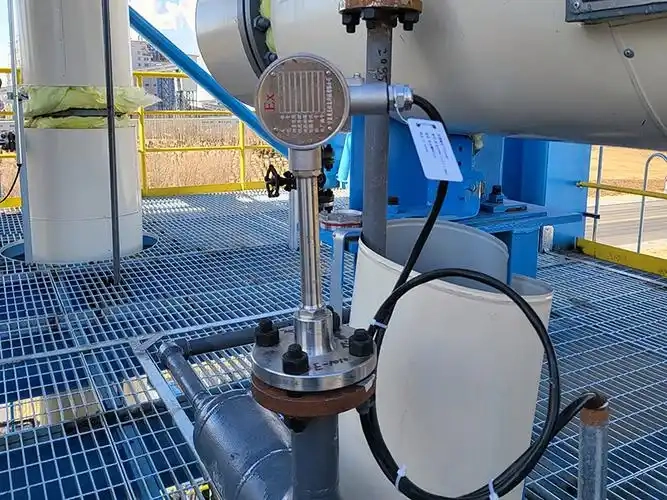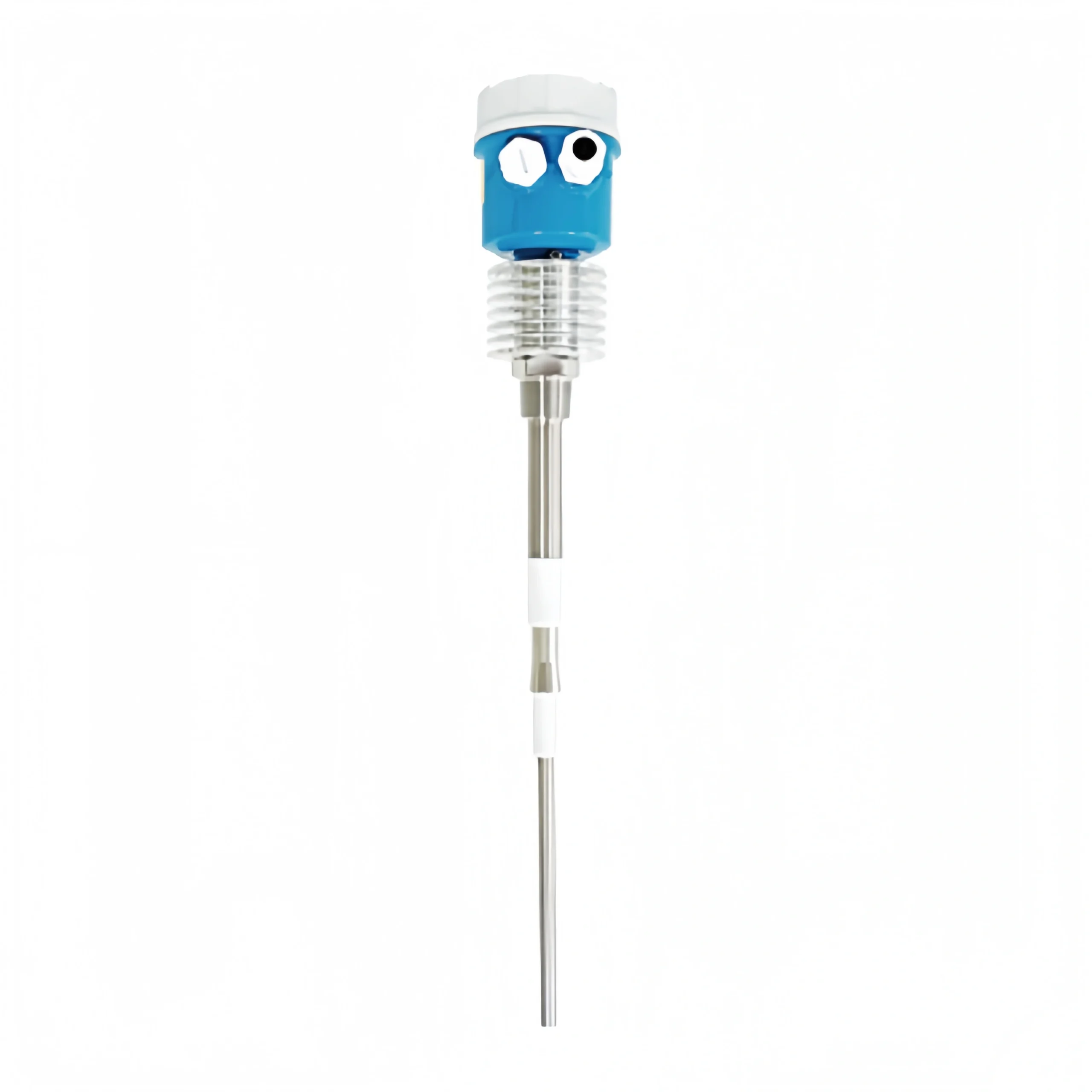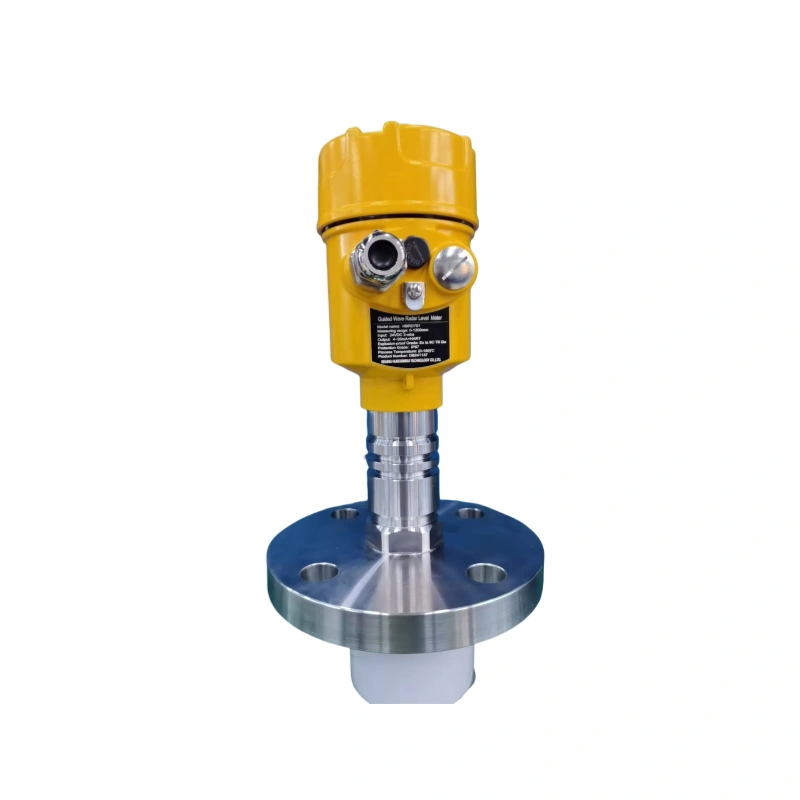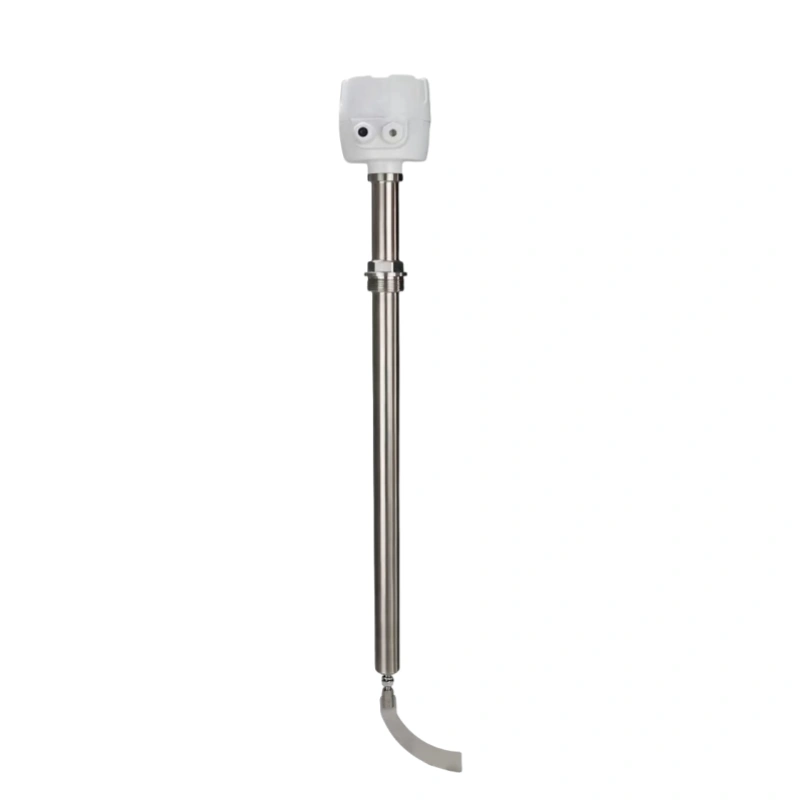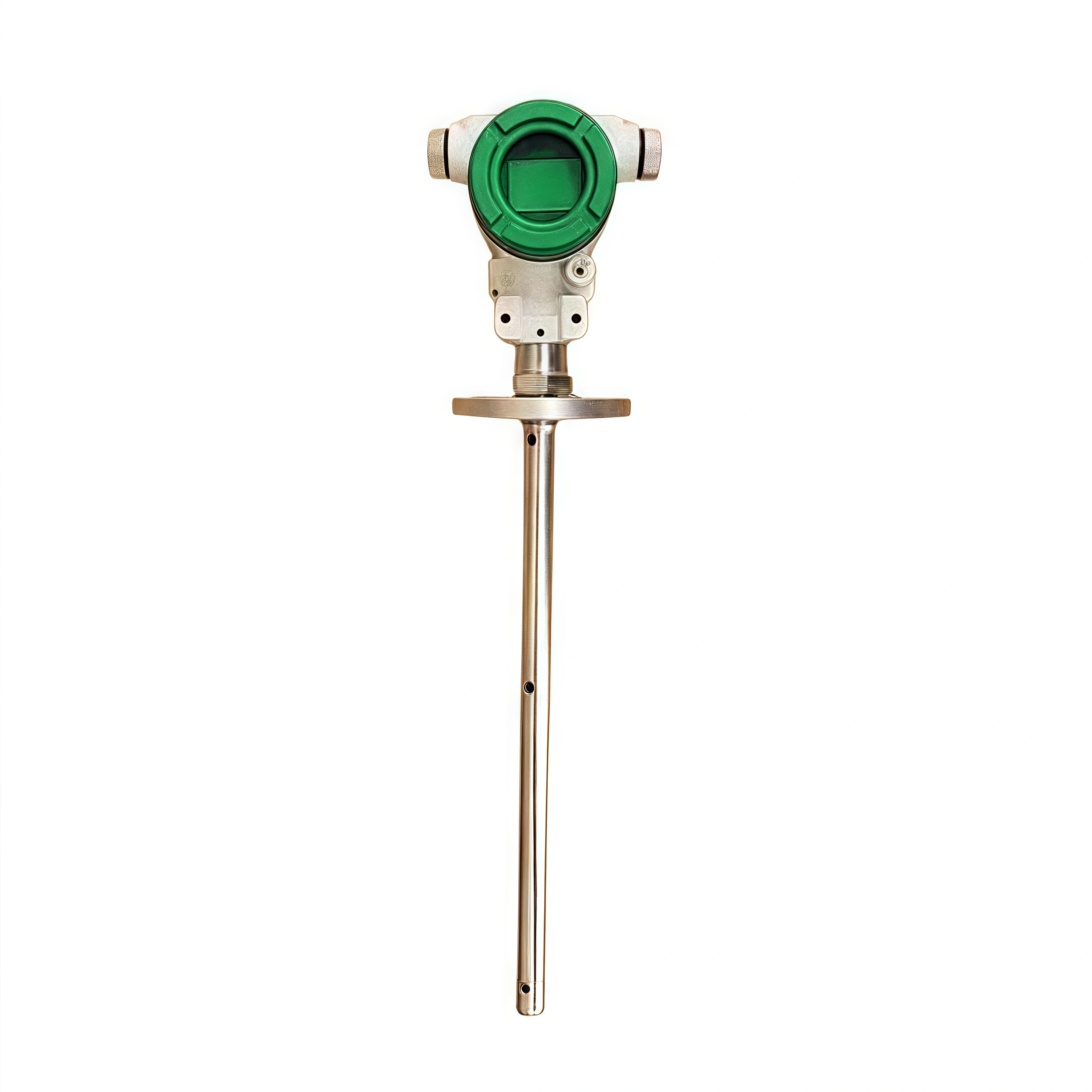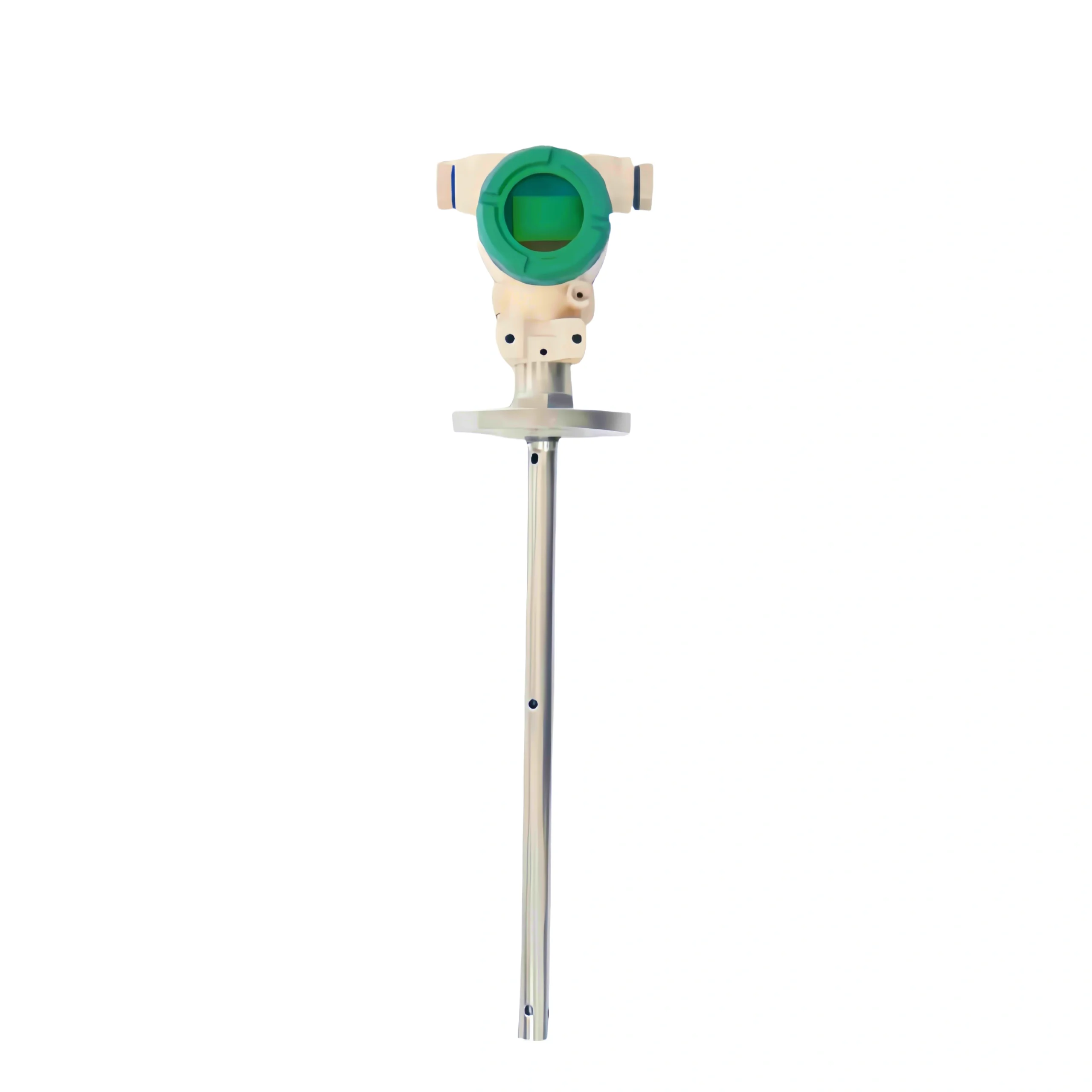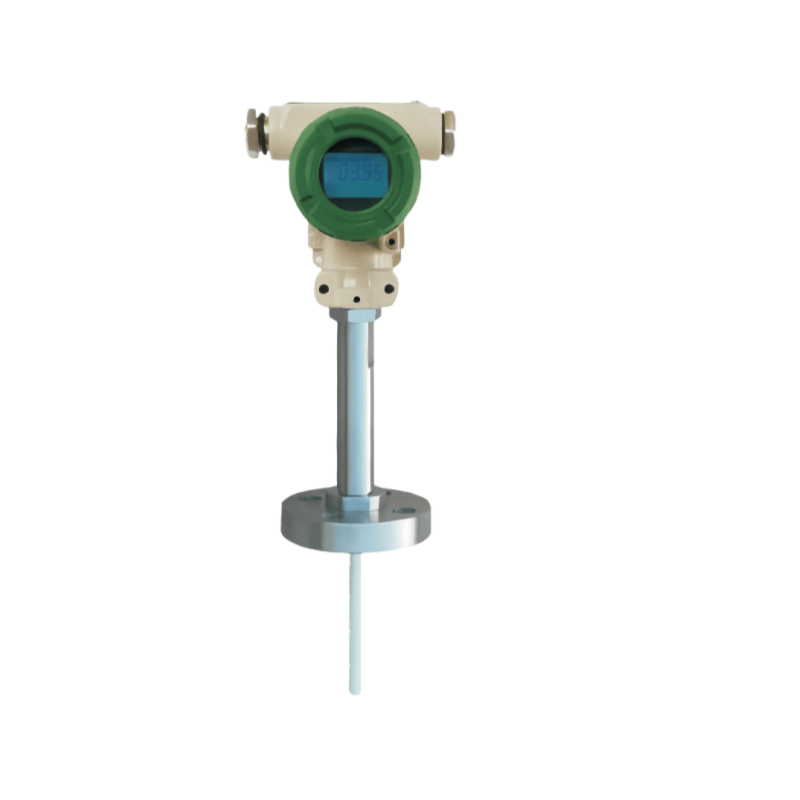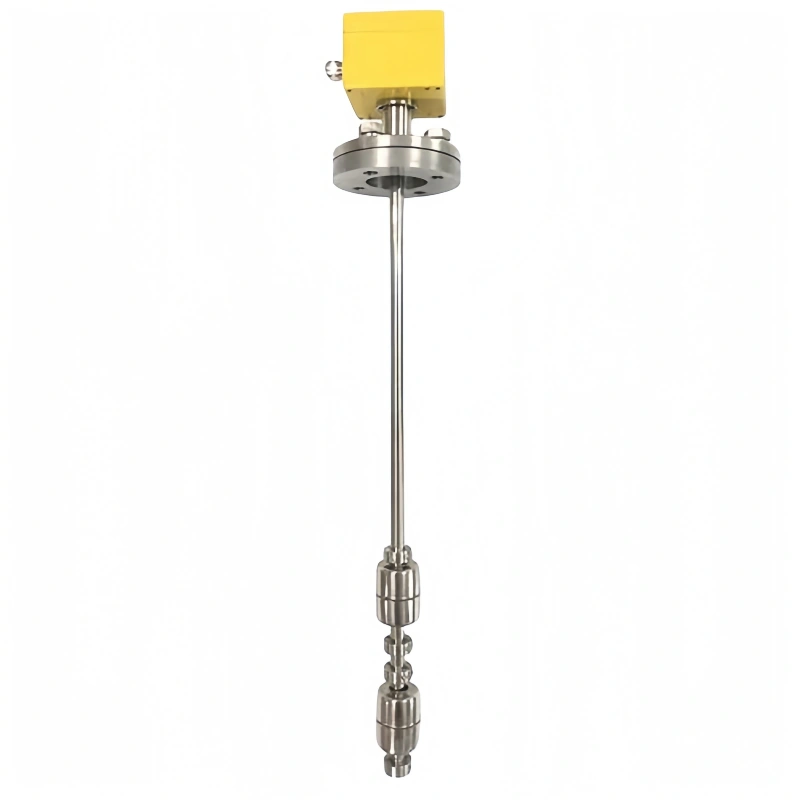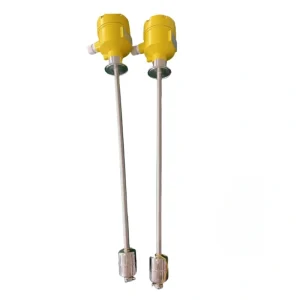
What is the difference between a float level gauge, a float level switch, and a float level controller? Depending on the output signal and the functions they perform, we typically refer to float level sensors as float level gauges, float level switches, or float level controllers. In fact, they all operate on the same principle.
Float Level Gauge
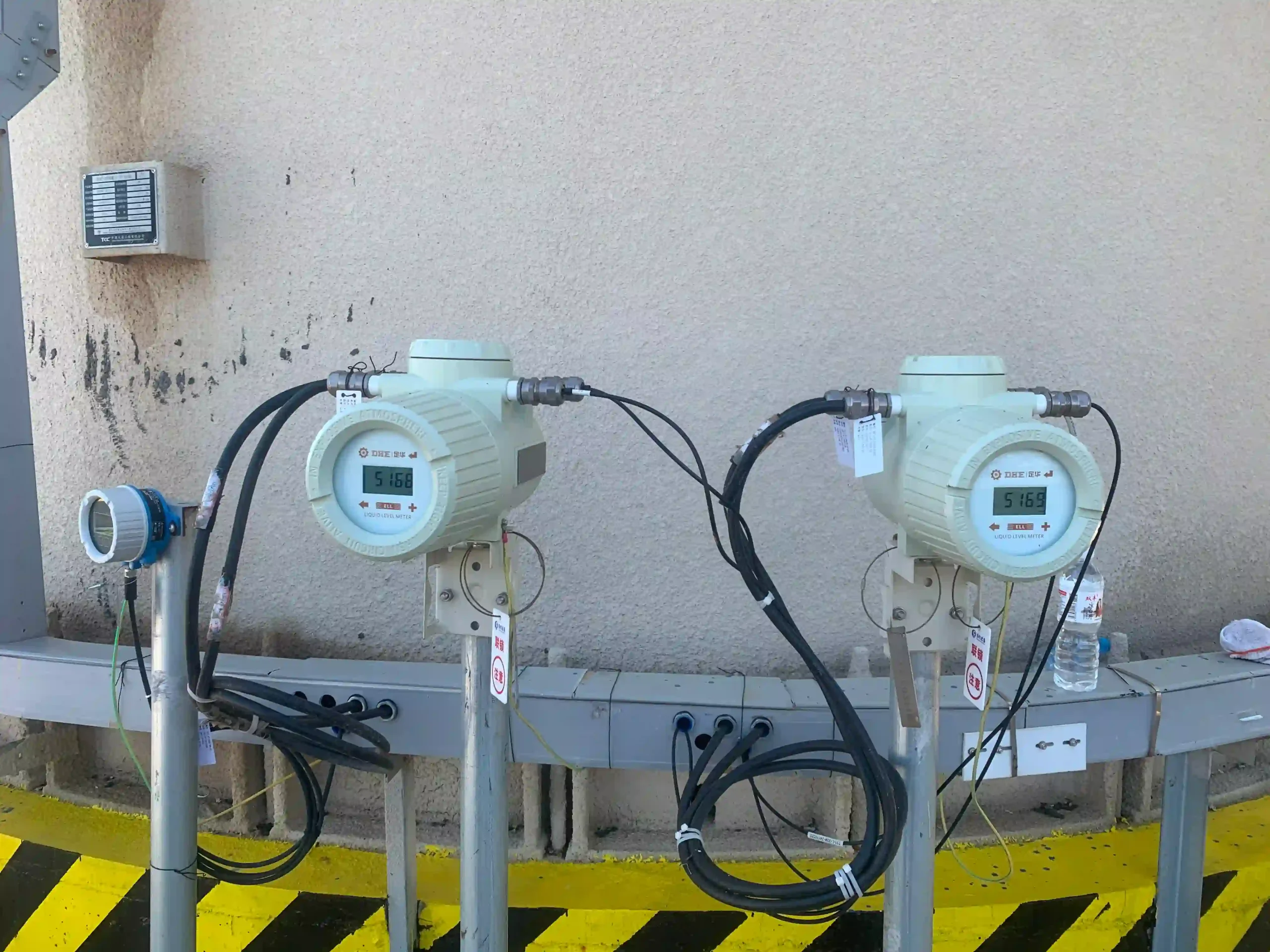
This instrument is designed for continuous liquid level monitoring and real-time output of specific liquid level values. It works by using a float that goes up and down with the liquid level, and a sensor converts the float’s movement into a standard 4–20 mA analogue signal. This signal can be sent to a control room, which can then show the liquid level values and percentages in real time, as well as collect data and monitor things remotely. This means that high-precision, automated monitoring is possible.
Float Level Switch
This is a basic switch-type instrument used for point-level control. Its core mechanism relies on the magnetic coupling between a magnet embedded in the float and an external reed switch. When the liquid level hits a set point, the contact is activated, opening or closing and producing an ON/OFF switch signal. It’s mostly used for high/low level alarms and basic equipment start/stop control, and it’s got a simple structure and low cost.
Float Level Controller
An automated unit integrating detection and logic control functions, it uses a float switch as the primary sensing component. Upon receiving a signal at the liquid level threshold, it performs logic operations and outputs a relay contact signal to directly control on-site equipment. It features protection functions such as explosion-proof and anti-vibration capabilities, and can form a complete automated liquid level control system, meeting the logic control requirements of complex operating conditions.
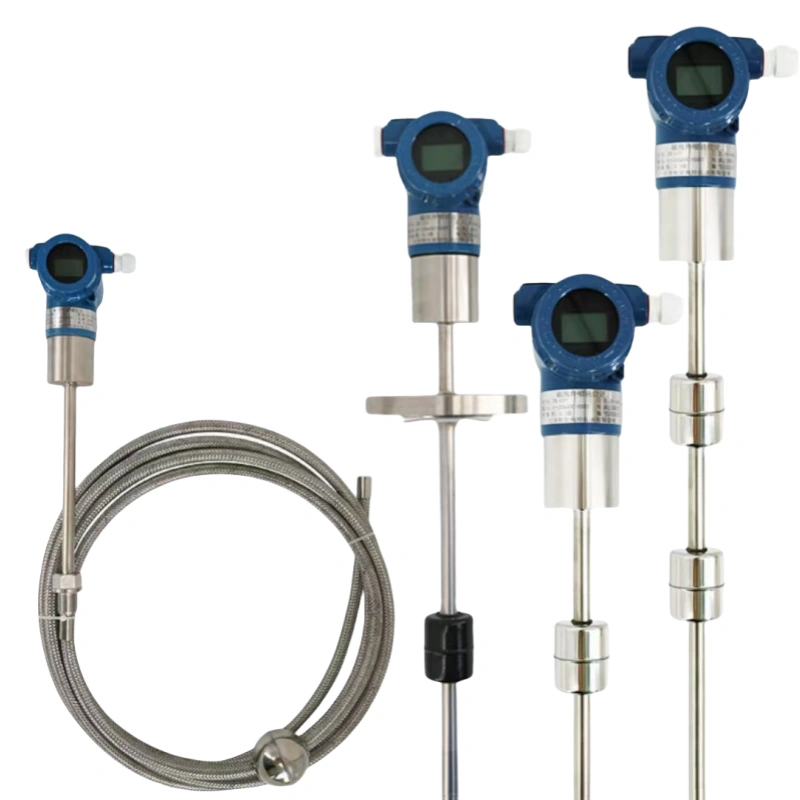
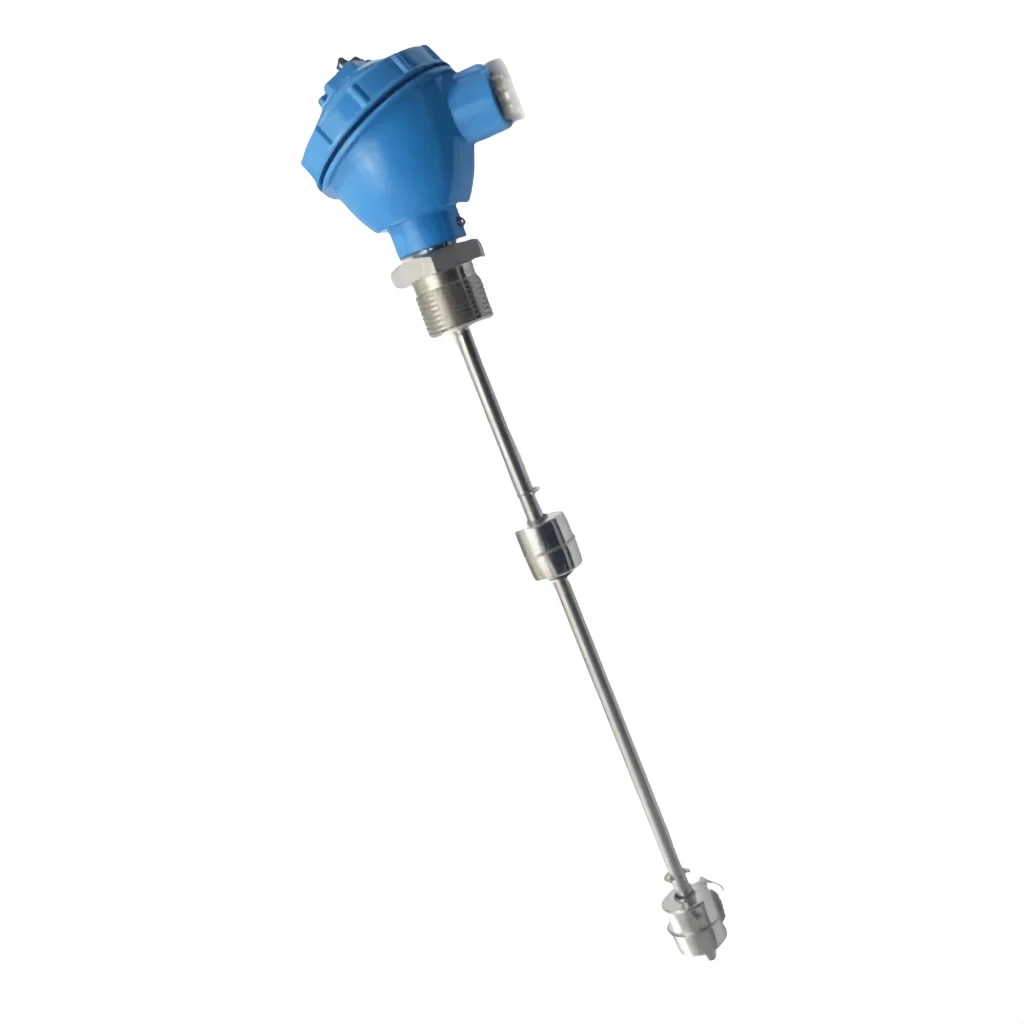
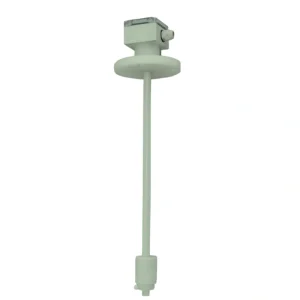
Working Principle
All three devices work on Archimedes’ principle of buoyancy. They use a float to tell them when the liquid level is rising or falling. But they are different in how they work, the signals they send out and what they are mostly used for. The specific principles are summarized as follows:
Float Level Gauge
This is mostly used to keep an eye on liquid levels and show specific values. When it’s running, the float goes up and down with the liquid level, which drives an internal magnetic float or linkage mechanism. A magnetostrictive sensor or multi-turn potentiometer converts the movement of the float into an electrical signal. This signal is related to the height of the liquid level. This signal is then processed by a converter and sent to instruments in the control room or a PLC system, which allows you to see the liquid level values and percentages in real time, log data and monitor things remotely.
Float Level Switch
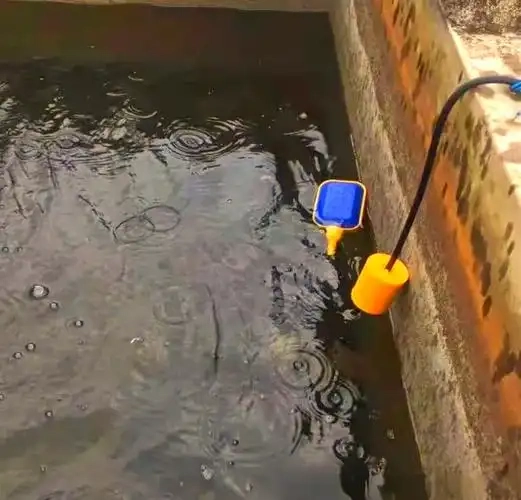
Primarily used for point-level control, it simply determines whether the liquid level has reached a preset threshold. A permanent magnet is built into the float; as the liquid level rises or falls, the float moves to the set position, causing the magnet inside the float to magnetically couple with the reed switch inside the outer sleeve, triggering a change in the reed switch’s contact state—from normally open to normally closed or vice versa; It outputs a simple on/off signal to trigger high/low-level alarms or directly control the start/stop of associated equipment such as pumps, thereby providing basic liquid level protection.
Float Level Controller
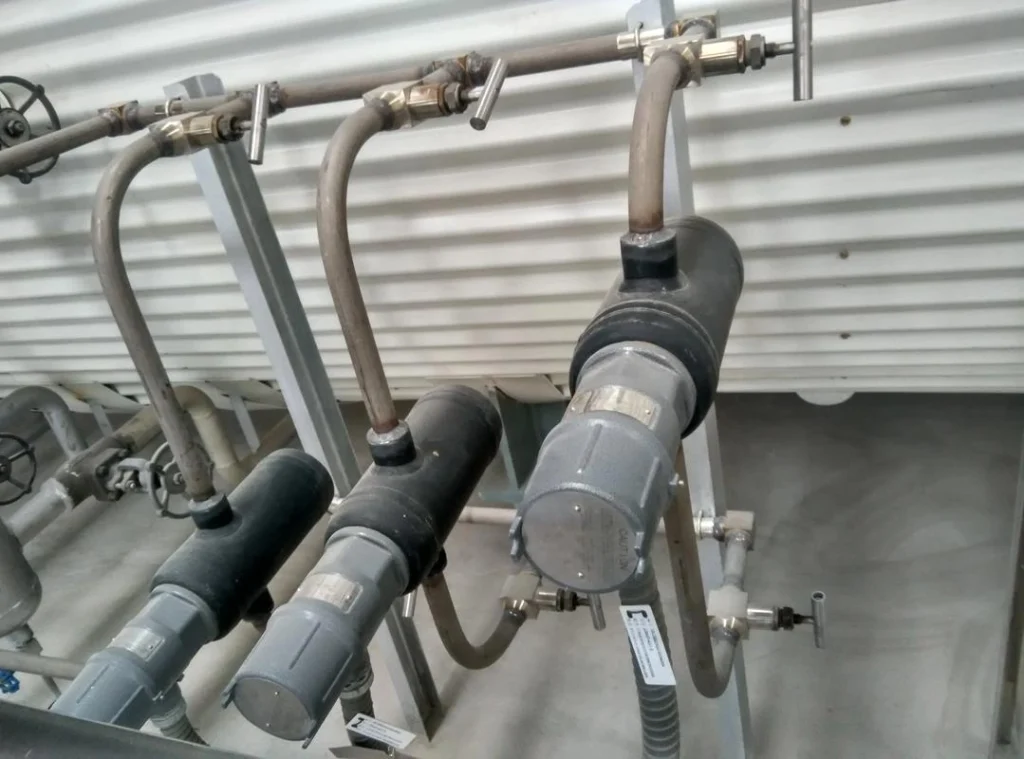
Float level controllers use the principles of buoyancy and magnetic coupling to automatically control the liquid level. As the liquid level rises or falls, the float moves with it. When it reaches the set position, it triggers the internal magnetic switch, transmitting the liquid level signal to the controller module.
The module uses built-in logic circuits to determine the current liquid level status and directly outputs relay switching signals to control the automatic start/stop of equipment such as pumps and solenoid valves. Some models also feature delay, anti-bounce, and protection functions, thereby constituting a complete automatic liquid level control system.
Advantages and Disadvantages
Advantages and Disadvantages of Float Level Gauges
Advantages
1. Accurate measurement: Enables continuous level monitoring and real-time output of specific level values and percentages. With minimal data error, it meets high-precision monitoring requirements;
2. Remote signal transmission: Outputs a standard 4–20 mA analog signal, allowing integration with control systems such as DCS and PLC. Suitable for highly automated environments, facilitating remote monitoring and data logging;
3. Stable operation: It uses magnetic coupling for non-contact transmission, which means no mechanical wear, low failure rates and a long service life, making it suitable for long-term continuous operation.
4. It works with lots of different types of media: You can choose materials like stainless steel or plastic based on what you’re working with, which is pretty handy.
Disadvantages
1. Higher cost: Compared to float-type level switches, the cost of buying, installing, and maintaining the switch is higher, which makes it not suitable for basic bulk configurations.
2. It is important that it is installed very precisely, and the mounting position must be fixed exactly to make sure that the float moves freely. The wiring and setting up of the signal are also quite complicated.
3. Weak resistance to interference; susceptible to electromagnetic signals and media crystallization or scaling, which may cause measurement errors or signal disruption;
4. Not suitable for harsh conditions such as strong corrosion, high temperature, or high pressure; materials degrade rapidly, leading to measurement failure.
Advantages and Disadvantages of Float Level Switches
Advantages
1. Simple and reliable structure with no complex electronic components; relies on mechanical buoyancy and magnetic coupling for operation, resulting in an extremely low failure rate, long service life, and low maintenance costs;
2. It’s a breeze to set up, with loads of options for mounting (top, side, or submersible); the wiring’s a piece of cake, and you won’t need a team of engineers to get it up and running.
3. Cost-effective: Low procurement and replacement costs, suitable for high-volume, basic level control applications, offering outstanding value for money;
4. It can resist strong interference: It won’t be affected by dust or electromagnetic signals, and the signal output is always clear and stable – making it perfect for standard operating conditions.
Disadvantages
1. The measurements are not very accurate. It only supports point-level control. It cannot display continuous level values. It can only determine whether the level has reached a preset threshold.
2. Limited operating conditions; unsuitable for high-temperature, high-pressure, highly corrosive, or media prone to crystallization and scaling, as the float is prone to jamming and corrosion damage;
3. It’s pretty basic, only giving you on/off signals, no fancy extras like remote transmission or data display, which makes it tricky to fit into complex automated systems.
4. It can be affected by changes in the media, and can go off in the wrong way during violent liquid movement or when there are too many impurities, which can affect how well it works.
Advantages and Disadvantages of Float Level Controllers
Advantages
1. It’s got all the control you need, with simple logic functions that let you automate stuff like pump start/stop and level interlock protection, so you don’t need any extra control units.
2. They’re really adaptable, and some models have explosion-proof, anti-vibration and delay protection functions, which makes them great for complex industrial scenarios like explosion-proof environments and multi-level control.
3. It’s really easy to use and can send strong signals straight to control equipment on-site, so you don’t need any extra conversion parts, which makes it great for integration.
4. It’s also really reliable. The sensing unit is based on a stable float switch design, with a solid control logic and a low failure rate, making it perfect for long-term automated operations.
Disadvantages
1. Higher cost; as it integrates functions such as sensing and logic control, the procurement and maintenance costs are higher than those of ordinary float level switches;
2. Installation and commissioning are complex; control logic must be configured based on operating conditions, and wiring and parameter tuning are more difficult than with standard float-type devices;
3. Functional redundancy: For simple point-level control scenarios, the complex logic control functions are unnecessary, resulting in wasted costs;
4. Difficult to look after: The internal control circuitry is complicated, so it takes specialised technical staff to fix it, which means less efficient maintenance.
Practical Applications
Float Level Gauges
These are primarily used in scenarios requiring continuous level monitoring and real-time acquisition of specific level readings. They are commonly found in storage tanks at oil refineries, reactors at chemical plants, sewage treatment plant sedimentation tanks, and water treatment plant clear water tanks.
They can keep an eye on the height of the liquid medium as it happens and send a standard 4–20 mA signal to the control room, which lets them log liquid level data, monitor things remotely and control the level to a high degree of precision. They’re great for highly automated production processes, like checking how much raw material there is in chemical production and checking transformer oil levels in power systems as they happen.
Float Level Switches
These switches are great for basic point-level control and high/low-level alarm applications. They’re really versatile and are used a lot in industrial and residential sectors. In industry, they’re used in storage tanks and in industries like oil refining, papermaking, and food processing to control upper and lower limits of the medium, preventing overflow or dry-out.
Examples include pulp tank level alarms in papermills and high/low-level start-stop control of raw material tanks in food factories. In residential applications, they are used in water tanks, pools, and water heaters to achieve automatic water replenishment and shut-off, such as level control of secondary water supply tanks in residential communities and dry-burn protection for household water heaters.
Float Level Controller
Primarily used in complex level management scenarios requiring a high degree of automation and logic control, these controllers are commonly found in industrial production. They are mainly used for automatic level control and protection in various containers, pools, and storage tanks, and are widely applied in industrial water supply and drainage, wastewater treatment, cooling water circulation, HVAC water tanks, as well as explosion-proof environments in the petroleum and chemical industries.
It can automatically control the start and stop of equipment like pumps and solenoid valves based on liquid level, which means you can have automatic water replenishment or drainage. It’s also got high/low level alarms, dry-run protection and overflow prevention functions. You’ll find it in water tanks, water towers, collection wells, and circulating water basins, as well as in chemical, papermaking, and power industries, where it’s needed to keep things steady and automatic.
For many years, Sino-Inst has remained dedicated to the R&D and application of industrial automation instruments, accumulating extensive industry experience and technical expertise. By integrating core parameters such as medium characteristics, operating pressure, temperature range, installation environment, and process conditions, we provide customized instrument selection solutions.
We also offer one-stop services including professional installation guidance, post-installation maintenance, and troubleshooting to help enterprises achieve efficient, stable, and cost-effective process control operations.