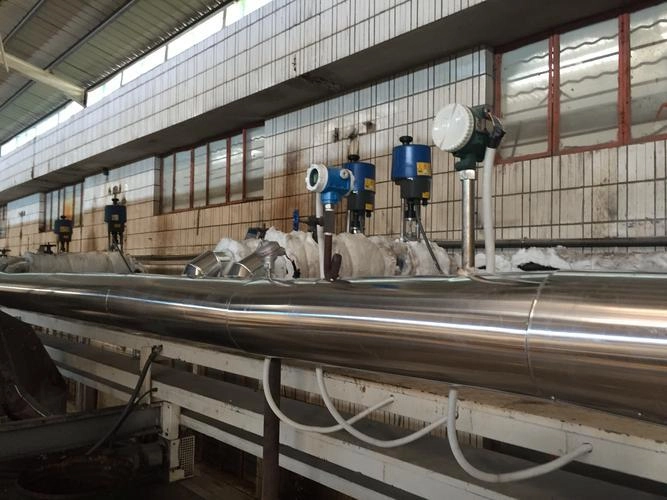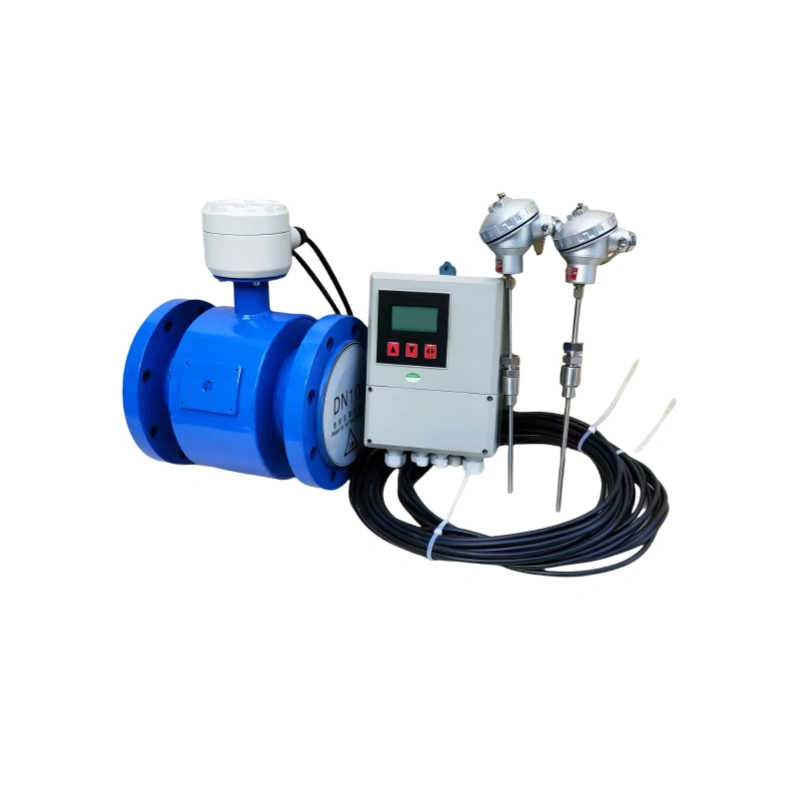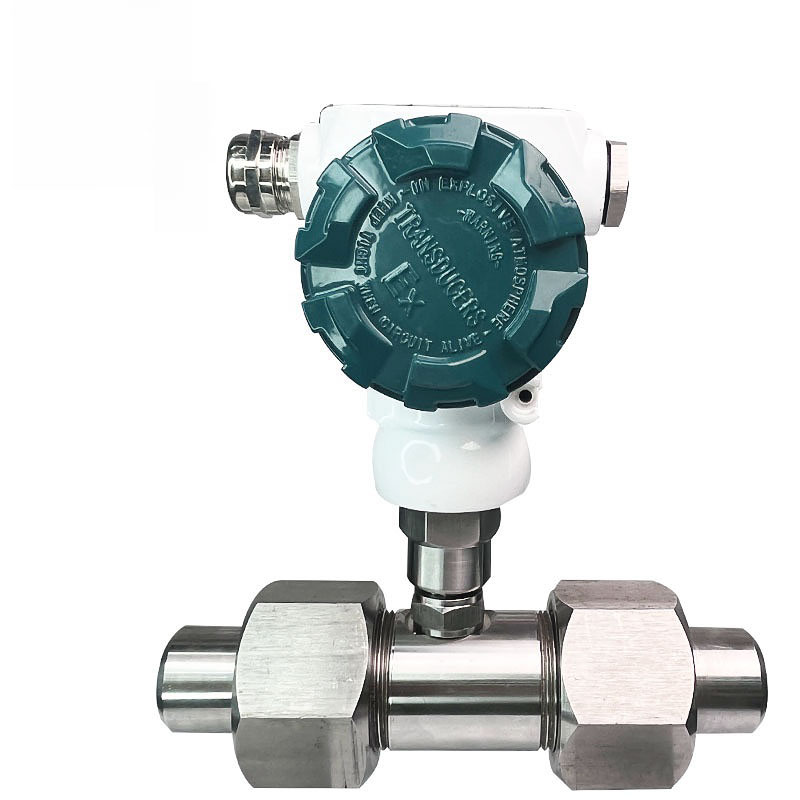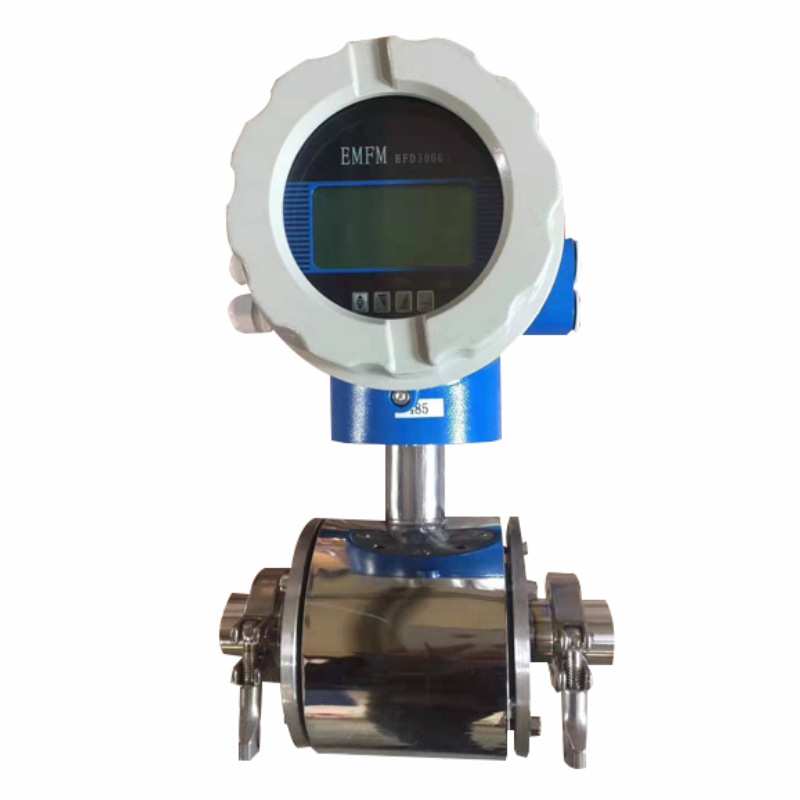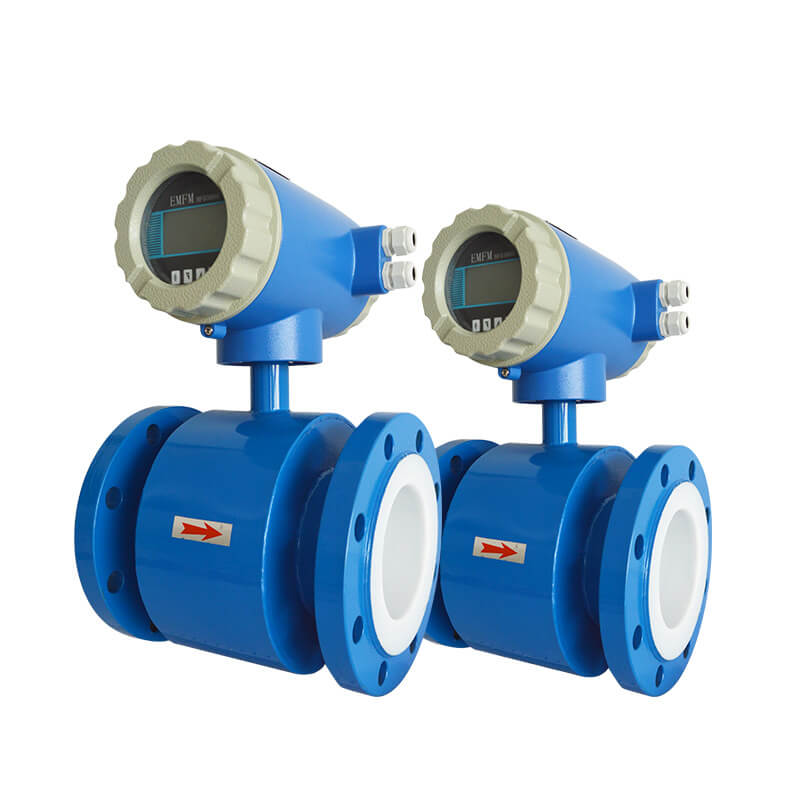
Electromagnetic flowmeters are instruments that measure the flow of fluids. They are used in many industries, including industry, chemistry and the environment. The electrodes are one of the most important parts of the system, and how they are designed and made has a direct effect on how accurate and stable the flowmeter is.
What are the electrodes of an electromagnetic flowmeter?
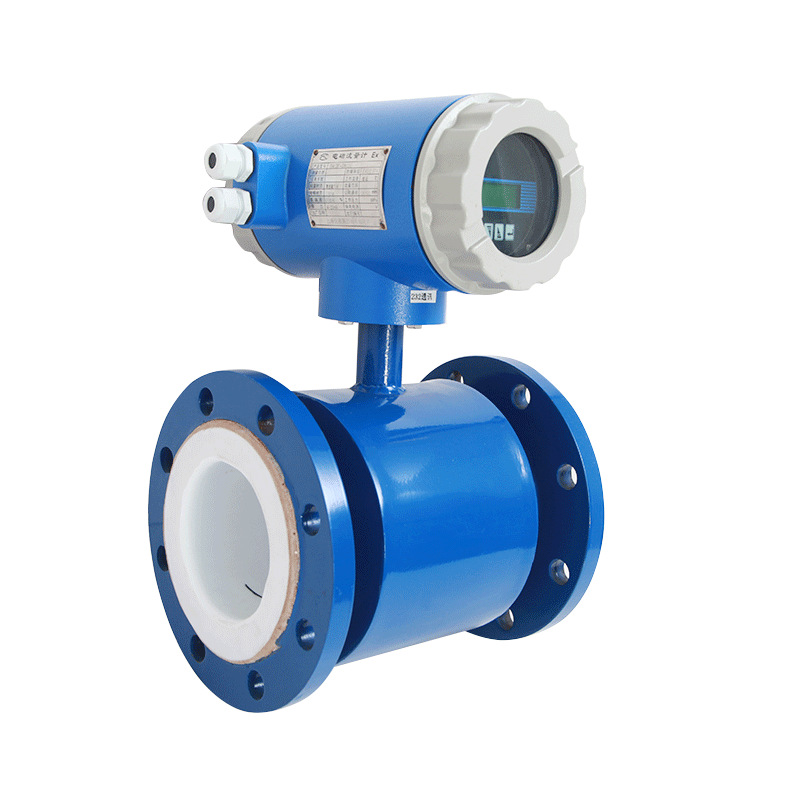
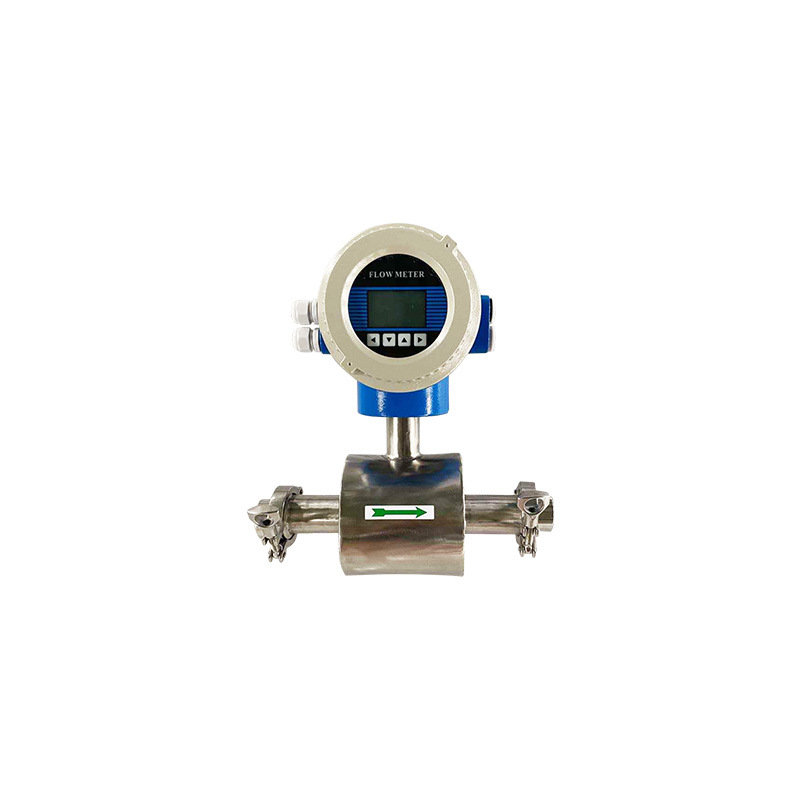
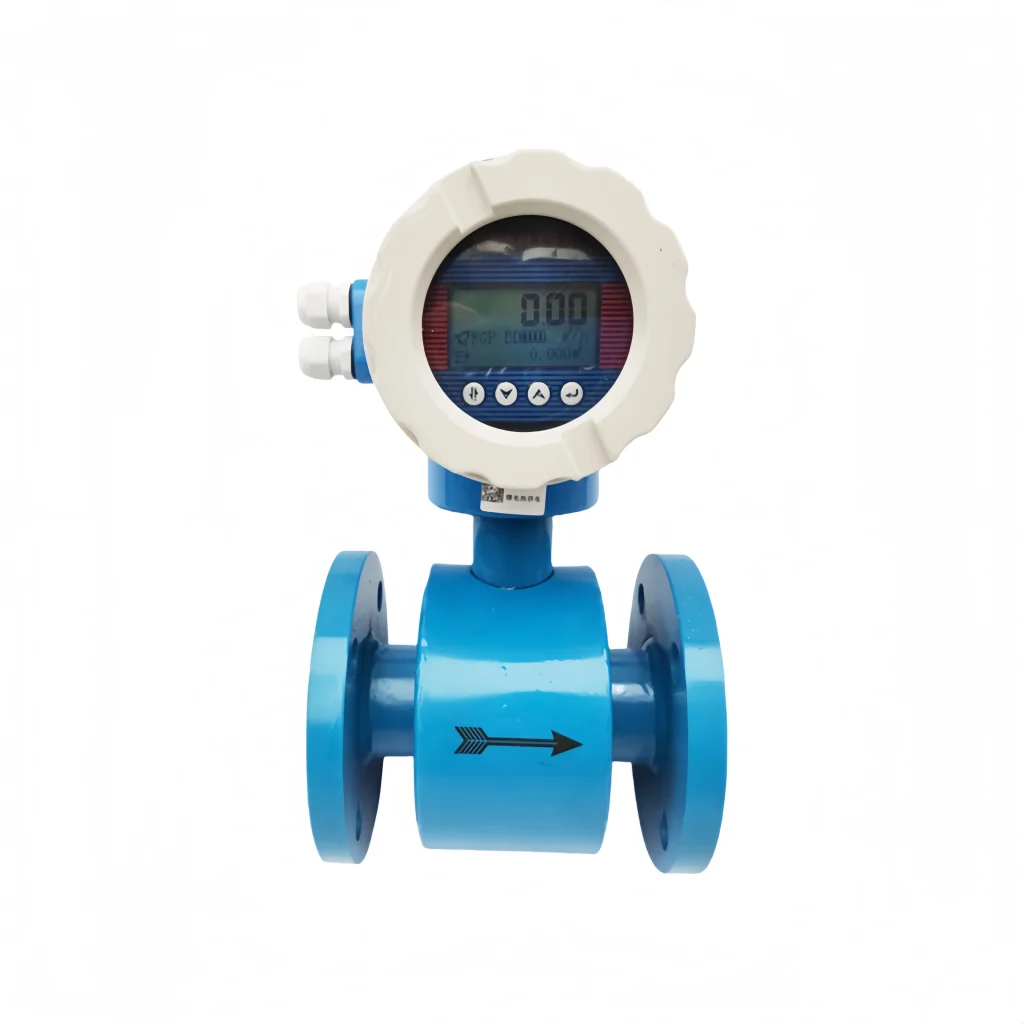
The measurement principleof the electromagnetic flowmeter sensor is based on Faraday’s law of electromagnetic induction. A pair of sensing electrodes are installed on the pipe wall perpendicular to both the measuring tube axis and the magnetic field lines.
When a liquid that can conduct electricity flows along the measuring tube, it cuts through the magnetic field lines. This creates an electromotive force. The measuring tube has two electrodes that detect this induced voltage, and the magnitude of the voltage is given by: E = K × B × V × D.
The electrodes are the critical components for detecting this minute voltage signal. By making direct contact with the fluid, they capture the induced voltage signal and transmit it to the converter for processing and display. Under varying operating conditions, the selection of electrode material directly impacts the flowmeter’s service life and measurement accuracy.
The Function of Electrodes
Electrode materials play a crucial role in electromagnetic flowmeters:
Signal Detection and Transmission:
Electrodes are the most important parts of the system that can detect induced electromotive force.When conductive liquids flow through a magnetic field, an electromotive force is generated. The electrodes are responsible for receiving and transmitting these small electrical signals so that they can be measured.Fluid Contact and Electrical Signal Transfer:
They maintain direct contact with the fluid passing through the flowmeter, ensuring electrical signals are effectively transferred from the fluid to the measurement circuitry without signal loss or distortion.
Electrode Characteristics of Electromagnetic Flowmeters
Corrosion Resistance:
As electrodes come into contact with fluids of varying properties, including corrosive chemicals, the corrosion resistance of electrode materials determines the flowmeter’s service life and measurement stability.
For example, when measuring corrosive fluids such as strong acids and alkalis, you can use materials like Hastelloy or tantalum that are resistant to corrosion. This ensures that the equipment will work reliably for a long time without being affected by the fluid.
Abrasion Resistance:
Electrodes may suffer wear when exposed to fluids containing solid particles or impurities. Materials with excellent abrasion resistance, such as titanium, minimise measurement errors and equipment damage caused by wear.
Electrical Conductivity:
High-quality electrode materials must possess good electrical conductivity to ensure accurate and sensitive detection of induced electromotive force, thereby enhancing measurement precision and accuracy.
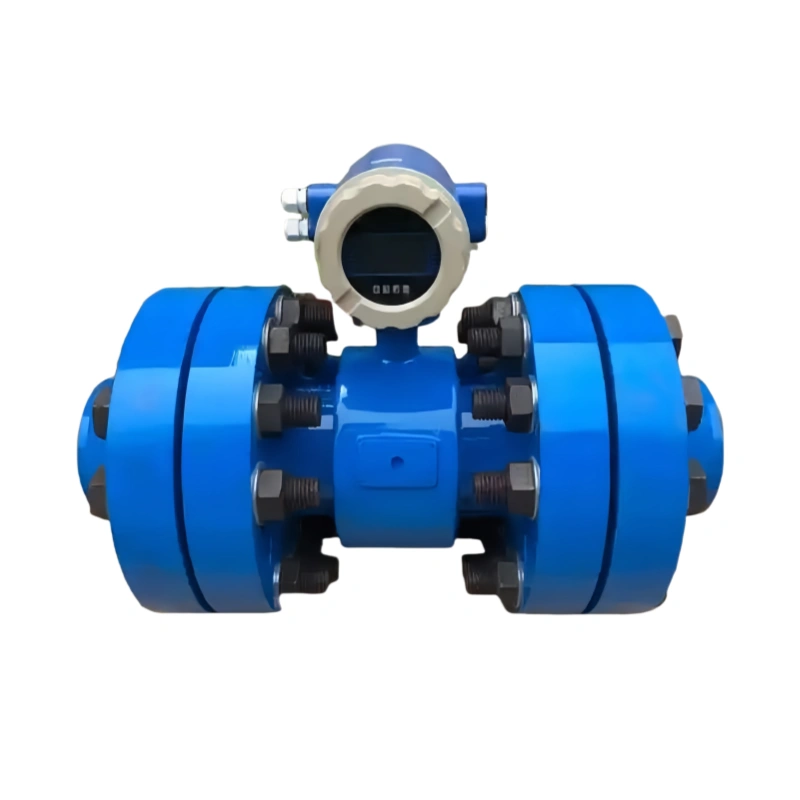
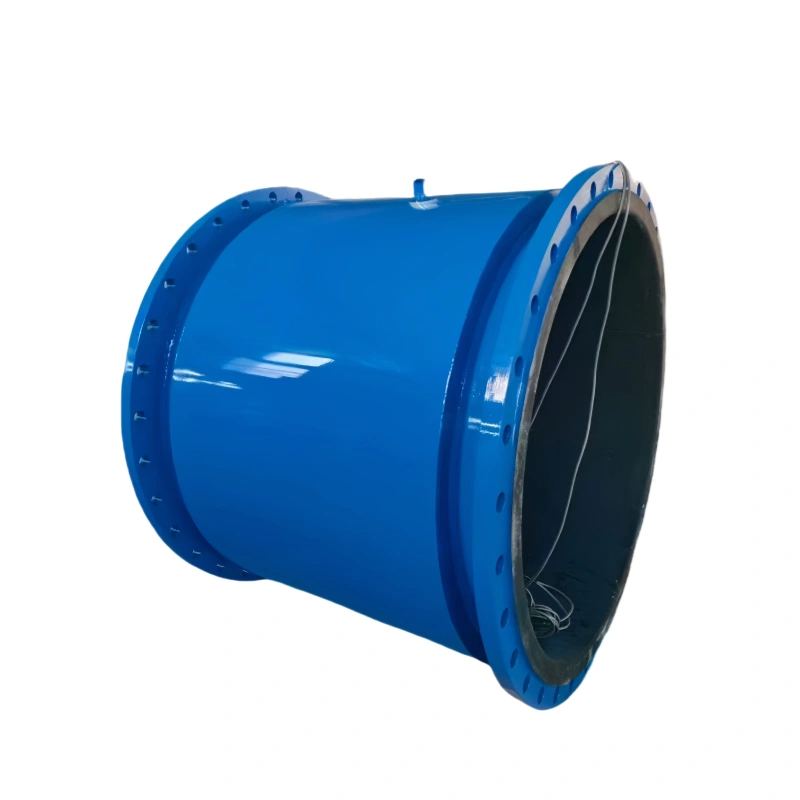
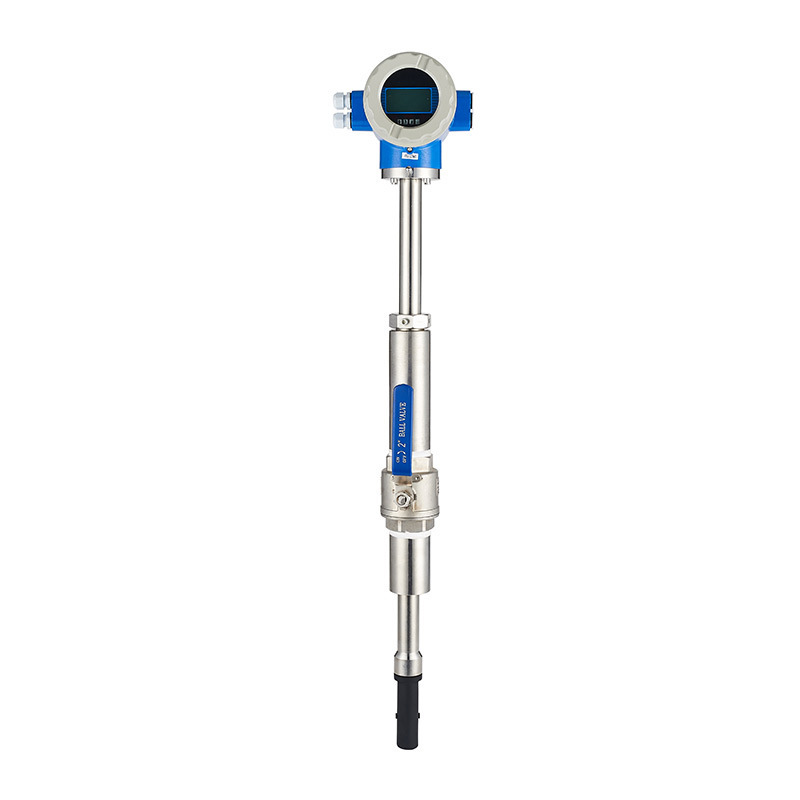
Common electrode materials
Stainless steel (e.g. 316L stainless steel):
Suitable media: Applicable to domestic sewage, industrial effluent, well water, raw water, municipal wastewater, and other similar fluids. Also suitable for weakly corrosive acid, alkali, and salt solutions.
It’s great at resisting corrosion and is really strong, so it’ll do a great job in most industrial environments and for water treatment. For example, electromagnetic flowmeters with 316L stainless steel electrodes are often used to measure flow in municipal wastewater treatment plants.
Hastelloy:
Hastelloy B: It’s pretty resistant to corrosion when it comes to hydrochloric acid (below 10% concentration), sodium hydroxide (below 50% concentration), phosphoric acid, and organic acids, but it’s not great with nitric acid solutions. This is often used in the chemical and pharmaceutical industries to measure the flow of these materials.
Hastelloy C: It is great at resisting corrosion from oxidising acids like nitric acid, mixed acids, or sulphuric acid mixtures, as well as oxidising salt solutions. In environments involving strong oxidising acids, electromagnetic flowmeters with Hastelloy C electrodes ensure measurement accuracy and stability.
Titanium:
It’s good for seawater, various chlorides (like sodium chloride, magnesium chloride, calcium chloride), salts (like sodium salts, ammonium salts, hypofluorite salts, potassium salts, etc.), nitric acid (but not fuming nitric acid) and alkalis (like potassium hydroxide, sodium hydroxide, barium hydroxide, etc.) at concentrations of up to 50% and room temperature.
Titanium electrodes are great at resisting corrosion and are really strong, which makes them perfect for use in marine engineering, brine processing and related fields. But you can’t use titanium electrodes with media like hydrochloric, sulphuric, phosphoric or hydrofluoric acid.
Tantalum:
It’s great for most chemical stuff, but not hydrofluoric acid, fuming sulphuric acid, or alkalis. This includes stuff like boiling-point hydrochloric acid, nitric acid, and sulphuric acid below 175°C. Tantalum electrodes are really good at resisting corrosion, which makes them perfect for measuring highly corrosive media.
But they’re quite expensive, so you can’t use them for everything.For instance, in certain specialised chemical processes, electromagnetic flowmeters with tantalum electrodes are employed for flow measurement of corrosive media.
Platinum:
It can handle pretty much all acid, alkali and salt solutions, and it’s great at resisting corrosion when it comes to different acids. But it’s not suitable for aqua regia. Platinum electrodes are really chemically stable and resistant to corrosion. They’re often used in places where precision is key, like in labs and top-notch pharma companies, especially when dealing with stuff that’s highly corrosive.
Tungsten carbide:
Possesses exceptional wear resistance, making it suitable for measuring highly abrasive media such as mineral slurries and muds. In environments like mines and mineral processing plants where electrode wear is severe, electromagnetic flowmeters with tungsten carbide electrodes ensure long-term stable measurement.
How to Select Electromagnetic Flowmeters with Different Electrodes
I. Characteristics of the Measured Medium
Corrosiveness:
Strongly corrosive media: For highly acidic or alkaline solutions such as sulphuric acid or hydrochloric acid, electrodes with superior corrosion resistance should be selected, such as tantalum, platinum, or titanium. Tantalum electrodes resist corrosion from nearly all chemical media (except hydrofluoric acid, fuming sulphuric acid, and alkalis), though they are costly.
Platinum electrodes are suitable for various acid, alkali, and salt solutions (excluding aqua regia), offering high chemical stability and measurement accuracy. Titanium electrodes resist corrosion from seawater, various chlorides and hypochlorite solutions, oxidising acids (including fuming nitric acid), organic acids, and alkalis. They offer good corrosion resistance and strength at a relatively lower cost.
For weakly corrosive media: such as industrial water, domestic water, and sewage, stainless steel 316L electrode material may be selected.
Oxidation-reduction properties:
Where redox reactions occur in the medium, electrode materials resistant to electrochemical reactions should be selected. For instance, platinum electrodes should be avoided when measuring hydrogen peroxide, as they form vapour on the electrode surface during such measurements, compromising accuracy.
Abrasive properties:
Highly abrasive media: Such as slurries, pulp, and ore slurries. Electrode materials with excellent wear resistance, like tungsten carbide electrodes, should be chosen.
Low-abrasive media: For pure water, most liquid chemical feedstocks, etc., standard stainless steel electrodes or other materials meeting corrosion resistance requirements may be selected.
II. Operating Conditions
Temperature:
High-temperature media: When it comes to hot water, steam and so on, it’s best to use materials that can handle high temperatures, like platinum-iridium alloys or platinum-tungsten alloys.
Ambient temperature media: For media at ambient temperatures, most common electrode materials such as stainless steel, titanium, and Hastelloy can meet requirements.
Conductivity:
Low conductivity media: When it comes to media like pure water or oil, you’ll want to use electrode materials that are highly sensitive, like stainless steel or Hastelloy, to make sure you get an accurate flow measurement.
High-conductivity media: There’s a pretty wide range of electrode materials out there, but you’ve still got to think about things like corrosion and wear resistance.
III. By electrode configuration
Flat-plate type: It’s got a flat electrode surface, which makes it great for use with fast-moving fluids and clean liquids.
Insertion type: Electrodes are inserted into the interior of the pipeline, making it suitable for unstable liquid conditions. Although it is more accurate than flat-plate types, it is harder to install.
Helical: It’s got a spiral electrode surface that’s great for low flow rates and viscous fluids, but it won’t last as long.
IV. Maintenance Ease
Maintenance Ease: Using electrode materials that are easy to replace and maintain reduces the complexity and cost of servicing equipment. Standardised electrode materials and interface designs, for example, make replacement and repair quick and easy.
V. Additional Considerations
Hygienic Standards: In fields like food and pharmaceuticals, electrode materials have to meet hygiene standards, meaning they can’t be toxic or contaminate anything. So, materials like stainless steel or titanium that meet these standards should be a priority in these industries.
Electromagnetic Compatibility: When selecting electrode materials, their electromagnetic compatibility with other components of the electromagnetic flowmeter must also be considered to ensure proper operation and measurement accuracy.
FAQ
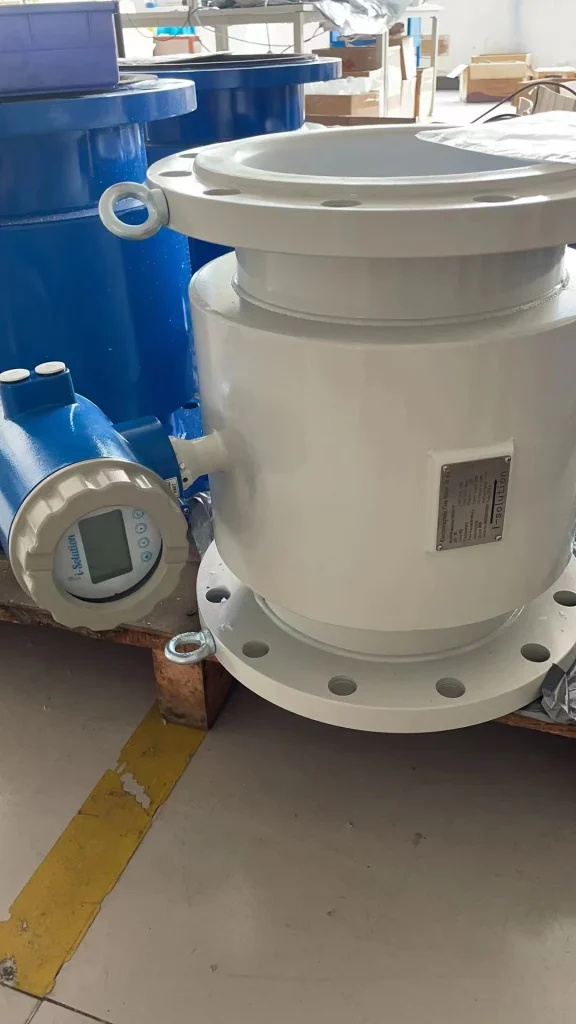
Common Lining Materials for In-Line Electromagnetic Flowmeters
Common lining materials for electromagnetic flowmeters include:
1.PTFE (polytetrafluoroethylene): It’s great at resisting corrosion, and it’s perfect for conveying weak acids, weak alkalis and various organic solvents, but it’s not the best when it comes to temperature.
2.F46 (Fluorinated PTFE): It’s stronger and more stable than PTFE, making it perfect for dealing with high-temperature corrosive stuff.
3.PFA (Polyfluoroethylene): It’s better than PTFE and F46 for flowmeters working in high temperature and pressure conditions, and it’s also pretty resistant to corrosion.
4.PEEK (polyetheretherketone): It’s great at resisting corrosion and is really strong, and it can operate in a wide range of temperatures, making it perfect for use with flowmeters that deal with high temperatures, high pressures and high viscosities.5. Fibreglass Reinforced Plastic (FRP): Exhibits outstanding corrosion resistance and abrasion resistance, suitable for corrosive media and applications with high levels of particulate impurities.
Accuracy Grades for Electromagnetic Flowmeters
Electromagnetic flow meters are classified as follows:
Class 0.2: This is the highest accuracy grade, making it perfect for situations that require very precise measurements. These flowmeters are very accurate, with a typical measurement error of ±0.2%.
Class 0.5: This represents the standard for high-precision electromagnetic flowmeters, suitable for applications demanding exceptional flow measurement accuracy, such as chemical and pharmaceutical industries. These flowmeters provide a measurement error of ±0.5%, making them ideal for precision control and metering.
Class 1.0: Flowmeters of this class are suitable for general industrial applications, with a measurement error of ±1%. For many routine flow monitoring tasks, Class 1.0 accuracy suffices for most requirements.
Class 1.5: Suitable for applications with relatively lower accuracy requirements, featuring a measurement error of ±1.5%. These flowmeters are typically employed in water treatment, sewage treatment, and similar fields.
Class 2.5 and below: These flowmeters are less accurate, but they are good for situations where the flow is not very variable, and where measurement errors could be as high as ±2.5% or more. They are usually used for monitoring flow when it is not critical.
Sion-Inst not only provides high-precision, high-stability electromagnetic flowmeters, but is also dedicated to offering professional support for your entire lifecycle management – from precise selection and standardised installation to regular calibration and maintenance.
Should you require the most suitable measurement solution for your process, our team of engineers stands ready to assist you in achieving measurable, controllable and reliable flow data.