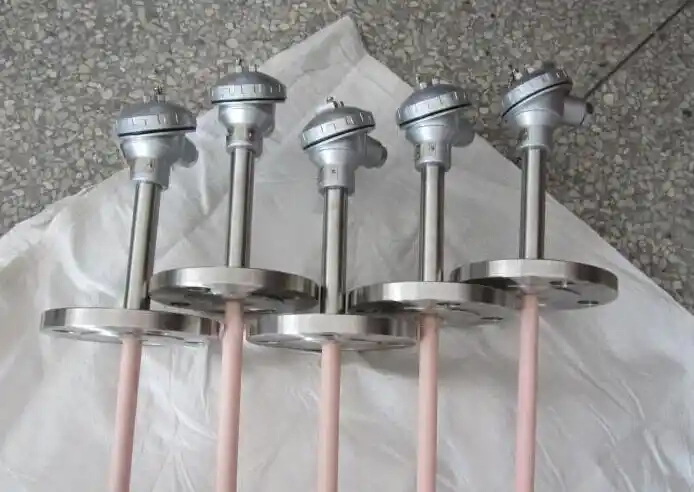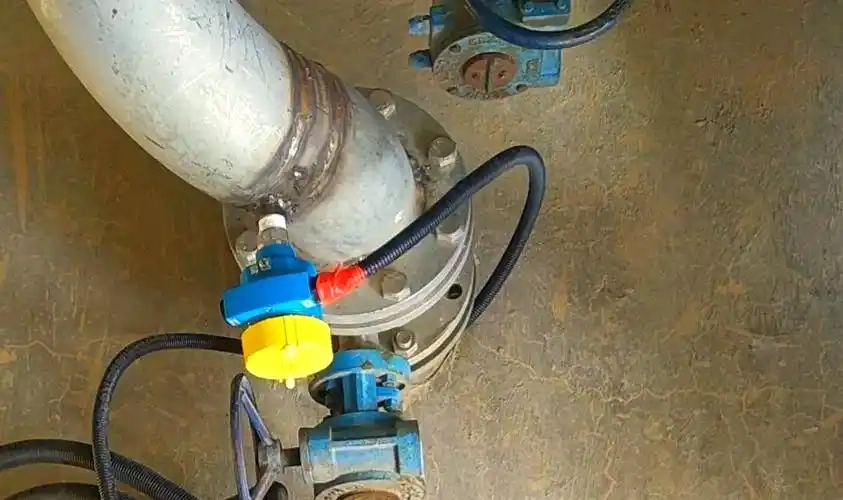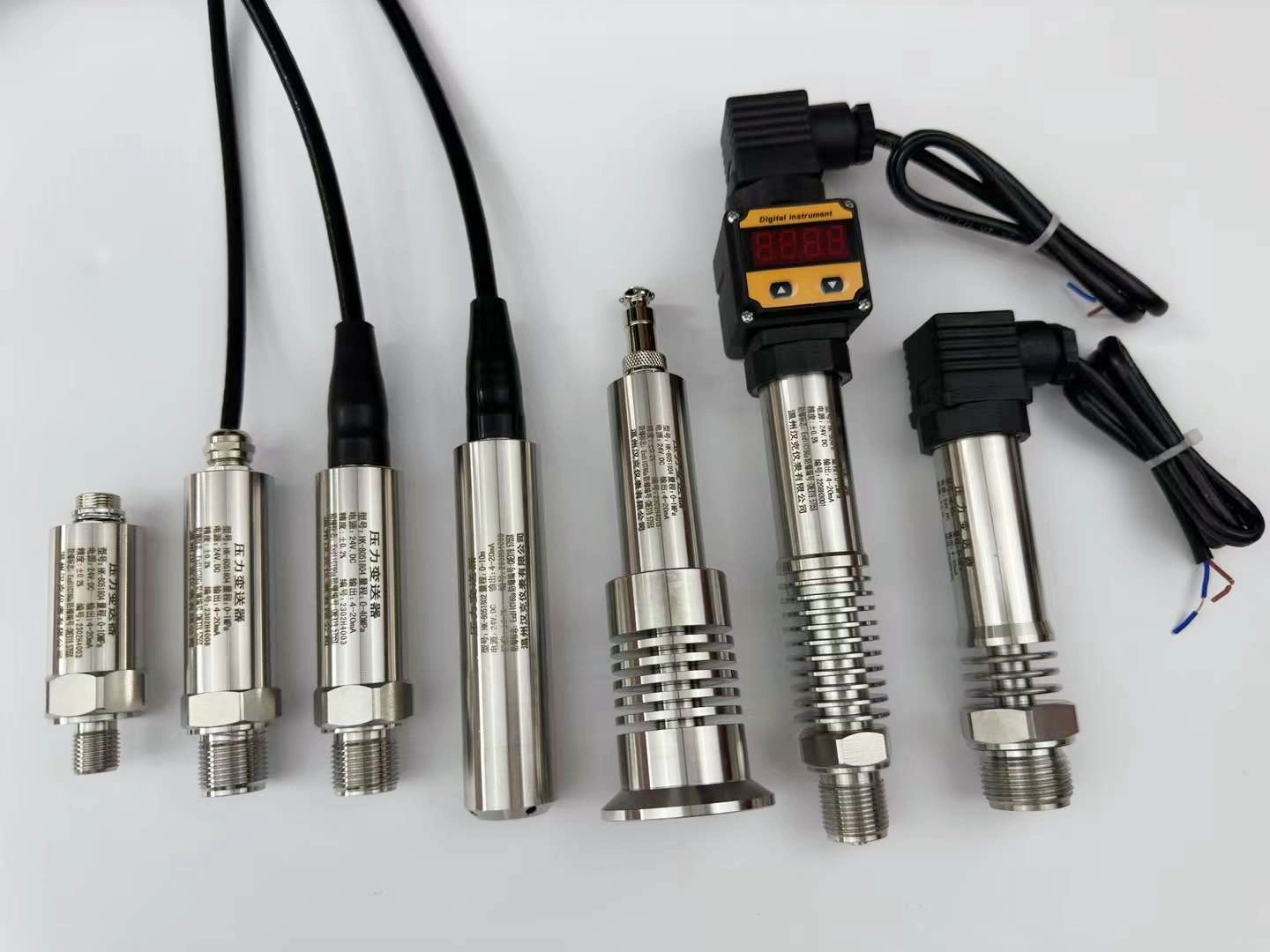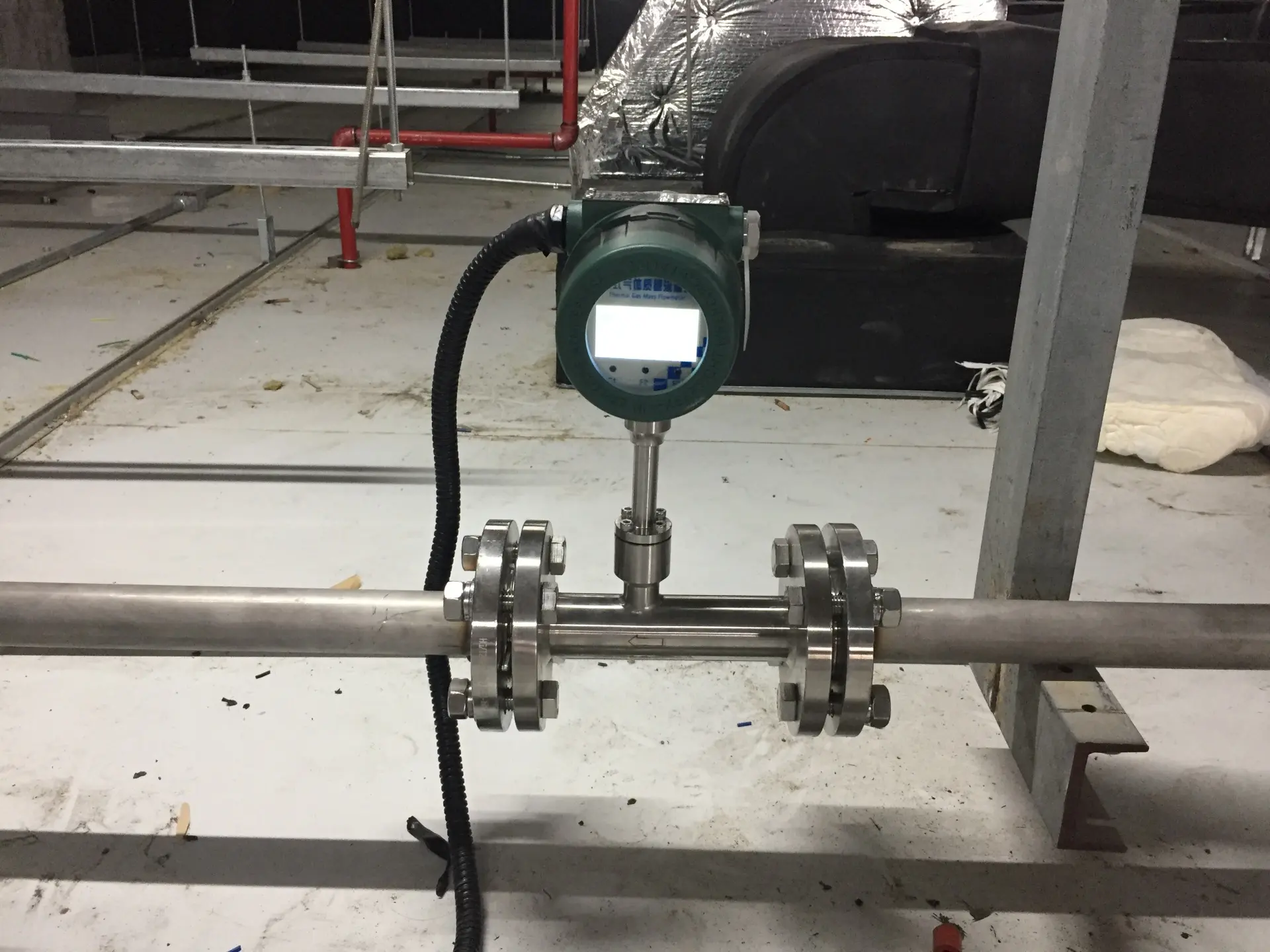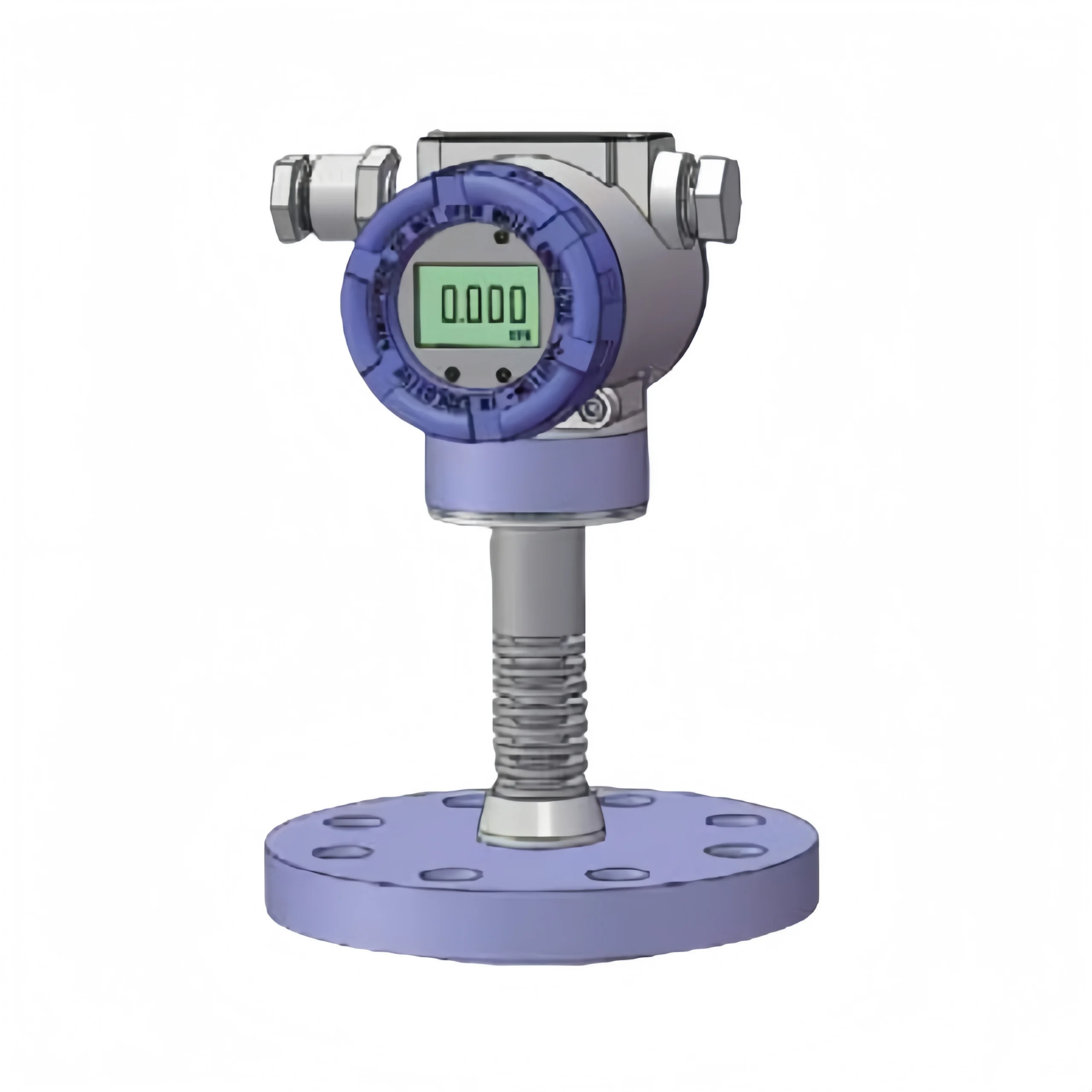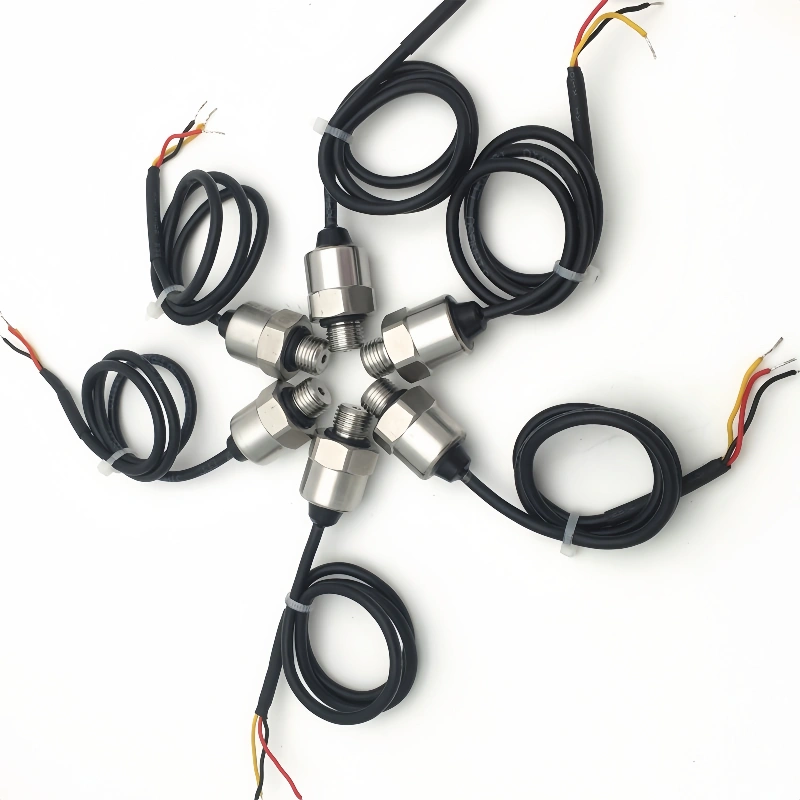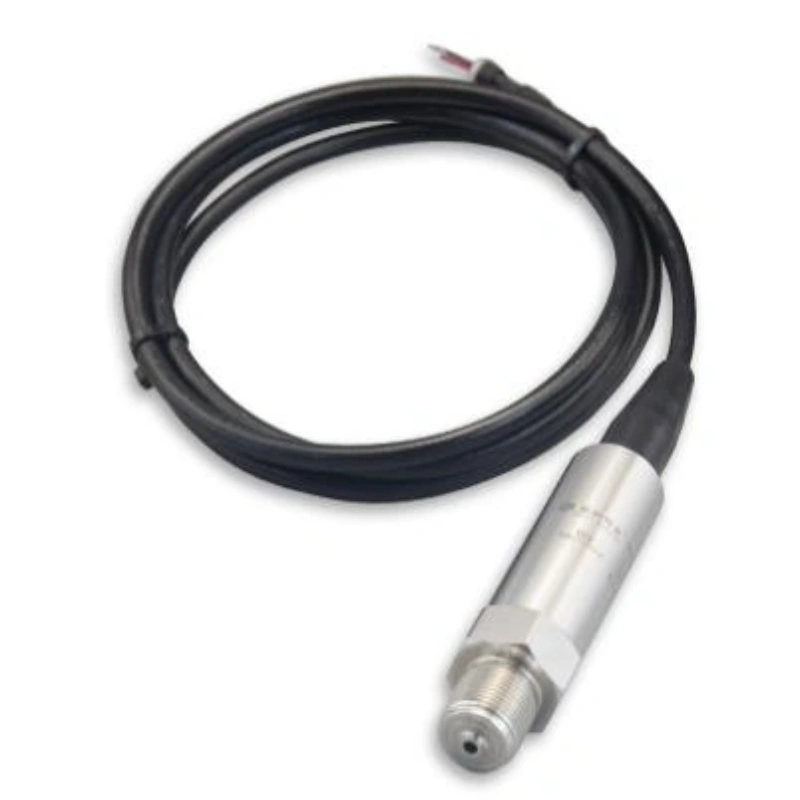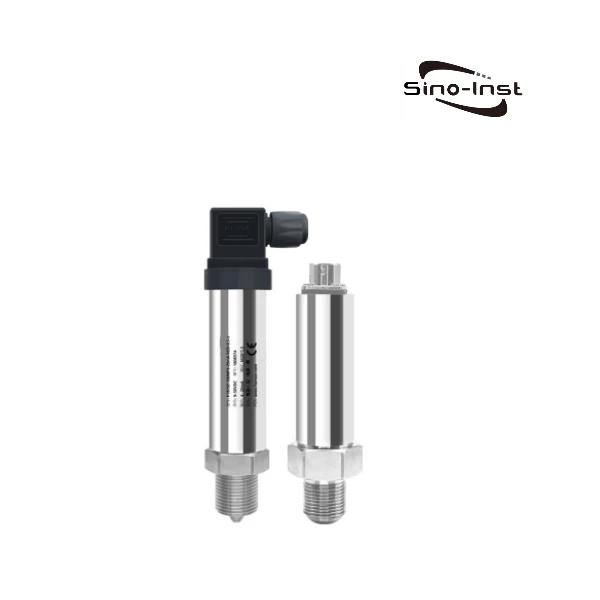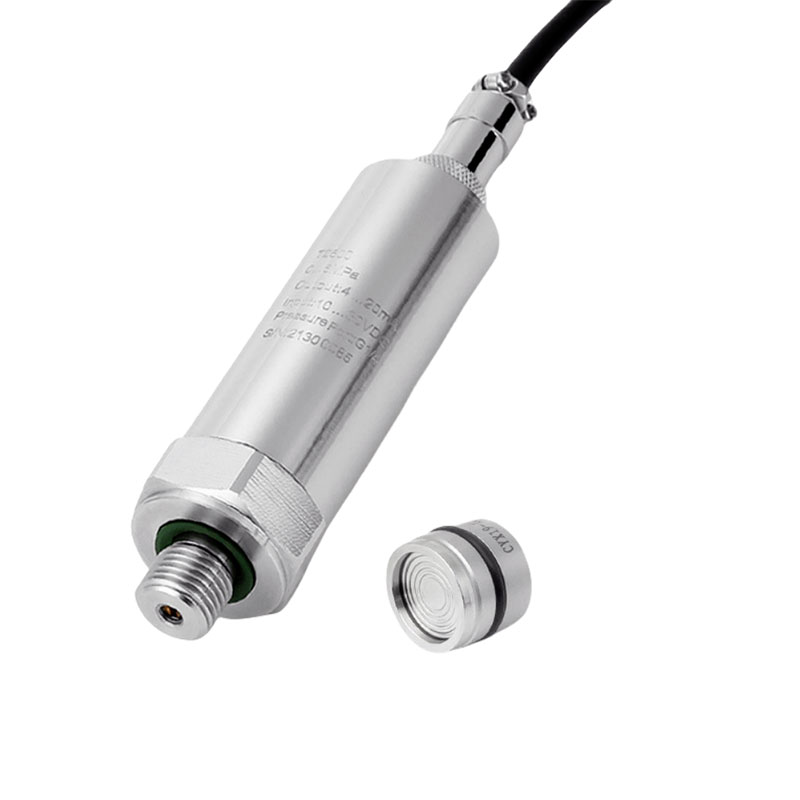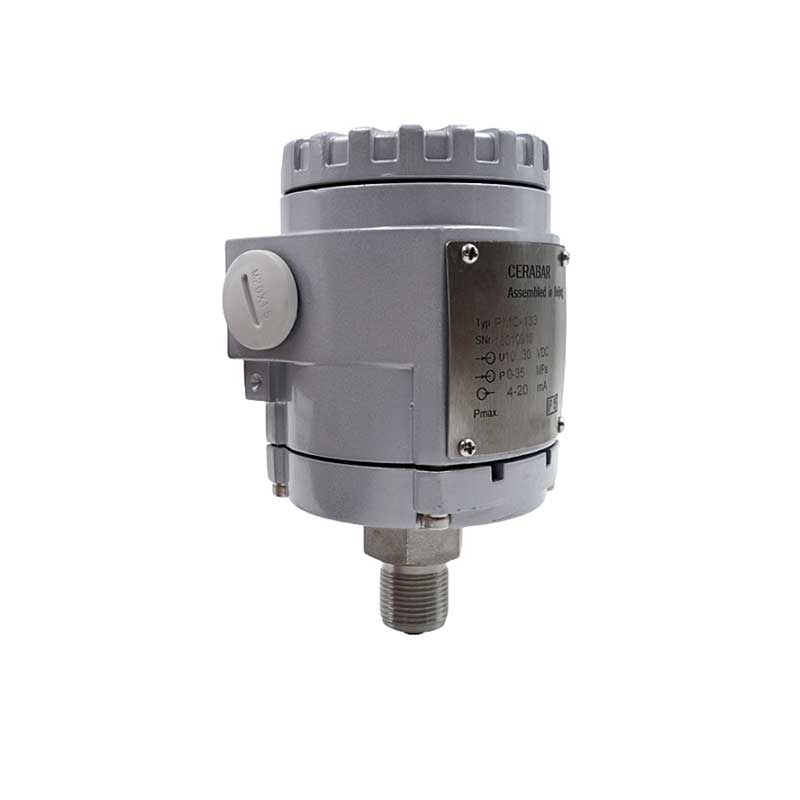
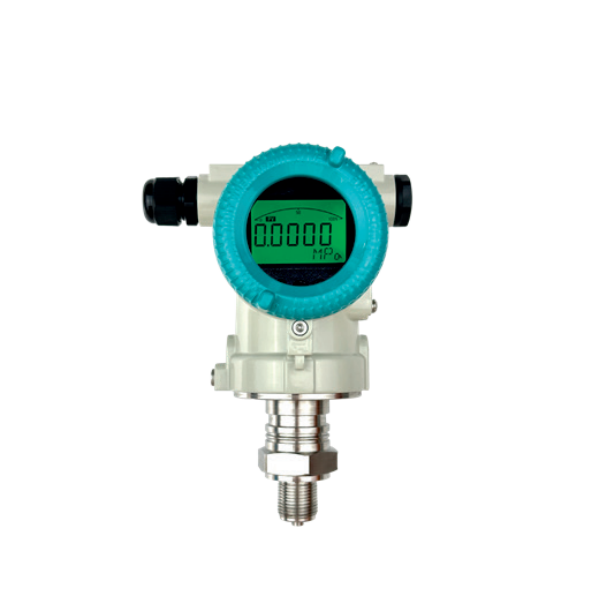
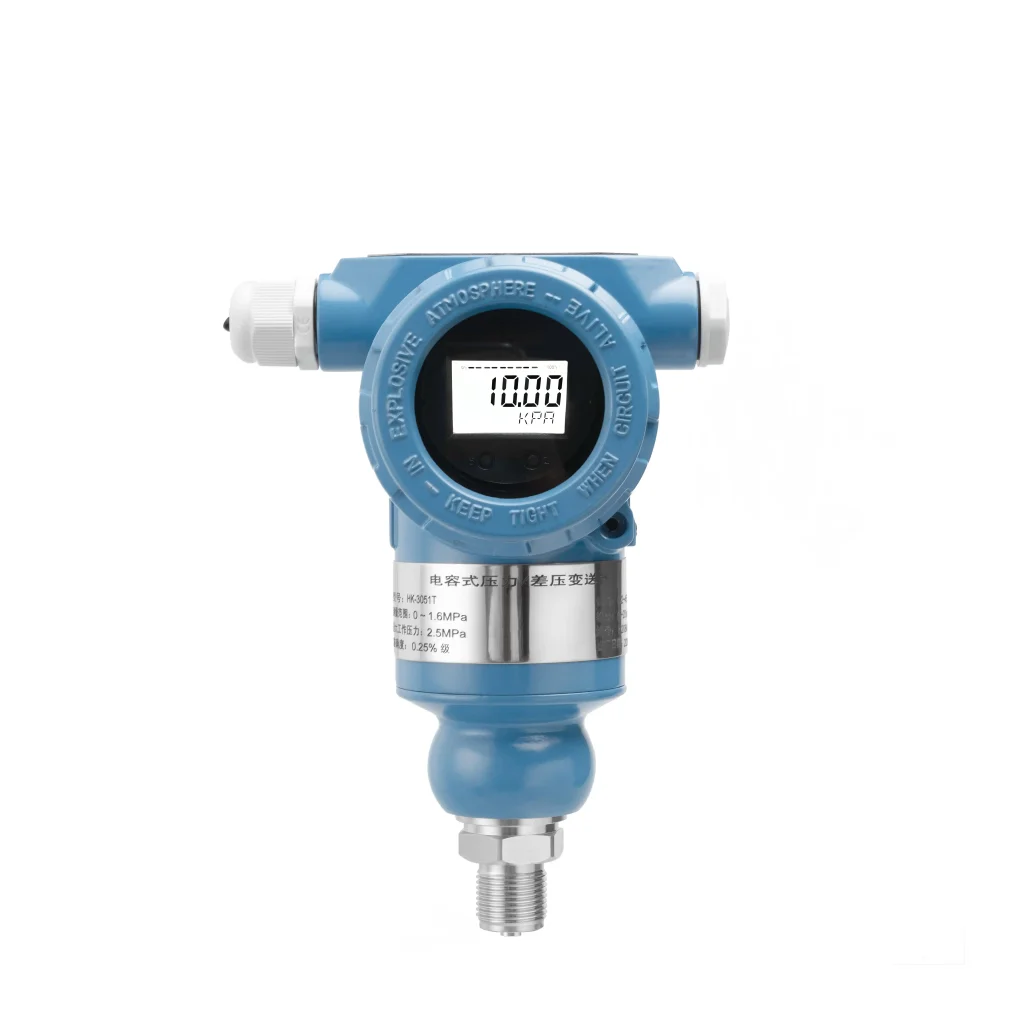
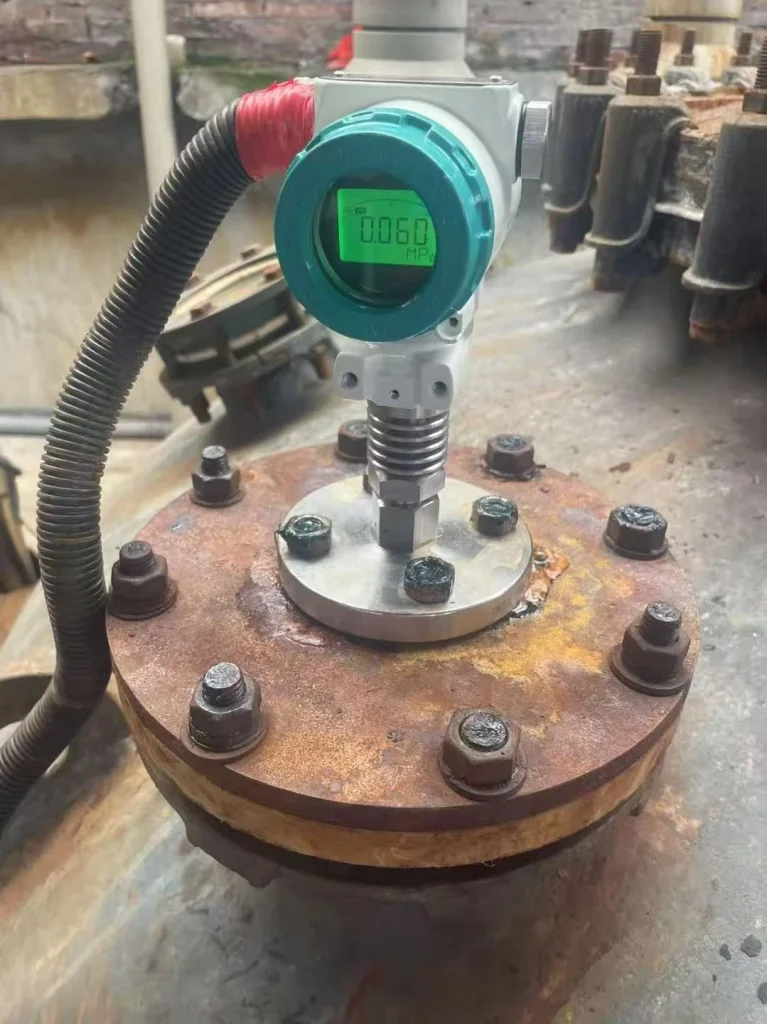
Flange pressure transmitters are industrial measuring instruments. They are installed via flange interfaces. They are specifically designed to measure the pressure or liquid level of process media.
This media is found within storage tanks, vessels, and pipelines.Pressure signals are acquired using diffusion silicon, single-crystal silicon, or capacitive pressure sensing elements, which are then converted into standard electrical signal outputs via dedicated circuitry.
Core Structure and Operating Principle
The flanged pressure transmitter employs a diaphragm-sealed transmission mechanism, isolating internal instrument components from the process medium. When the pressure of the measured medium is transmitted through the flange interface to the sensor’s isolation diaphragm, the diaphragm undergoes minute deformation.
This deformation causes a change in the resistance or capacitance value of the internal bridge circuit within the sensor, thereby generating a weak electrical signal proportional to the pressure.
The transmitter’s internal circuitry amplifies this signal, applies linearisation compensation and temperature correction, ultimately outputting a standardised signal suitable for transmission and processing, such as a 4-20mA current loop or digital signal.
This design proves particularly suitable for industrial tank pressure monitoring, where conventional threaded connections may fail or become obstructed.
Classification of Flange Pressure Sensors
By Material:
PVC engineering plastic flanges, stainless steel flanges, etc.
By Manufacturing Method:
Forged flanges, cast flanges, welded flanges, etc.
By Operating Principle:
Piezoresistive Flange Pressure Sensor: Utilises the piezoresistive effect of semiconductors or metals. When pressure acts upon the sensing element, its resistance value changes, causing a corresponding variation in output voltage or current.Offers advantages including mature technology, high precision, and rapid response.
Capacitive flange pressure sensors: Operate on the principle that a capacitor’s capacitance varies with pressure.Characterised by high accuracy, excellent stability, and strong resistance to interference.
Piezoelectric flange pressure sensors: Materials with a piezoelectric effect can be used to convert pressure into signals of charge or voltage.Offer advantages including superior high-frequency response and high sensitivity.
By structural form:
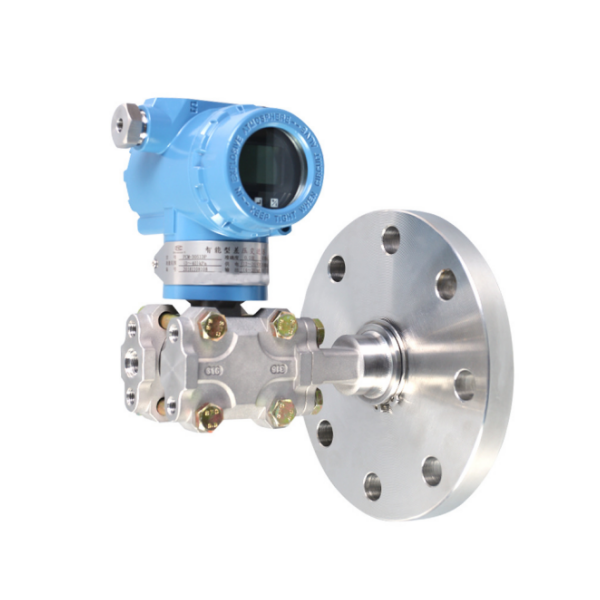
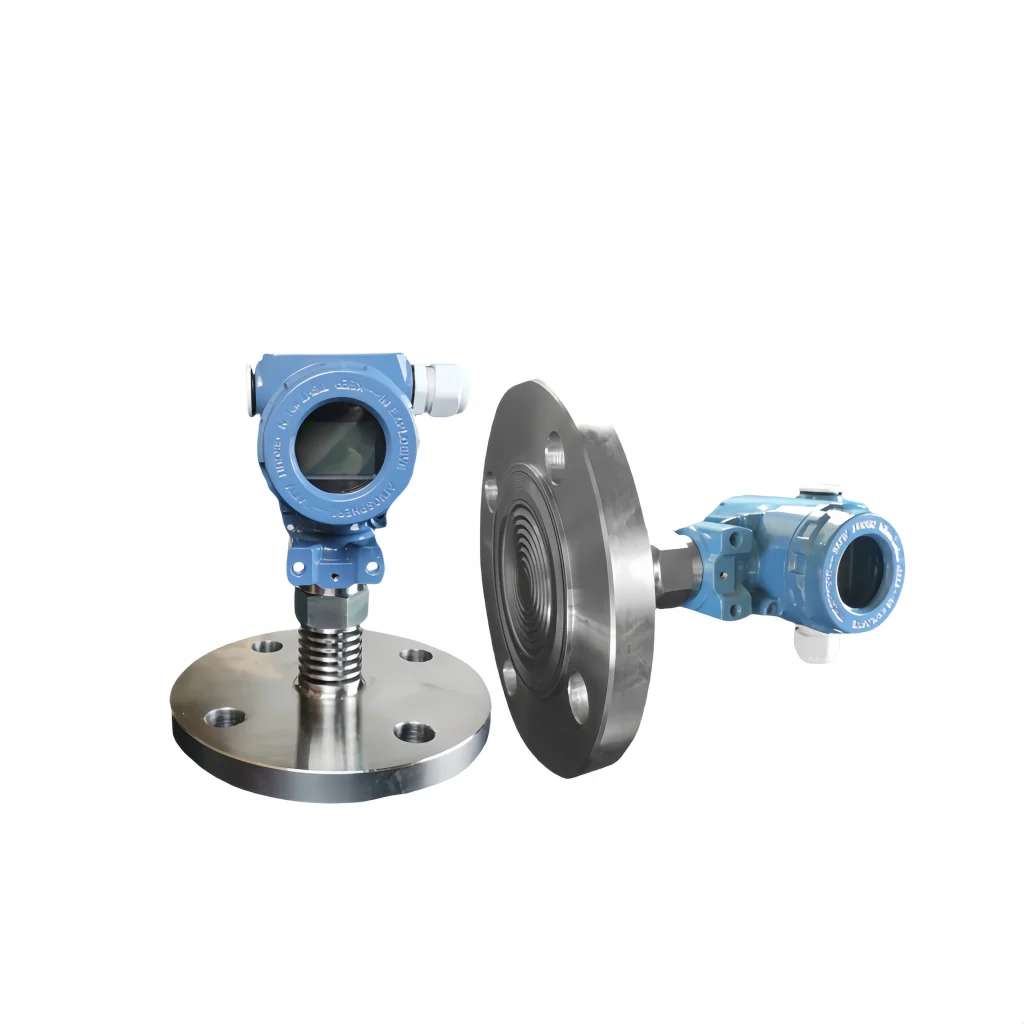
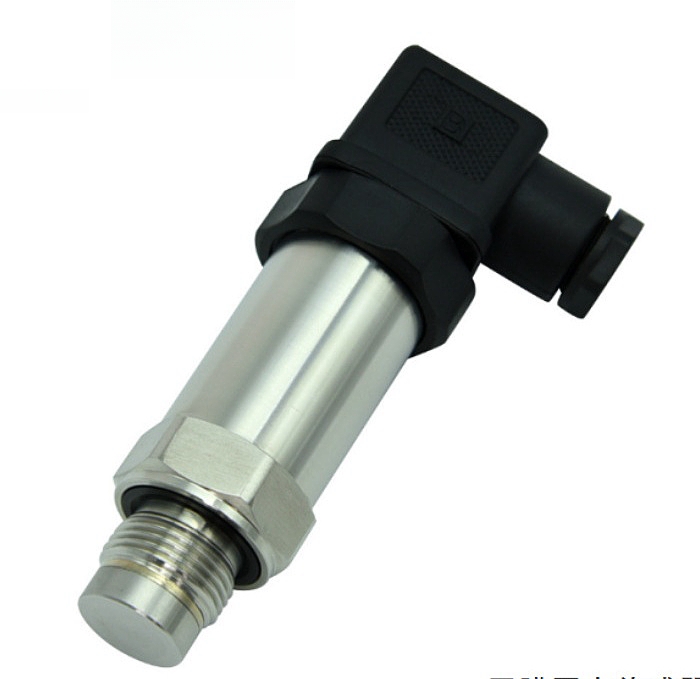
Single-flange pressure sensor: Primarily comprises a flange and core components such as the pressure sensor. The flange contacts the measured medium directly, transmitting pressure changes immediately to the sensor. Suitable for measuring clean, non-corrosive liquids or gases.
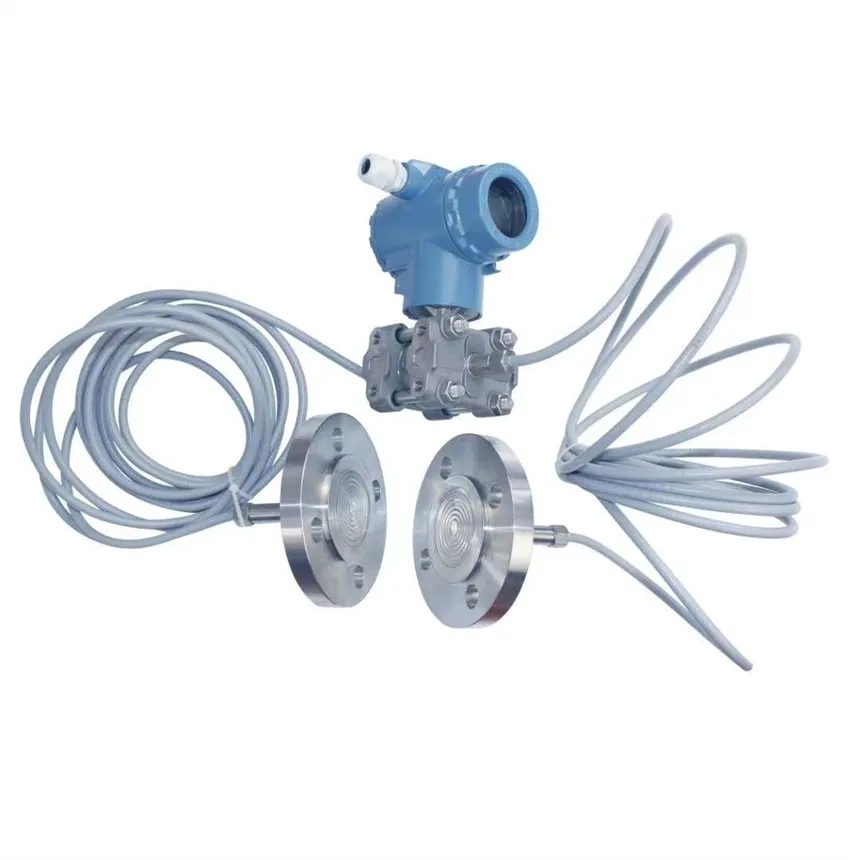
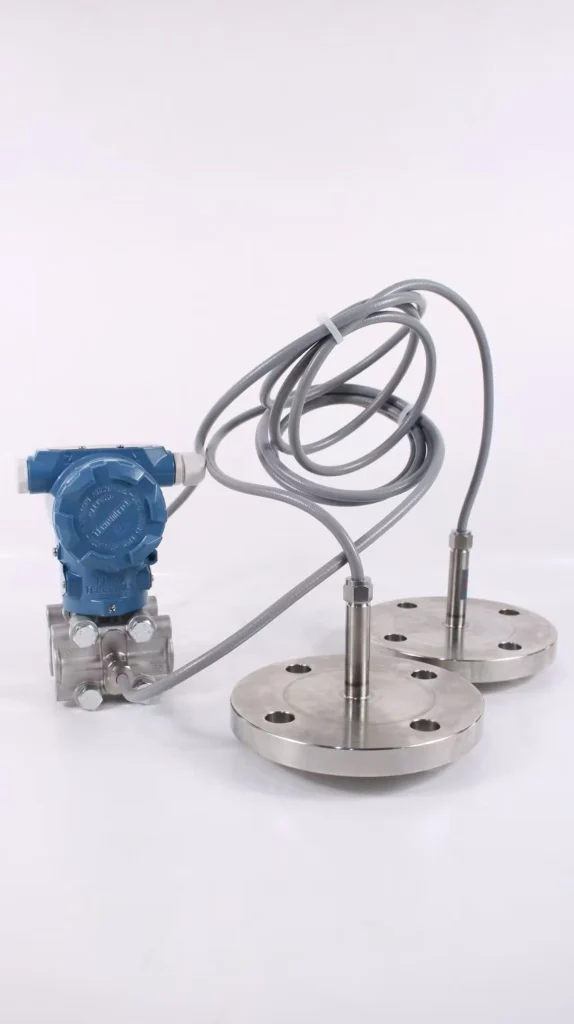
Double-flange pressure sensor: Features two flanges separated by a measured diaphragm, typically filled with liquid.The medium transmits pressure information to the sensor via the intermediate filling fluid.Suitable for measuring corrosive, high-viscosity, or impurity-containing media.Classification by Application Scenario:
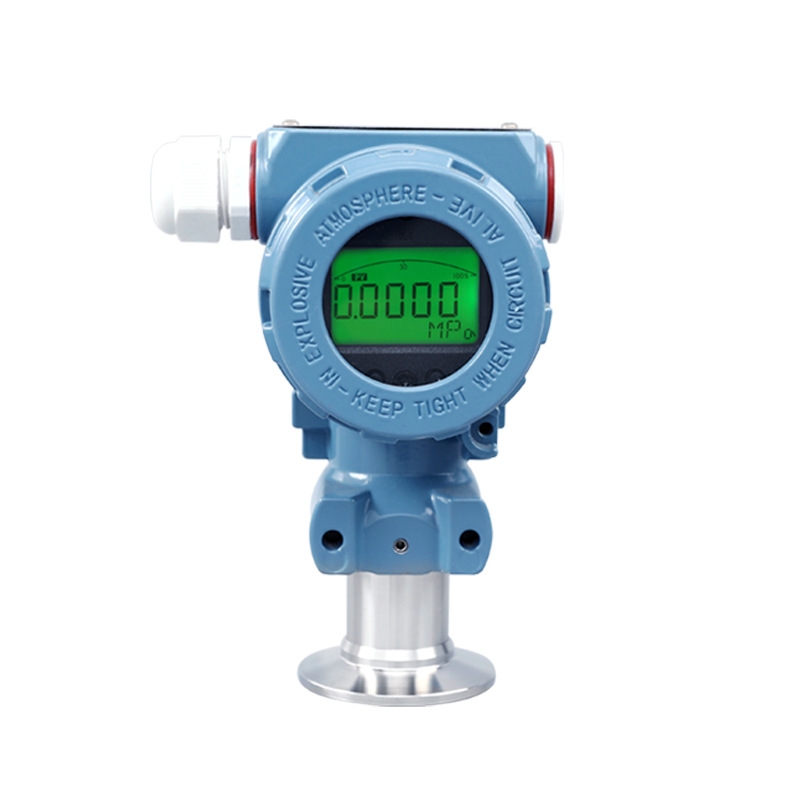
Hygienic Flange Pressure Sensor: Features a flush diaphragm with a dead-space-free design.Process connections comply with sanitary standards, utilising materials such as 316L stainless steel or gold-plated diaphragms for ease of cleaning.
Hygienic Flange Pressure Sensor: Corrosion-Resistant Flange Pressure Sensor: Incorporates corrosion-resistant alloy diaphragms and wetted parts or fully wetted materials, designed for pressure measurement in highly corrosive media.
Sealing configurations for flanges:
Flat-face flanges:
The sealing surface of a flat-face flange is a smooth plane, occasionally machined with two concentric grooves featuring triangular cross-sections (commonly termed water lines).Suitable gaskets for flat-face flanges include various non-metallic flat gaskets, laminated gaskets, metal-jacketed gaskets, and spiral-wound gaskets (which may incorporate inner rings, outer rings, or both).
Raised Face Flanges:
The sealing surface of raised face flanges comprises a concave and a convex surface, with the gasket positioned within the concave surface. Suitable gaskets include: various non-metallic flat gaskets, laminated gaskets, metal-jacketed gaskets, spiral-wound gaskets (basic type or with inner ring), metal corrugated gaskets, metal flat gaskets, and metal serrated gaskets.Compared to flat-face flanges, gaskets in raised-face flanges are less prone to extrusion, facilitate easier alignment during assembly, and offer a broader operating pressure range.They are employed in applications demanding stringent sealing requirements.
Tongue-and-groove flanges:
The sealing surface has a tongue and a groove, with the gasket going in the groove.You can use metal and non-metal flat gaskets, metal-jacketed gaskets, and basic-type spiral-wound gaskets.
Other Sealing Surface Types:
Beyond the flange sealing configurations described above, additional types exist, such as those employing trapezoidal groove sealing surfaces, as well as special sealing surfaces designed for use with O-rings or lens gaskets.
Advantages of Flanged Pressure Sensors
1.High precision and stability with strong interference resistance
Utilising high-precision components and advanced signal processing, accuracy reaches 0.1% FS and above; the flanged structure resists vibration and temperature drift, ensuring long-term operational stability.
2.Withstands Harsh Conditions
Made from 316L stainless steel and Hastelloy, with high-temperature-resistant seals to make sure it can be used from -40°C to 200°C, even under thousands of bar of pressure, and in really corrosive environments.
3.Compact and Easy Installation with Wide Compatibility
Flange-direct connection design requires no additional fittings for efficient installation; compact size suits confined spaces, supporting horizontal/vertical mounting.
4.Interference Resistance for Complex Environments
Integrated sealing and electromagnetic shielding counteract electromagnetic and vibration interference; select models feature damping adjustment to filter pressure pulse fluctuations.
5.Overload Protection for Extended Service Life
Built-in overload protection prevents component damage; core components utilise high-strength materials and precision manufacturing for superior fatigue resistance.
6.Multi-medium compatibility for broad applicability
Measures gases, liquids, high-viscosity fluids, and crystallising media.Contact parts offer customisable materials and sealing methods to suit diverse applications.
7.Diverse signal outputs for automation integration
Supports 4-20mA, 0-10V, RS485 and other signals for seamless automation system integration. Intelligent models feature industrial bus connectivity for remote operation and maintenance.
Applications of Flanged Pressure Transmitters
Petrochemical Industry: Within petroleum, natural gas, and chemical sectors, flanged pressure transmitters measure pressure in pipelines, vessels, and other equipment.
Power Generation: In thermal and hydroelectric power plants, these transmitters monitor pressure in boilers, pipelines, and associated systems.
Food and Beverage: During food and beverage production, CIP-compliant (Clean-in-Place) embedded diaphragm pressure sensors monitor pressure to ensure stable and safe manufacturing processes.
Pharmaceutical Industry: Within pharmaceutical manufacturing, flanged pressure transmitters monitor pressure in reactors, pipelines, and other equipment to guarantee product quality.
Automotive Manufacturing: During vehicle production, flanged pressure transmitters monitor pressure in engines, hydraulic systems, and related equipment.
Selecting the Appropriate Flanged Pressure Sensor
1.Measurement Range and Overpressure Protection
Range: Must cover the actual operating pressure with a 20%-80% margin to ensure optimal accuracy. For instance, selecting a 0-10MPa model for pressure monitoring in a chemical plant reactor improved data stability by 30% in practical use.
Overpressure Protection: Models with overpressure protection must be chosen to prevent sensor damage from transient pressure surges.A petrochemical enterprise experienced diaphragm rupture due to neglecting overpressure scenarios; the issue was resolved by replacing with a dual-diaphragm structure.
2.Medium Compatibility
Corrosive media (e.g., hydrochloric acid, sodium hydroxide): Select diaphragms made of Hastelloy or tantalum to prevent electrochemical corrosion.
High-viscosity media (e.g., heavy oil): Choose models with self-cleaning capabilities to avoid measurement errors caused by medium adhesion.
Particulate-laden media (e.g., sewage): Install filtration devices or select ceramic diaphragms to prevent blockage or abrasion.
3.Temperature and Pressure Types
High-temperature scenarios (>200°C): Sensors require heat sinks or ceramic-filled coupling compounds; certain models withstand temperatures up to 350°C.
Low-temperature scenarios (<-50°C): Select cryogenic-rated models to prevent material embrittlement and leakage.
Pressure Type: Specify whether measuring gauge pressure, absolute pressure, or differential pressure.For instance, boiler drum pressure monitoring requires absolute pressure transmitters.
4.Accuracy Class and Response Time
Accuracy Requirements: Trade settlement applications (e.g., natural gas pipeline pressure metering) demand ±0.075%FS high-precision models; process control scenarios (e.g., industrial circulating water pressure monitoring) accept ±0.1%FS accuracy, reducing costs by 40%.
Response Time: Rapid switching applications (e.g., laser cutting gas pressure control) require models with response times <50ms; steady-state monitoring (e.g., tank pressure) can utilise models with response times <200ms.
5.Output Signal and Interface
4-20mA output suits traditional PLC/DCS systems; HART protocol supports remote calibration.
Digital signals (e.g., Modbus-RTU) facilitate integration into IoT platforms.
6. Protection and Explosion-Proof Requirements
Protection Rating: Outdoor applications require IP68 protection with rain covers and lightning arresters; humid environments (e.g., paper mills) necessitate moisture-resistant circuitry, with some models employing potting seal technology.
Explosion-Proof Certification: Petrochemical industries require Ex d IIC T6 Ga rating, with independent ground resistance <4Ω to prevent equipment damage from static or lightning strikes.
7.Selecting Suitable Flange Sealing Systems
Our flanged pressure transmitters reference the Rosemount 1199 sealing system for flange standards.Customisable options include FFW flush-face flange seals, RFW flange seals, EFW extended flange seals, PFW flat seals, RTW threaded seals, SCW Tri-Clover Tri-Clamp sanitary seals, and SSW tank short-jacket sanitary seals.
FAQ
1. How to measure liquid levels in open and closed tanks?
We employ distinct approaches for each scenario to ensure accurate hydrostatic level measurement:
Open tanks: We use a pressure transmitter mounted on a single flange, installed at the base. This measures the pressure exerted by the liquid column in relation to atmospheric pressure.
Enclosed/Pressurised Tanks: This requires a differential pressure transmitter.The high-pressure flange is positioned at the bottom, and the low-pressure side (usually a capillary pressure transmitter) connects at the top. This configuration eliminates internal tank pressure, enabling pure liquid level measurement.
2. Which materials should I select for corrosive media?
Incorrect material selection accelerates equipment failure.We offer multiple chemically compatible transmitter options tailored to your specific ‘mixture’:
316L stainless steel: The standard for general-purpose and food-grade hygienic flange transmitters.
Hastelloy C: Our preferred material for high-chloride environments and strong acids.
Tantalum: Specialised for the most extreme corrosive environments where even Hastelloy proves inadequate.
PTFE/PFA lining: Ideal for preventing viscous media from adhering to flush diaphragm pressure sensors.
3. How does the remote diaphragm seal function?
Remote seal pressure transmitters utilise a flexible diaphragm seal transmitter connected to the main sensor body via a fine tube known as a capillary.
Process pressure acts upon the external isolation diaphragm.This pressure is transmitted through the filling fluid within the capillary (e.g., silicone oil).The fluid conveys the pressure signal to the internal sensing element.
Customisation Support
Our strength at Sino-Inst lies in our ability to customise each remote seal flange pressure transmitter or differential pressure transmitter to your specific tank or pipeline configuration:
Custom Flanges: We offer a full range of ANSI flange pressure sensor sizes and DIN standards.
Materials Science: Special alloys such as Hastelloy or tantalum are available for exceptional chemical compatibility.
Flexible Capillary Tubing: Customisable capillary lengths for remote installation in high-temperature or inaccessible areas.
Global Rapid Delivery: Our optimised supply chain ensures your project stays on schedule with swift dispatch.
Drawing on years of expertise in the sensor sector, Sino-Inst has developed a comprehensive portfolio of sensors for pressure, displacement and humidity, among other applications. Substantial technical expertise and cutting-edge innovation capabilities underpin this portfolio.
Our solutions are tailored specifically for critical industries, including municipal engineering, rail transit and food and chemical processing.Through exceptional stability and interference resistance, we empower clients throughout their intelligent production and industrial transformation journeys.