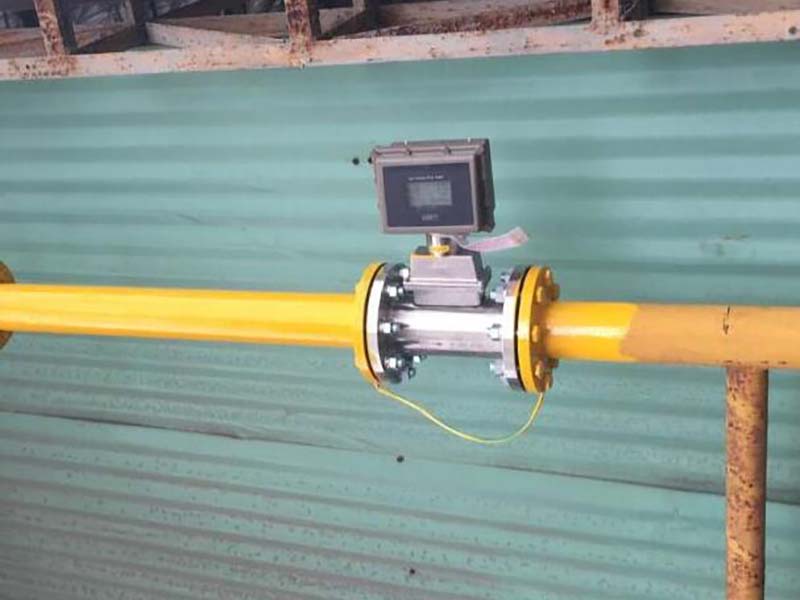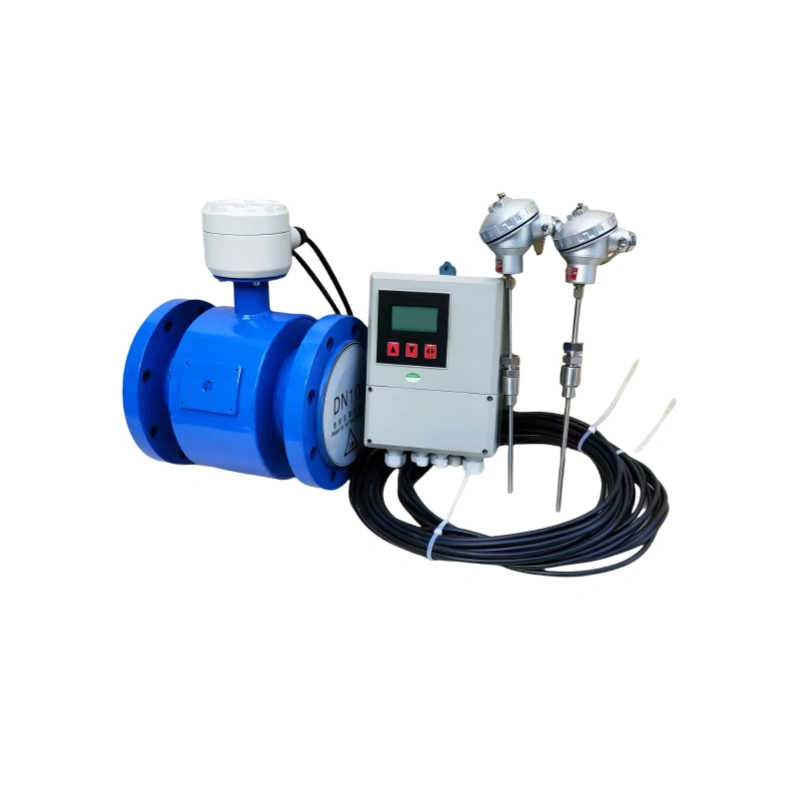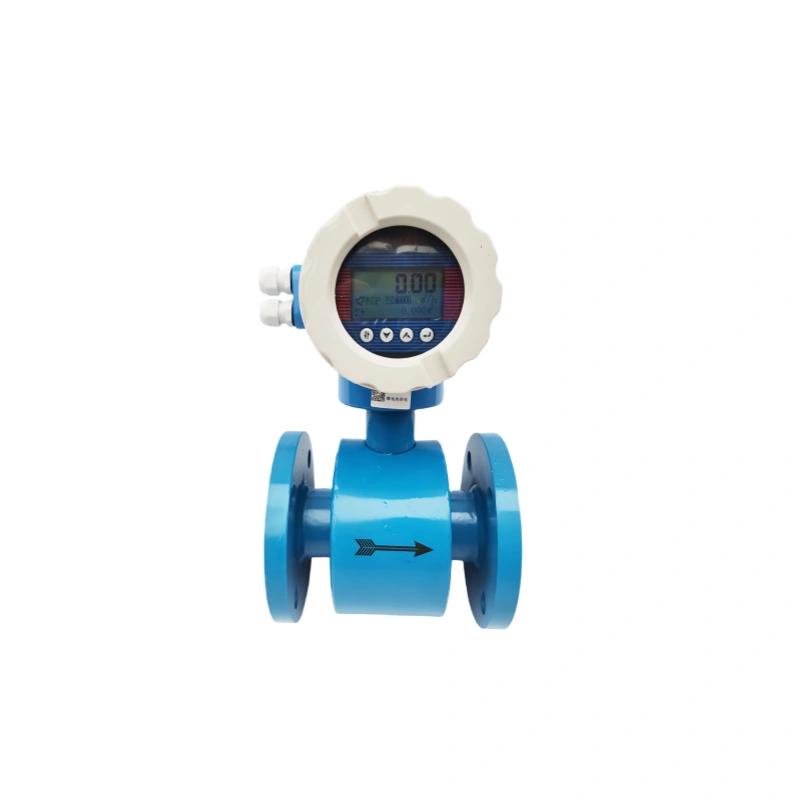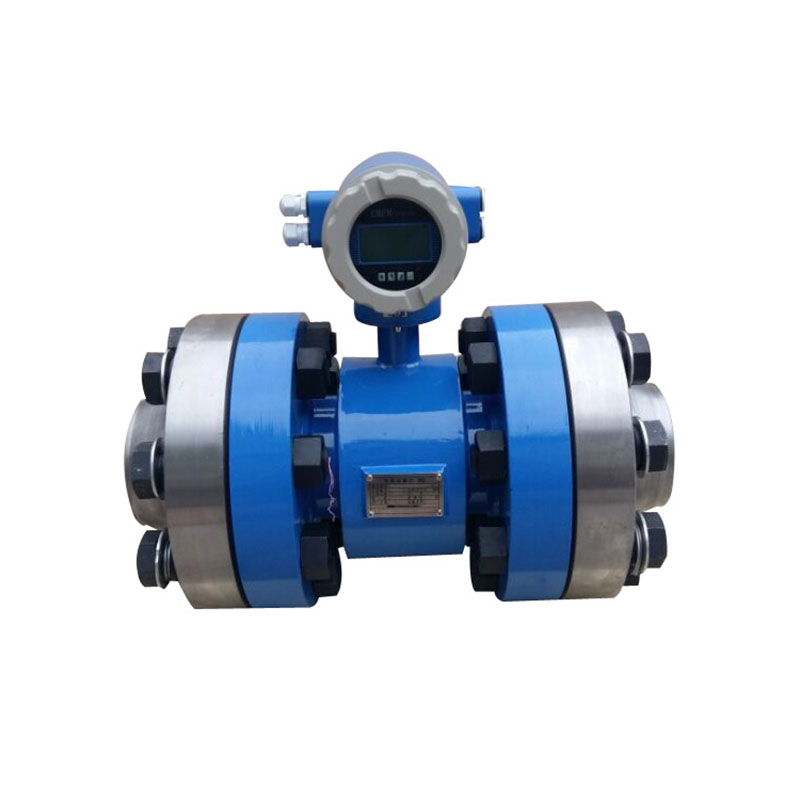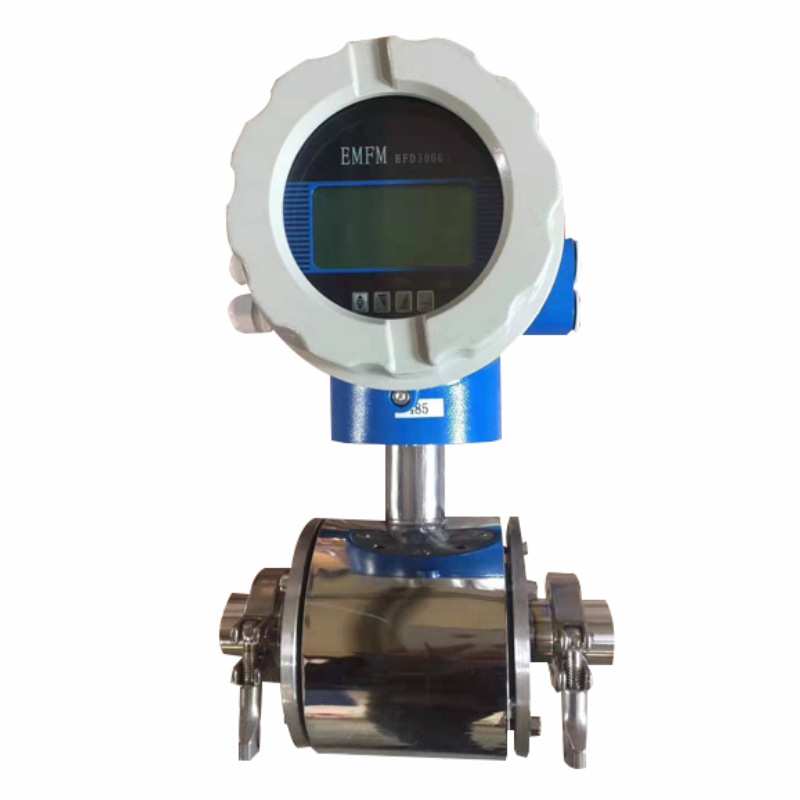
Electromagnetic flow meters are used a lot in modern industry to measure liquid and gas flow rates, and they’re pretty crucial for the job.Their accuracy standards directly impact how efficiently and how well the production process is done, and also quality control.
So it’s really important to understand and master these precision benchmarks.The measurement accuracy class of a flowmeter is the standard for working out the permissible error range between its readings and the true value.A higher accuracy class indicates a narrower error margin and more precise measurement results.
Working Principle of Electromagnetic Flowmeters
Electromagnetic flowmeters operate based on Faraday’s law of electromagnetic induction.When an electrical conductor (like a liquid) flows through a magnetic field, an electromotive force is generated at a right angle to the magnetic field direction.The strength of this electromotive force is directly related to how fast the fluid is moving.You can calculate flow rate by detecting this electromotive force.They’re durable and long-lasting because they contain no moving mechanical parts.
Factors Affecting the Accuracy of Electromagnetic Flowmeters
1.Fluid Properties
The electrical conductivity, viscosity, temperature, pressure, and other characteristics of the fluid can impact the measurement accuracy of electromagnetic flow meters. For instance, when the fluid’s electrical conductivity is low, measurement errors may increase; similarly, significant variations in fluid temperature and pressure can also affect measurement precision.
2.Installation Conditions
Installation factors such as the position, mounting method, and length of straight pipe sections upstream and downstream also affect measurement accuracy.Incorrect positioning, installation techniques or straight pipe lengths may cause unstable fluid flow and compromise measurement results.
3.External Interference
During operation, electromagnetic flow meters may be affected by external electromagnetic interference, vibration disturbances, and other factors.Such disturbances have the potential to induce instability in the output signals from the flow meter, thereby compromising the accuracy of the measurements.
4.Instrument Quality
The accuracy of the electromagnetic flow meter’s measurements is also impacted by its inherent quality, including sensor precision, signal processing circuit reliability, and display unit performance.Measurement errors may be caused by defects within the instrument, such as low-accuracy sensors or unstable signal processing circuits.
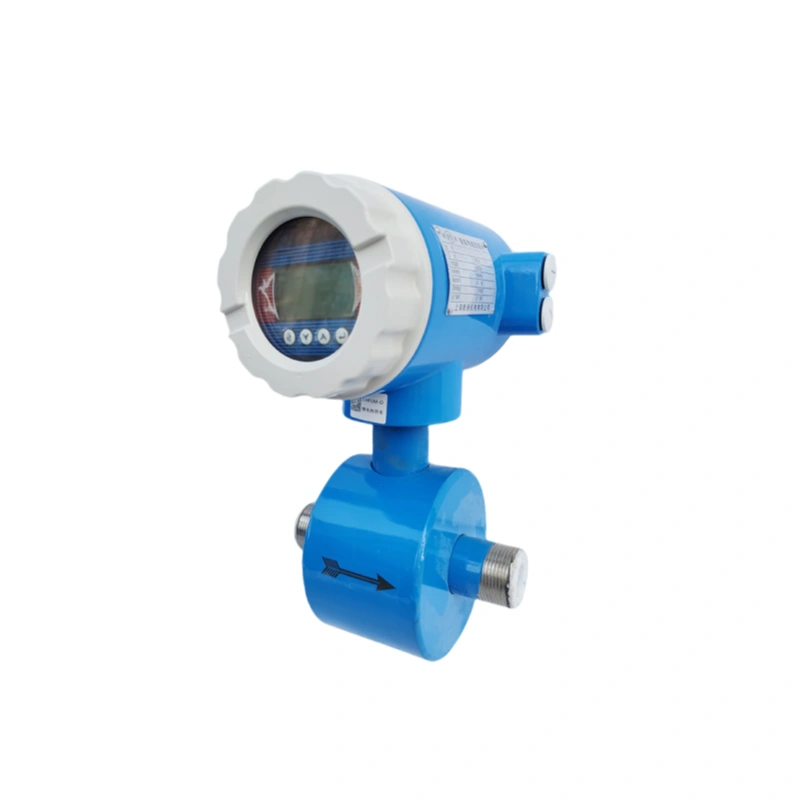
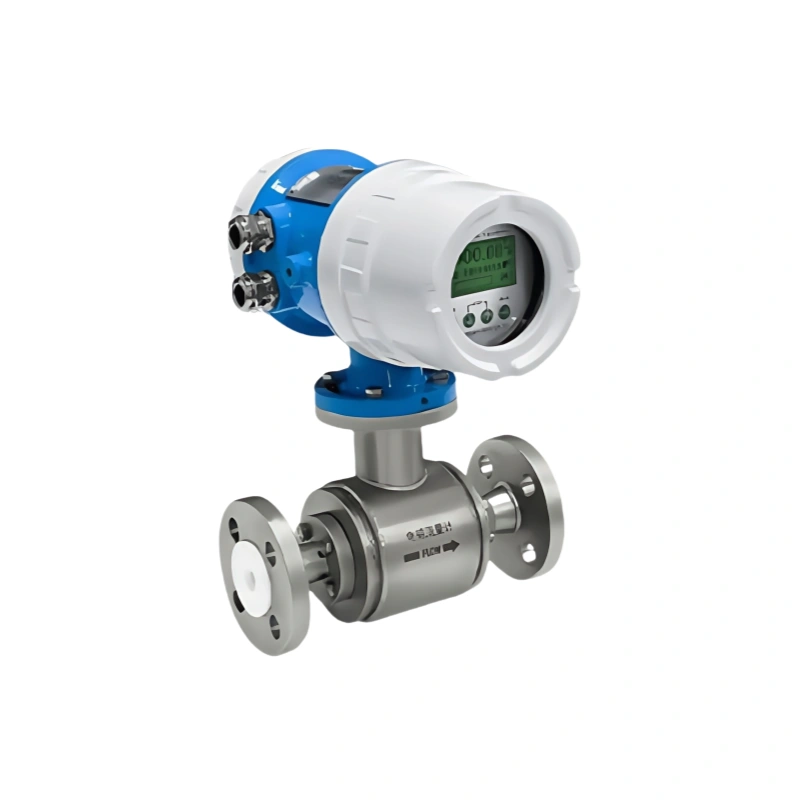
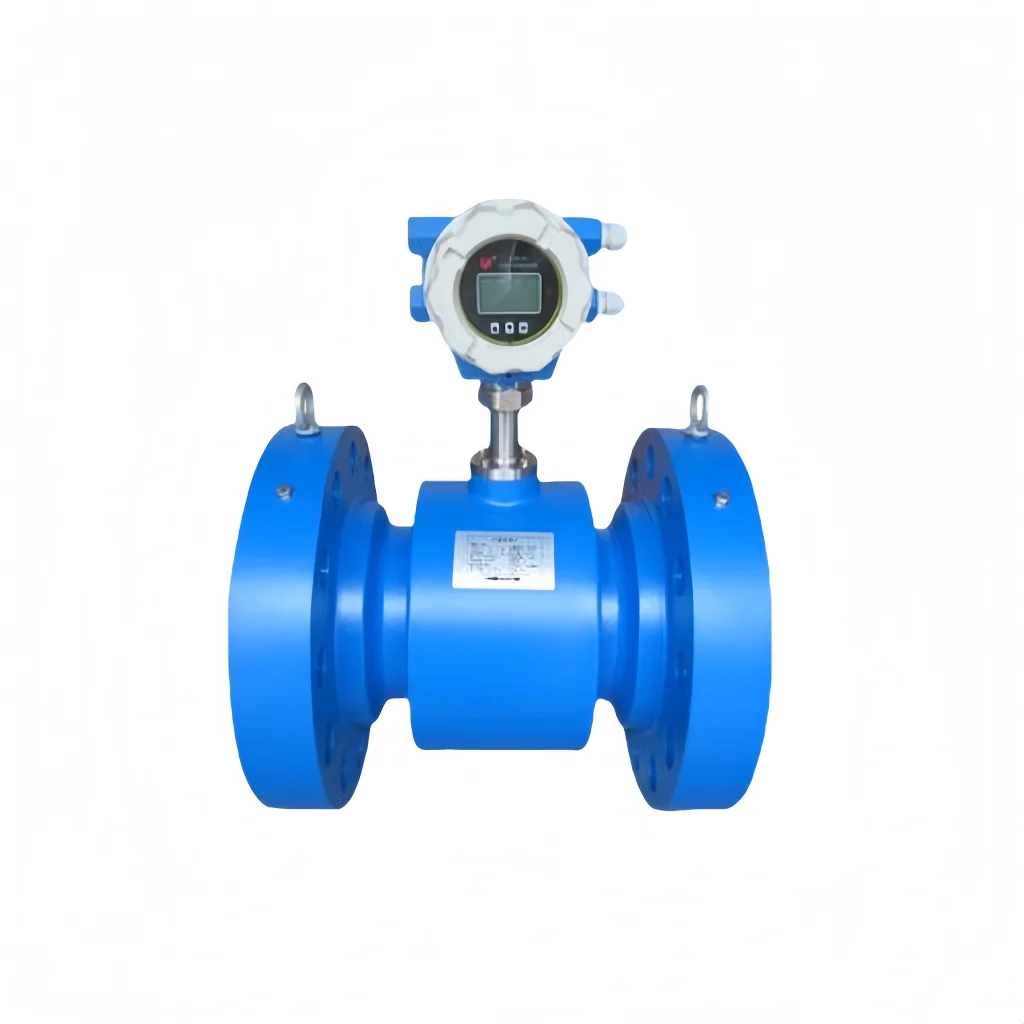
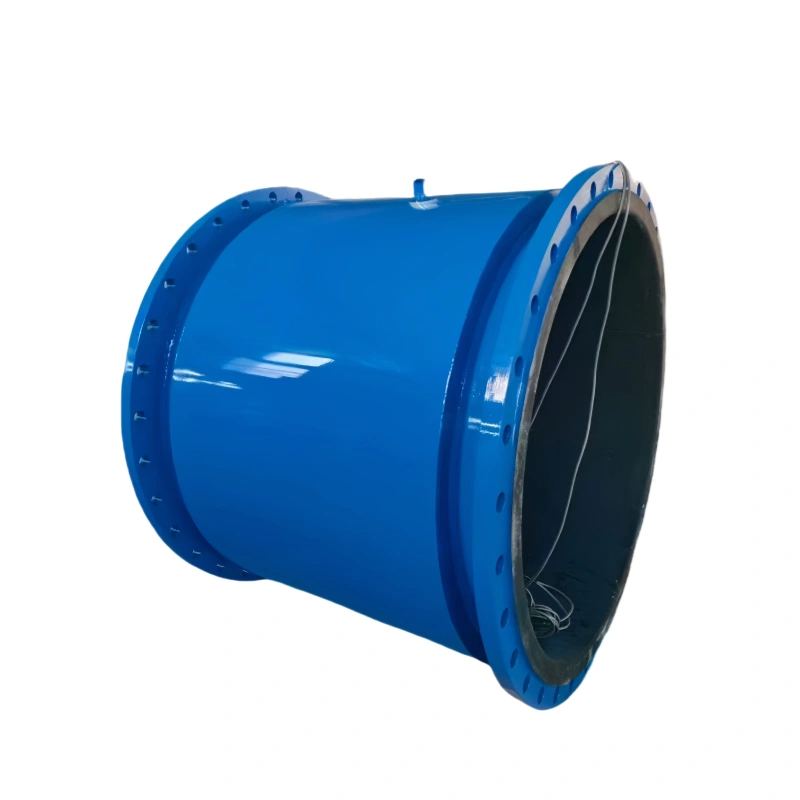
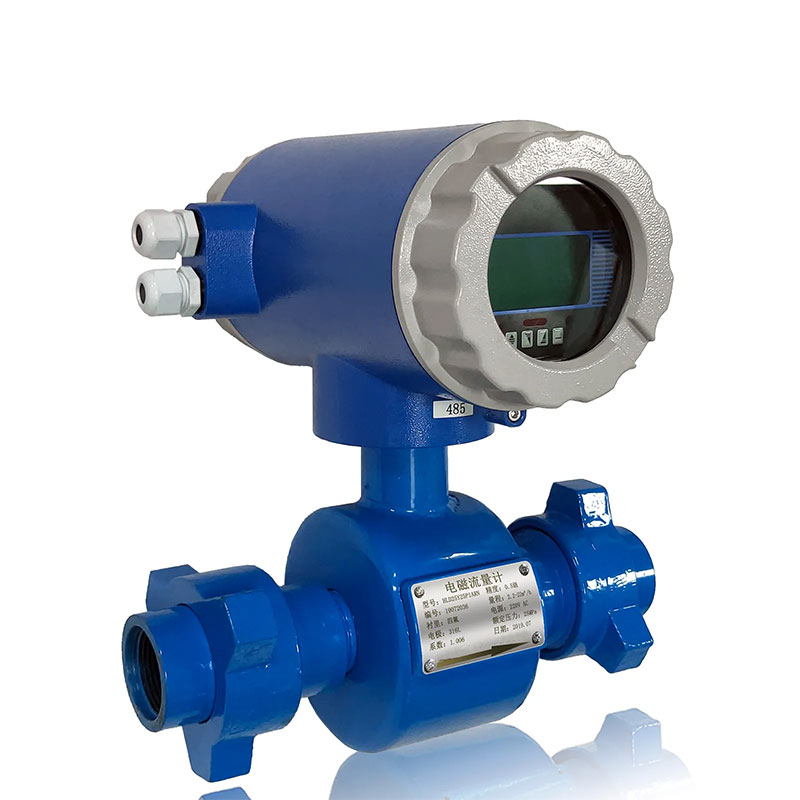
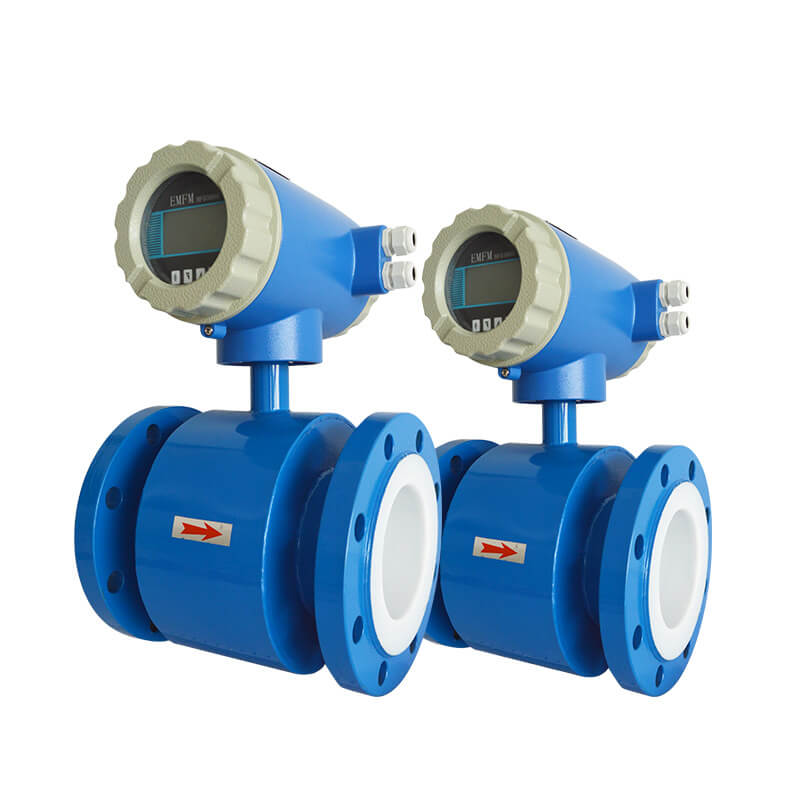
Accuracy classes of electromagnetic flow meters
Electromagnetic flow meters are typically classified into accuracy classes of 0.2, 0.5, 1.0, 1.5, 2.5, and so forth.Each accuracy class denotes a distinct permissible measurement error range.
Class 0.2: This is the highest accuracy class, perfect for applications that need really precise measurements, like energy metering and lab calibration.The measurement error of flow meters in this grade is minimal, typically falling within ±0.2%.
Class 0.5: This represents the standard for high-precision electromagnetic flowmeters, suitable for applications demanding exceptional flow measurement accuracy, such as chemical and pharmaceutical industries.With a measurement error of ±0.5%, such flowmeters are ideal for precision control and metering.
Class 1.0: Electromagnetic flowmeters of this class are suitable for general industrial applications, such as circulating water and slurry conveyance, with a measurement error of ±1%.In many routine flow monitoring scenarios, Class 1.0 accuracy suffices for most requirements.
Class 1.5: These flowmeters are suitable for applications with relatively low accuracy requirements and feature a measurement error of ±1.5%.These flowmeters are commonly used in the water and sewage treatment industries.
Class 2.5 and below: These flowmeters offer lower accuracy, suitable for applications with minimal flow variation, with measurement errors reaching ±2.5% or higher. They are generally employed for non-critical flow monitoring.Sion-Inst electromagnetic flowmeters achieve Grade 0.5 accuracy, enabling high-precision monitoring of various conductive fluids.
.
How to Enhance the Accuracy of Electromagnetic Flowmeters
Selecting Suitable Fluids: Choose appropriate measuring instruments and methods tailored to different fluid characteristics to minimise their impact on measurement accuracy.
Optimising Pipeline Design: Resistance encountered during fluid flow can be reduced by refining pipeline design, such as by selecting suitable inner wall materials and ensuring smooth surfaces.This mitigates its effect on measurement precision.
Improve Installation Conditions: Address factors such as installation locati0n, pipeline vibration, and temperature fluctuations by implementing appropriate measures. This includes selecting suitable installation sites, minimising pipeline vibration, and controlling temperature variations to mitigate their impact on measurement accuracy.
High-Precision Calibration: Conduct high-precision calibration of the instrument to ensure its accuracy and reliability, thereby reducing measurement errors caused by instrument inaccuracies.
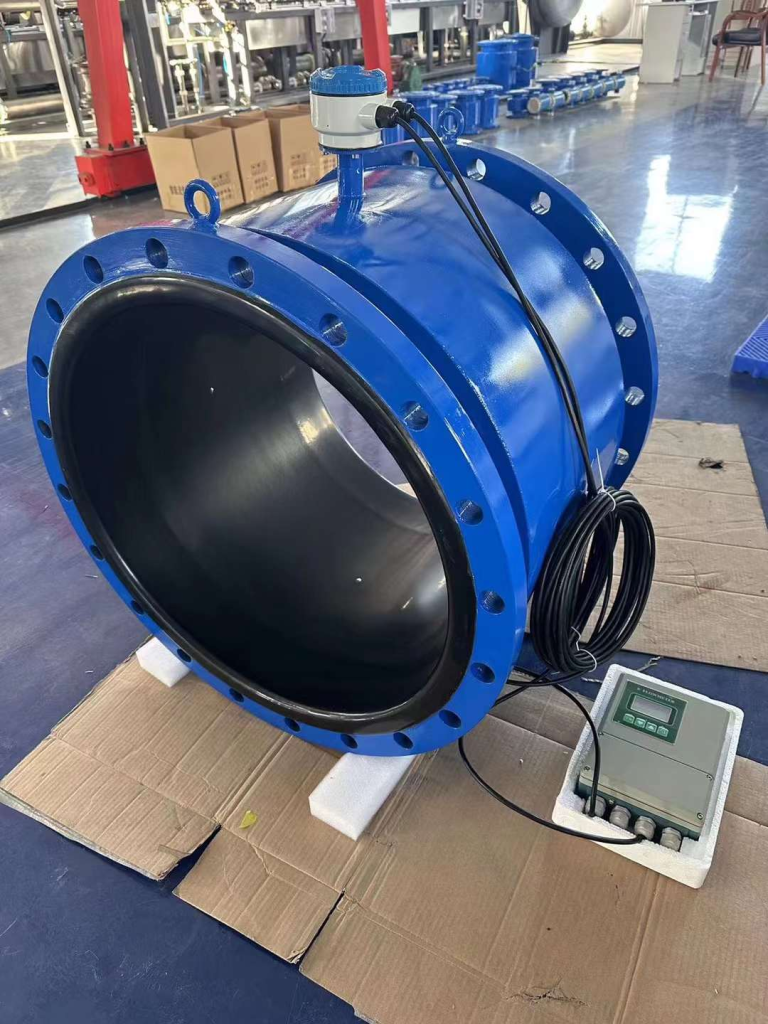
Turndown ratio of electromagnetic flowmeters
The turndown ratio of an electromagnetic flowmeter denotes the ratio between the maximum and minimum flow rates detectable within a specified measurement gradient.This metric shows how well the instrument measures flow at low rates.Things like how precise the flowmeter is, the computer hardware design, and the programming all have an impact.To ensure measurement accuracy, the turndown ratio should generally not exceed 125:1.
Its formula is: Turndown ratio = Qmax / Qmin
A wide turndown ratio indicates greater adaptability to operational conditions. In many practical measurement scenarios, flow rates are not constant.If a flowmeter’s turndown ratio is insufficiently wide, it may produce inaccurate measurements.If the flow goes above the upper limit, the readings get distorted. On the other hand, if the flow goes below the lower limit, the instrument might not show a reading or give the wrong signal.A high turndown ratio is key to getting accurate measurements.An electromagnetic flowmeter with a high turndown ratio ensures consistent measurement accuracy throughout the entire range of flow fluctuations.
Factors affecting the range ratio:
In electromagnetic flowmeters, the primary factors influencing the range ratio are the instrument’s accuracy, measurement range, and measurement gradient.
A higher range ratio corresponds to lower instrument accuracy, and it is affected by the following factors:
1.Accuracy of the Electromagnetic Flowmeter
How accurate the electromagnetic flowmeter is determines the range ratio. Its accuracy depends mainly on how precise the internal magnetometer, calibration components and sensors are, with the magnetometer having the biggest impact on accuracy.So, to improve the range ratio, we need to make the flowmeter’s internal components more precise.
2.Flowmeter measurement range
The measurement range denotes the maximum and minimum flow rates that the flow meter can measure. This is a key factor affecting the range ratio. When the flow rate of the measured medium varies significantly, the range ratio naturally increases. However, a wider range compromises accuracy, necessitating the selection of an appropriately sized range.
3.Measurement Gradient
The measurement gradient is basically the smallest measurable change unit for electromagnetic flowmeters, and it does have an impact on the range ratio to a certain extent. A higher measurement gradient lets you spot smaller minimum medium flows, which improves the range ratio. But if the measurement gradient is lower, there are more medium flow variations, which means the range ratio is reduced.
Electromagnetic Flowmeter Selection Guide
1. Medium Compatibility
Conductivity Requirements
Electromagnetic flowmeters need certain conductivity levels in the liquid, usually a minimum of 5μS/cm.
Pure water: The conductivity levels are between 50 and 500 μS/cm, which is perfect for the conditions we’re measuring.
Weak acids/alkalis: e.g., dilute sulphuric acid (5% concentration) with conductivity ~1000 μS/cm requires corrosion-resistant materials.
High-conductivity liquids: For example, if you’re using concentrated hydrochloric acid (30% concentration) with conductivity up to 50,000 μS/cm, you’ll need to make sure the electrodes and linings are more resistant to corrosion.
Corrosive Medium Handling
Electrode Material: 316L stainless steel is suitable for weakly corrosive media, while Hastelloy C-276 or tantalum is recommended for concentrated acids and strong alkalis.
Lining Material: Rubber lining is suitable for general liquids, while PTFE or polyurethane lining is suitable for highly corrosive or high-temperature media.
2.Flow Rate and Nominal Diameter
Flow Range Design
Design Flow Rate: Must cover actual operating conditions with a 10%-20% margin.For instance, a municipal water supply with a design flow rate of 500m³/h should employ a flowmeter with a range of 0-600m³/h.
Flow Velocity Control: Liquid velocity should be maintained between 0.5-10m/s to avoid excessively low (unstable signals) or high (increased pressure loss or electrode damage) velocities.
Nominal Diameter Matching Principle
Pipe Diameter: The flowmeter’s nominal diameter must match the pipeline to prevent measurement errors caused by throttling or enlargement.Reducing/Enlarging Diameter Design: If diameter adjustment is required, verify flow velocity (≤10 m/s after reduction, ≥0.3 m/s after enlargement).
3. Accuracy and Stability
Accuracy Class Selection
High-Precision Applications (e.g., trade settlement, pharmaceutical production): Accuracy ±0.5% FS (full scale).
General-Purpose Applications (e.g., process control, environmental monitoring): Accuracy ±1.0% FS.
Cost-Sensitive Applications (e.g., rough monitoring): Accuracy ±2.0% FS.
Long-Term Stability Assurance
Repeatability: High-quality electromagnetic flowmeters should exhibit repeatability ≤0.2% FS to ensure sustained measurement stability.
Linearity: Within the 10%-100% span range, linearity should be ≤0.5%FS to minimise non-linearity errors.
4.Environmental Adaptability
Temperature Range Compatibility
Sensor: -25°C to 200°C (standard type), -40°C to 250°C (high-temperature type, requires cooling apparatus).
Converter: -10°C to 60°C (standard type), -25°C to 85°C (wide-temperature type).
Pressure Rating Compatibility
Standard Type: 0-2.5MPa (flanged connection), 0-4.0MPa (high-pressure type requires special design).
Special Applications: For deep-sea pipeline measurements, select models with pressure resistance ≥10MPa and verify sealing performance.
Protection Rating Requirements
IP65: Dry indoor environments, suitable for laboratories or control rooms.IP67/IP68: Outdoor or submerged environments, protecting against rain, dust, or brief immersion.
5. Signal Output and Communication
Analogue Output Types
4-20mA signal: High interference resistance, suitable for long-distance transmission to PLC or DCS systems.
Voltage output (0-5V, 0-10V): Suitable for short-distance transmission or embedded systems.
Digital Output Protocols
RS485/Modbus: It facilitates integration into platforms and supports remote monitoring and data upload.
Protocol Compatibility: Diverse system integration requirements are met by this product, which supports industrial protocols such as HART and Profibus.
6.Installation and Maintenance
Installation Orientation Specifications
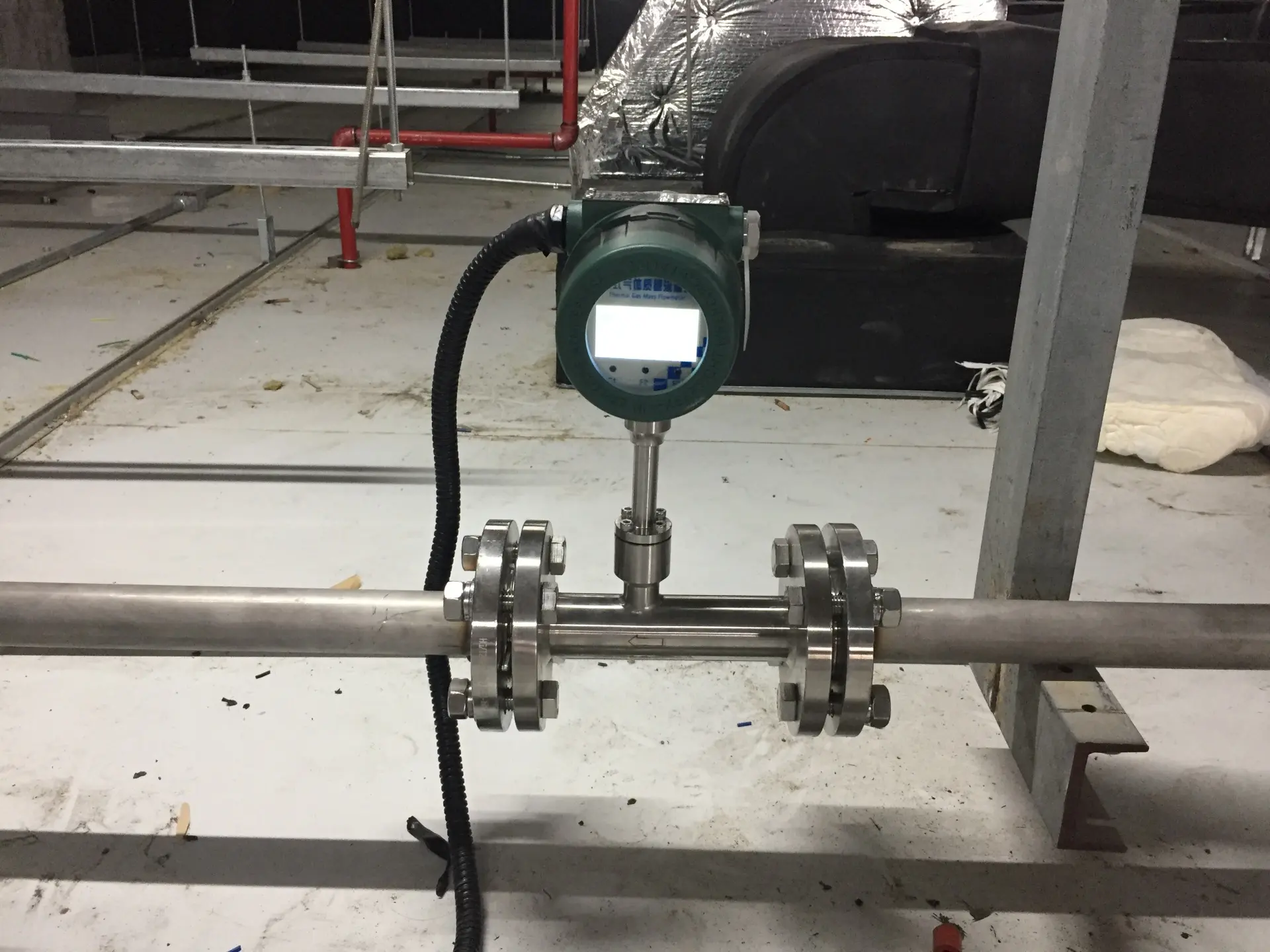
Horizontal Installation: The electrodes are positioned horizontally to ensure full contact with the medium. A minimum of 10D of upstream straight pipe and 5D of downstream straight pipe is required.
Vertical Installation: Medium flow direction from bottom to top to prevent bubble accumulation (liquid measurement) or sedimentation of impurities (particulate-containing media scenarios).
Grounding and Explosion-Proof Design
Grounding Requirements: Metal piping must be reliably grounded using a conductor with a cross-sectional area of at least 5.5 mm² to prevent the accumulation of static electricity and the associated safety hazards.
Explosion-proof scenarios: In environments such as chemical production lines, explosion-proof flowmeters must be used.
Maintenance Cycle Recommendations
Periodic calibration: Calibrate the instrument every 1-2 years.For high-precision applications, it is recommended that you submit your equipment to a professional calibration institution.
Cleaning and rust removal: Clean deposits from electrodes and pipe inner walls every 3-6 months. Apply anti-corrosion treatment to metal components.
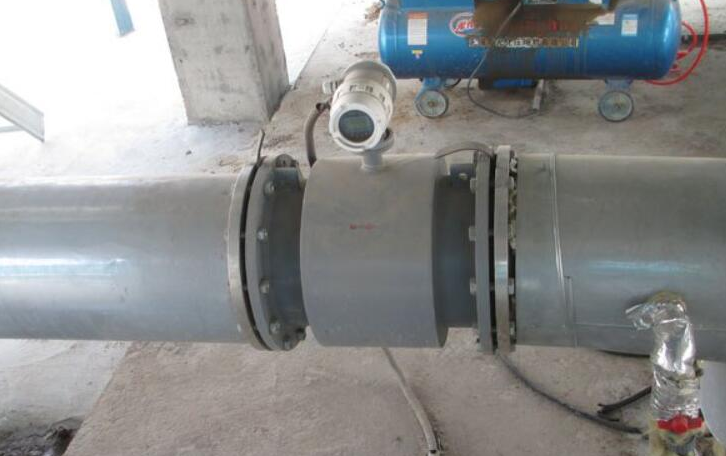
Sino-Inst is a specialist manufacturer and supplier of flow meters. With years of expertise in sensor technology, Sino-Inst offers a diverse range of flow measurement products, including electromagnetic, turbine, vortex, ultrasonic, and mass flow meters.
Our products are used extensively across a range of critical industries, including cooling water systems, industrial gas processing, handling corrosive and saline fluids, chemical processing, wastewater treatment, energy production and electronics manufacturing, as well as in laboratories. With core performance characterised by high stability and precision, they inject robust momentum into the intelligent upgrading of these sectors.