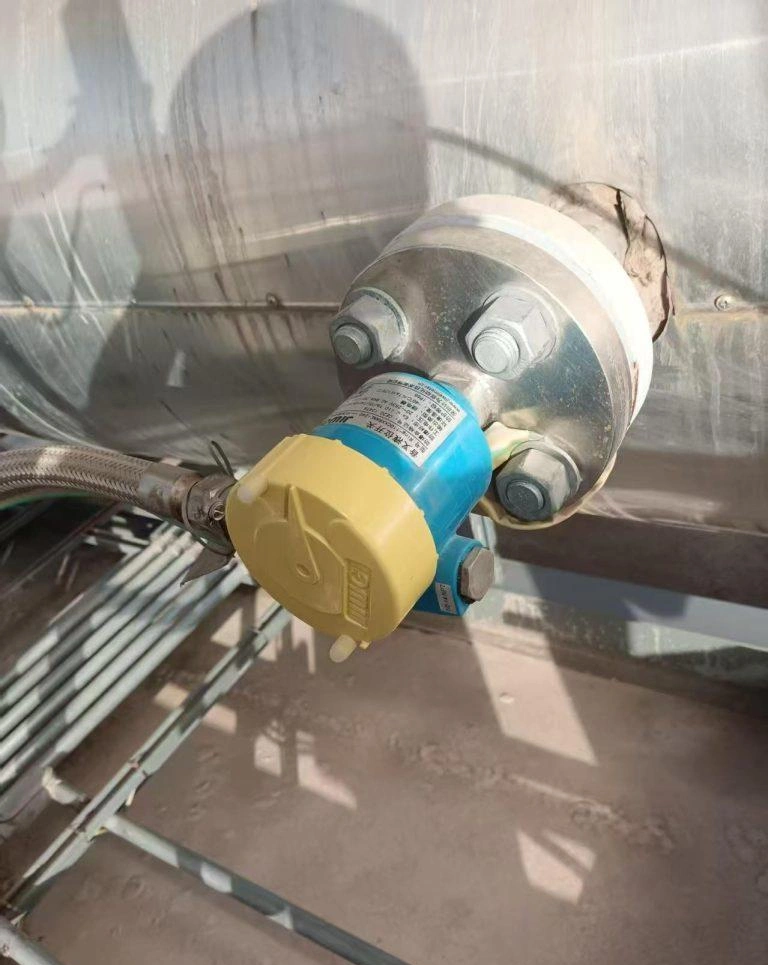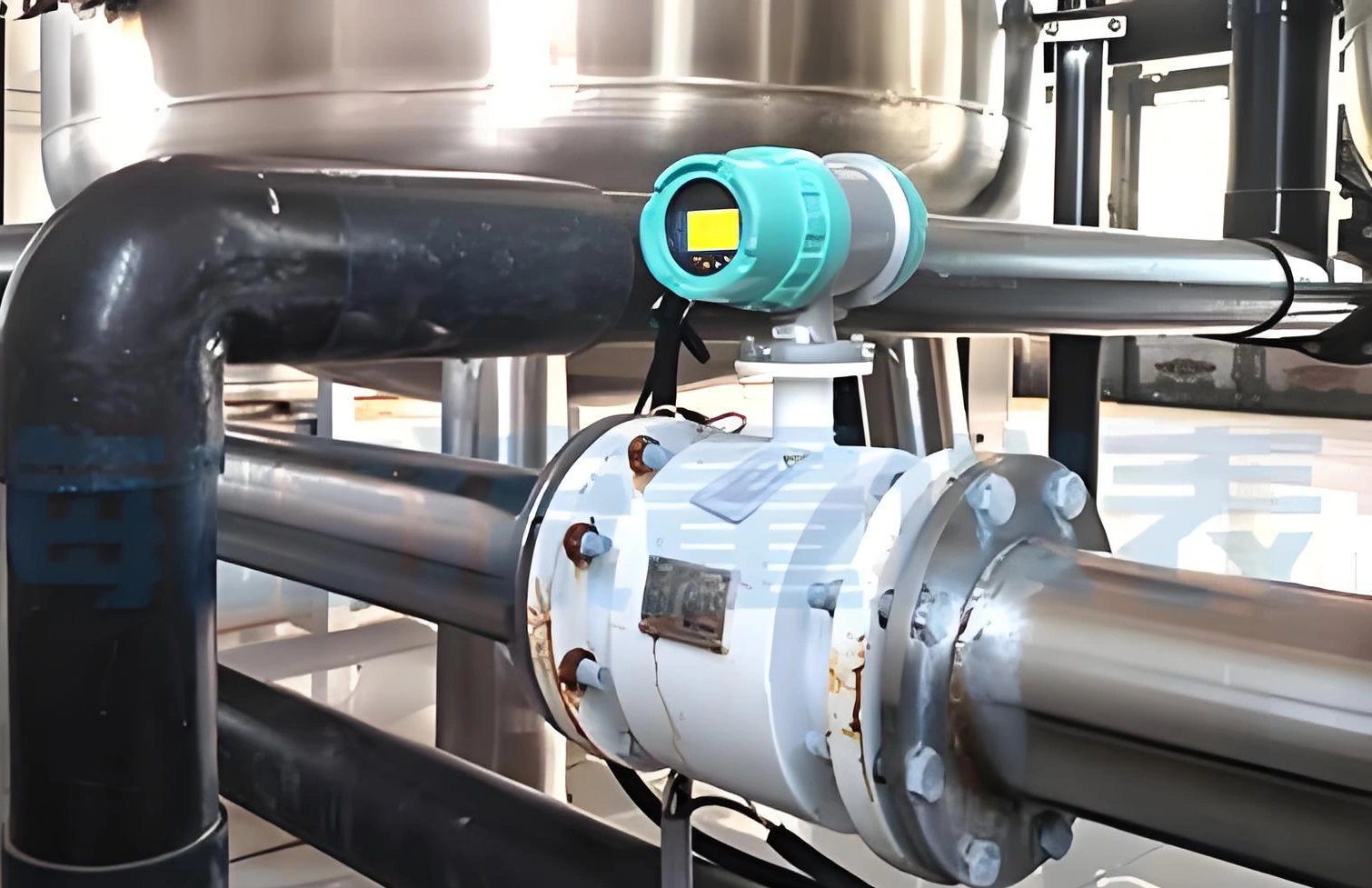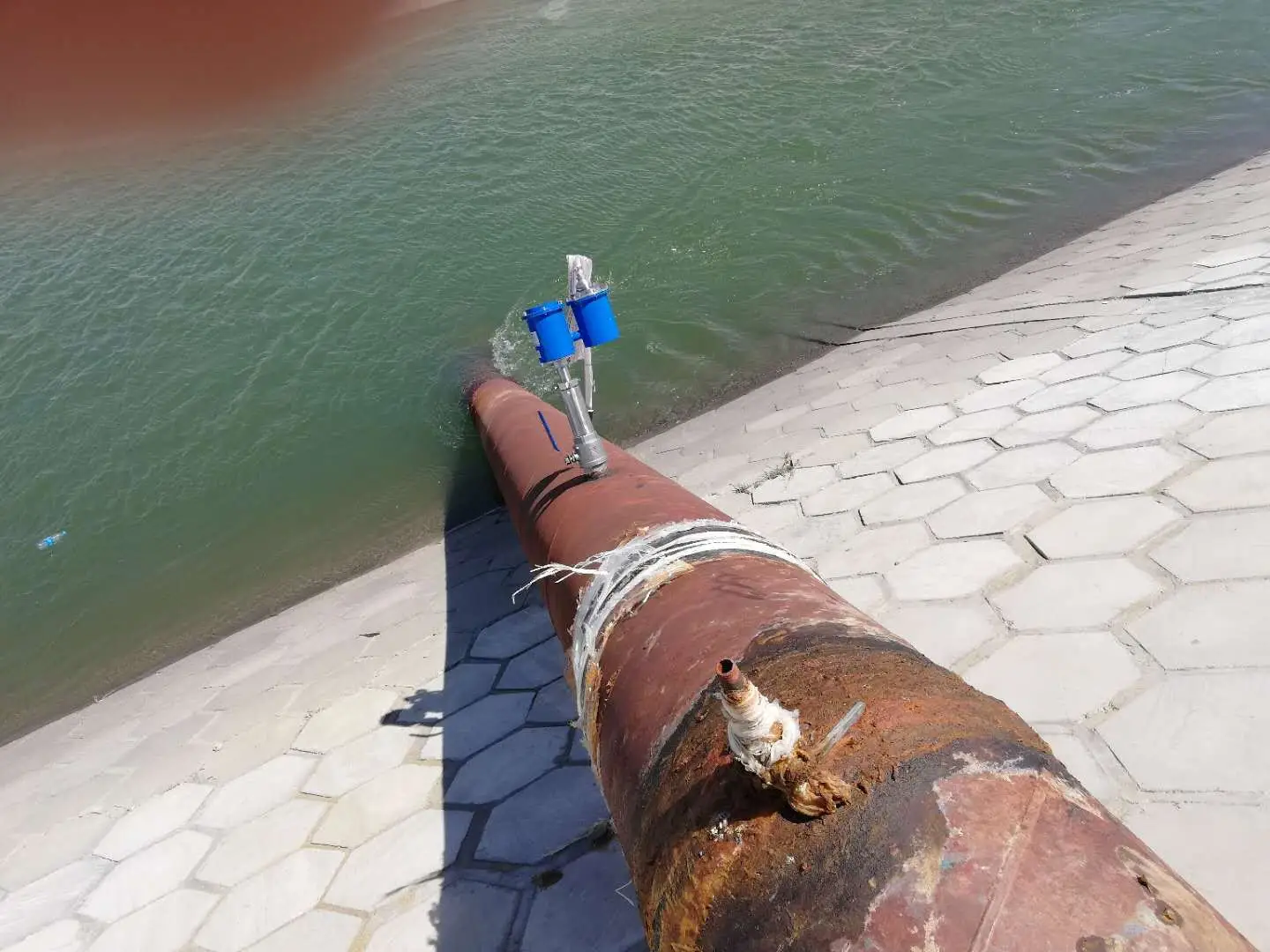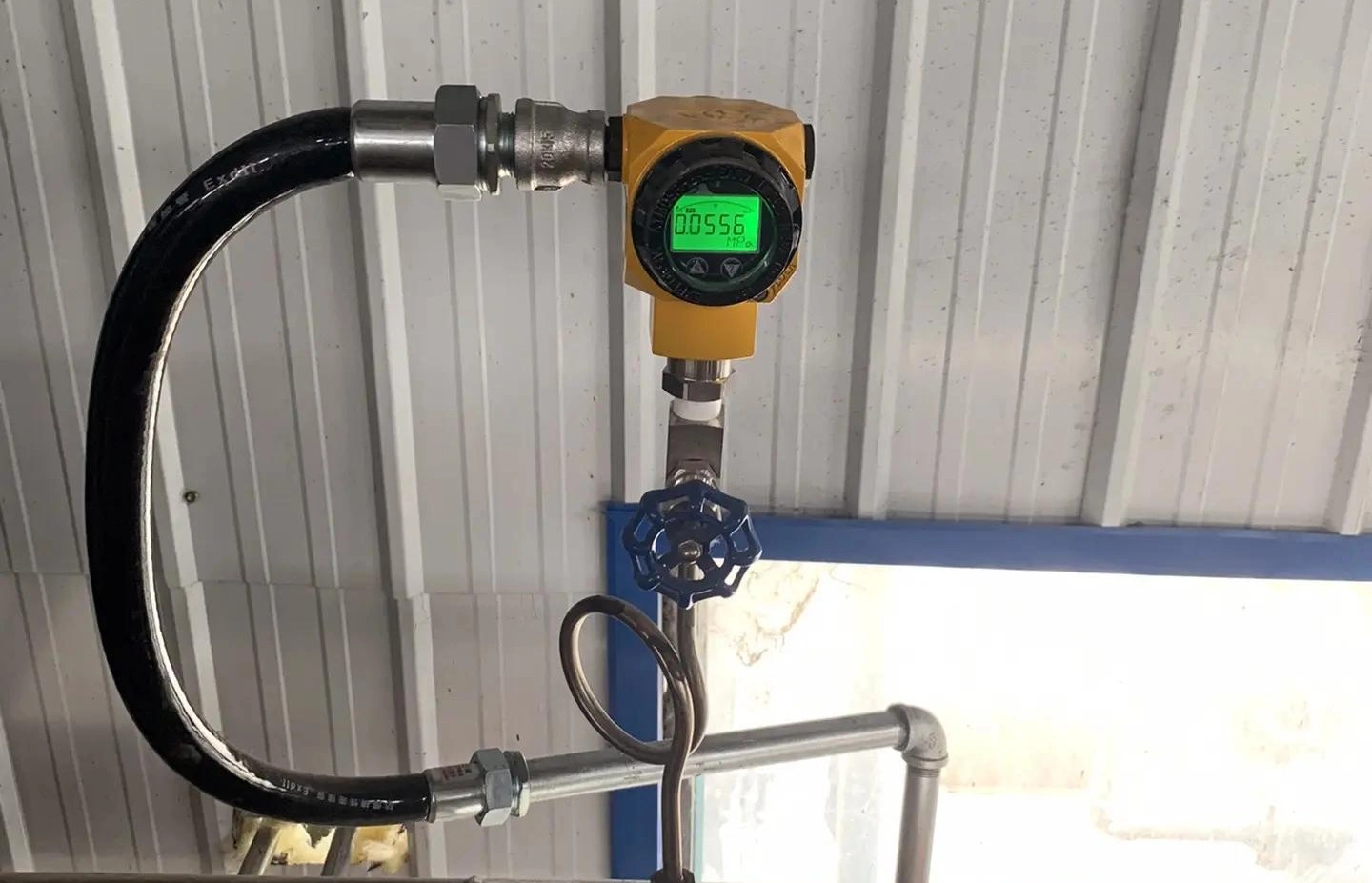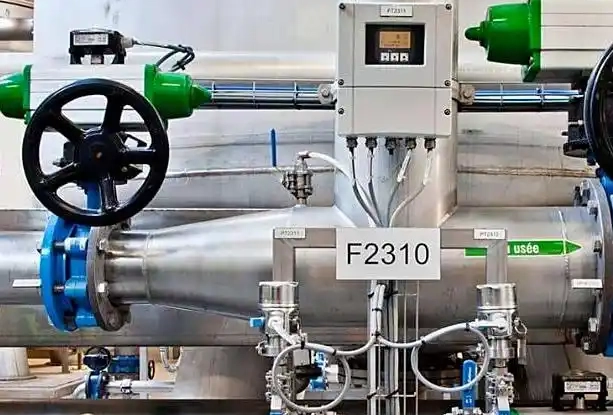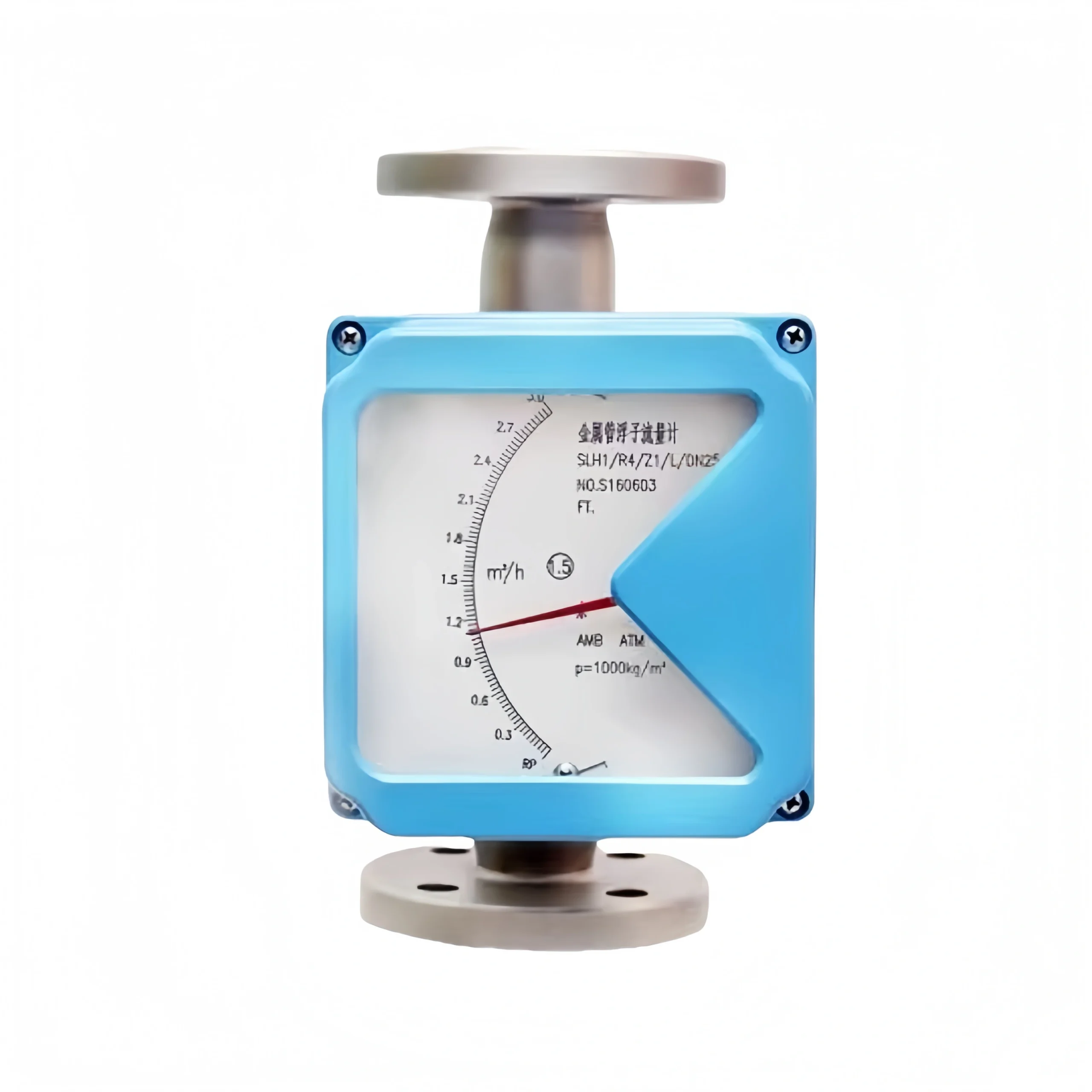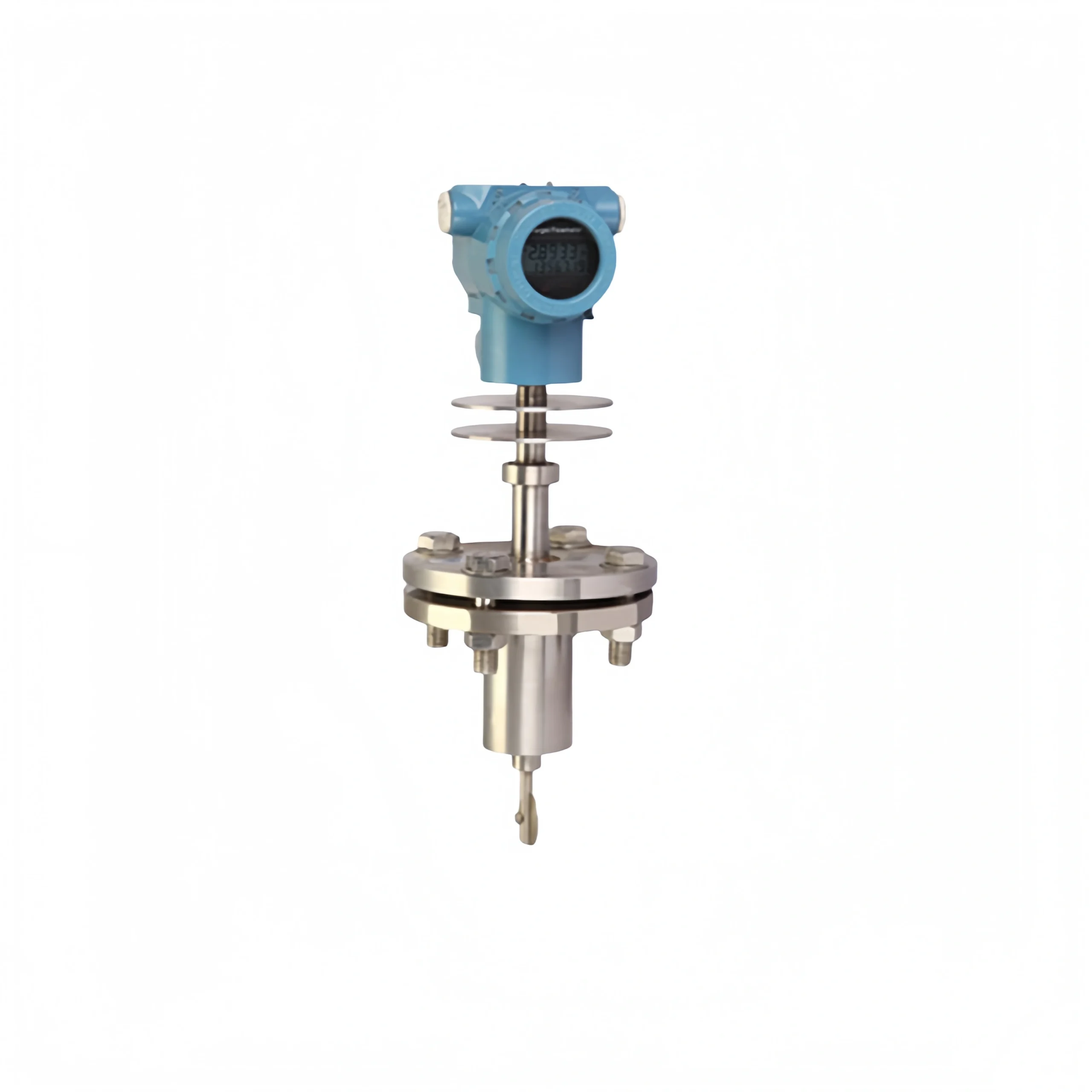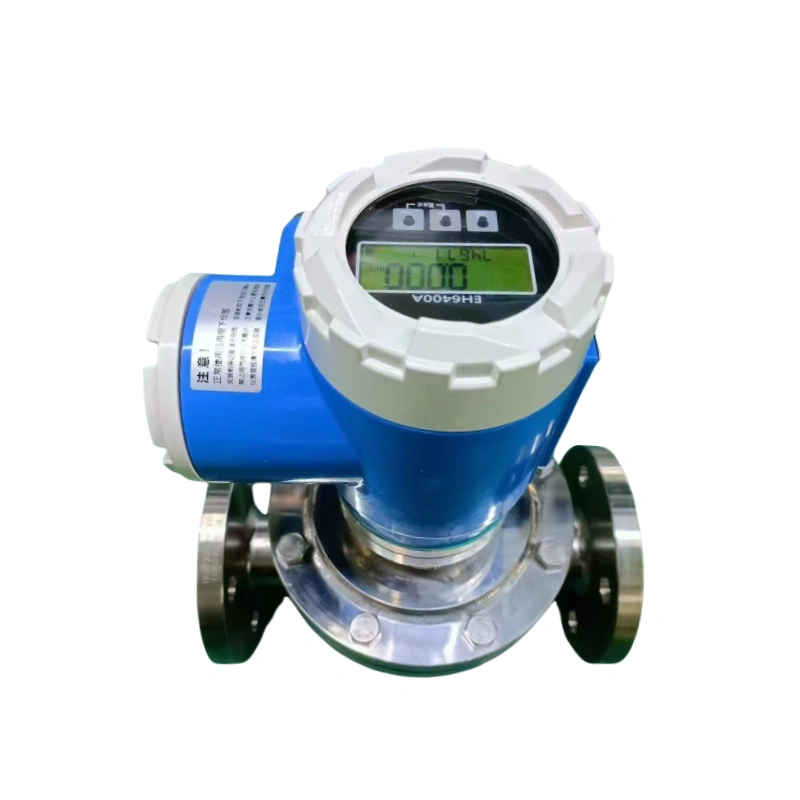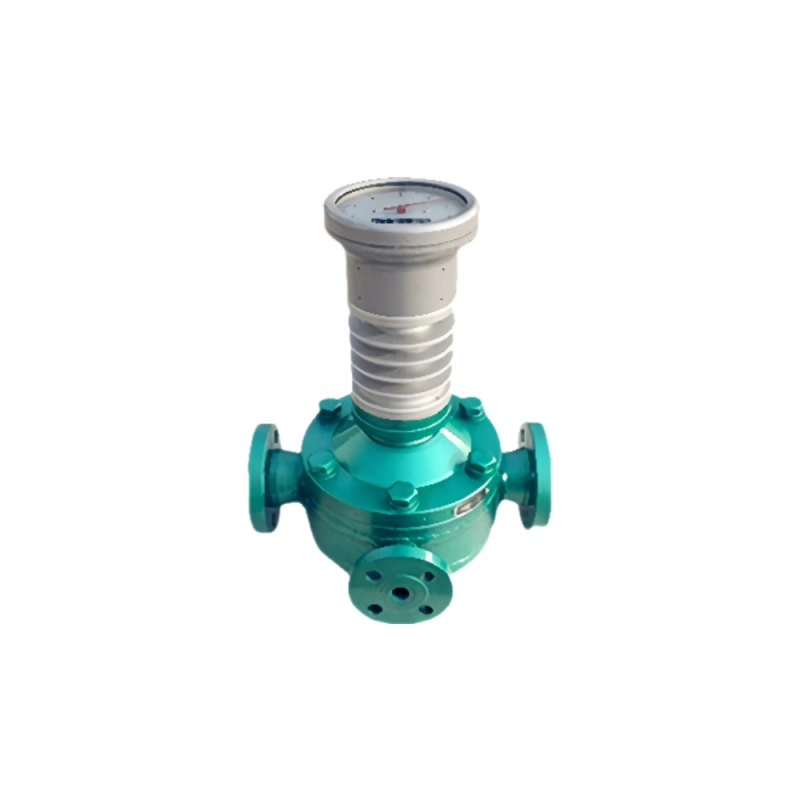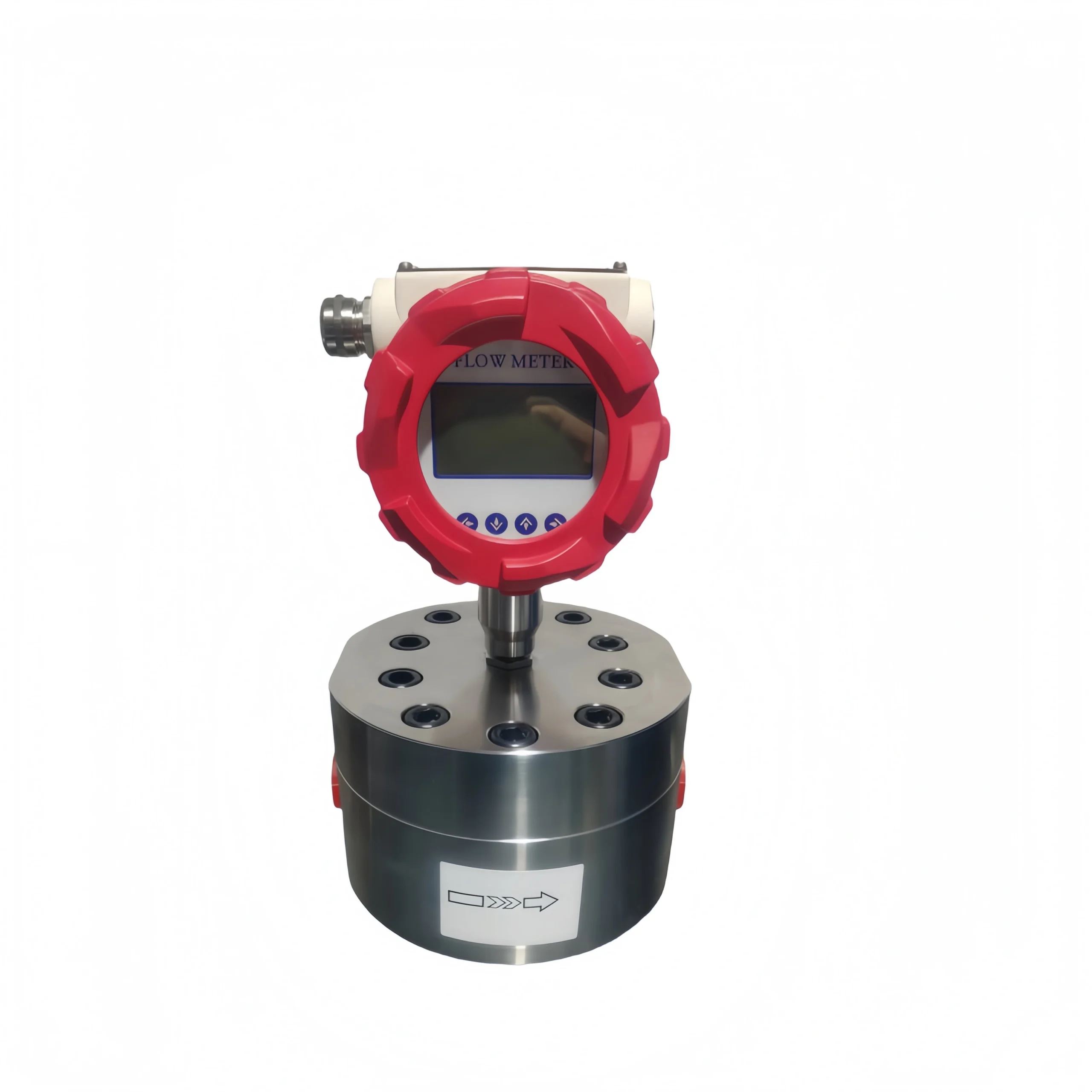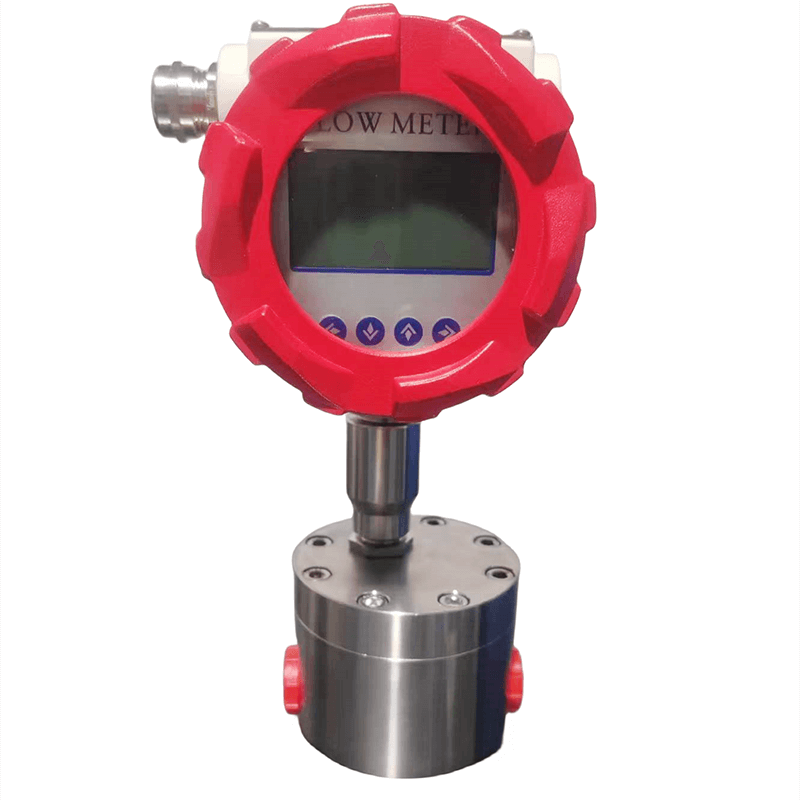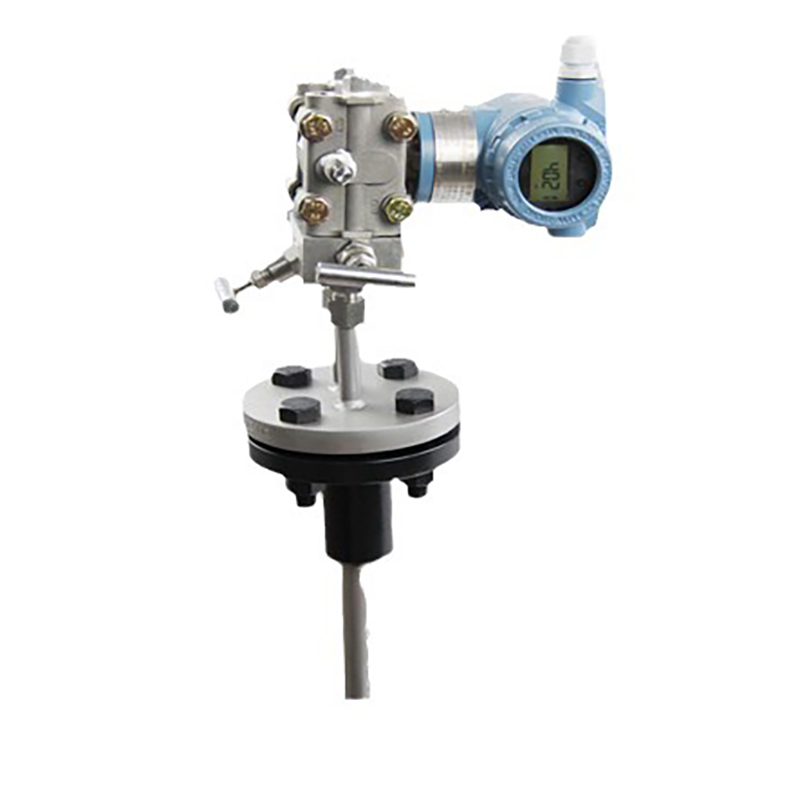
Target flow meters play a significant role in measurement applications across industrial sectors such as petrochemicals, metallurgy, power generation and municipal heating; they are particularly suited to the precise measurement of high-viscosity media, fluids containing solid particles, and low-flow-rate conditions.
Operating on the principle of force exerted on a target, target flow meters are capable of withstanding harsh operating conditions that most conventional flow meters cannot handle. Drawing upon fluid mechanics theory and field operational data, this article explores the instrument’s metrological performance, sources of error, and patterns of suitability for specific operating conditions.
Basic Principles of Target Flow Meters
The basic principle of the target-type flowmeter involves installing a target plate perpendicular to the direction of the flow stream within a straight pipe section of constant cross-section.
As fluid moves past the target plate, the plate experiences a thrust force. This force scales with the fluid’s kinetic energy and the plate’s cross-sectional area.
Over a specific Reynolds number range, the volumetric flow rate through the meter bears a linear relationship to the force exerted on the target plate. A force transducer picks up this mechanical loading; downstream electronics then condition the signal into a usable electrical output.
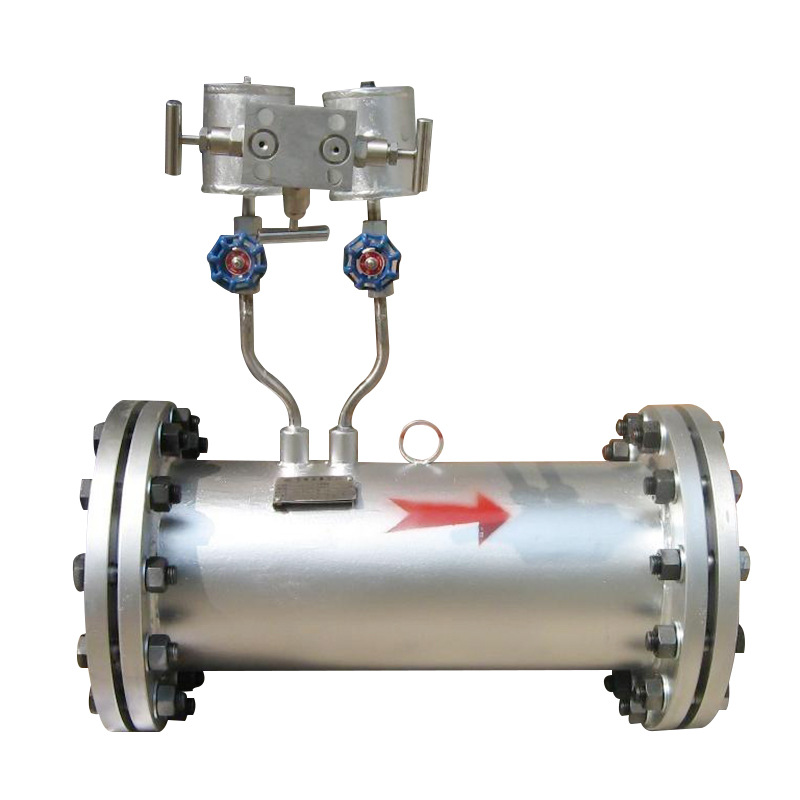
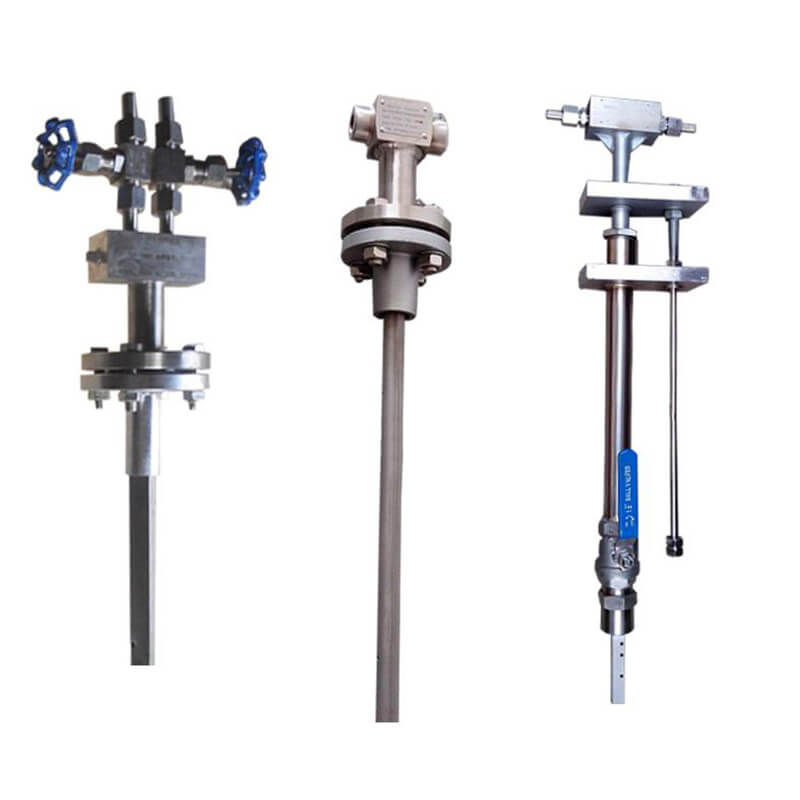
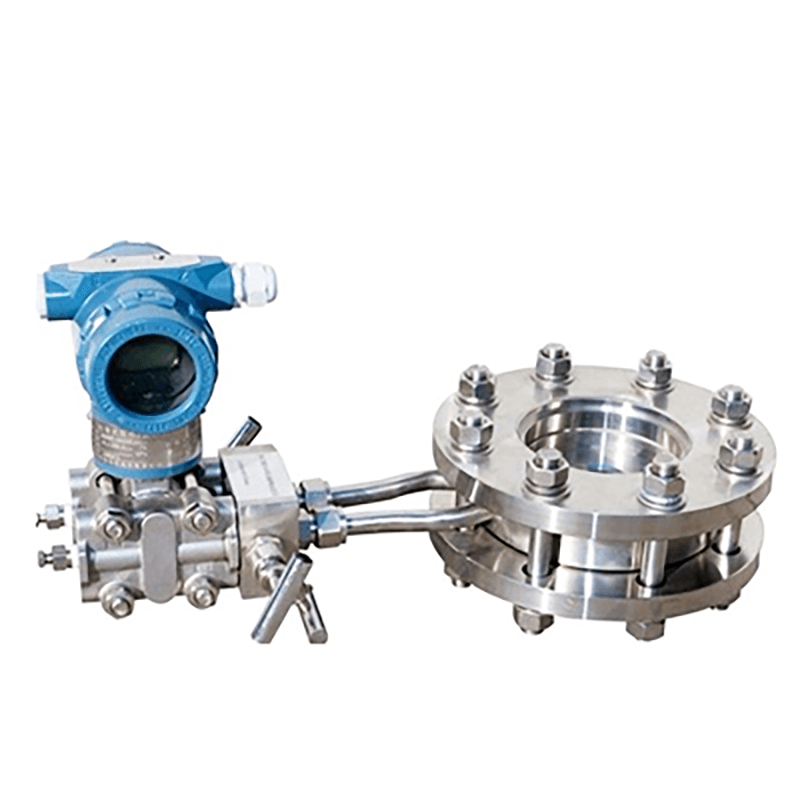
The main hardware of a target flowmeter includes the measurement conduit, the target plate itself, the force transducer, and the signal conditioning electronics. The transducer uses strain-gauge technology, built around a cylindrical elastic element with bonded strain gauges, and can be installed either inside or outside the flow path.
When the elastic element deflects under load, it unbalances the Wheatstone bridge formed by the gauges, producing an electrical signal that varies as the square of the flow rate.

Main Functions and Features of Target Flow Meters
Target flow meters are designed for accurate gas and liquid flow measurement across a wide operating range—from normal ambient conditions to extreme high and low temperatures. What sets them apart:
High measurement accuracy: These meters can reach accuracy grades as fine as 0.2%. Temperature and pressure compensation are built in, so mass flow or standard cubic meter outputs come through directly—no extra conversion needed.
Excellent operational stability: The target plate and throat geometry are engineered to keep fluid distribution even inside the meter. That keeps readings consistent and prevents drift when ambient conditions shift.
Low maintenance requirements: Fewer moving parts and a clean, simple layout translate to a long service life, solid reliability, and repairs that don’t require tearing the whole unit apart.
Great anti-interference and anti-fouling capability: Real-time temperature and pressure compensation runs automatically during operation, kicking out standardized mass and volume data. This cuts down the number-crunching workload for field personnel down the line.
Application scenarios for target-type flowmeters
1. High-viscosity liquid measurement conditions: It adapts perfectly to pipeline measurement of high-viscosity fluids like crude oil, heavy oil, resin, lubricating oil and syrup.
Unlike conventional differential pressure meters that struggle with sticky media buildup, the target-based structure effectively reduces adhesion issues and maintains stable metering for viscous working fluids. Commonly found in oil refining and fine chemical raw material transport pipelines.
2. Pipelines carrying fluids containing solid particulate impurities:capable of measuring slurry, coal slurry, sewage and chemical waste liquids containing fine particles.
The target plate is wear-resistant and not easily blocked by impurities, making it widely used in mine water supply and drainage, sewage discharge pipelines at wastewater treatment plants, and construction slurry conveyance.
3.High- and low-temperature media applications: Suitable for measuring both standard-temperature industrial water supply and drainage, as well as low-temperature refrigerants, high-temperature heat transfer oil and asphalt.
This type of instrument is widely selected for measuring discharge flow rates in petroleum refining and asphalt processing production lines.
4. Low-pressure gas and steam measurement in small to medium pipes: Suitable for monitoring low-pressure coal gas, compressed air and saturated steam. You’ll typically find these in boiler room gas inlets, small HVAC steam loops and plant-level process gas lines.
5. Corrosive fluid production lines:With a corrosion-resistant lined target, these meters handle aggressive chemical media like acids, alkalis and salt solutions without issue.They are used in production process pipelines for electroplating, daily chemical raw materials and inorganic salt chemical production.
6. Applications with limited installation space: The instrument features a compact design and does not require long straight pipe sections for installation. It is suitable for flow measurement in narrow pipelines, on-board hydraulic circuits, and small integrated units, and is widely used in hydraulic pump stations and lubricating oil lines for small compressors.
Conditions unsuitable for target-type flowmeters
1. Media containing a large quantity of hard solid particles, where particle abrasion wears down the target plate, leading to easy damage to the instrument.
2. Media with persistently very low flow rates, where the flow sits below the bottom end of the measurable range and throws off readings badly.
3. Pipelines that keep getting hit by water hammer or wild pressure spikes. The repeated jolting stress slowly chews up the meter’s internal sensing parts over time.
4. Fluids that are either thick with viscosity or tend to drop out solids. Gunk builds up on the target plate and gradually throws the measurements out of whack.
5. Strongly corrosive process fluids, unless you spec out a custom anti-corrosion build. Standard target and sensor assemblies get eaten away by aggressive chemicals pretty quickly.
6. Clean gas applications running at low pressure with minuscule flow. There simply isn’t enough fluid push to move the target properly, so the meter ends up sluggish and unresponsive.
Advantages and Disadvantages of Target Flow Meters
Advantages:
Simple structure and easy installation: Featuring a basic, streamlined mechanical design, these flow meters require no sophisticated technical support for on-site mounting. Operators can complete the whole installation process independently with ease.
Wide range of applications: This meter model imposes no strict limitations on measured media. It adapts to all kinds of fluid conditions, such as high-viscosity liquids and low Reynolds number fluids, and performs stably under various pipe sizes, extreme temperatures and high-pressure working environments.
High measurement accuracy: Precision hits 0.2% grade. Temperature and pressure compensation is built right in, so mass flow and standard cubic meter values come out directly—no extra conversion steps, less headache for field calculations.
Good repeatability and fast measurement: The device delivers steady recurring readings alongside snappy response speeds, helping streamline daily metering work on site.
Rich features: Operators may enable optional modules including small-signal truncation and nonlinear compensation. Such customizable setups let users modify instrument functions to match unique field operating requirements.
Strong resistance to interference and contaminants: Real-time temperature and pressure compensation runs automatically during operation, helping the meter shrug off fluid impurities and signal noise and keep measurements steady.
Low pressure drop and stable operation: There’s no intricate throttling hardware inside, so pressure loss stays minimal. The pipeline doesn’t take a hit on delivery pressure, and the unit can run continuously without fuss for the long haul.
No risk of clogging, suitable for contaminated media: The flow path is wide open—no narrow channels or dead pockets where sludge or debris can pile up. That makes these meters a solid pick for measuring dirty or particle-laden fluids over extended periods.
High weather resistance and durability: The main body is built tough, with no fragile or high-wear parts to worry about. Vibration and corrosive media don’t phase it. In rough plant conditions, it keeps ticking through long service cycles and doesn’t need swapping out every other year.
Simple maintenance and low costs: No need for regular teardowns or cleaning during daily operation. Faults are rare, and post-install upkeep is straightforward—so you spend less on spare parts and manual servicing over time.
Supports multiple signal outputs: The meter works with all common standard electrical output options, so it plugs straight into PLCs, smart instruments and industrial control systems without any integration headaches.
Disadvantages:
High installation costs: These meters aren’t cheap to fit—you’ll likely need to modify the existing pipeline, which adds to the bill.
High fluid flow requirements: The fluid needs to be moving at decent speed for reliable readings. Too slow, and accuracy drops off. The meter also disturbs the flow a bit, so what’s upstream matters—vortices or other turbulence can mess with your numbers.
Narrow measurement range: Turndown is fairly limited on most units, usually sitting around 10:1.
Requires zero-point recalibration: The target plate and rod carry their own weight, so you’ll need to reset the zero point after installation.
Impact on environments with frequent on-off cycling: These meters work best in continuous flow setups. If your system cycles on and off a lot, expect measurement accuracy to suffer.
Advantages and Disadvantages of Target Flow Meters
Advantages:
Simple structure and easy installation: Featuring a basic, streamlined mechanical design, these flow meters require no sophisticated technical support for on-site mounting. Operators can complete the whole installation process independently with ease.
Wide range of applications: This meter model imposes no strict limitations on measured media. It adapts to all kinds of fluid conditions, such as high-viscosity liquids and low Reynolds number fluids, and performs stably under various pipe sizes, extreme temperatures and high-pressure working environments.
High measurement accuracy: Precision hits 0.2% grade. Temperature and pressure compensation is built right in, so mass flow and standard cubic meter values come out directly—no extra conversion steps, less headache for field calculations.
Good repeatability and fast measurement: The device delivers steady recurring readings alongside snappy response speeds, helping streamline daily metering work on site.
Rich features: Operators may enable optional modules including small-signal truncation and nonlinear compensation. Such customizable setups let users modify instrument functions to match unique field operating requirements.
Strong resistance to interference and contaminants: Real-time temperature and pressure compensation runs automatically during operation, helping the meter shrug off fluid impurities and signal noise and keep measurements steady.
Low pressure drop and stable operation: There’s no intricate throttling hardware inside, so pressure loss stays minimal. The pipeline doesn’t take a hit on delivery pressure, and the unit can run continuously without fuss for the long haul.
No risk of clogging, suitable for contaminated media: The flow path is wide open—no narrow channels or dead pockets where sludge or debris can pile up. That makes these meters a solid pick for measuring dirty or particle-laden fluids over extended periods.
High weather resistance and durability: The main body is built tough, with no fragile or high-wear parts to worry about. Vibration and corrosive media don’t phase it. In rough plant conditions, it keeps ticking through long service cycles and doesn’t need swapping out every other year.
Simple maintenance and low costs: No need for regular teardowns or cleaning during daily operation. Faults are rare, and post-install upkeep is straightforward—so you spend less on spare parts and manual servicing over time.
Supports multiple signal outputs: The meter works with all common standard electrical output options, so it plugs straight into PLCs, smart instruments and industrial control systems without any integration headaches.
Disadvantages:
High installation costs: These meters aren’t cheap to fit—you’ll likely need to modify the existing pipeline, which adds to the bill.
High fluid flow requirements: The fluid needs to be moving at decent speed for reliable readings. Too slow, and accuracy drops off. The meter also disturbs the flow a bit, so what’s upstream matters—vortices or other turbulence can mess with your numbers.
Narrow measurement range: Turndown is fairly limited on most units, usually sitting around 10:1.
Requires zero-point recalibration: The target plate and rod carry their own weight, so you’ll need to reset the zero point after installation.
Impact on environments with frequent on-off cycling: These meters work best in continuous flow setups. If your system cycles on and off a lot, expect measurement accuracy to suffer.
Installation Requirements for Target Flow Meters
Installation quality is a key factor that determines measuring precision and overall equipment stability. To comply with industrial metering criteria and simplify daily operation and subsequent maintenance work, all field installation procedures must follow the standardized requirements below.
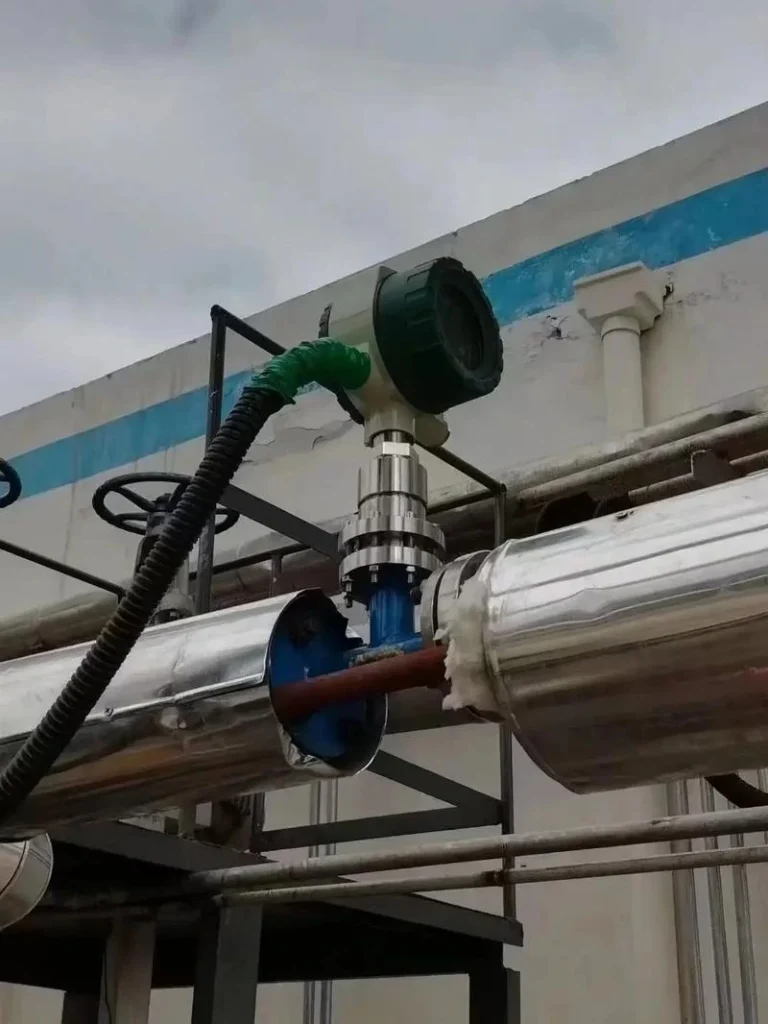
For general working conditions, horizontal mounting is the optimal choice. The meter readout needs to be fitted above the pipe run. Field technicians can easily check instant flow and accumulated flow readings locally, while this layout avoids instrument internals soaking in process fluid and lowers breakdown chances.
Proper straight pipe extensions before and after the meter are vital to keep steady, precise readings over extended service periods.
Under normal operating conditions, horizontal installation is preferred. The display head should sit on the upper side of the pipeline so that maintenance staff can read parameters such as instantaneous flow rate and cumulative values on-site. This also keeps instrument components from being submerged in the medium and cuts the risk of failure.
The straight pipe section upstream of the flowmeter must be at least 10 times the pipe’s nominal diameter, while the downstream section must be at least 5 times the nominal diameter.
These straight pipe runs ease turbulence and swirling flow triggered by elbows, reducers, valves and other pipe fittings. They help stabilize fluid flow ahead of the meter and limit inaccuracies brought on by uneven flow distribution.
To avoid full-line production shutdowns, install bypass piping together with the flowmeter. When routine maintenance, field calibration or component replacement becomes necessary, process fluid can shift over to flow via this spare pipeline.
Full plant shutdown becomes unnecessary. This cuts idle production hours, avoids economic losses and delivers greater flexibility for all pipeline inspection and upkeep work.
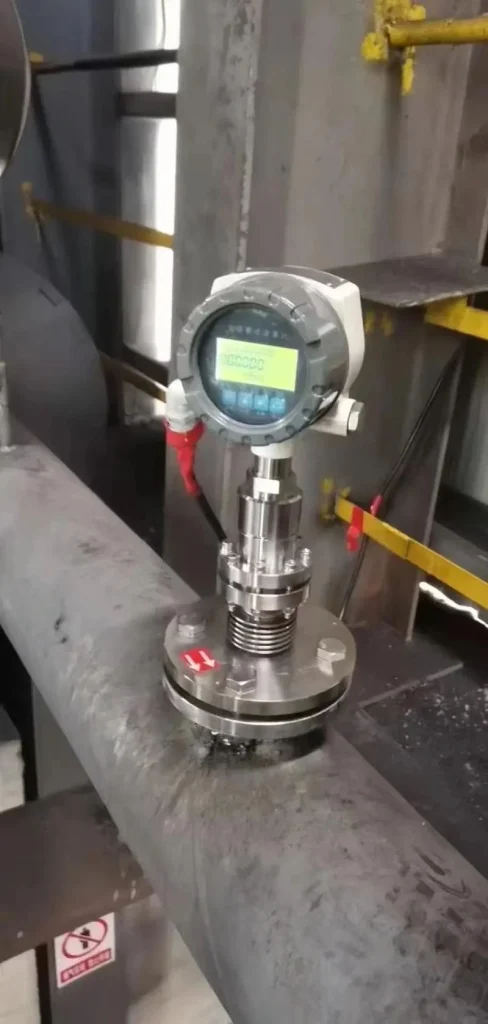
In short, orifice plate flow meters prove reliable for tough industrial fluid measurement tasks. They stand out against demanding working environments, deliver consistent precise readings, and come with modest running and upkeep expenses. Sino-Inst focuses on industrial flow measurement supplies.
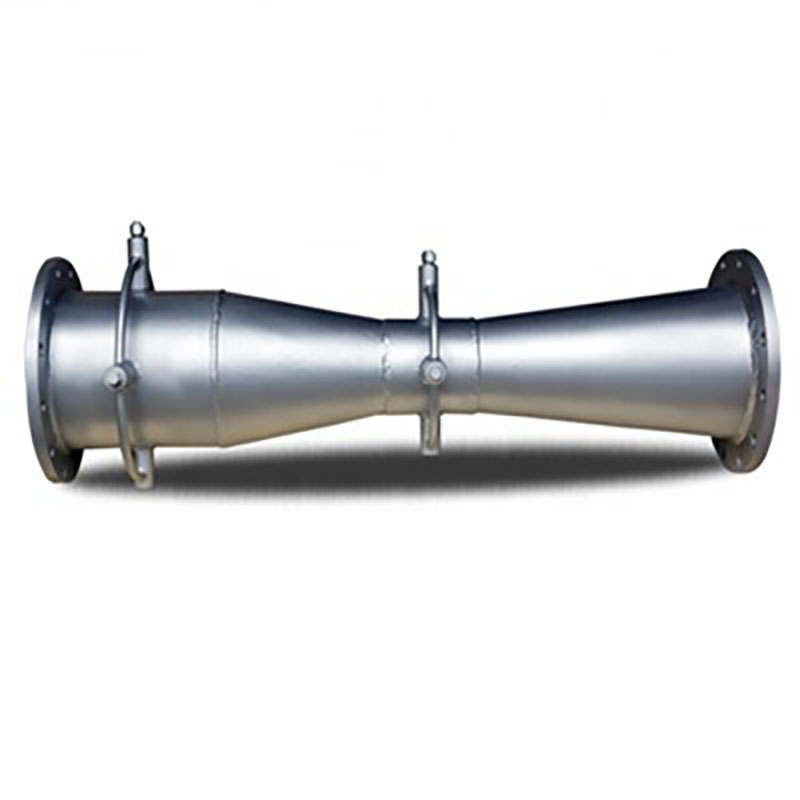
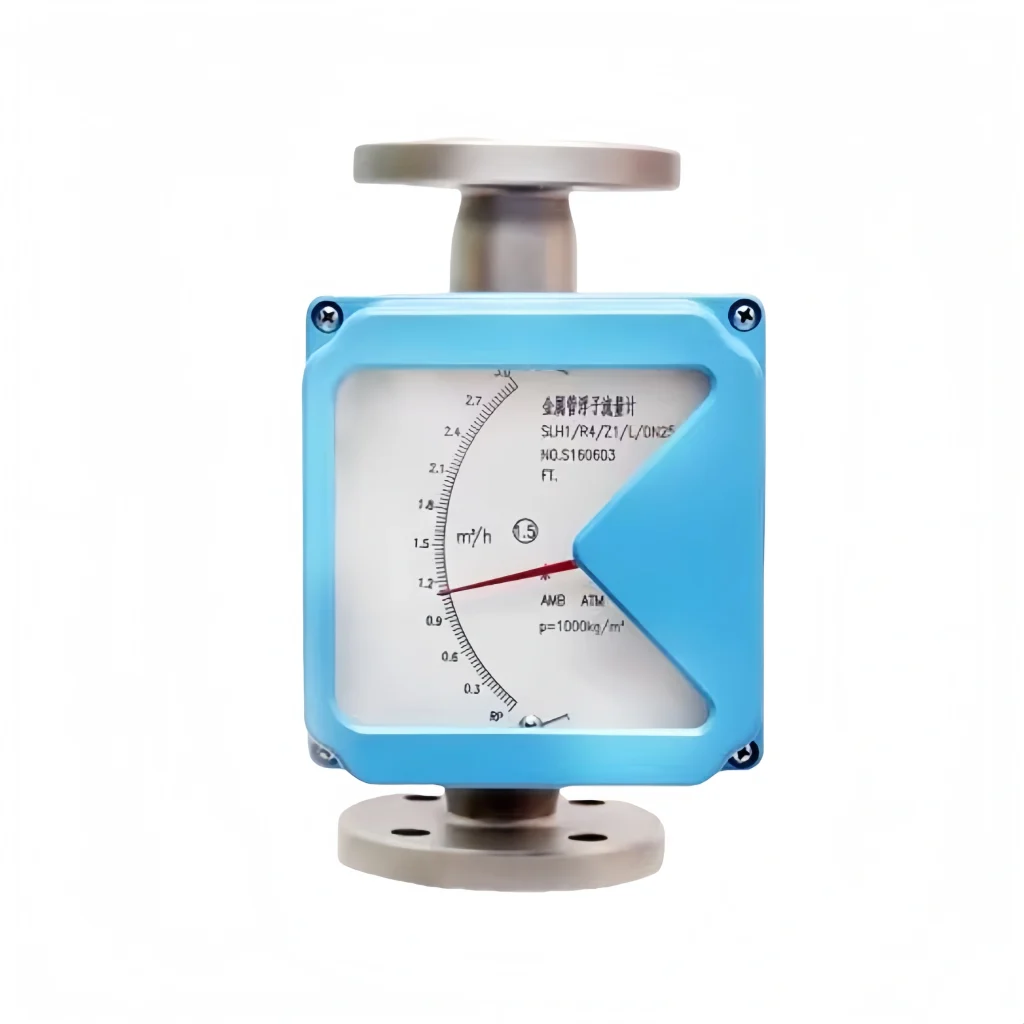
We supply an extensive portfolio of differential pressure flow equipment, such as orifice, rotameter and Venturi flow meters, alongside many other mainstream flow measurement devices. We tailor full-set metering plans covering model selection computation, structural design, on-site fitting and debugging, all customized around your actual working conditions including fluid traits, pipe size, mounting surroundings and precision standards.
Whether dealing with thick petrochemical liquids or steam metering for municipal heating networks, we select appropriate flow instruments to secure stable equipment run and reliable measured data.