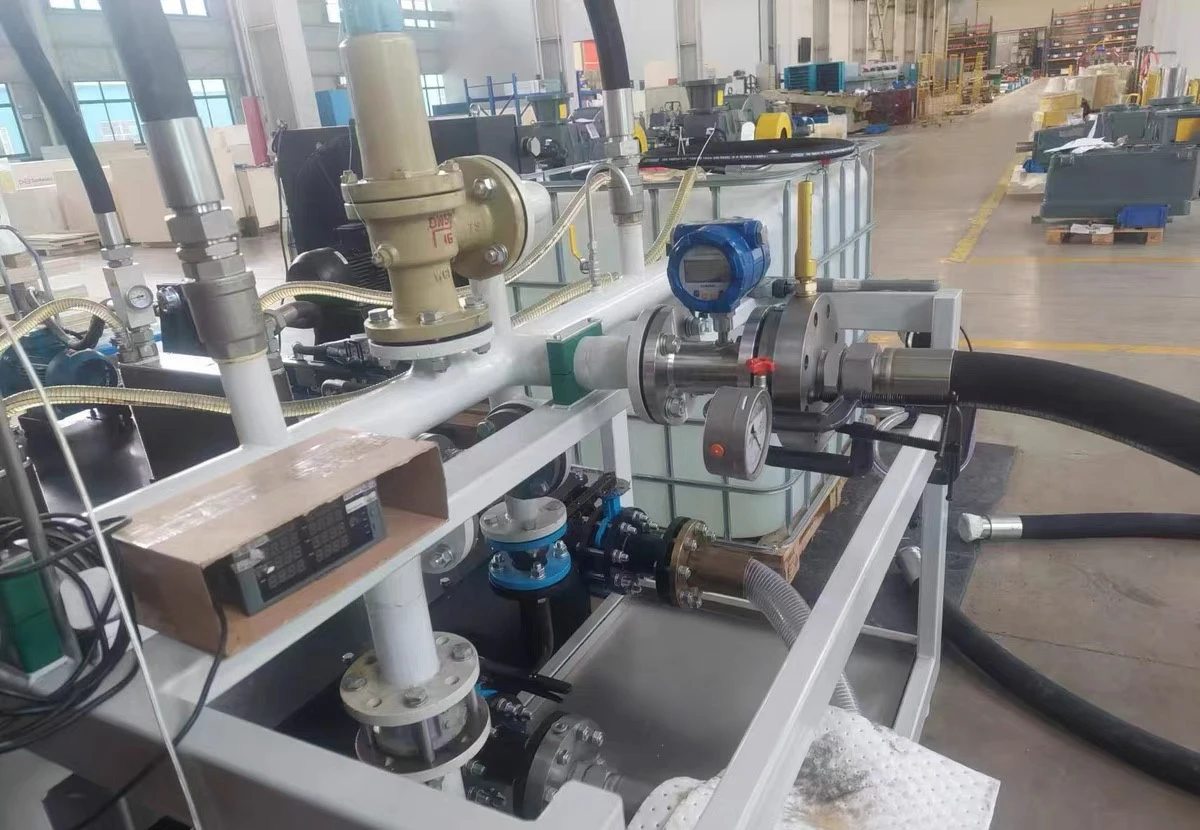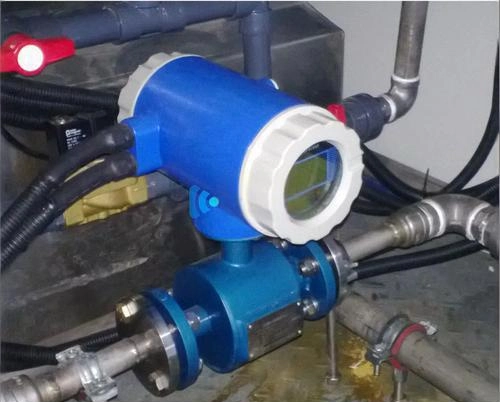
There are two main types of electromagnetic flow meter: inline and insertion. Both of these work on something called Faraday’s law of electromagnetic induction. Their main job is to measure the flow rate of conductive media. However, because of the way they are designed, they perform very differently, and they can be installed and used in different ways.
In industrial applications, these two types are not mutually exclusive alternatives but rather complementary solutions tailored to varying pipe diameters, accuracy requirements, and installation constraints. Precise selection necessitates a thorough understanding of one’s own process characteristics and a clear grasp of the fundamental distinctions between the two device types.
I. Structure and Installation
1. Inline electromagnetic flow meter
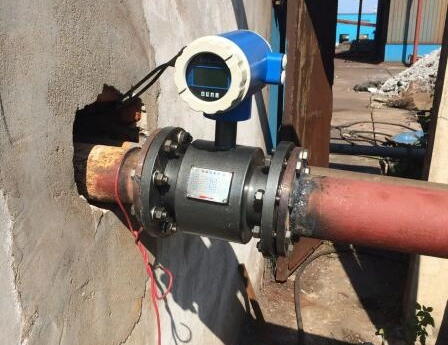
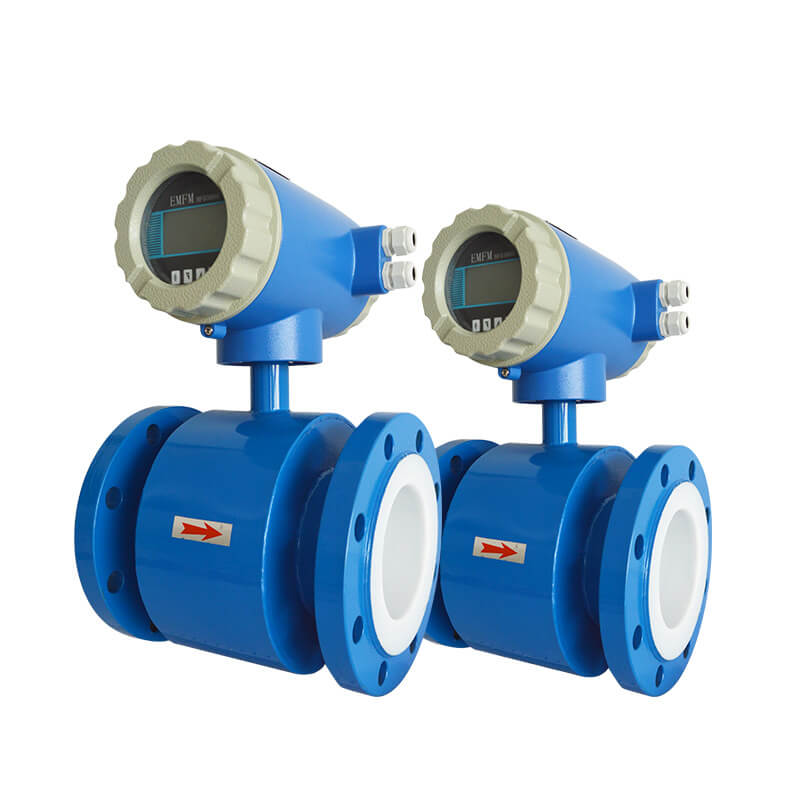
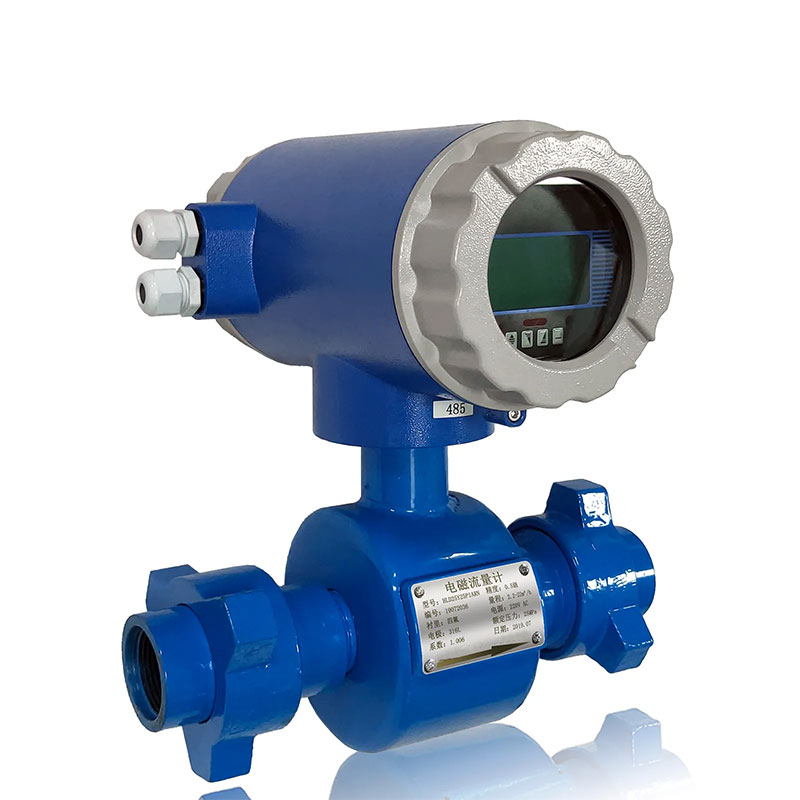
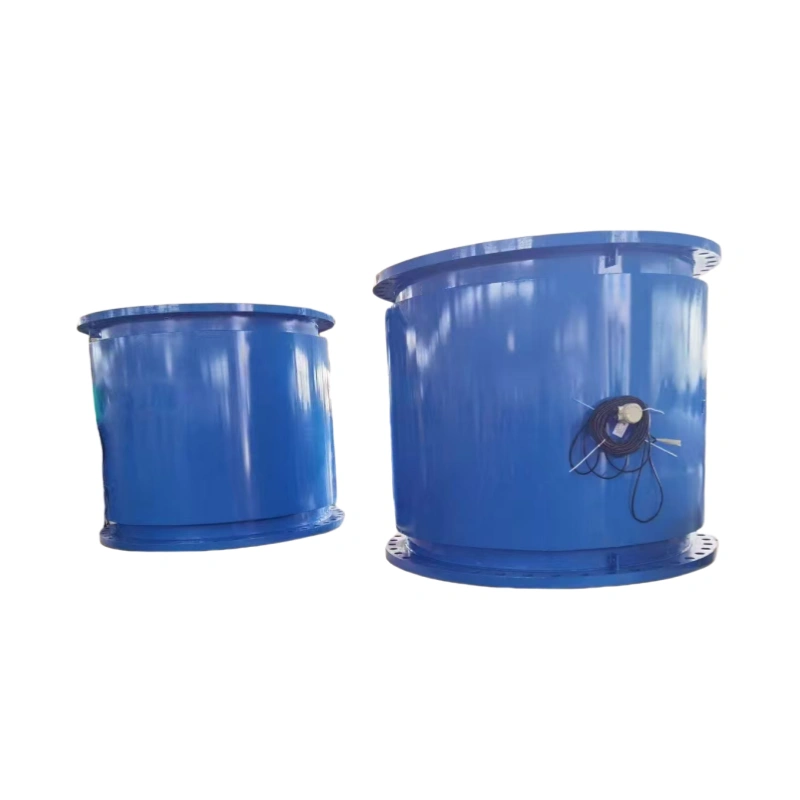
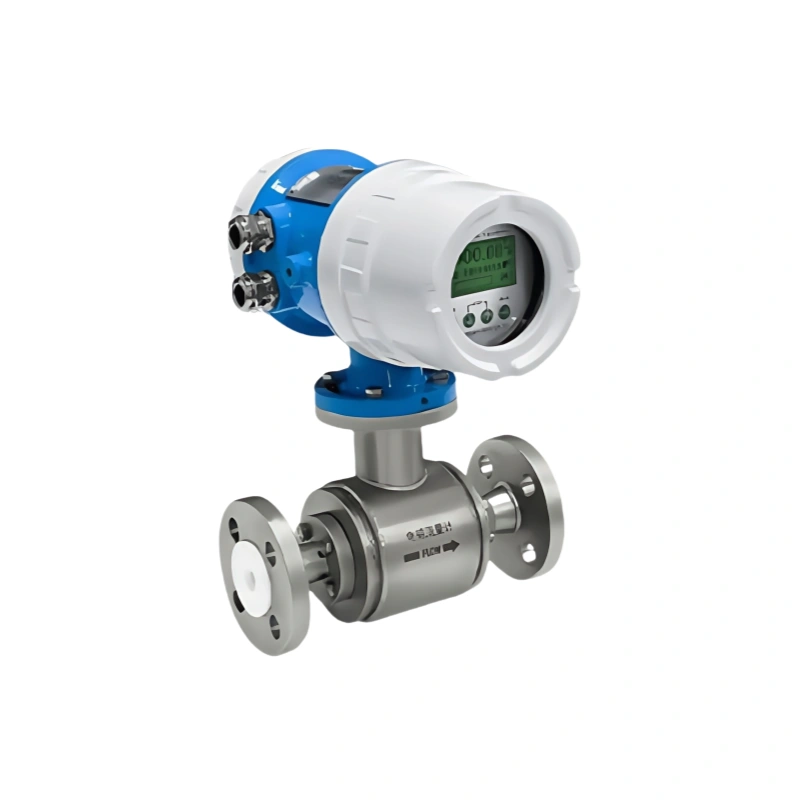
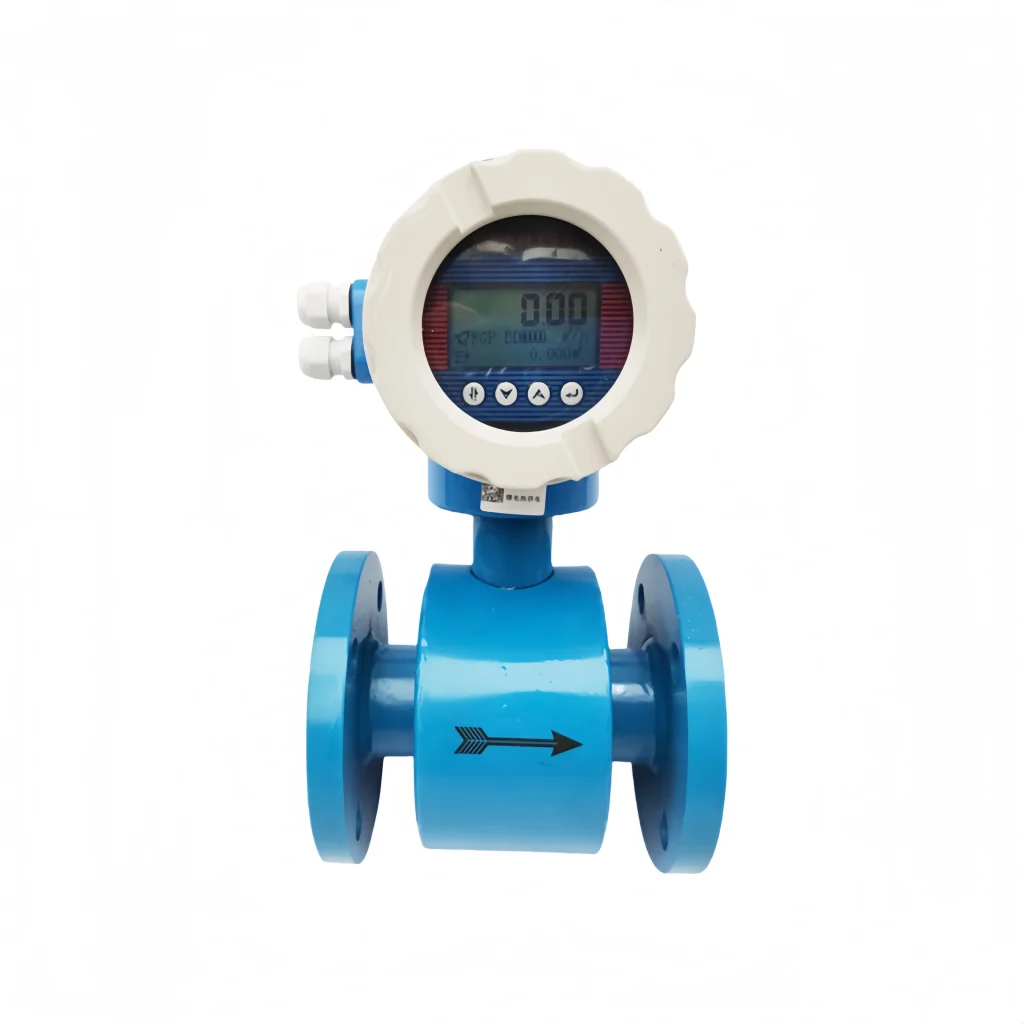
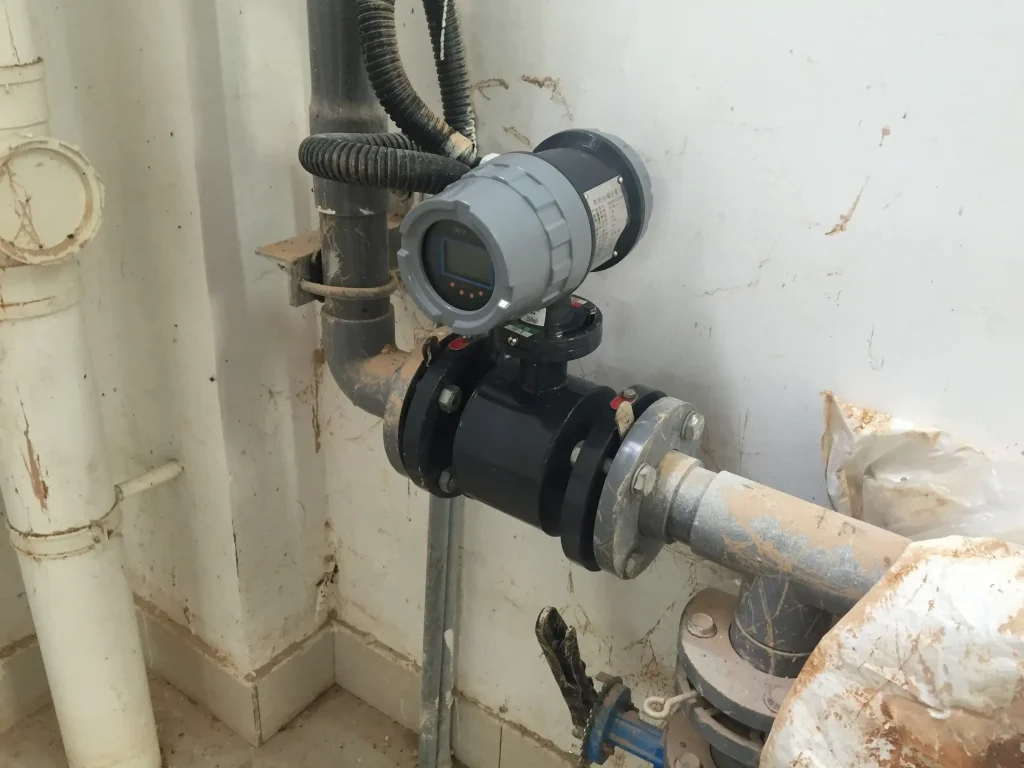
It has a special design where the pipe is part of the measuring tube. This makes it a standard part of a pipeline. It has a diameter, a pressure rating, and a connection type that works with process piping. You can connect both ends directly to industrial process pipelines using flanges, threads, or welding. This makes them part of the system that moves fluids around.
To achieve electromagnetic isolation and medium protection, the inner wall of the measuring tube is lined with non-conductive materials. Commonly used materials include wear-resistant rubber, polytetrafluoroethylene (PTFE), and aluminium oxide ceramics, selectable according to the characteristics of the medium.
Fixed electrodes are embedded on both sides of the measuring tube, typically crafted from materials such as 316L stainless steel, Hastelloy, or tantalum. These electrodes make direct contact with the conductive medium being measured to capture the induced signal. The device’s excitation coil is wound around the exterior of the measuring tube. When switched on, it generates a magnetic field that either remains constant or changes at regular intervals.
This ensures that, as the liquid flows through the pipe, it consistently cuts the magnetic field lines. This makes sure the signal is always the same. We just need to shut down the process pipeline temporarily while we’re installing it. It’s really important that the pipe is the right size, and that it’s all lined up and sealed properly. Usually, standard straight pipe sections upstream and downstream need to be kept to stop the impact of fluid turbulence on measurement accuracy.
2. Insertion Electromagnetic Flow Meter
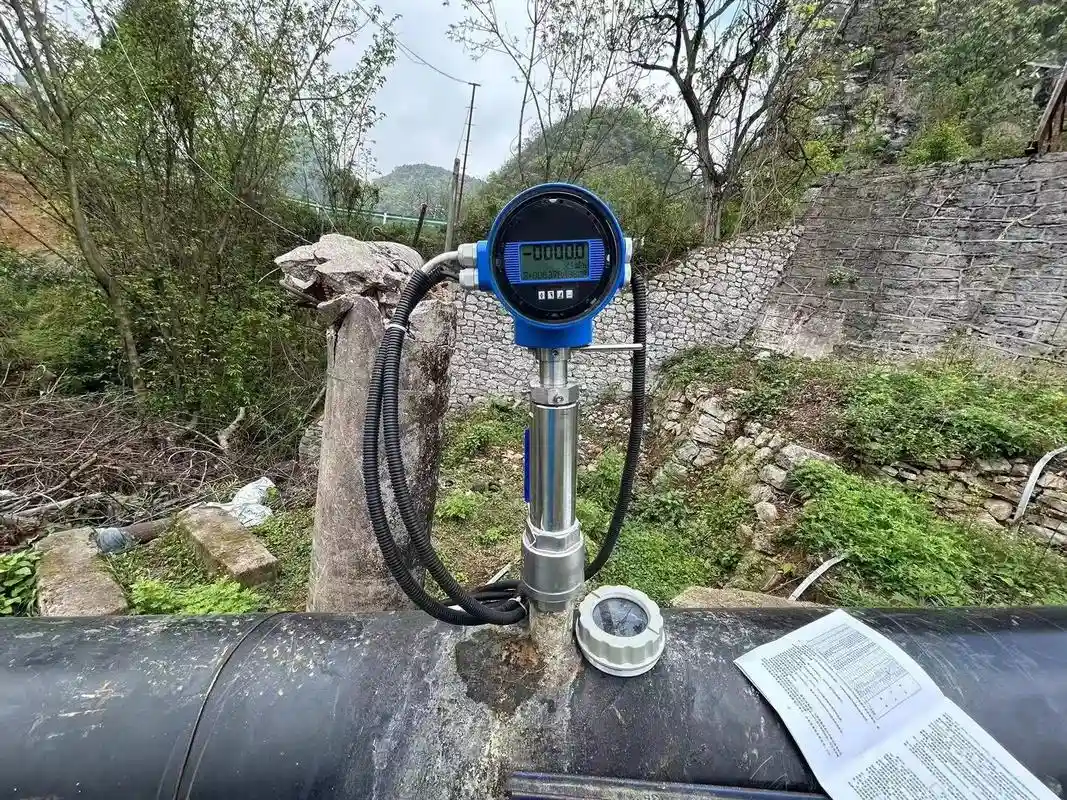
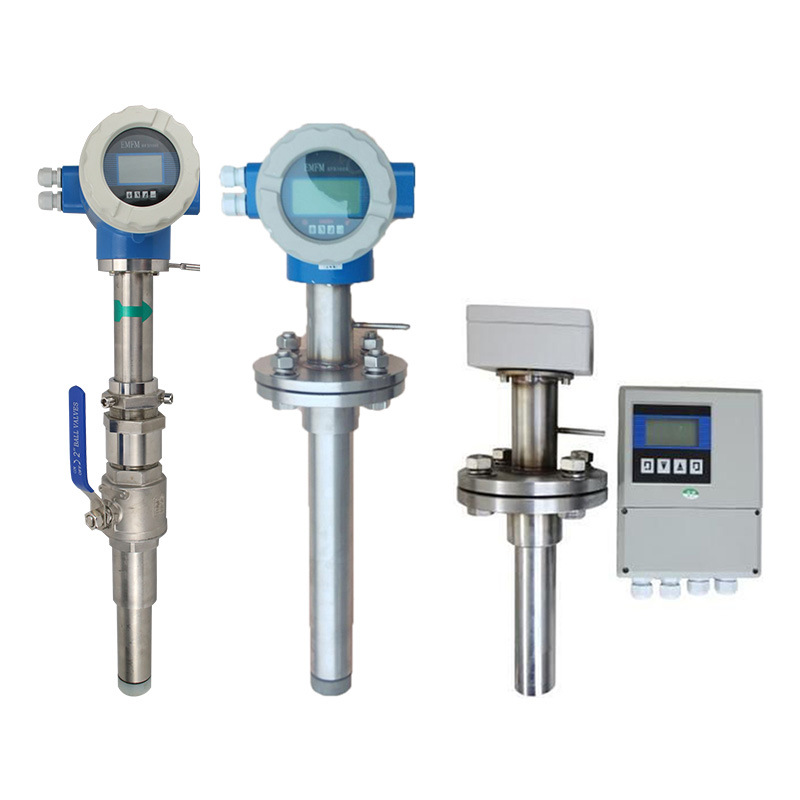
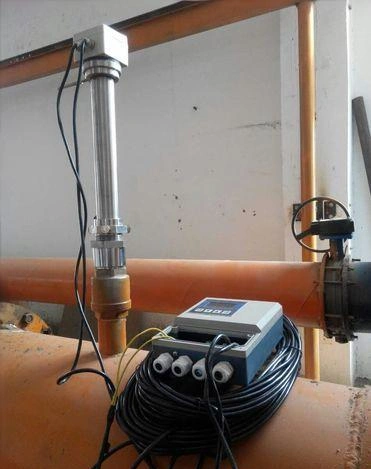
Insertion electromagnetic flow mete features a separated sensor-and-host design; its core measurement unit comprises an insertion sensor assembly integrating electrodes, excitation coils, and a protective housing. This assembly is placed in the pipeline using an existing mounting seat, with the sensor probe partly immersed in the measured fluid in order to capture local velocity signals. Data transmission between the host and sensor is achieved via wired cables or wireless modules, accommodating complex on-site installation constraints.
Installation requires no complete interruption of process pipeline operation. All you need is a designated pipe opening and mounting bracket. The bracket enables the sensor to be installed and removed quickly and easily, reducing labour costs. It causes minimal disruption to existing pipeline systems, thus avoiding the impact of pipeline modifications on production continuity. This makes it particularly suitable for metering retrofits on large-diameter pipelines and for upgrading ageing equipment where prolonged shutdowns are impractical.
II. Measurement Accuracy
Inline electromagnetic flow meters achieve high measurement accuracy through structural design advantages, with standard accuracy grades reaching ±0.5% to ±1.0% FS (full scale). Certain high-precision models attain ±0.2% FS. Under full-bore pipeline flow conditions, the magnetic field generated by the encircling coils distributes uniformly across the measuring tube cross-section.
The consistency of conductive media cutting magnetic field lines ensures stable induced signals, minimising the impact of uneven fluid velocity distribution. This capability meets stringent data accuracy requirements for applications such as trade settlement, process closed-loop control, and high-precision metrological testing. Furthermore, these meters exhibit low long-term accuracy drift and excellent measurement stability.
Insertion electromagnetic flow meters offer moderate measurement accuracy, typically rated at ±1.0% to ±2.5% of full scale. Due to structural limitations, their sensors capture velocity data only at a single point or partial cross-section within the pipe. Overall flow rate is estimated by combining this local velocity with the pipe’s cross-sectional area. Measurement results are significantly influenced by flow velocity distribution within the pipe, sensor insertion depth, and insertion position.
If the insertion point is not in the right place in the pipe, or if there are vortices or other irregularities, this will cause errors in the measurements. So, these meters are only suitable for lower accuracy requirements, like process monitoring, data statistics and trend analysis. They cannot meet the demands of trade settlement or high-precision measurement.
III. Range Adaptability Characteristics
Inline electromagnetic flow meters, with a full-bore design and no extra bits that get in the way, can achieve a turndown ratio of 1:100 or greater. Some models can go as high as 1:200. They’re really versatile and can adapt to different flow speeds.
They’re great for both low-volume media transfers and high-volume media transmissions, and they’ll always give you accurate measurements without you having to keep adjusting the settings. This makes them perfect for industrial applications where there’s a lot of flow fluctuation. The full-bore design also stops things getting stuck in the pipeline, which keeps things more stable.
Insertion electromagnetic flow meters exhibit a relatively narrow turndown ratio, typically around 1:50. Constrained by sensor detection range and signal sensitivity, their adaptability to flow velocity variations is limited. At low flow rates, signals captured by the sensor are prone to attenuation and distortion, leading to noticeable fluctuations in measurement accuracy.
What’s more, how well it can adapt to different ranges is affected by things like how deep it is put in and how much the fluid is moving. If the insertion point is not in the right place in the pipe, or if there are vortices or other irregularities, this will cause errors in the measurements. These meters are only suitable for lower accuracy requirements, like process monitoring, data statistics and trend analysis.
IV. Anti-Interference Capability Characteristics
The inline electromagnetic flow meter has an integrated design in which the coil, electrodes and measuring tube are sealed together to form a synergistic system with excellent shielding performance. This system effectively resists external electromagnetic interference.
The precise alignment between the internal electrodes and magnetic field ensures optimal synergy, minimising the impact of fluid turbulence on the sensing signal. This results in low data drift, maintaining stable measurement performance even in proximity to electromagnetic radiation sources such as high-voltage cables, frequency converters, or strong magnetic equipment, without requiring additional complex shielding measures.
Insertion electromagnetic flow meters, employing a split-type structure, are susceptible to signal attenuation or distortion due to electromagnetic interference affecting the transmission link between the sensor and the main unit. Furthermore, sensor insertion alters the original fluid flow pattern, potentially inducing localised eddy currents and velocity turbulence.
Combined with inherent velocity differences between the pipe wall and central flow region, these factors collectively increase measurement deviation. Consequently, their interference resistance and measurement stability are inferior to in-line electromagnetic flowmeters. Practical application necessitates avoiding electromagnetic radiation sources or implementing supplementary shielding and grounding measures.
V. Media Compatibility Characteristics
The inline electromagnetic flow meter demonstrates exceptional adaptability to complex media. It can handle impure media containing solid particles, fibres, or suspended solids, as well as highly abrasive and strongly corrosive substances, thanks to its customised lining and electrode materials. The full-bore structure eliminates blind spots and precision gaps, effectively preventing media blockages and jamming.
This makes them suitable for measuring complex media such as mineral slurries, metallurgical effluents, acid-alkali solutions, electroplating baths, and industrial wastewater. For highly corrosive media, specialised materials like PTFE linings and tantalum electrodes can be selected to ensure long-term stable operation and resistance to media erosion.
Insertion electromagnetic flow meters exhibit significant limitations in medium compatibility. Their sensor insertion section is directly exposed to the measured fluid without comprehensive protective structures, making them susceptible to erosion and wear from impurities.
Prolonged contact between electrodes and protective casings with high-particle-content or high-viscosity media can lead to wear, scaling, and blockages, resulting in signal distortion and reduced measurement accuracy. For highly abrasive or strongly corrosive media, sensor material degradation accelerates significantly, substantially shortening service life. Consequently, these meters are only suitable for measuring clean or low-impurity, low-viscosity conductive media.
VI. Maintenance Difficulty
Inline electromagnetic flow meters feature no mechanical moving parts, boasting a simple and reliable structure. Routine maintenance primarily focuses on inspecting the condition of the lining and electrodes, requiring low maintenance frequency and presenting minimal operational complexity. During daily operation, periodic checks are only needed to verify whether the lining exhibits signs of ageing, cracking, or delamination, and whether the electrodes show scaling, corrosion, or wear.
Any abnormalities detected should be promptly cleaned or replaced. The equipment boasts a long service life, typically lasting 8 to 10 years under standard operating conditions. However, it should be noted that maintenance requires interrupting process pipeline operation and disassembling flanges or threaded connections, which may impact production continuity. Therefore, maintenance is recommended during scheduled equipment shutdown windows.
Insertion electromagnetic flow meters require significantly more frequent maintenance than in-line types. Their sensors, exposed to the fluid, are susceptible to erosion by impurities and scaling. Regular disassembly for cleaning and calibration is essential, alongside verifying the insertion depth to prevent measurement inaccuracies from positional drift.
Sealing components endure prolonged exposure to medium pressure, temperature, and erosion, leading to ageing and leakage. Regular replacement is essential. Under high-pressure or high-abrasion conditions, sensor and seal wear accelerates, resulting in shorter lifespans compared to in-line electromagnetic flowmeters. Consequently, the maintenance costs and operational complexity of these models exceed those of inline models.
In the complex domain of industrial processes, measuring flow is imperative for optimising production, ensuring safety and maintaining cost efficiency. We have a wealth of experience in the field of flow measurement, having specialised in this area for many years. If you’ve got a problem with measuring your processes, we’re here to help. We’re not just a supplier of premium instruments, we’re your partner.
We’ve got high-precision inline electromagnetic flowmeters as well as a whole range of insertion and portable instruments, so you can get everything you need to manage your flows in one place. Tailored to your specific fluid characteristics, pipe dimensions, and temperature/pressure conditions, our specialists will precisely match linings, electrodes, and models.
We make flow easy to see and control very precisely. We are committed to delivering the most valuable measurement solutions. We empower you to enhance energy efficiency, safeguard quality and achieve intelligent operations. Contact us today to arrange a bespoke technical consultation or to request product documentation. Together, we can infuse your processes with more accurate and reliable measurement capabilities.