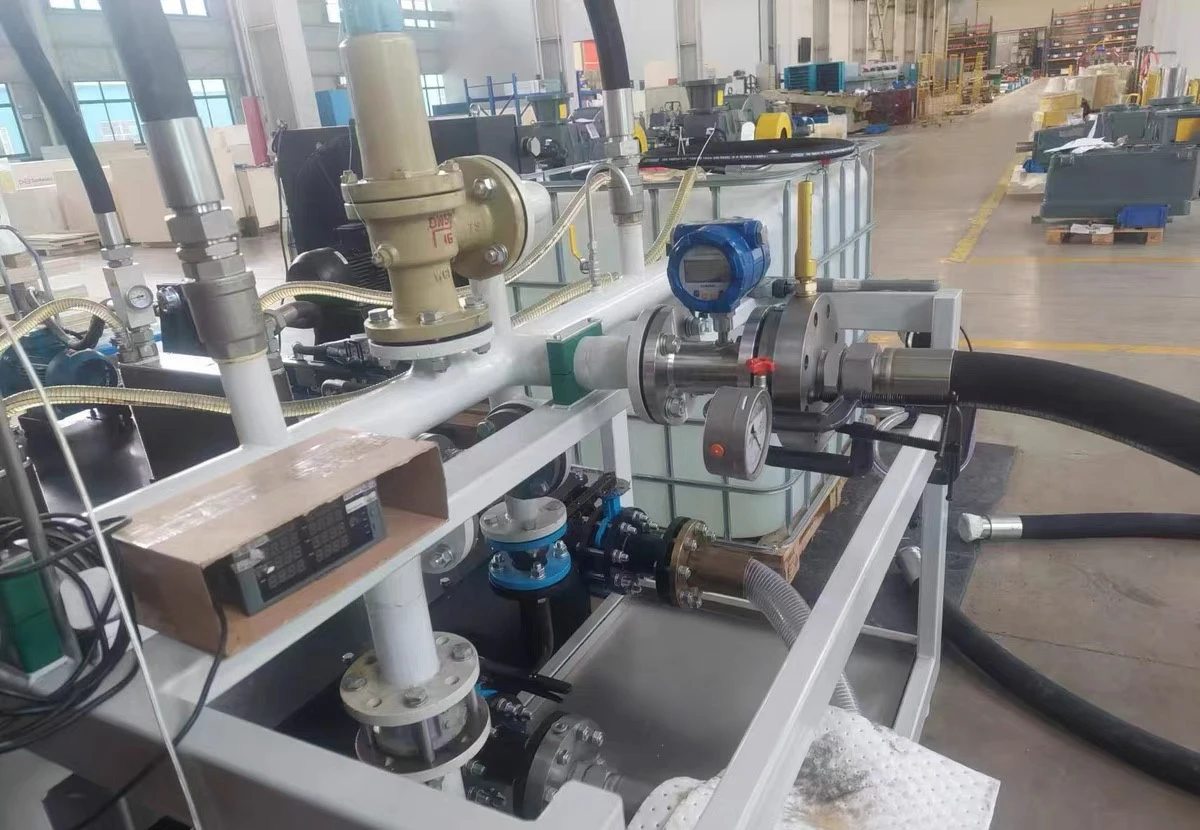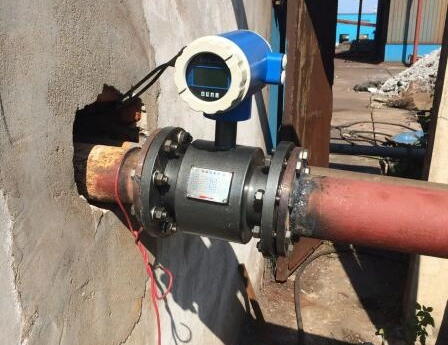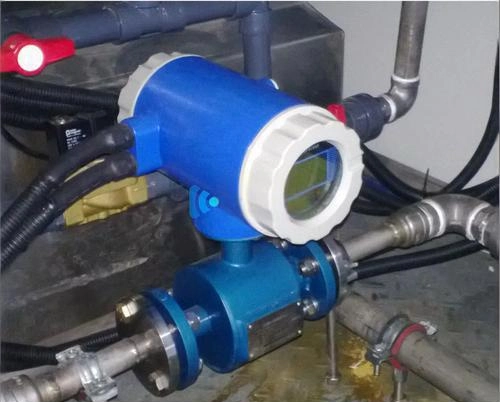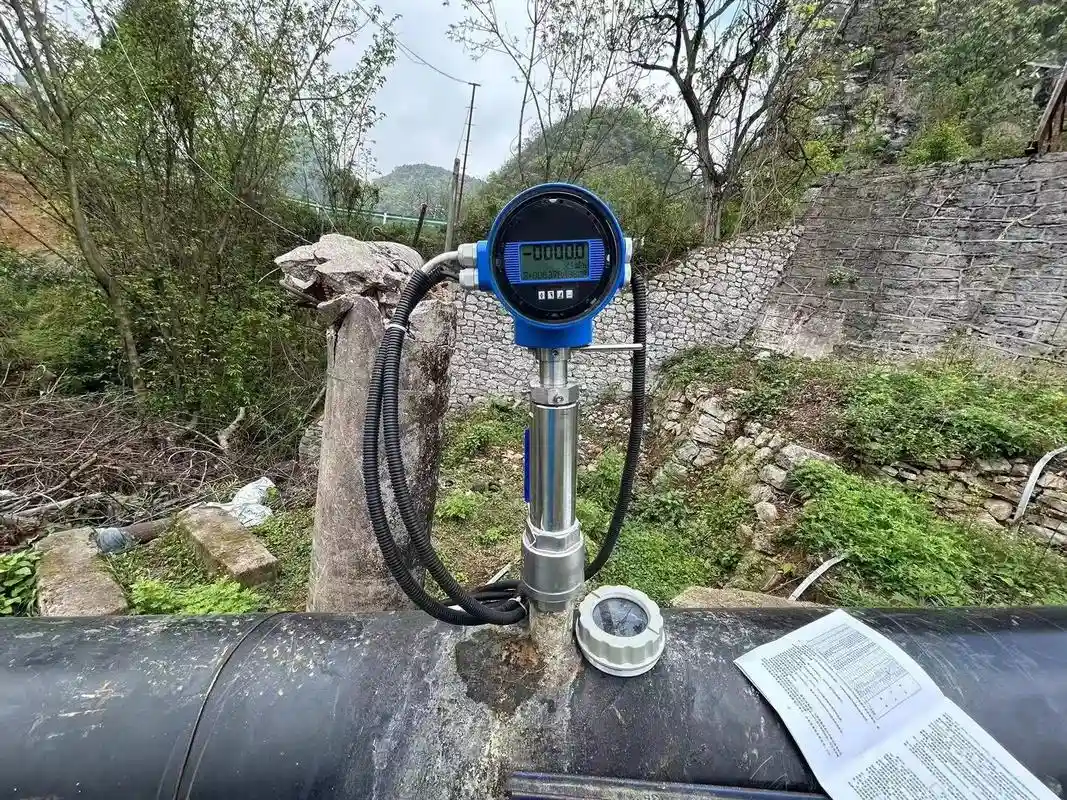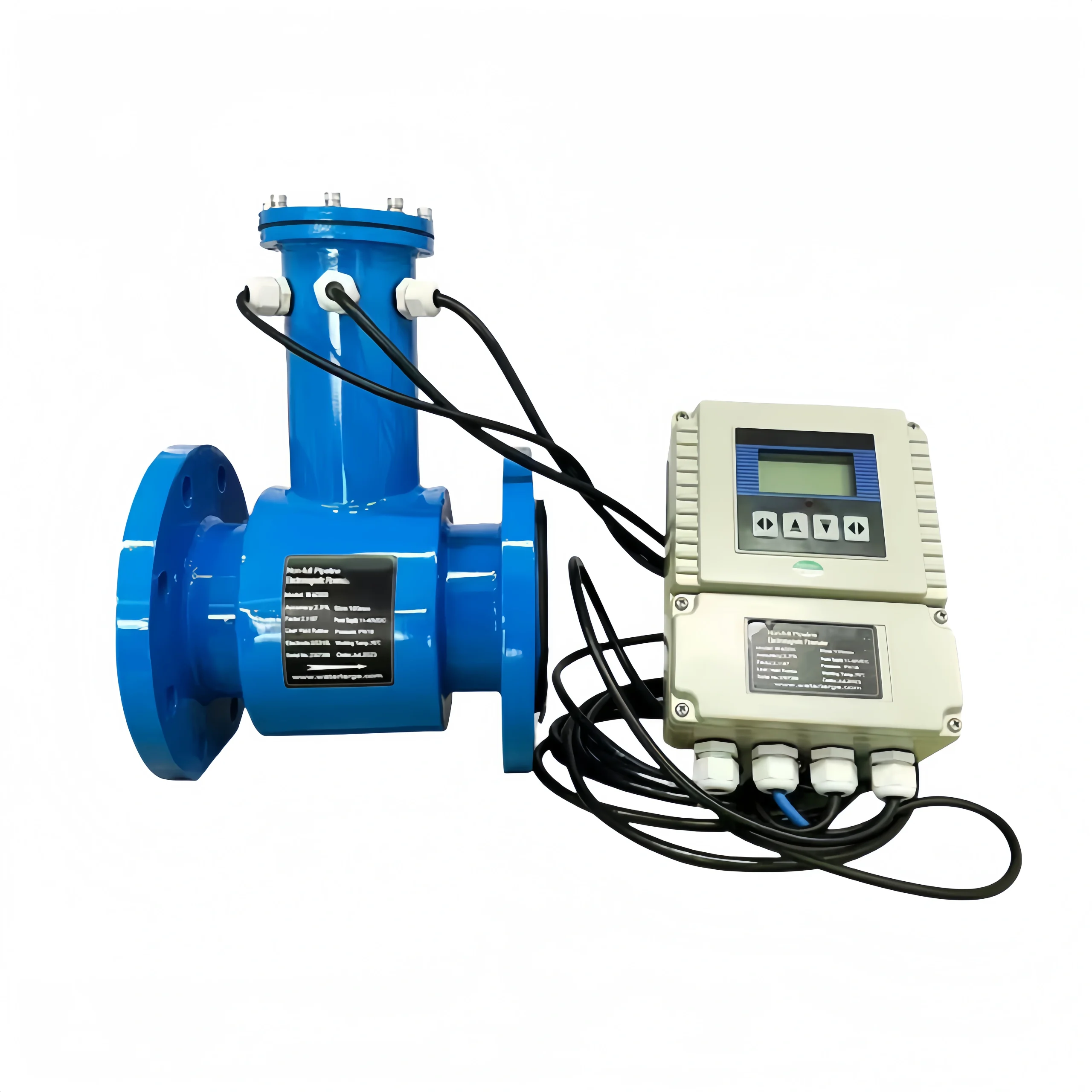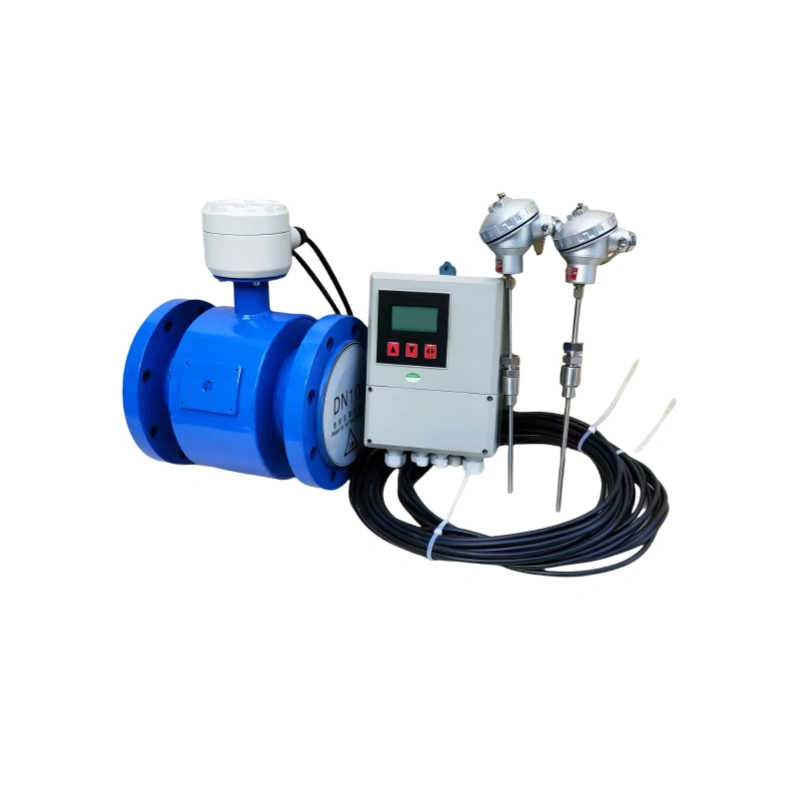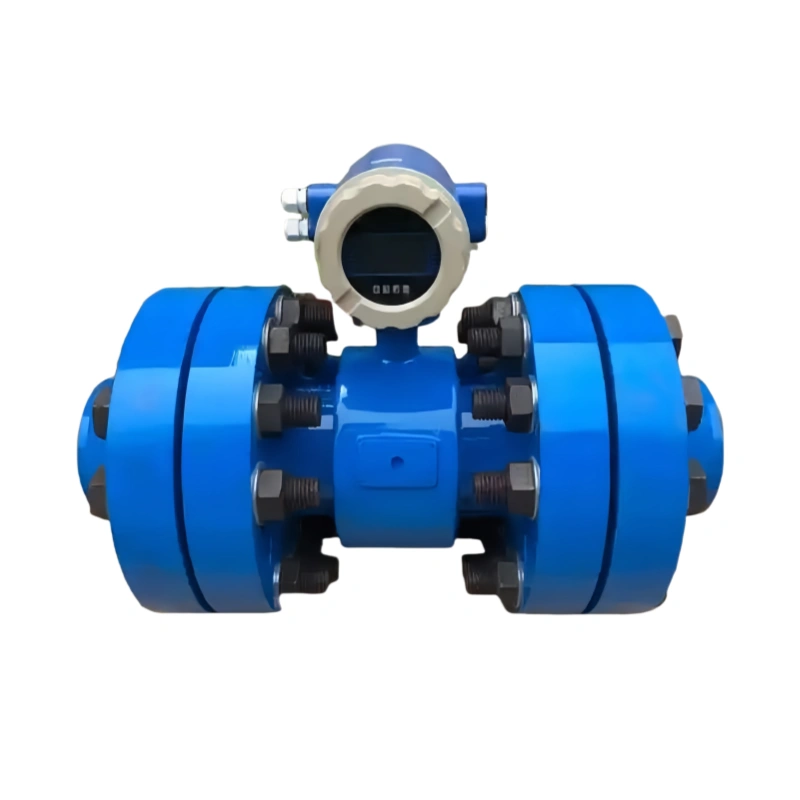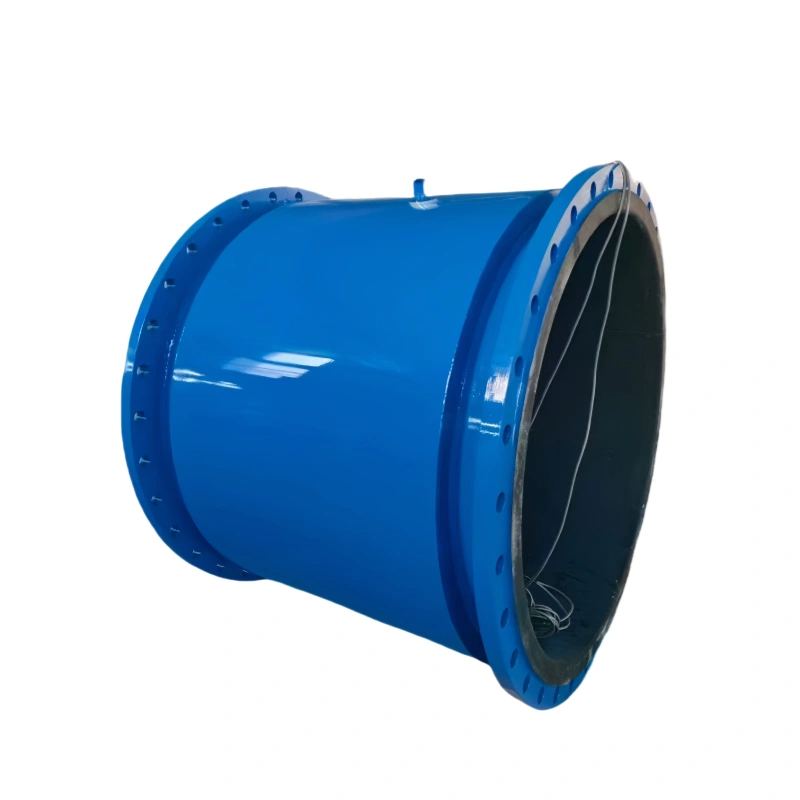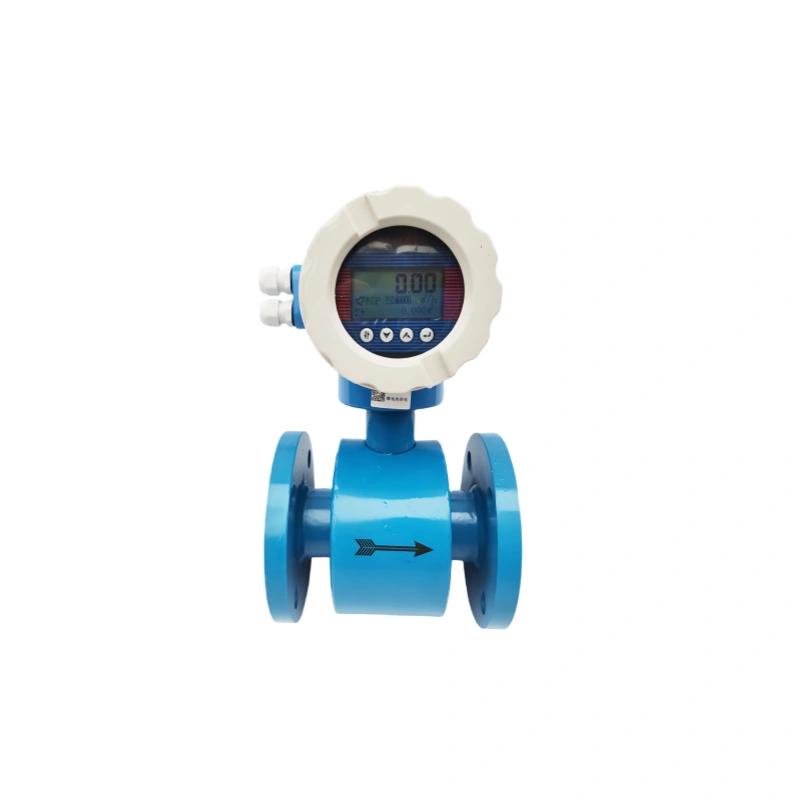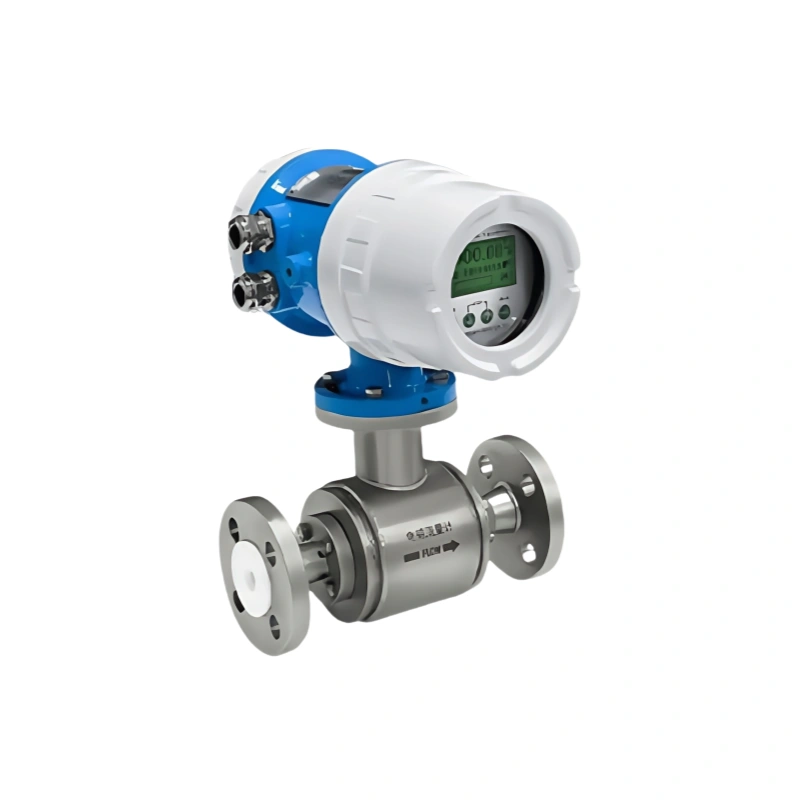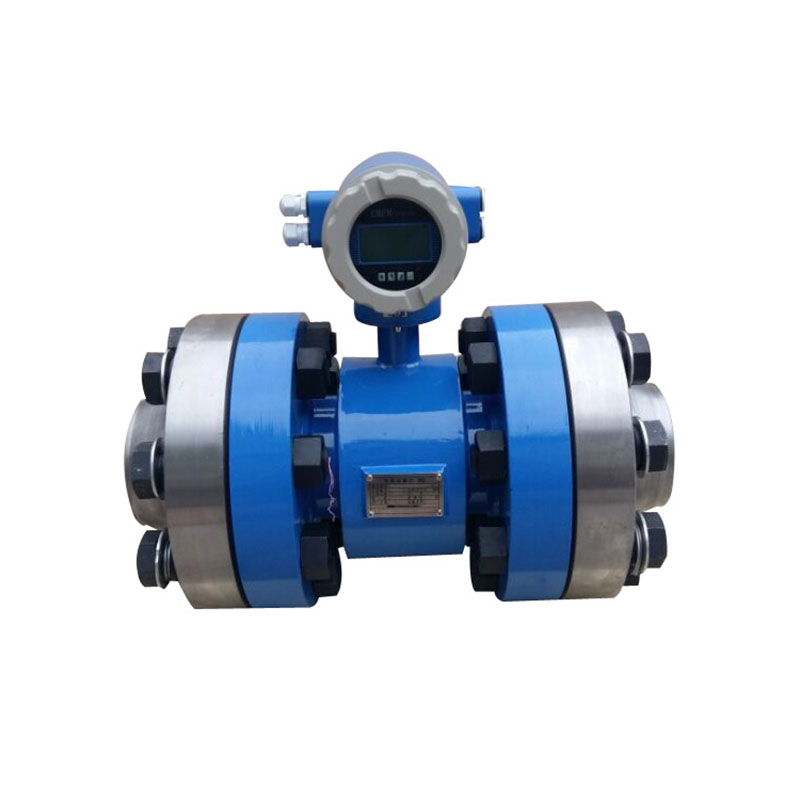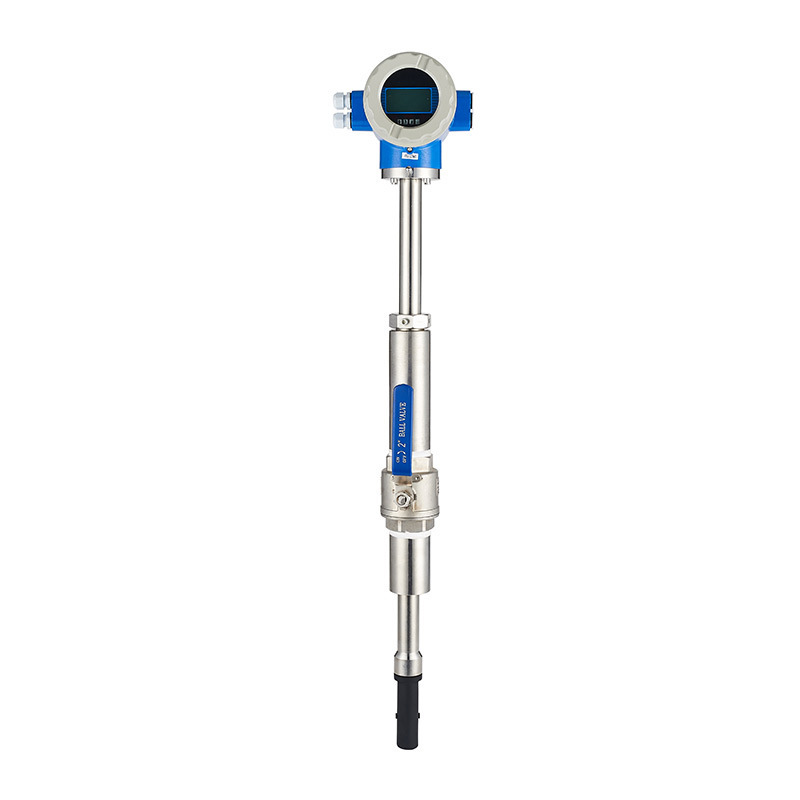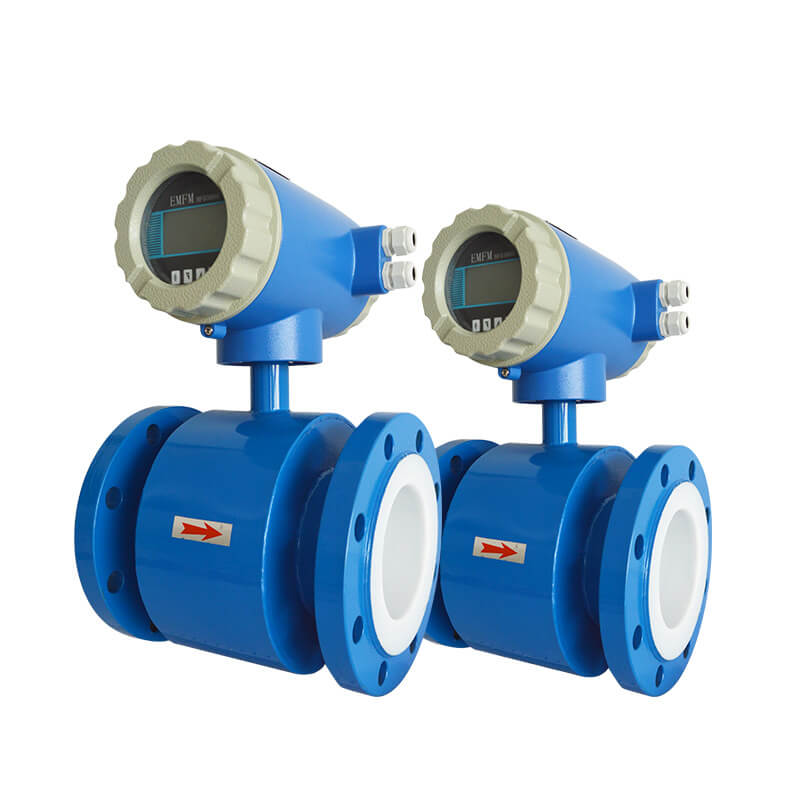
Capacitive electromagnetic flowmeters effectively overcome the limitations of traditional electrode-type flowmeters. Using capacitive coupling to detect flow signals prevents direct contact between the electrodes and the measured fluid. This solves problems like electrode corrosion, contamination and liquid leakage, and it reduces the conductivity requirements of the measured fluid by a lot. Consequently, they can measure fluids with low conductivity, slurry-laden fluids and fluids prone to adhesion — types that are traditionally difficult for electrode-type electromagnetic flowmeters to measure. This means that electromagnetic flowmeters can be used in many more situations.
Working Principle
It uses something called Faraday’s law of electromagnetic induction. Within the measuring tube, the conductive medium functions as the conductive metal rod in Faraday’s experiment, while two electromagnetic coils at the upper and lower ends generate a constant magnetic field. When conductive fluid flows through, an induced voltage is generated. Two electrodes within the pipe measure this induced voltage. Electromagnetic isolation between the fluid and the measuring electrodes is achieved via a non-conductive lining (rubber, Teflon, etc.) within the measuring pipe.
Structural Characteristics
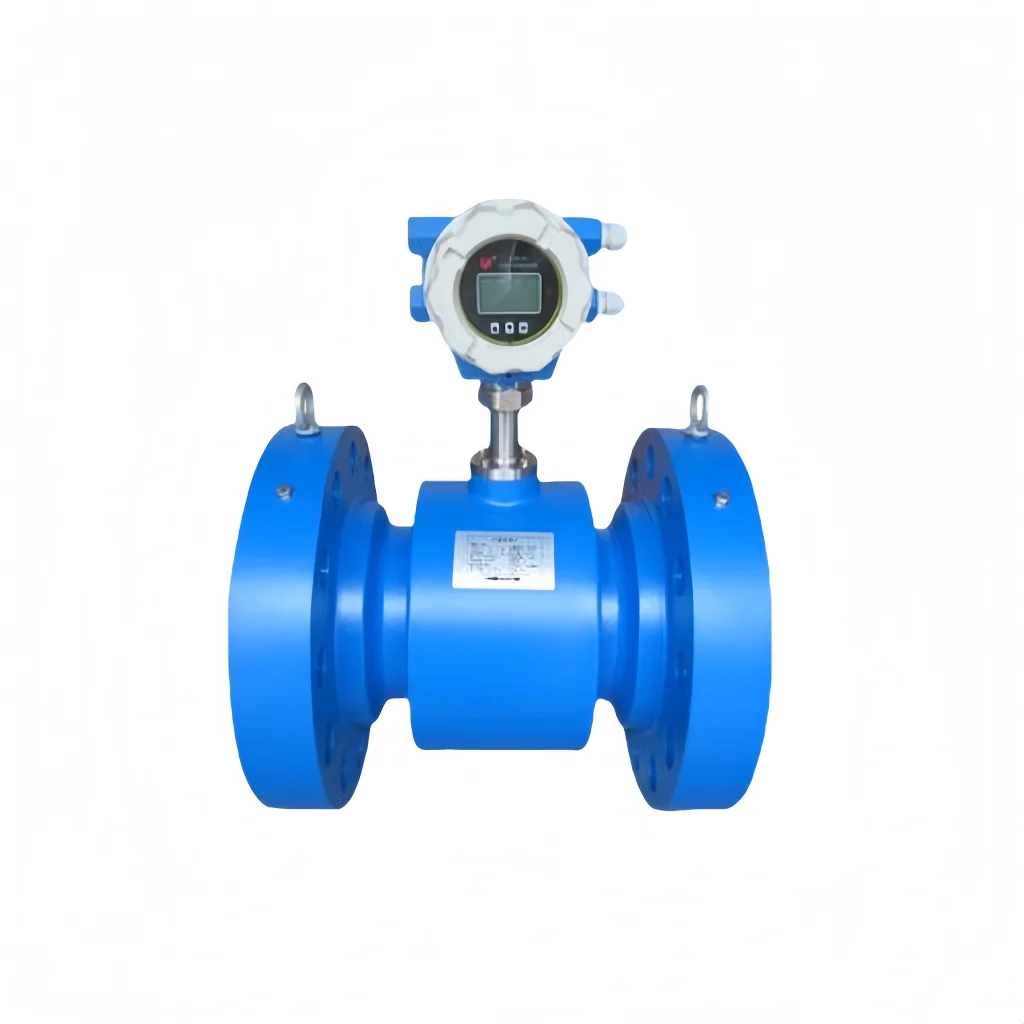
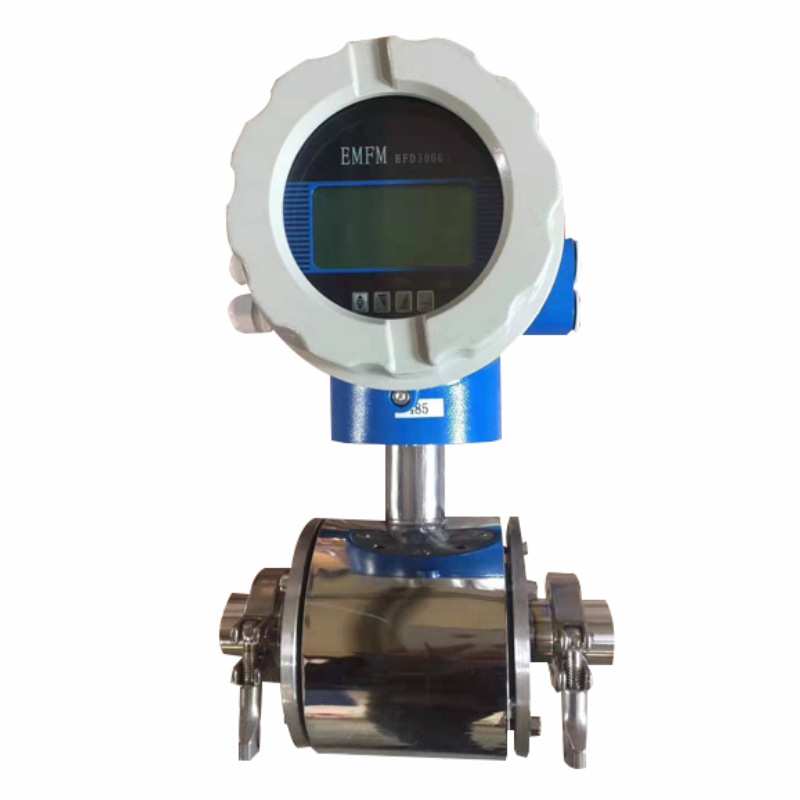
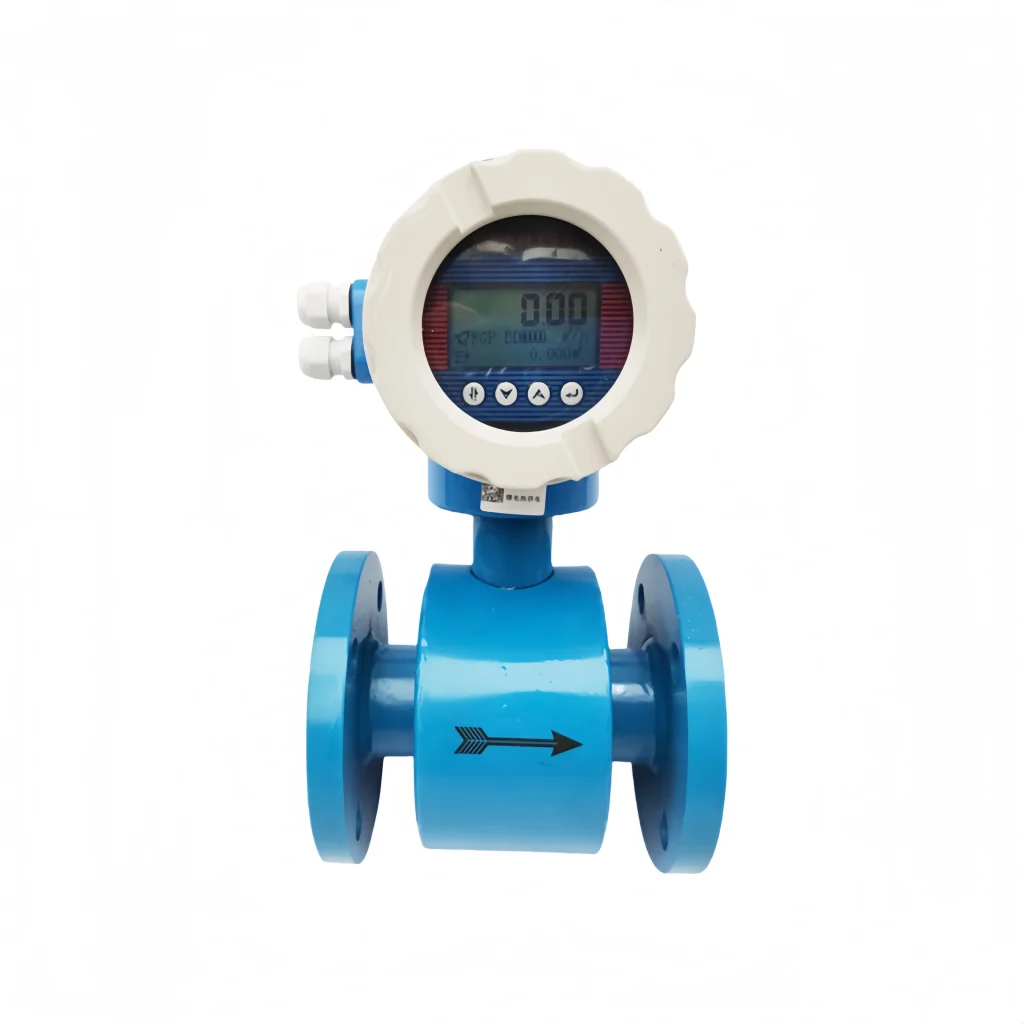
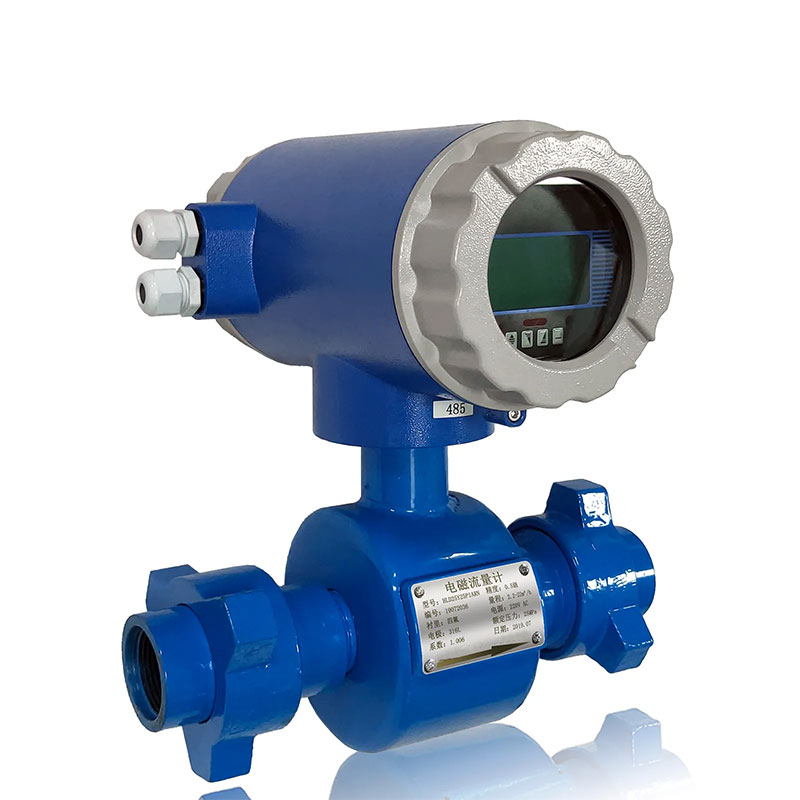
Capacitive electromagnetic flowmeters feature large-area electrodes, with the electrodes isolated from the measured fluid by an insulating lining or by employing insulated measuring tubes such as ceramic tubes or PVC pipes. The contact electrodes are positioned on the outer surface of the measuring tube or embedded within it, forming a detection capacitance with the measured fluid via an insulating lining or insulated measuring tube. This capacitance is utilised to couple the electromagnetic field generated by the moving fluid. PVC tubes, while the electrodes are positioned on the outer surface of the measuring tube or embedded within it. This configuration creates a detection capacitance with the measured fluid through the insulating lining or insulated measuring tube. This enables the coupling of flow signals generated by electromagnetic induction.
Adopting capacitive coupling for signal detection resolves issues such as electrode surface fouling, corrosion and friction. This makes it possible to reliably measure fluid types that are challenging for electrode-type electromagnetic flowmeters, including low-conductivity fluids, slurry-laden fluids, and fluids prone to fouling.
Differences from Traditional Electromagnetic Flowmeters
Variations in Electrode Contact Method and Material Selection
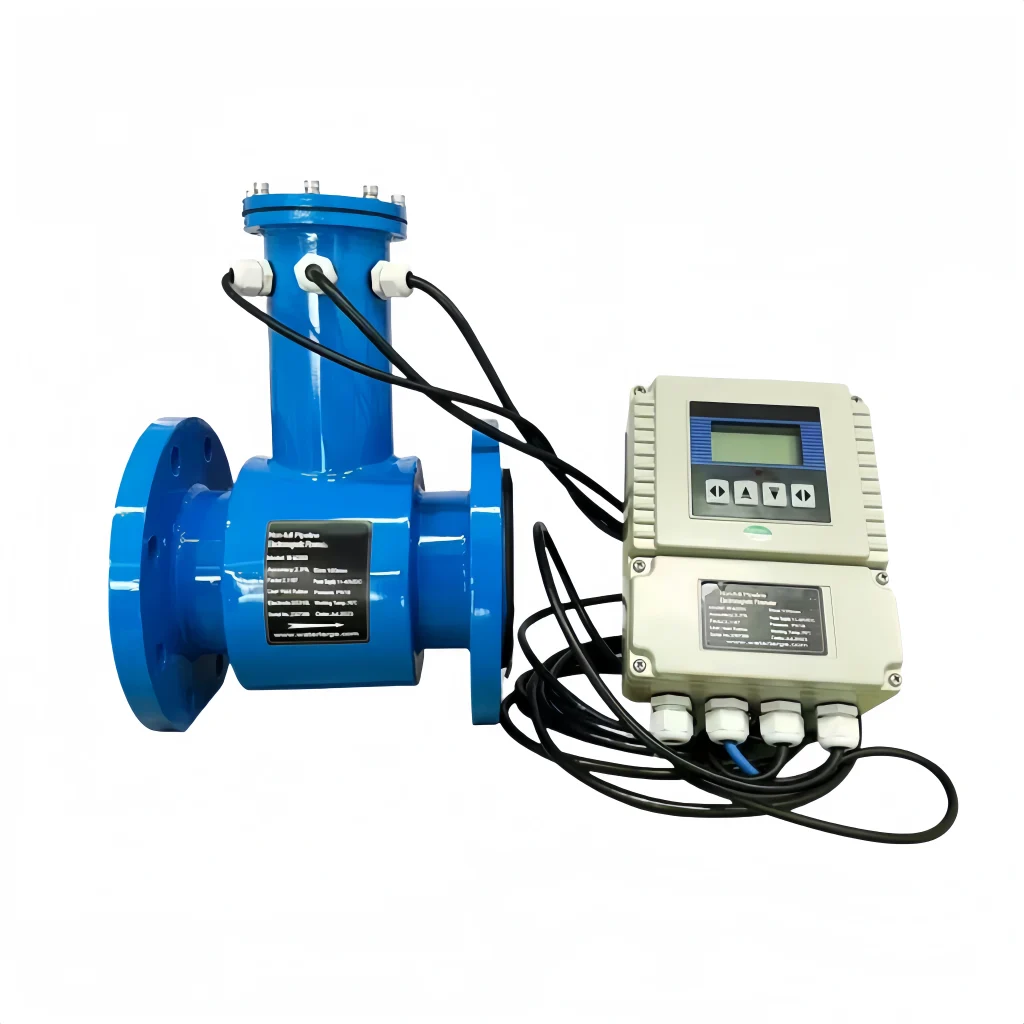
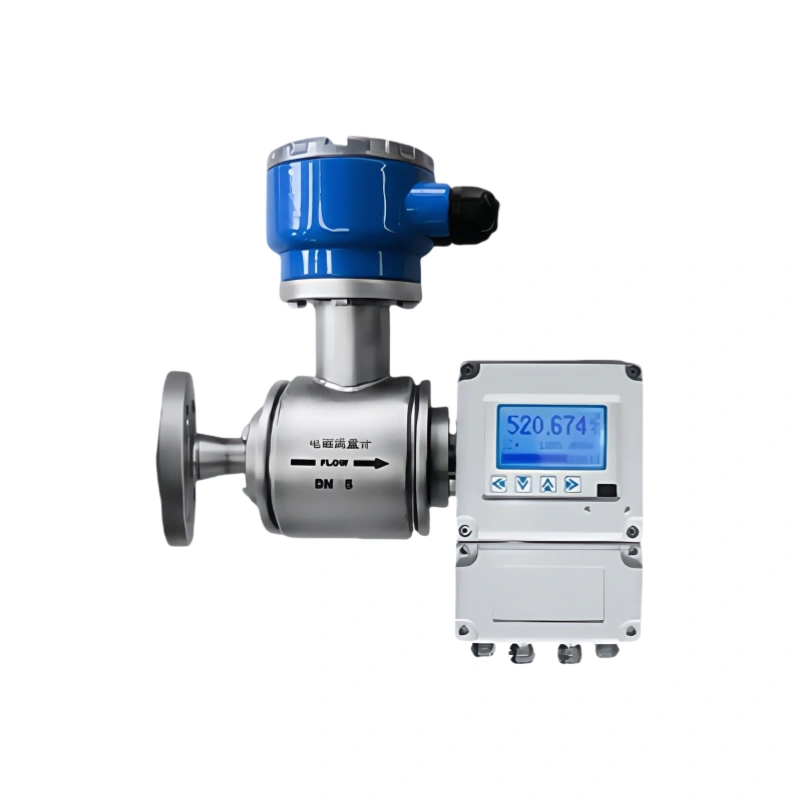
Traditional electromagnetic flowmeters employ direct-contact electrodes, wherein metallic electrodes penetrate the measuring tube wall to extend into the pipe. These electrodes come into direct contact with the measured fluid to capture induced electromotive force. You need to choose the right electrode materials based on how corrosive the fluid is, and you typically use special alloys like Hastelloy, titanium, or tantalum for this. If you don’t, you might end up with corrosion, scaling or passivation issues. Capacitive electromagnetic flowmeters employ a non-contact electrode design. We attach highly conductive metal plate electrodes to the outer wall of the measuring tube, and they pick up signals indirectly via capacitive coupling. The electrodes don’t touch the fluid, so it doesn’t matter if they’re compatible with it. This gets rid of all the problems with electrode corrosion, scaling and metal ion contamination.
Significant Differences in Measuring Tube Structure and Materials
Normal electromagnetic flowmeters use metal tubes, so they need to be lined with insulating materials like PTFE or rubber. This stops the signal from being interfered with by the metal tube and prevents the fluid from coming into direct contact with the metal. Capacitive electromagnetic flowmeters use high-density insulating ceramics (such as alumina or zirconia) directly as the measuring tube, eliminating the need for an additional lining. The ceramic tube wall serves as both the fluid passage and the core medium for capacitive coupling. Its smooth surface resists scaling while reducing signal transmission losses, resulting in a simpler and more stable structure.
Differences in Excitation Systems and Signal Processing Technology
Conventional electromagnetic flowmeters predominantly employ mains frequency or low-frequency excitation. Signals are directly acquired from electrodes at relatively high intensity, imposing lower demands on amplification circuits and anti-interference capabilities, resulting in simpler circuit design. Capacitive electromagnetic flowmeters, however, require high-frequency excitation systems (typically 50/2Hz or above, with premium models reaching 100Hz+) due to the minute capacitive coupling signals (often at the microvolt level). This must be paired with ultra-high input impedance, low-noise preamplifier circuits, and synchronous demodulation technology to effectively filter interference, amplify valid signals, and ensure measurement accuracy.
Significant Differences in Operational Adaptability
Conventional electromagnetic flowmeters demand higher fluid conductivity, typically ≥5μS/cm, limiting their application to standard conductive liquids. Electrode contact with the fluid risks contaminating the medium, rendering them unsuitable for high-purity requirements in semiconductor and pharmaceutical industries. Maintenance frequency is exceptionally high in strongly corrosive or scaling-prone media. Capacitive electromagnetic flowmeters can measure fluids with ultra-low conductivity as low as 0.01 μS/cm, making them suitable for special media like ultrapure water and deionised water. Their non-contact design handles highly corrosive, viscous, and scaling-prone conditions without risking medium contamination, extending maintenance intervals to 5–10 years.
Cost and Installation Requirements Differ.
Normal electromagnetic flowmeters use technology that’s been around for a while, and the tubes and electrodes needed to measure metal are fairly cheap to make. They can be installed more easily and don’t need to be protected against electromagnetic interference or pipeline vibrations, which makes them more cost-effective for general applications. Capacitive electromagnetic flowmeters, with their ceramic measuring tubes, high-frequency excitation and high-precision signal processing technology, cost a lot more to make than regular models. There are also strict rules about where they should be installed. For example, they should be kept away from strong electromagnetic sources and pipeline vibrations should be minimised. Failure to meet these conditions may result in an unstable coupling signal, leading to higher installation and operational costs.
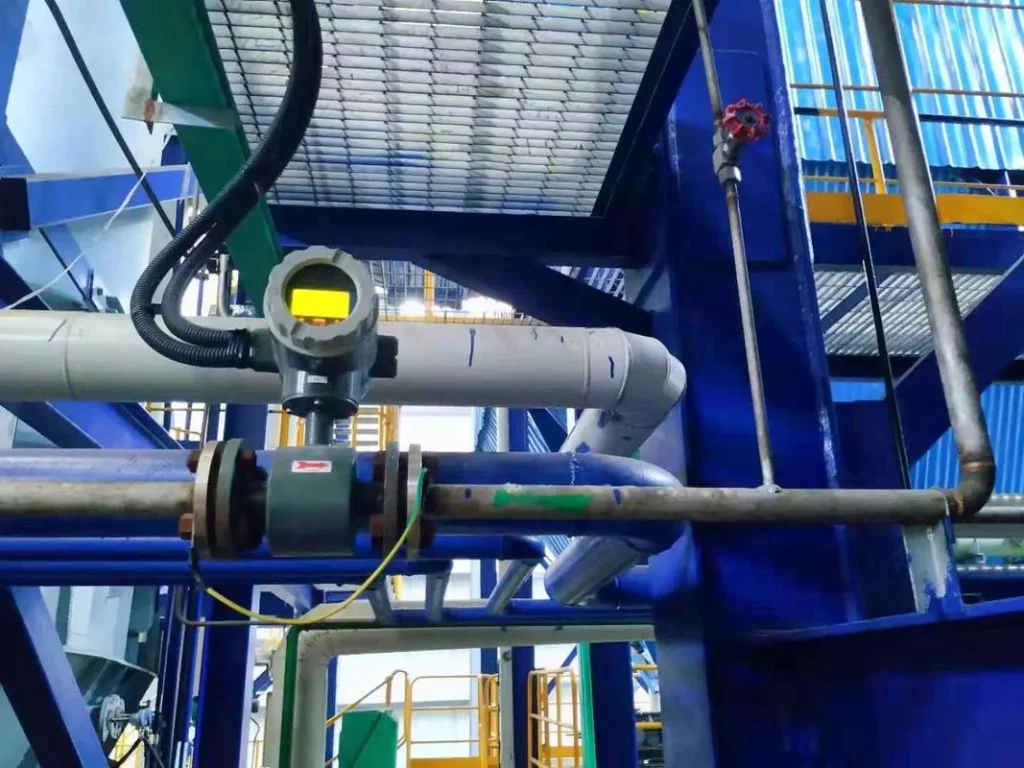
Advantages and Disadvantages
Advantages:
- Completely eliminates electrode-related issues.Electrodes employ an externally mounted design, affixed to the outer wall of the ceramic measuring tube and fully isolated from the measured fluid. This fundamentally prevents problems such as electrode corrosion, scaling, passivation, and oxidation. There is no need to select special electrode materials like Hastelloy or titanium based on fluid corrosiveness, enabling seamless adaptation to harsh media conditions including strong acids, strong alkalis, high viscosity, and scaling-prone substances.
- Compatibility with ultra-low conductivity fluids. Leveraging capacitive coupling technology and a high-frequency excitation system, it overcomes the traditional electromagnetic flowmeter’s limitations regarding fluid conductivity. It can accurately measure fluids as low as 0.01 μS/cm, meeting the measurement requirements for ultra-pure water, deionised water, alcohol, and other low-conductivity media, thereby filling the application gap left by conventional equipment.
- Eliminates risk of medium contamination. The electrodes don’t touch the fluid, so no metallic ions are released, which keeps the fluid pure. This makes them perfect for industries that need to keep things super clean, like semiconductor manufacturing, pharmaceutical production and food processing, as it stops product wastage due to contamination.
- Low maintenance costs and extended service life.The ceramic measuring tube features a smooth, wear-resistant surface, eliminating issues of wear and ageing in contact components. Under normal operating conditions, the equipment maintenance cycle can be extended to 5-10 years, significantly reducing downtime for repairs and lowering long-term labour and material costs, thereby progressively demonstrating its cost-effectiveness.
- Strong interference resistance and stable measurement.Paired with high-frequency excitation modules (typically 50/2Hz or above) and high-precision signal processing circuits, it effectively filters power frequency interference and environmental noise. It maintains stable measurement accuracy even in complex industrial environments, outperforming traditional low-frequency excitation models.
Disadvantages:
- Relatively high manufacturing cost.The complex forming process of high-density insulated ceramic measuring tubes, coupled with the high technical barriers of high-frequency excitation modules and low-noise signal processing circuits, results in significantly higher procurement costs compared to conventional electromagnetic flowmeters. This lack of cost-effectiveness in standard general-purpose applications is a notable drawback.
- Stringent installation requirements. The capacitively coupled signals are extremely weak (typically in the microvolt range), making the equipment highly sensitive to external electromagnetic interference and pipeline vibrations. Installation necessitates avoidance of strong interference sources and the use of specialised mounting brackets, while also imposing strict requirements on pipeline coaxiality and full-bore conditions, thereby increasing installation and commissioning complexity and costs.
- High technical barriers for signal processing.The amplification, filtering and demodulation of weak signals depend on high-end chips and sophisticated algorithms. Low-end products are prone to signal drift and measurement inaccuracies, and their core performance depends on the technical expertise of the manufacturer. It’s hard for normal brands to keep things steady.
- Operational adaptability limitations.These work like normal electromagnetic flowmeters. They can only be used to measure liquids, as they can’t detect gases or steam. Except for specialised non-full-bore models, most require full-bore operation. If the medium contains significant air bubbles, this disrupts capacitive coupling, leading to reduced measurement accuracy.
Applications
1. Industrial automation control:In industry, it’s really important to be able to measure the flow of materials accurately. This helps to make sure that the products are good quality and that the production process is efficient. Capacitive electromagnetic flowmeters can monitor the speed at which fluids are moving in fluidised beds, pipelines and steam turbines. This is crucial for industrial processes.
2. Petrochemical Industry: In the petrochemical industry, capacitive electromagnetic flowmeters are used to measure the flow of crude oil, natural gas and petrochemical products. This gives you precise control and metering, making sure your operational processes stay stable.
3. Wastewater Treatment:In municipal sewage treatment plants, capacitive electromagnetic flowmeters are employed to monitor wastewater flow during treatment. This facilitates optimised equipment operation and enhanced treatment efficiency.
4. Water Supply: Capacitive electromagnetic flowmeters also play a vital role in water treatment plants and municipal water supply systems, enabling real-time monitoring of water delivery volumes to ensure reliable service provision.
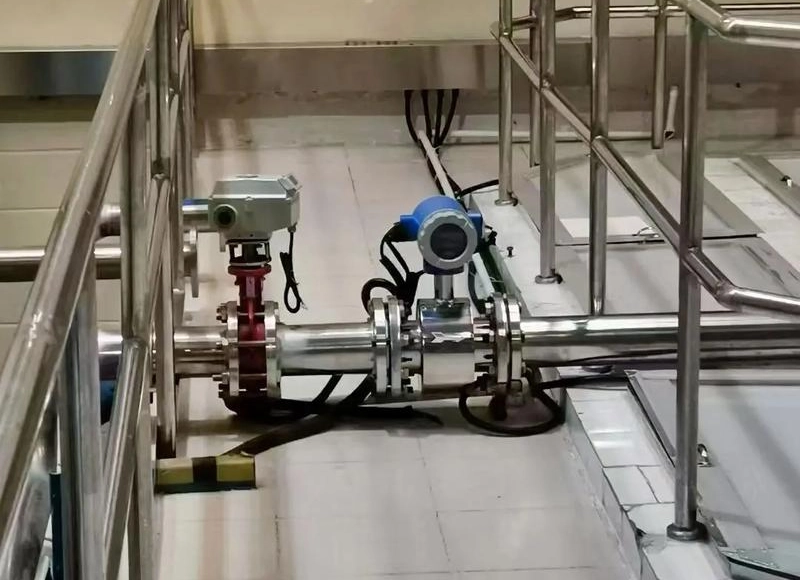
The efficient operation of industrial production relies on precise flow and pressure monitoring. From chemical processing and water utilities to metallurgy and HVAC, Sion-Inat’s electromagnetic flowmeters and pressure sensors consistently meet industry demands with high reliability and adaptability. Our robust measurement and control technology helps you reduce costs, enhance efficiency, and mitigate production risks. Enquire now to have our specialist team match you with the optimal product solution and unlock new efficiencies in production measurement and control.