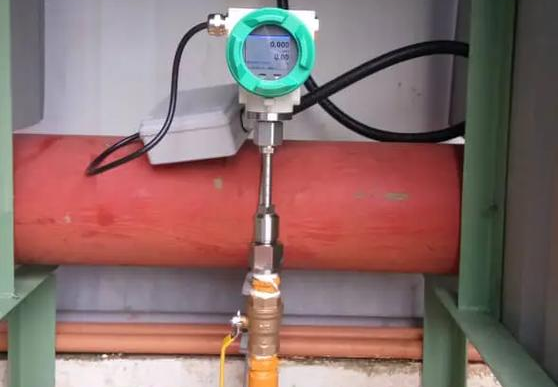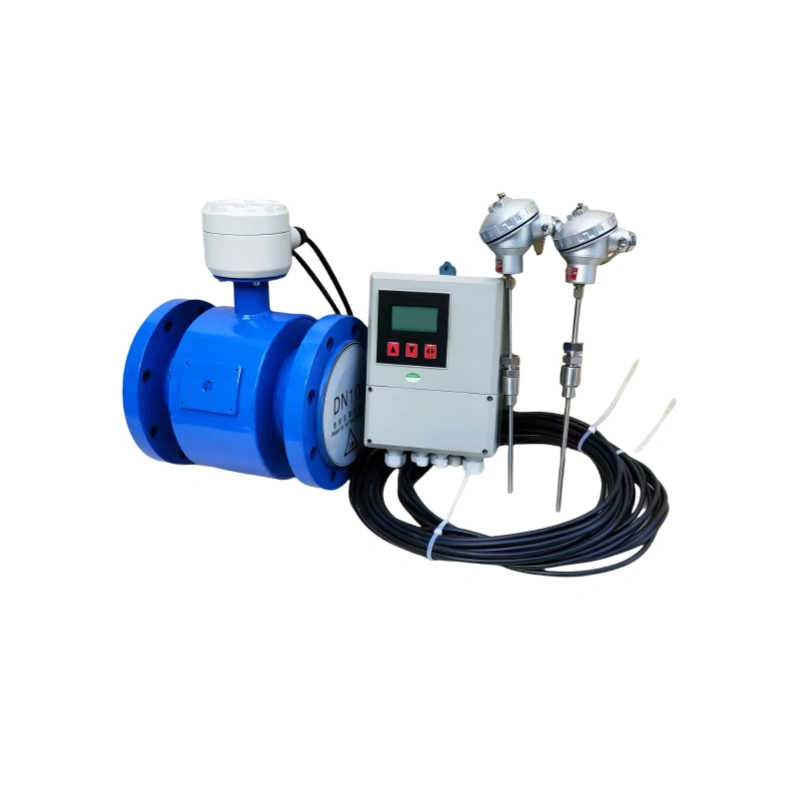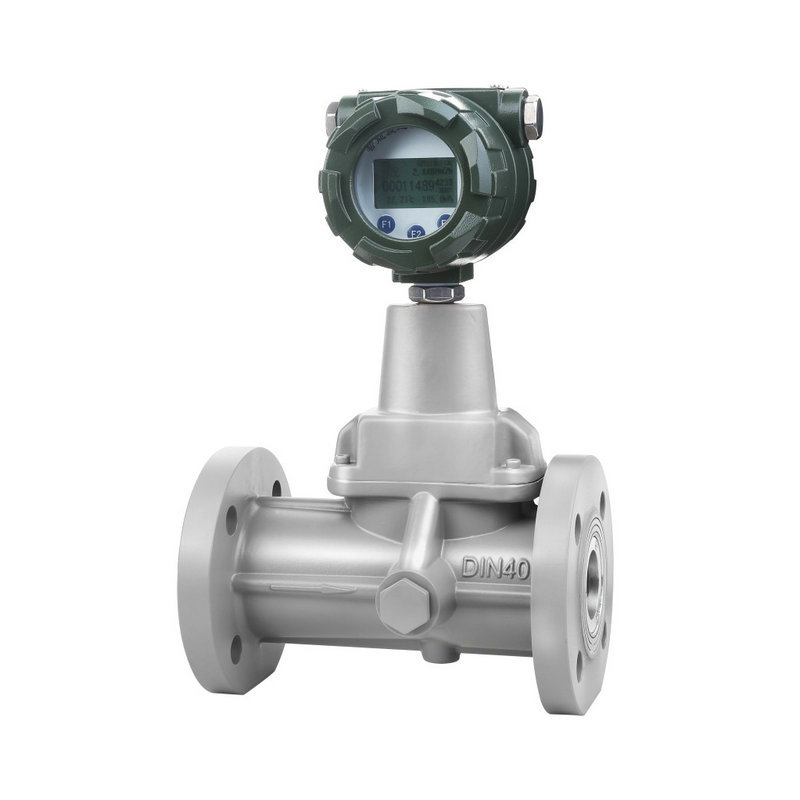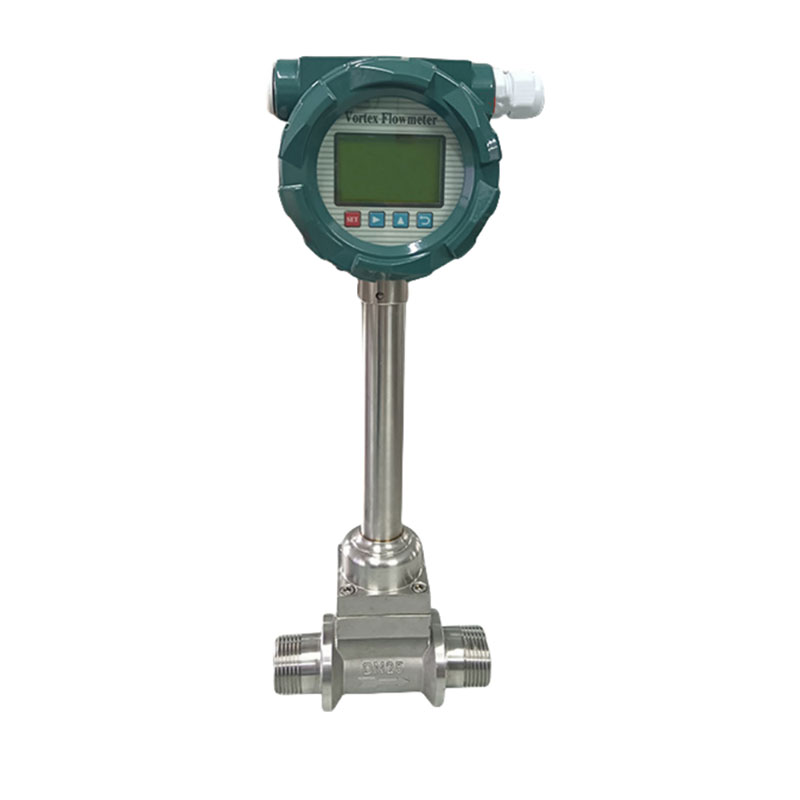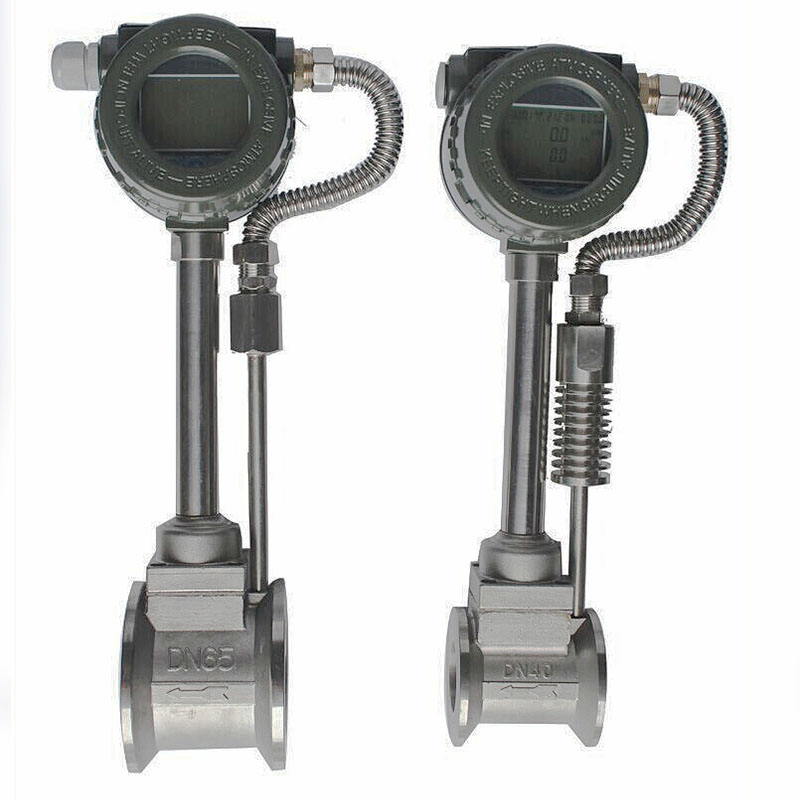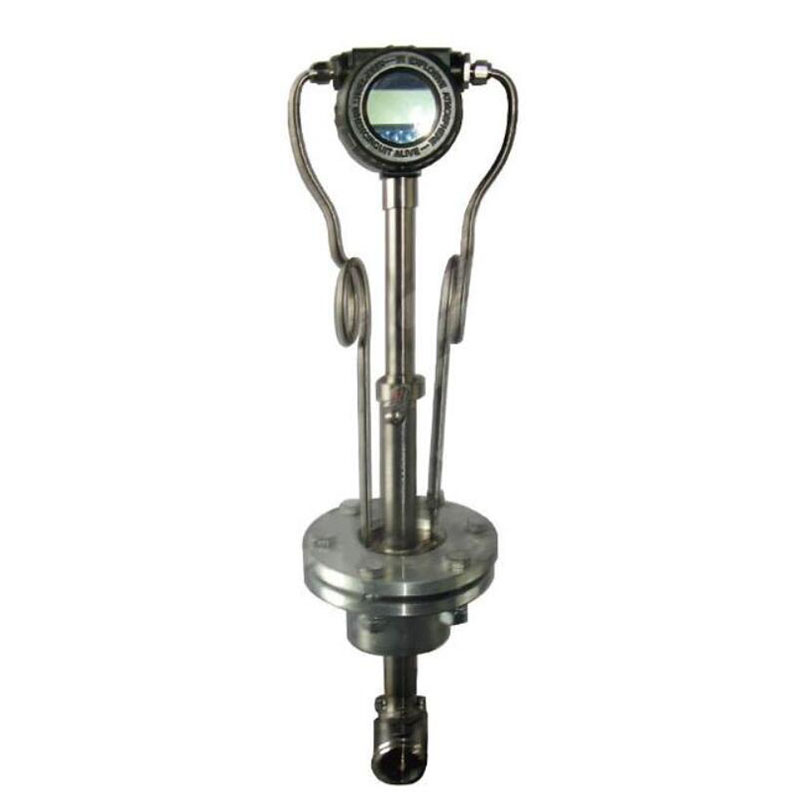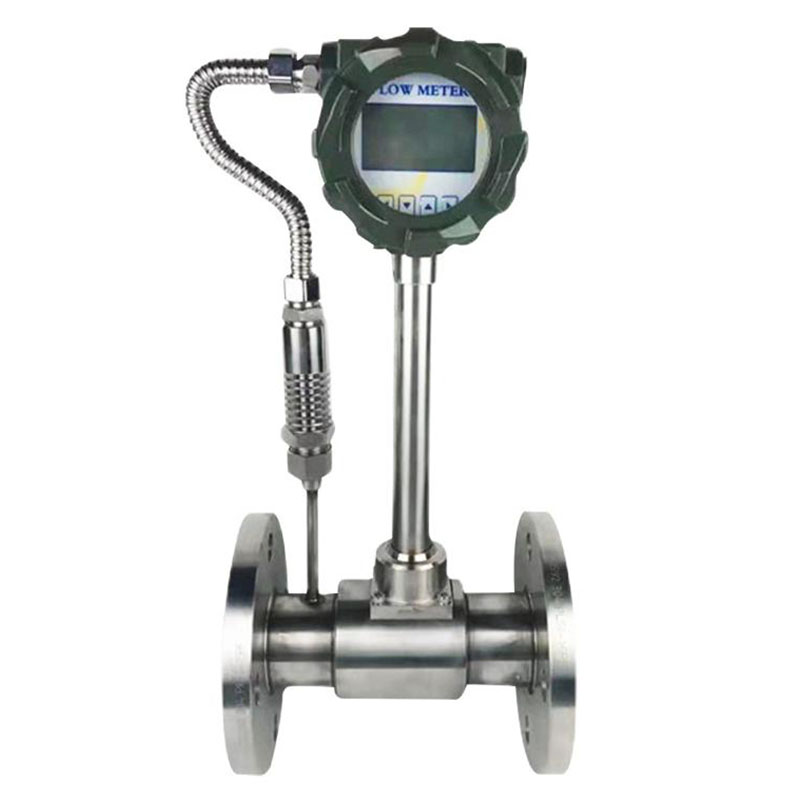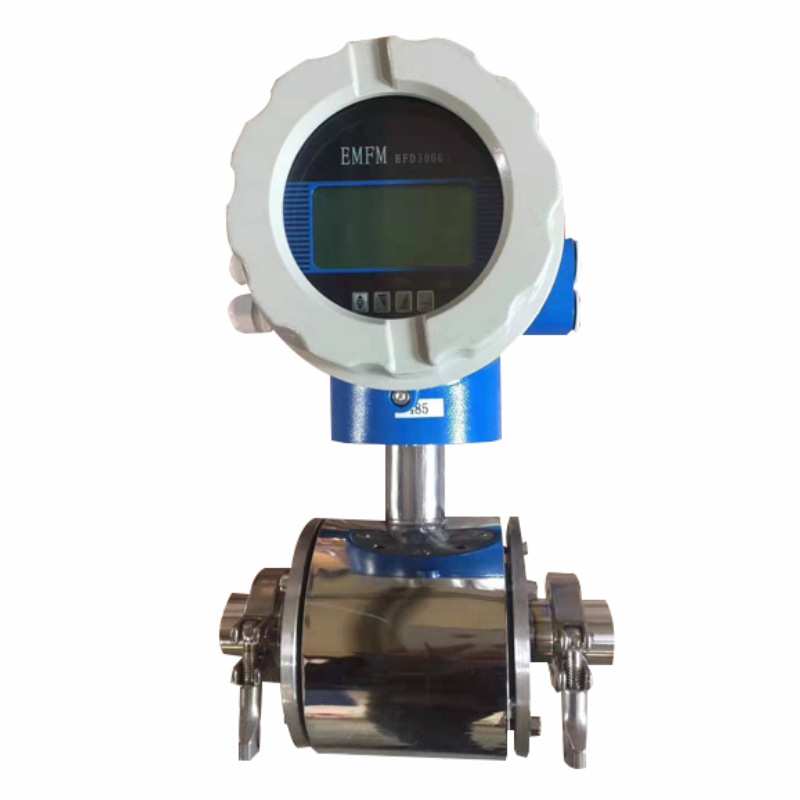
Flow meters are used in all sorts of situations, like in industry, for water supply and drainage, and for energy metering. Vortex flow meters and electromagnetic flow meters are two of the most common flow measurement instruments in industry. They work in different ways, need different things to be used with them, and you need to do different things when you install them. Many users often find themselves perplexed during selection: What distinguishes vortex flow meters from electromagnetic flow meters? Which should be chosen for my specific operating conditions?
Working Principle
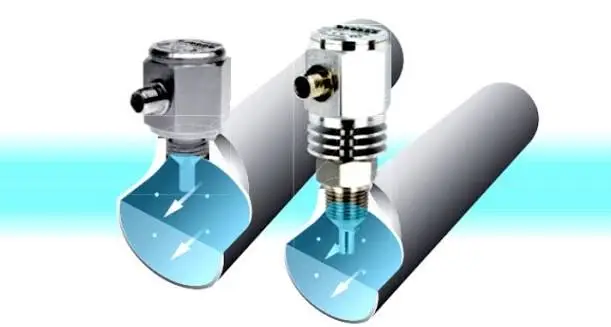
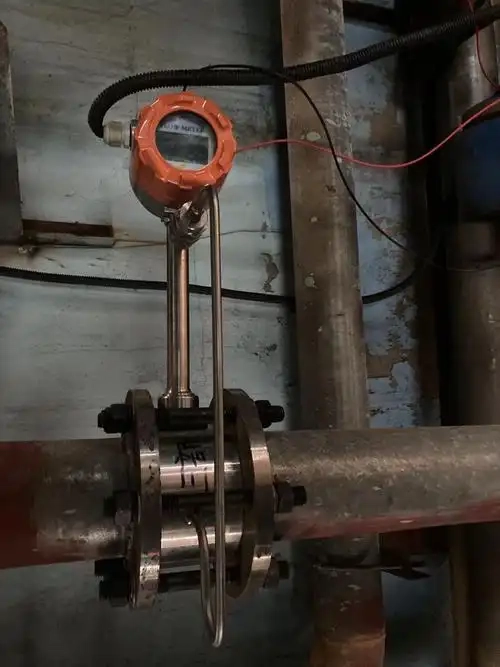
Vortex Flow Meter: Based on the Karman vortex street principle, a vortex generator is installed within the fluid. As the fluid flows past the vortex generator, regular vortices are alternately generated on both sides. The frequency of these vortices is directly proportional to the fluid velocity. Flow rate is measured by detecting this vortex frequency.
Electromagnetic Flowmeter: This is based on Faraday’s law of electromagnetic induction. There are two special electrodes on the pipe wall. They are at a right angle to the measuring tube and the magnetic field lines. When a conductive liquid moves along the measuring tube, it creates an electric current. The magnitude of this force is proportional to the flow velocity. The fluid flow rate is determined by measuring this induced electromotive force. The numerical expression is: E = K × B × V × D.
In simple terms, vortex flow meters count vortices, while electromagnetic meters measure voltage.
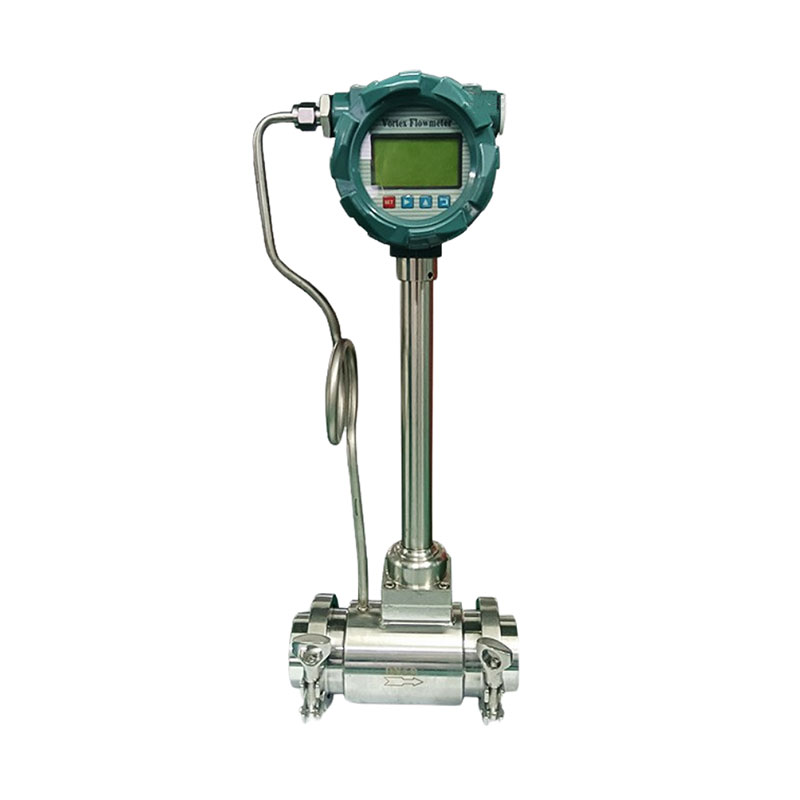
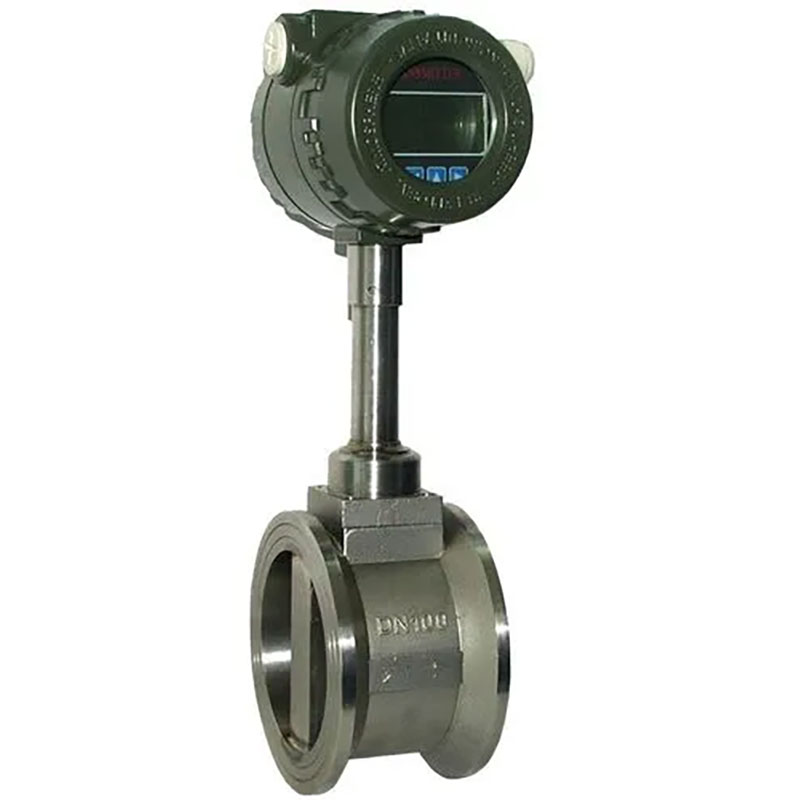
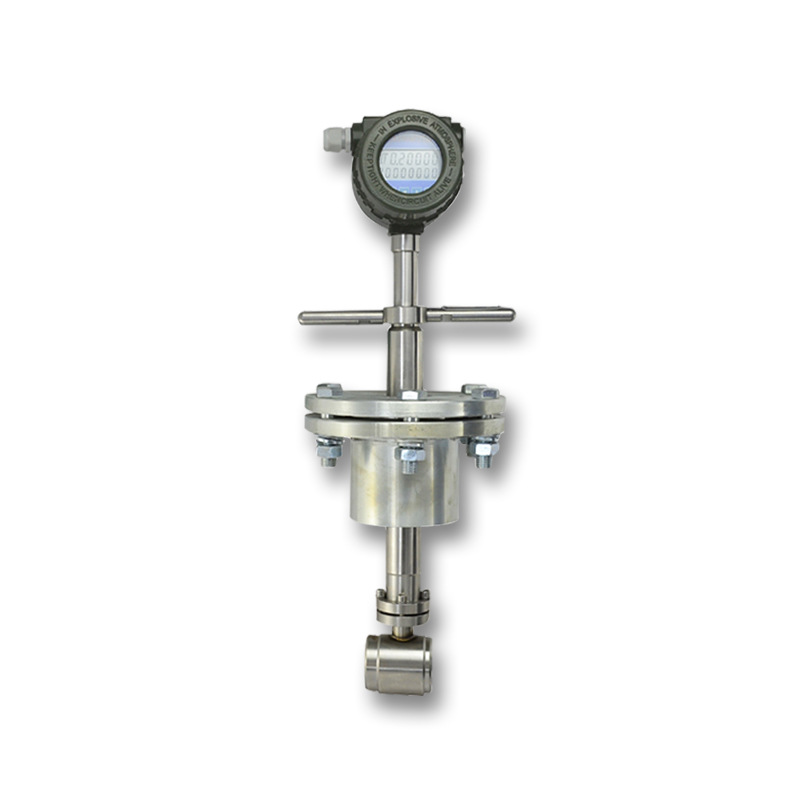
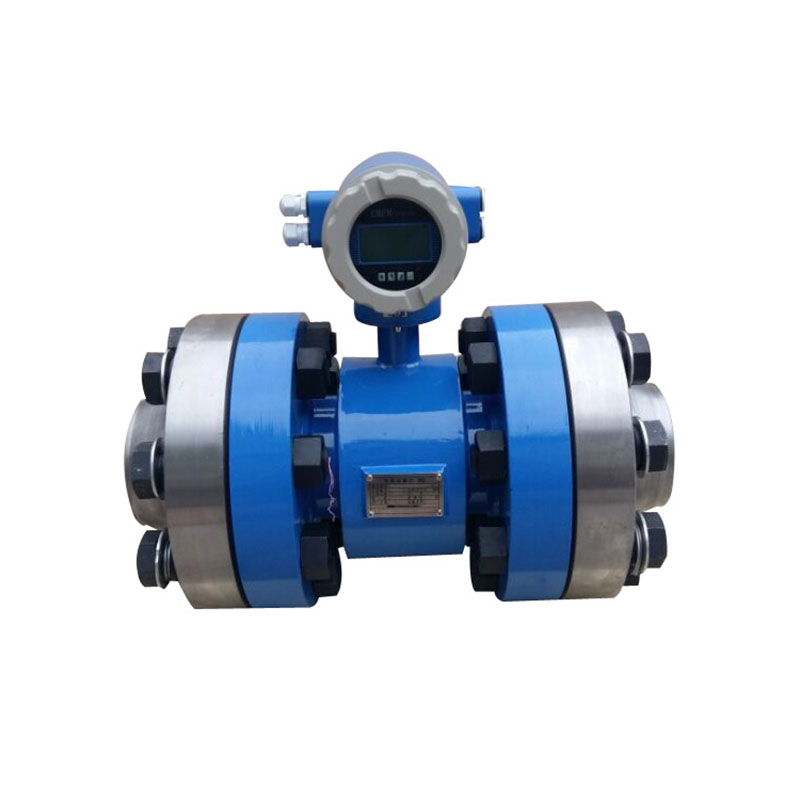
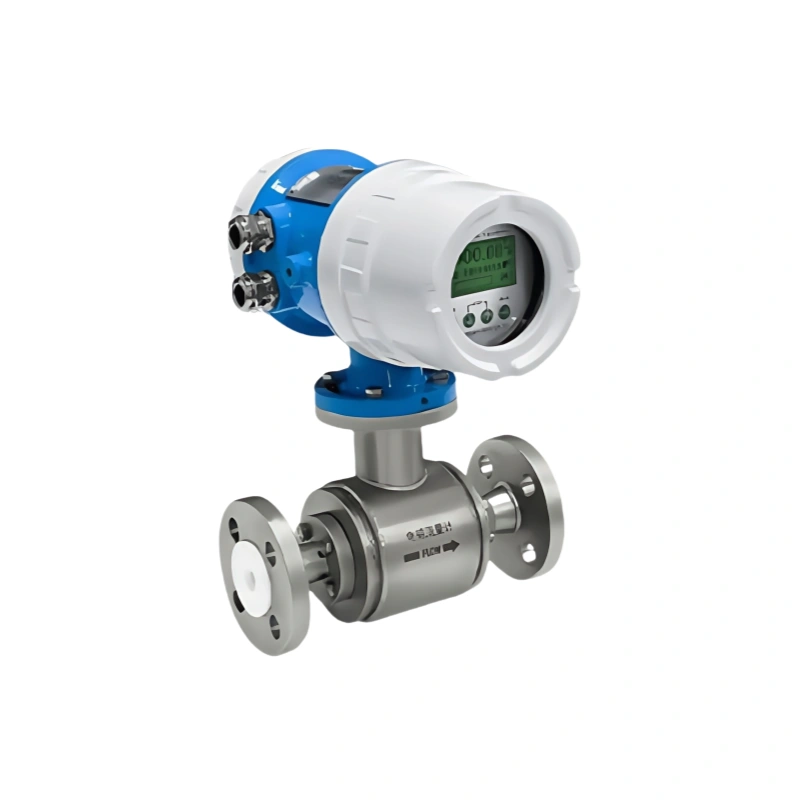
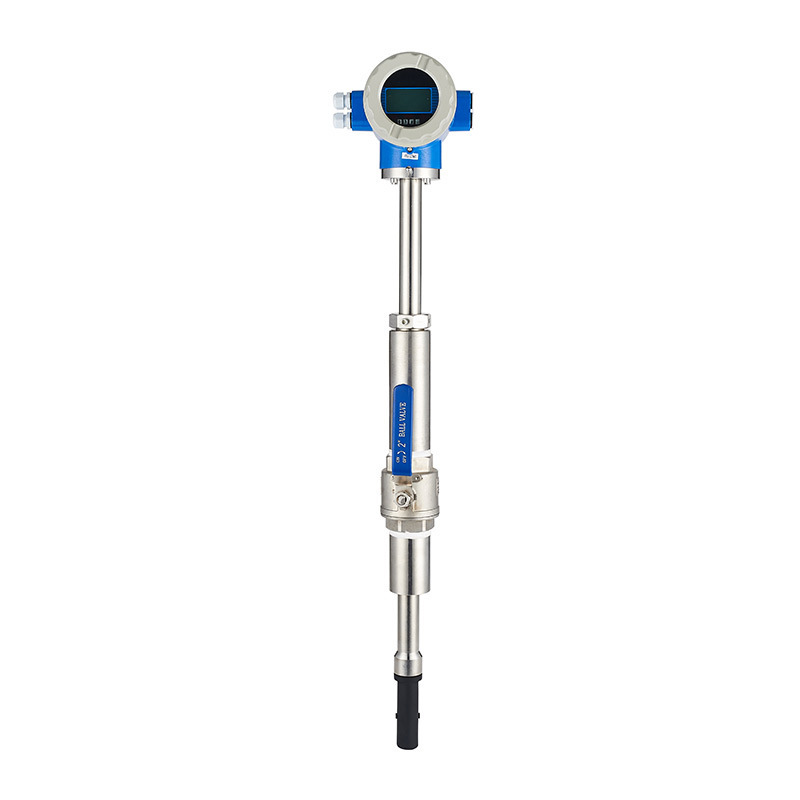
Comparison of Advantages and Disadvantages Between Magnetic Flowmeters and Vortex Flowmeters
Applicable Media
Magnetic flowmeters operate based on Faraday’s law of electromagnetic induction and are only suitable for conductive liquids with conductivity ≥5 μS/cm. The things it can be used on include dirty water from factories, wastewater, different acid-alkali-salt solutions, slurries, ore pulps and paper pulps. They are used a lot in situations where liquids are measured in the fields of chemical engineering, metallurgy and municipal engineering.
Vortex flow meters work on the Karman vortex street principle, so they don’t need any conductivity from the liquid. They can measure gases, steam, and some types of liquid, like air, natural gas, steam, light oils, and organic solvents. This includes measuring gas/liquid/steam three-phase measurements.
Medium Restrictions
Electromagnetic flowmeters, constrained by their operating principle, cannot measure gases or steam, nor can they handle non-conductive liquids such as pure oil, pure water, or deionised water. While they can process conductive media containing solids or fibres, excessively high solid particle content accelerates electrode wear.
Vortex flow meters are unsuitable for high-viscosity media exceeding 50 mPa·s, such as heavy oil or resins. They’re also not great for contaminated media with a lot of solid particles or long fibres, as these can cause fluid entanglement or blockages, which can mess up the measurement stability and accuracy.
Internal Structure and Pressure Loss
Electromagnetic flowmeters employ a full-bore, obstruction-free design. The measuring tube features a smooth, continuous inner wall without throttling constrictions. Fluid experiences only friction losses along its path, resulting in minimal pressure loss. They can be approximated as straight pipe sections, making them suitable for high-flow, low-pressure energy-efficient conveyance systems.
Vortex flow meters incorporate an internal vortex generator and operate on a throttling principle. Fluid flow generates localised pressure losses proportional to pipe diameter, flow velocity, and medium density. Overall pressure loss is approximately one-third to one-fifth that of orifice plate flow meters. Pressure margin verification is required for low-pressure gases or large-diameter pipelines.
Measurement Accuracy and Turndown Ratio
Electromagnetic flowmeters are pretty accurate, with standard models having an error range of ±0.2% to ±0.5% of reading (R). High-precision models offer an accuracy of ±0.2% R. They also have an incredibly wide turndown ratio, usually ranging from 100:1 to 1000:1. These meters can handle low flow rates, they’re really quick to respond, and they’re great for when the flow is low and variable.
Vortex flow meters offer medium-to-high measurement accuracy, with liquid measurement errors of ±0.5% to ±1.5% of reading. Accuracy for gases and steam is slightly lower. Their typical turndown ratio ranges from 10:1 to 30:1. At low flow rates, vortex strength weakens and signal-to-noise ratio decreases, resulting in inferior measurement performance compared to electromagnetic flow meters. This may lead to fluctuations or low-flow cut-off.
Installation Requirements
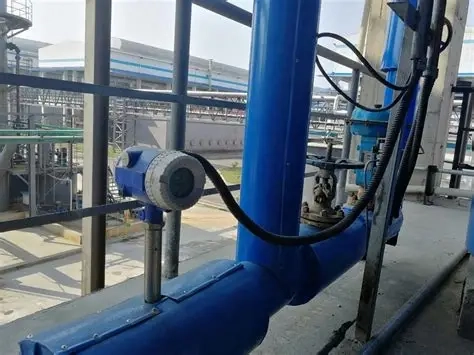
Both electromagnetic and vortex flowmeters require full-bore installation. Electromagnetic flowmeters demand a minimum upstream straight pipe section of ≥5D and a minimum downstream straight pipe section of ≥2–3D. Installation must be conducted away from strong magnetic fields and high-power interference sources, with separate, reliable grounding (typically <10Ω ground resistance). They exhibit good resistance to upstream flow field disturbances.
Vortex flow meters need stricter straight pipe requirements: ≥10D upstream and ≥5D downstream. They’re not as resistant to vibration, so noise can easily get in from the pipeline. You’ll need to do more to stop it vibrating when you’re putting it in, like using supports and pads that stop vibrations. To measure gas, you need to stop liquid from building up. To measure liquid, you need to stop gas from getting trapped.
Maintenance Focus
Electromagnetic flowmeters feature no moving parts, resulting in low overall failure rates. Core maintenance concerns include electrode surface scaling, fouling, and corrosion. Long-term operation necessitates periodic cleaning. Lining materials have limitations regarding temperature resistance (typically ≤180°C), pressure resistance, and corrosion resistance. Maintenance primarily involves inspecting electrodes, grounding, and insulation performance.
For vortex flowmeters, core maintenance focuses on cleaning, wear, and entanglement of the vortex generator. Impurities in the medium readily adhere to or erode the flow obstructor, necessitating regular cleaning or replacement. Simultaneously, inspect the sensitivity and secure mounting of the detection probe. Maintenance primarily involves clearing obstructions and calibrating zero-point stability.
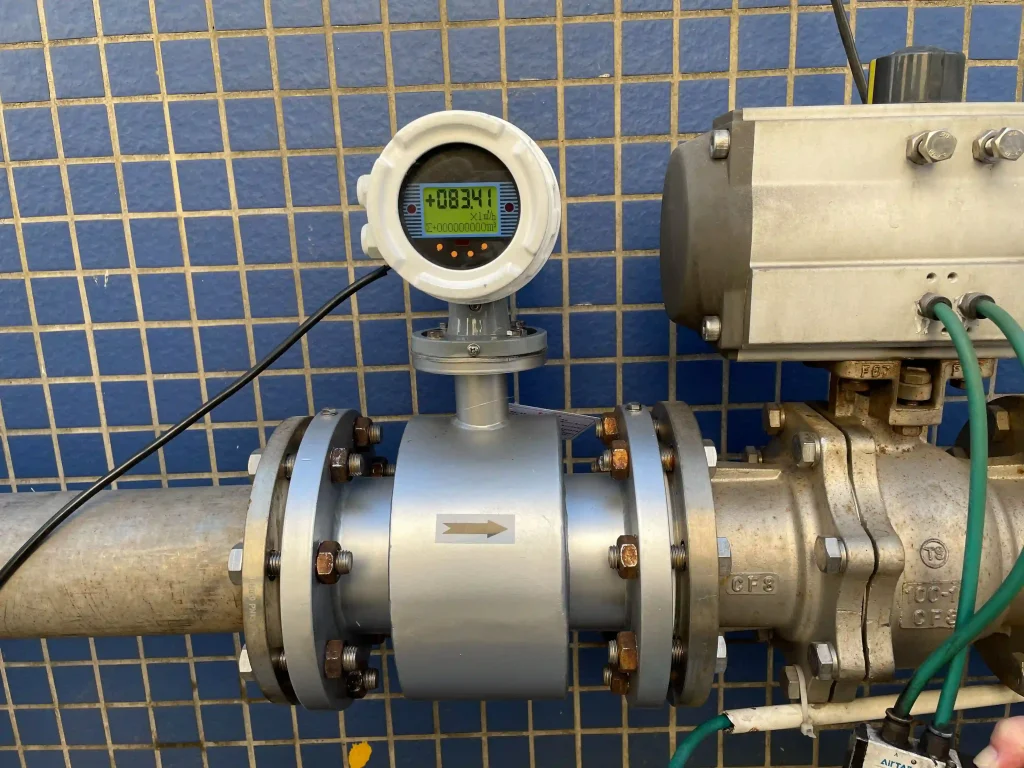
Differences in Application Scenarios
Electromagnetic Flowmeters:
You can choose different electrodes and lining materials for different uses, so you can get the right material for the job.
Water Supply: Used for measuring tap water flow in water treatment plants and distribution networks;
Beverage Industry: Employed on beverage production lines to monitor ingredient ratios and filling processes;
Chemical Industry: It measures how fast liquids with different levels of acidity, alkalinity, or saltiness (solutions) flow during chemical production;
Wastewater Treatment: Measures flow rates of sewage and sludge in treatment plants and drainage networks;
Building Services: Measures flow rates of hot/cold water in heating, air conditioning, and fire protection systems.
Vortex Flow Meters:
Industrial Production Workshops: It can be used in many different industries, including metallurgy, power generation, coal mining, chemical processing, petroleum, transportation, construction, light industry, textiles, food processing, pharmaceuticals, agriculture, environmental protection, and daily life. They’re used in process energy monitoring systems to measure energy and in totalisers to measure materials, which is great for supporting industrial and agricultural production.
Energy metering sector: Vortex flow meters can measure crude oil, refined petroleum products, liquefied petroleum gas, and water. These commonly used energy sources rely on vortex flow meters for energy consumption data measurement.
Environmental Protection Engineering Sector: Vortex flow meters primarily measure the discharge of energy sources such as flue gases, waste liquids, and sewage that severely pollute the atmosphere and water resources. They assist users in rationally controlling the discharge of harmful liquids and reducing pollution.
Transportation Sector: This encompasses railways, highways, aviation, water transport, and pipeline transportation. Vortex flow meters serve as a key data source for control, distribution, and scheduling, and are also essential tools for safety monitoring and economic accounting.
Selection Recommendations
1. When it comes to conductive liquids (like water, wastewater, acids/alkalis, slurries, etc.), go for electromagnetic flowmeters. These are only effective for conductive liquids and not for non-conductive liquids, gases or steam. They’re great for dealing with contaminated, particulate, or corrosive media, and they’re super stable and resistant to interference, so they’re perfect for most industrial liquid flow applications.
2. If you’re looking to measure gases, steam or low-viscosity clean liquids, then we’d definitely recommend vortex flow meters. These meters can measure gases, steam and liquids, so they’re pretty versatile. They’re great for clean, low-viscosity fluids like compressed air, nitrogen, natural gas, saturated steam, superheated steam, light oil, and pure water. They’re a popular choice for measuring gas or steam flow because they’re cheap and easy to install.
3. Where media contain substantial particulates, fibres, or exhibit adhesive or clogging tendencies, electromagnetic flowmeters are essential. Vortex flowmeters’ vortex generators are prone to entanglement and blockage by debris, leading to measurement inaccuracies or damage. Electromagnetic flowmeters feature no protruding internal components, resisting clogging and material adhesion. They are thus better suited for harsh media such as slurries, pulp, sewage, and ore slurries.
4. Where operational conditions demand minimal pressure loss, electromagnetic flowmeters are the preferred choice. They’ve got a full-bore, obstruction-free design, so they’ll keep the pressure where you need it. Vortex flowmeters, with their vortex-generating elements, cause some pressure loss. When it comes to low-pressure gases or large-diameter, low-pressure liquids, electromagnetic flowmeters are the way to go. They’re super energy efficient and stable.
5. For high-temperature, high-pressure applications—particularly steam and high-temperature gases—vortex flowmeters are the preferred selection. Electromagnetic flowmeters face limitations in high-temperature resistance due to restrictions on lining and electrode materials. Vortex flowmeters can withstand higher temperatures and pressures, making them the mainstream choice for high-temperature steam and gases.
6. For low flow velocities and small liquid flows, electromagnetic flowmeters are the preferred choice. They maintain stable measurement even at low velocities and have a lower lower limit. vortex flow meters have minimum velocity requirements; excessively low flow rates prevent stable vortex formation, leading to signal loss or significant fluctuations.
Cost-sensitive applications, smaller pipe diameters, and clean media favour vortex flow meters. For equivalent pipe sizes, vortex meters are typically more economical than electromagnetic ones, with simpler installation and maintenance, making them suitable for cost-sensitive, general-purpose applications with favourable media conditions.
7. If you need to measure fluids really accurately, for trade settlement, or in really disturbed environments, electromagnetic flowmeters are the best choice. They’re super accurate, stable, and resistant to electromagnetic interference, making them perfect for applications where precision is key. Vortex flowmeters aren’t as accurate and can be more affected by vibration and pulsating flow, so they’re better for keeping an eye on processes.
In industrial production, no detail is insignificant, and precise measurement is paramount. From adapting to operating conditions to selecting the right product, from installation and commissioning to after-sales maintenance, professional control at every stage is the core prerequisite for ensuring efficient, safe, and energy-saving production. Looking ahead, as intelligent manufacturing and digital factories advance, flow meters will play an increasingly vital role in more demanding conditions and complex scenarios.
Choosing a professional, reliable, and capable flow meter manufacturer is about more than just picking the right equipment; it’s about making sure your production is safe, efficient, and will pay off in the long run. Sion-Inst’s got a top-notch technical team and a full-on service system, so you’re covered every way. We’ll work together to get really good at what we do and start making top-notch products.