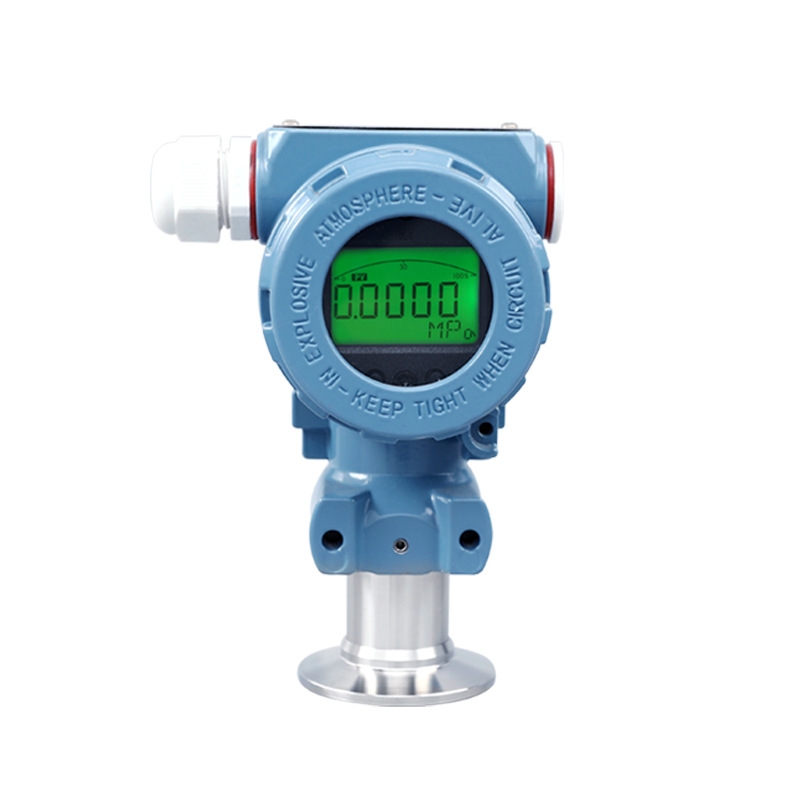
Pressure sensors are used in many different areas, such as modern industrial automation, automotive electronics, aerospace, and consumer electronics. The pressure sensing element is the core component of a pressure sensor. Its main job is to change the pressure of the measured material (like gas or liquid) into an electrical signal that can be understood by later circuits. This electrical signal can show changes in voltage, current, resistance, or a mechanical deformation signal. How good the pressure sensor is at measuring pressure, how quickly it responds and how well it works for certain jobs all depend on this part.
What is the Sensing Element of a Pressure Sensor
A pressure sensor’s most important part is the sensing (or sensitive) element. It basically acts as a transducer, which means it changes pressure into an electrical signal. This conversion process relies on specific physical effects, which in turn determine the various types of sensing elements.
In engineering, the sensing element usually works with elastic components like diaphragms, Bourdon tubes or bellows. First, the elastic element changes pressure into movement. Then, the sensing element changes this mechanical movement into an electrical signal. This division of labour allows for a more modular and optimised sensor design.
Piezoresistive Sensing Element
Working Principle
The way these sensors work is based on something called the piezoresistive effect. When conductive or semiconductor materials are put under pressure, their crystal lattice structure changes, affecting how easily electricity can flow through them and causing a big change in how much electricity they can resist. This is especially true for materials used in semiconductors.
Advantages and Disadvantages
Advantages:
These sensors operate on the semiconductor piezoresistive effect, offering exceptional measurement sensitivity and the ability to accurately detect minute pressure variations with typical accuracy within ±0.1%.
They exhibit rapid response times with millisecond-level signal output latency, making them suitable for dynamic pressure monitoring applications.
Their compact structure facilitates miniaturisation and integration to meet installation requirements for small-scale equipment.
Their straightforward signal conversion mechanism eliminates the need for complex auxiliary circuitry to transform pressure signals into electrical signals, facilitating subsequent signal processing and transmission.
Disadvantages:
There is significant temperature sensitivity as the piezoresistive coefficient of semiconductor materials is markedly affected by temperature, leading to measurement errors. Precise temperature compensation circuits are essential to ensure measurement stability.
Stringent packaging processes are required as the quality of the packaging directly impacts the component’s interference resistance and service life. However, this results in higher packaging costs.
Overload tolerance is limited and exceeding the rated pressure range can cause irreversible damage to the semiconductor material.
Stability and service life deteriorate significantly in harsh environments such as strong corrosion or high temperatures without special protective measures.
Piezoresistive Sensing Element
Working Principle
The way these sensors work is based on something called the piezoresistive effect. When conductive or semiconductor materials are put under pressure, their crystal lattice structure changes, affecting how easily electricity can flow through them and causing a big change in how much electricity they can resist. This is especially true for materials used in semiconductors.
Advantages and Disadvantages
Advantages:
These sensors operate on the semiconductor piezoresistive effect, offering exceptional measurement sensitivity and the ability to accurately detect minute pressure variations with typical accuracy within ±0.1%.
They exhibit rapid response times with millisecond-level signal output latency, making them suitable for dynamic pressure monitoring applications.
Their compact structure facilitates miniaturisation and integration to meet installation requirements for small-scale equipment.
Their straightforward signal conversion mechanism eliminates the need for complex auxiliary circuitry to transform pressure signals into electrical signals, facilitating subsequent signal processing and transmission.
Disadvantages:
There is significant temperature sensitivity as the piezoresistive coefficient of semiconductor materials is markedly affected by temperature, leading to measurement errors. Precise temperature compensation circuits are essential to ensure measurement stability.
Stringent packaging processes are required as the quality of the packaging directly impacts the component’s interference resistance and service life. However, this results in higher packaging costs.
Overload tolerance is limited and exceeding the rated pressure range can cause irreversible damage to the semiconductor material.
Stability and service life deteriorate significantly in harsh environments such as strong corrosion or high temperatures without special protective measures.
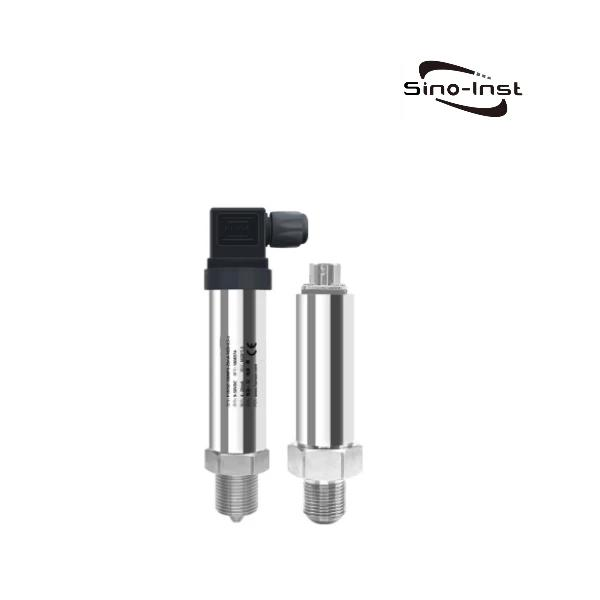
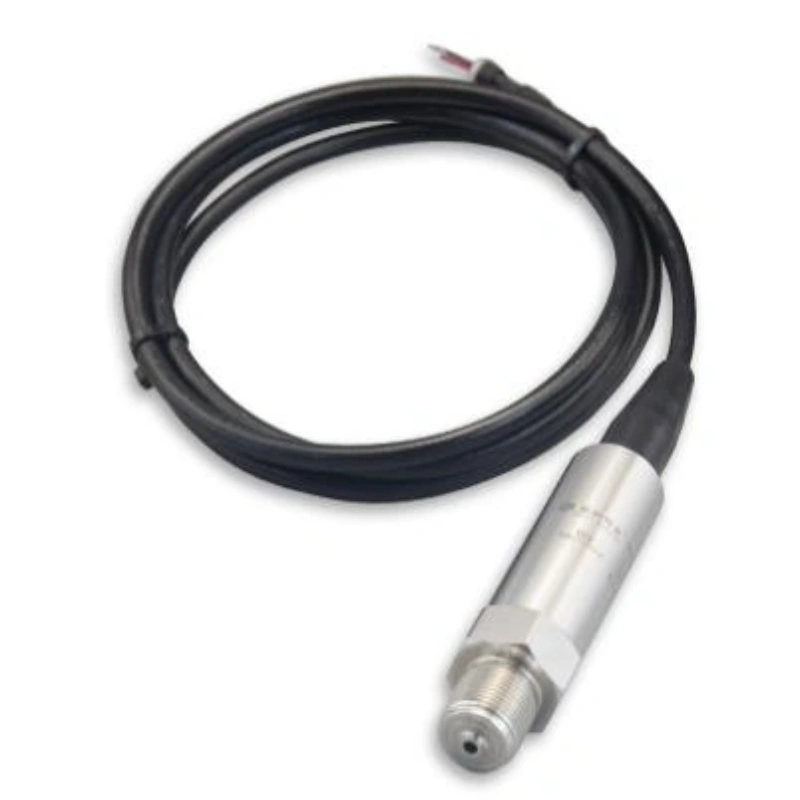
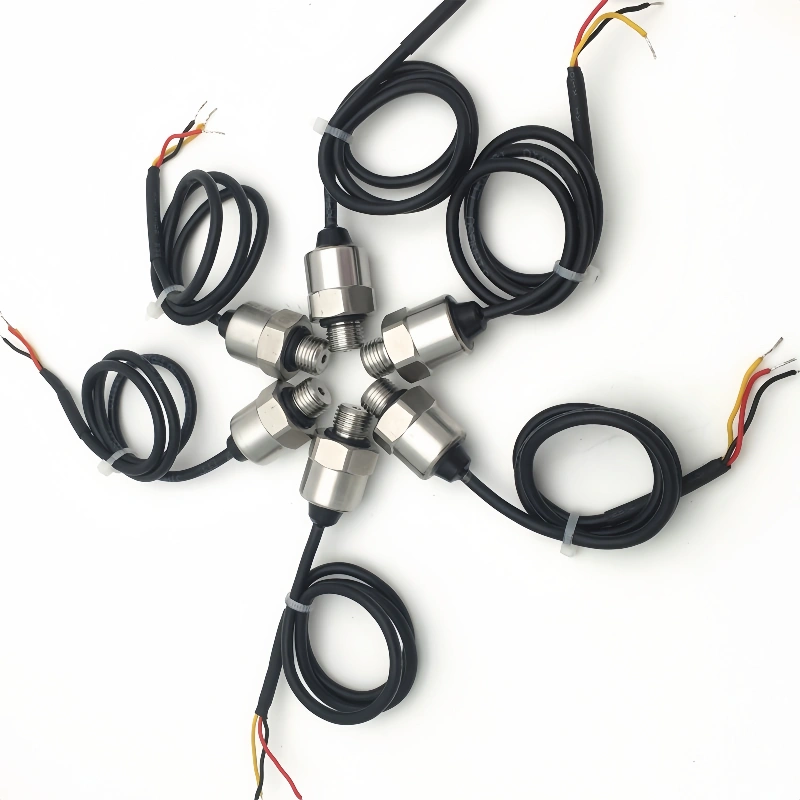
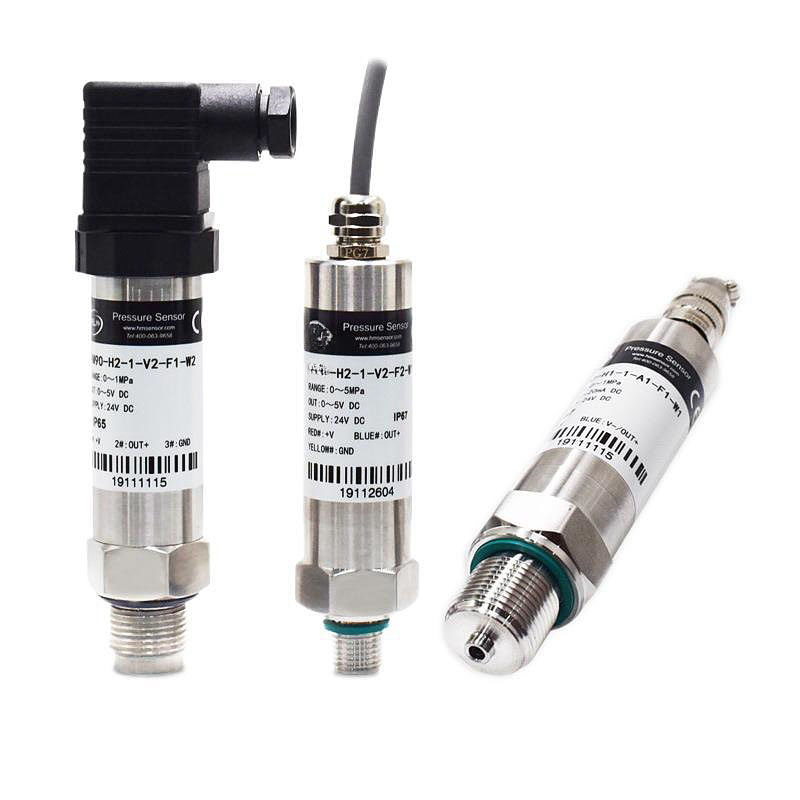
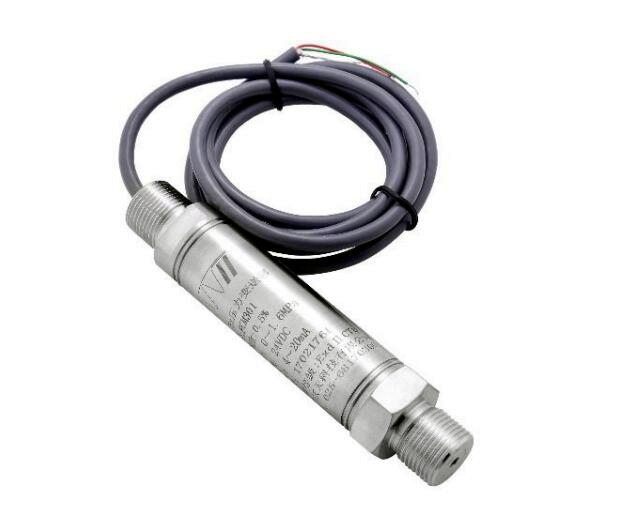
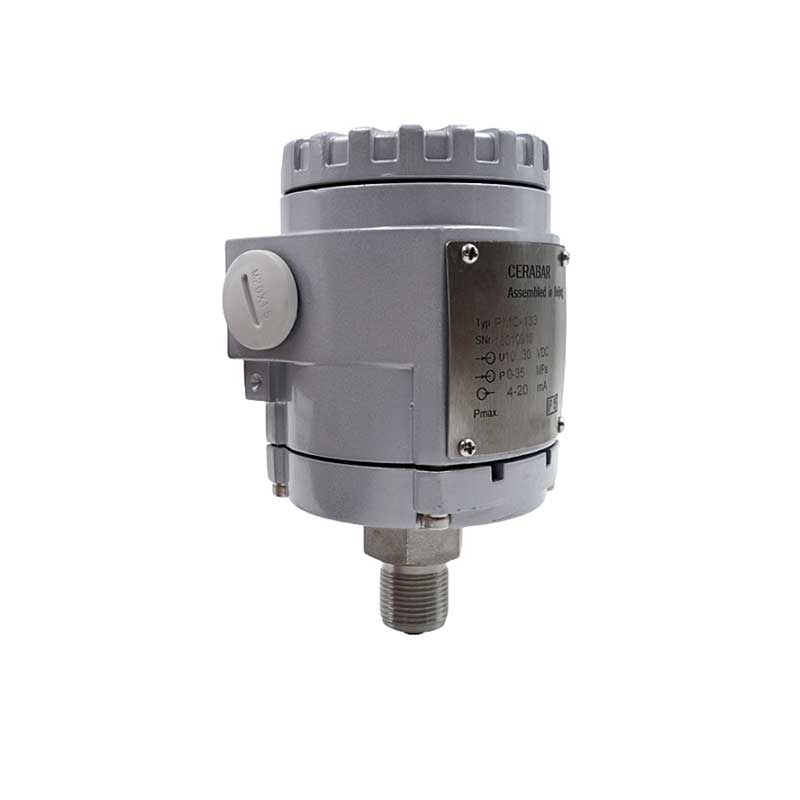
Piezoelectric Sensing Elements
Working Principle
The piezoelectric effect is the name for the phenomenon whereby some materials generate an electric charge on their surface when they are put under pressure. Pressure can change materials like quartz, lead zirconate titanate and ceramics. This can create electric charges on the surface. This is one of the most important ideas behind piezoelectric pressure sensors.
Advantages and Disadvantages
Advantages:
This device can convert pressure into an electrical signal very quickly.
It can also respond very quickly to pressure changes.
It can be used to detect pressure at high speeds.
It is very sensitive, so it can detect very small changes in pressure.
It does not need an external power supply because it is self-powered.
It is small and easy to miniaturise.
Some piezoelectric materials do not corrode easily, which means they can be used in harsh environments.
Disadvantages:
Unsuitable for long-term static pressure measurement due to charge leakage over time, necessitating charge amplifiers and low-noise transmission cables, resulting in higher system integration costs;
Significant temperature-dependent piezoelectric coefficients
Thermal drift reduces measurement accuracy, necessitating dedicated temperature compensation modules.
Limited overload tolerance exceeding the threshold pressure may cause irreversible lattice damage to piezoelectric materials, leading to component failure.
Furthermore, some crystalline piezoelectric materials are sensitive to humidity, resulting in a significant reduction in stability in high-humidity environments.
Capacitive Sensing Element
Working Principle
Some parts of the printer can ‘tell’ how pressure is affecting the material by converting pressure into an electrical signal. They are made up of a fixed electrode, a movable electrode (or diaphragm) and a medium, which together form a closed capacitive structure. When there is pressure on the movable electrode (or diaphragm), things change. This includes the spacing between the electrodes, the overlapping area and the dielectric constant of the medium. These changes result in regular changes to the capacitance value.
Advantages and Disadvantages
Advantages:
It can detect even the smallest changes in pressure, making it perfect for low-pressure and micro-pressure applications.
It uses very little power, so it’s great for battery-powered devices.
It offers strong resistance to electromagnetic interference and is minimally affected by external electromagnetic environments, providing excellent signal stability.
Its simple and compact structure facilitates miniaturisation and integration, meeting space-constrained installation requirements.
It has superior linearity compared to traditional strain gauge elements, coupled with low mechanical loss and an extended service life.
It is highly adaptable to various media, with certain configurations suitable for corrosive or viscous substances.
Disadvantages:
The high temperature sensitivity can cause problems. These include drift in electrode spacing and medium dielectric constant. This can lead to measurement errors. This means we need to use something called a temperature compensation module.
The installation process must be very precise. Deviations in the electrode assembly and uneven diaphragm deformation can affect accurate measurements. This can increase the cost of assembly.
The measurement range is limited. It is mostly suitable for low-pressure scenarios (0-1MPa). It’s not the best at high-pressure situations.
It is susceptible to fluctuations in medium dielectric constant. Changes in the measured medium composition can interfere with capacitance detection. This limits its application in multi-medium mixture scenarios.
The response speed is moderate in certain configurations. This makes adaptation to high-frequency dynamic pressure detection challenging.
The signal processing circuitry is more complex than piezoresistive elements.
Strain-Gauge Sensing Elements
Working Principle
The core components of strain-gauge sensing elements comprise strain gauges and an elastic body. Strain gauges are usually attached to the surface of the elastic body using special glue. They come in two types: Metallic and semiconductor. When an elastic body is pushed, it changes shape in proportion to the force applied. This makes the surface strain gauges stretch or compress at the same time. Metallic strain gauges are devices that can measure tiny changes in the distance between atoms in a material. When an object is deformed — stretched or compressed — the distances between the atoms change slightly. This results in a slight change in the material’s electrical resistance. Semiconductor strain gauges can measure changes in a material’s crystal lattice structure when it is deformed. This affects how easily electricity can flow through the material.
Advantages and Disadvantages
Advantages:
Pressure-to-electrical signal conversion based on strain effects
Metal strain gauges offer a broad measurement range (0.1 MPa to 1000 MPa) and robust overload resistance.
They are capable of withstanding transient shock pressures and have a simple structure with mature manufacturing processes. This facilitates straightforward maintenance and rapid repair via strain gauge replacement after failure.
Metal strain gauges are really temperature-stable and can handle tough conditions like high temperatures, humidity and strong vibrations.
They’re great at resisting corrosion and can handle vibrations well, and they’re easy to adjust for temperature changes.
Metal strain gauges are compatible with various elastic elements such as beam, diaphragm and cylinder types. They deliver good signal output linearity and have strong compatibility and adaptability to diverse scenarios.
Disadvantages:
Metal strain gauges exhibit low sensitivity, with minimal resistance change under load, necessitating signal amplification circuits.
Semiconductor strain gauges offer higher sensitivity but possess a significant temperature coefficient, prone to resistance drift under thermal variations, requiring precise temperature compensation circuits that increase system design complexity.
Performance is dependent on bonding techniques; adhesive ageing or poor adhesion can cause slippage between the strain gauge and elastic element, leading to measurement drift over time and reduced service life.
Due to its mechanical inertia, the elastic element has a moderate signal response speed and a limited frequency response range. This makes it unsuitable for the precise measurement of high-frequency dynamic pressures or transient shock pressures.
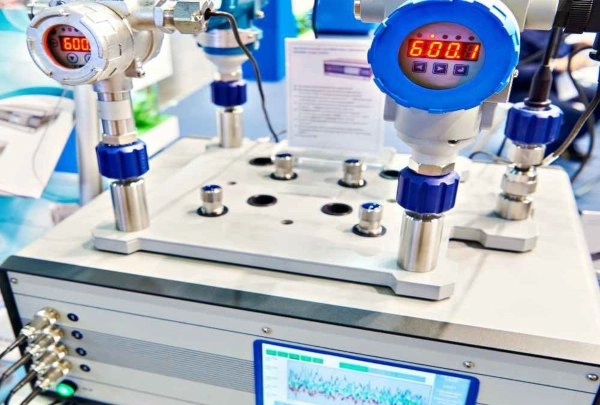
What are the different types of pressure sensing devices?
There are different instruments that are used to test pressure. The type of instrument used depends on the specific situation and requirements. Some common pressure measurement instruments are listed below.
1.Pressure gauge: This is the most commonly used mechanical pressure measurement device, typically employed to measure the pressure of gases or liquids. It features a pointer that moves in response to changes in internal pressure.
2.Digital pressure gauge: This device provides more precise readings than traditional mechanical gauges and displays them on a liquid crystal display.
3.Strain gauge: This is a sensor that gets deformed when pressure is applied. It can then use these measurements to determine pressure values.
4.Pressure Sensor: This is a device that converts pressure into an electrical signal and is frequently employed in automated control and monitoring systems. These devices may be capacitive, piezoresistive or piezoelectric.
5.Vacuum Gauge:This is specifically designed to measure pressures below atmospheric pressure. In other words, it measures vacuum levels.
6.Bourdon Tube: A curved tube that attempts to straighten as internal pressure increases, thereby driving the instrument pointer’s movement.
7.Maxwell’s Demon:This is an early type of measuring device that can measure high levels of vacuum. Now, it is mostly used to calibrate other vacuum gauges.
8.Pirani Gauge:Measures pressure in low-pressure environments by detecting changes in thermal conductivity.
9.Quartz Crystal Pressure Sensor:It measures pressure by observing how frequently quartz crystals vibrate. This provides highly precise measurements, and the instrument is highly stable.
The choice of instrument depends on the specific situation, how accurate it needs to be, how far the measurements can be, and how much money is available.
As a specialist sensor manufacturer, Sion-Inst has honed its expertise in pressure sensing technology over many years. We offer bespoke product solutions spanning the entire range from low to ultra-high pressure.
Whether addressing corrosion resistance and vibration tolerance in harsh environments or meeting precise measurement requirements in high-accuracy applications, our mature technical expertise and comprehensive quality control system ensure every need is met. We always put our customers first. This means that we do everything from helping them choose the right product, to designing solutions for them and looking after them after they have bought something.